
Taphonomy
What is a fossil?
Almost everything we know about dinosaurs comes from fossils. But fossilization is an extremely rare process that depends on very specific conditions. Understanding how fossils form (and why most animals never become one) is essential to interpreting what the fossil record actually tells us.
Definition and basic concepts
A fossil is any preserved trace of ancient life, generally older than 10,000 years. It can be a bone, a tooth, a footprint, a leaf impression, an insect trapped in resin, or even behavioral marks such as nests and burrows.
The word "fossil" comes from the Latin fossilis, meaning "obtained by digging." Until the 18th century, the term applied to anything unearthed, including minerals and crystals. Today the definition is restricted to traces of living organisms preserved in sedimentary rocks, amber, ice, peat, or asphalt.
Fossils are divided into two main categories. Body fossils preserve parts of the organism: bones, teeth, shells, wood, leaves. Trace fossils (ichnofossils) preserve evidence of activity: footprints, trackways, coprolites (fossilized feces), nests, burrows, and bite marks.
Fossil vs. subfossil
Subfossils are remains that have not yet undergone complete mineralization. Mammoth bones frozen in Siberia, giant sloths preserved in caves, and even human mummies fall into this category. The distinction is gradual, not absolute: there is no exact moment when a bone "becomes" a fossil.
The numbers of the fossil record
How fossilization occurs
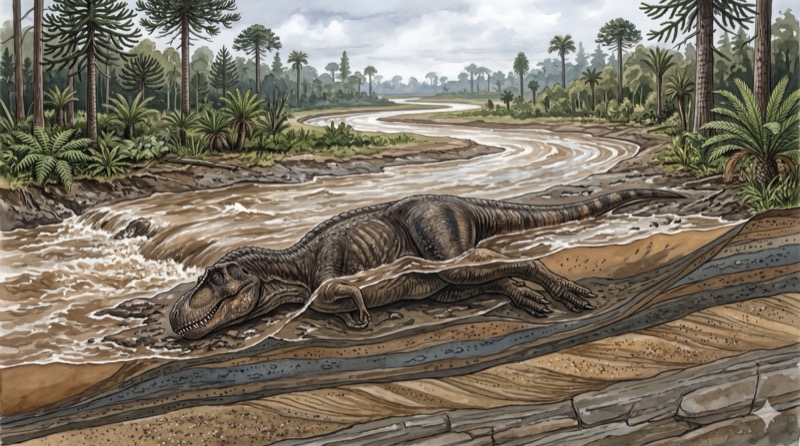
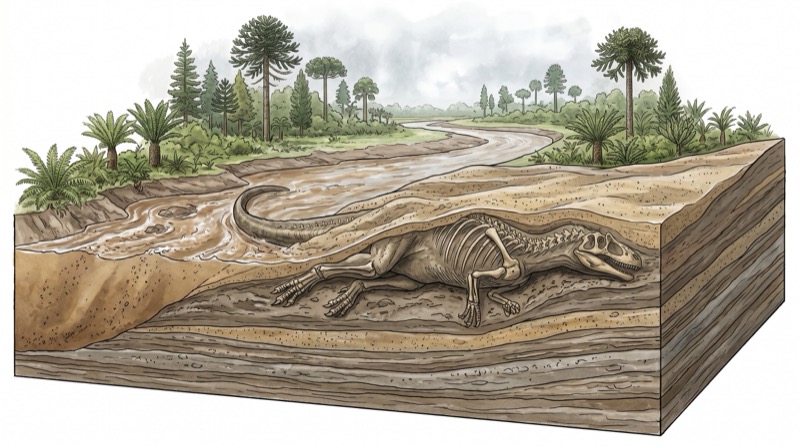
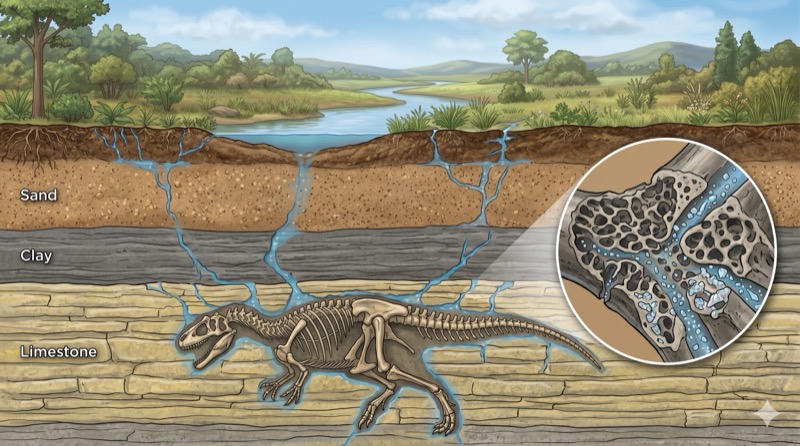
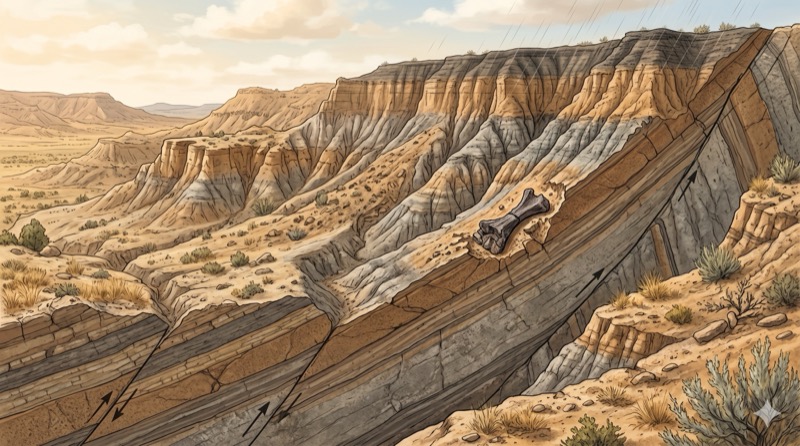
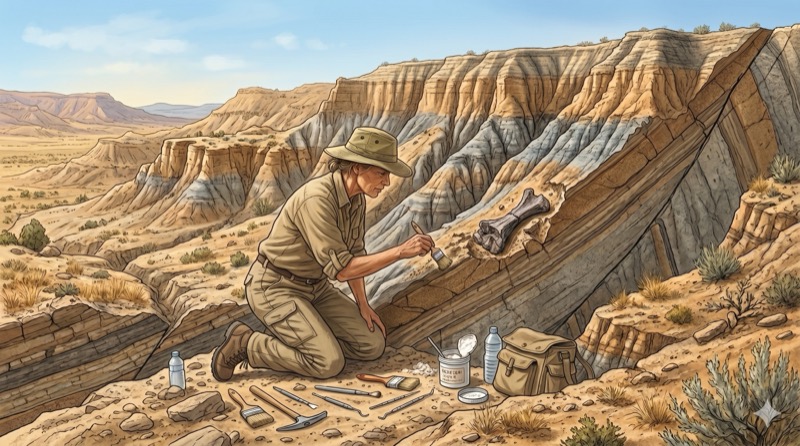
Fossilization is a race against destruction. When an animal dies, predators, scavengers, bacteria, insects, roots, rain, wind, and sun work together to erase every trace of the body. To become a fossil, the organism must escape all of those agents.
Types of fossilization
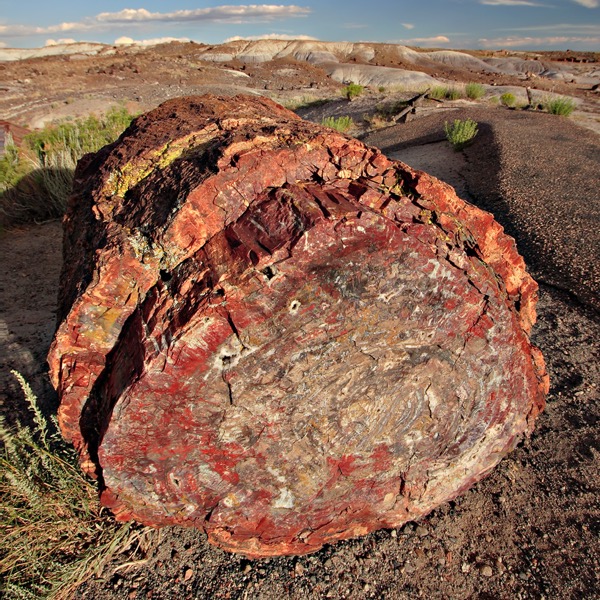
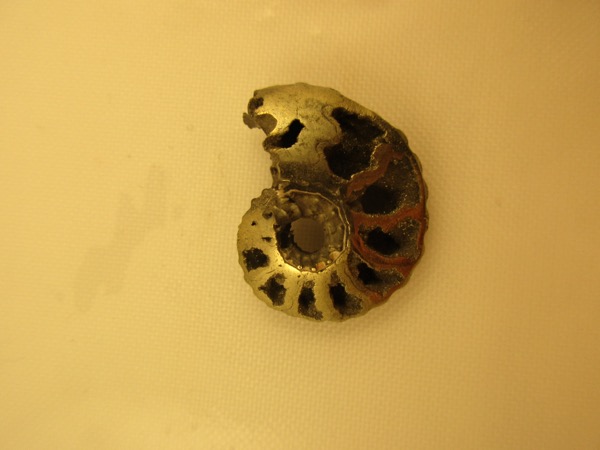
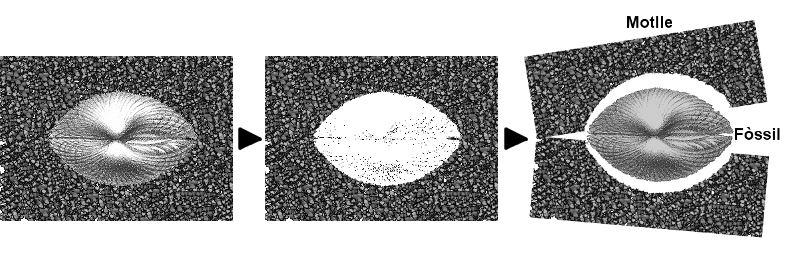
There are multiple ways an organism can be preserved. Each type yields different information and reveals distinct aspects of ancient life.
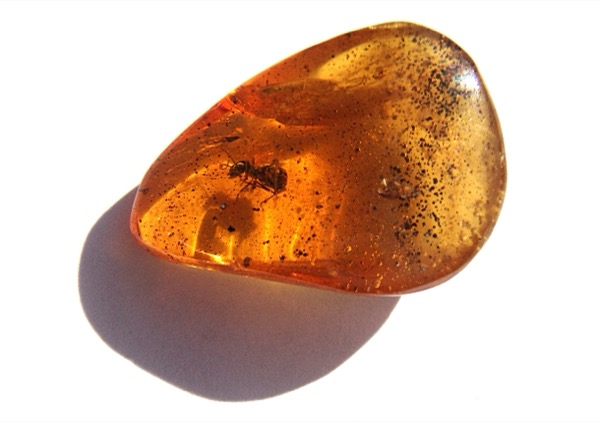
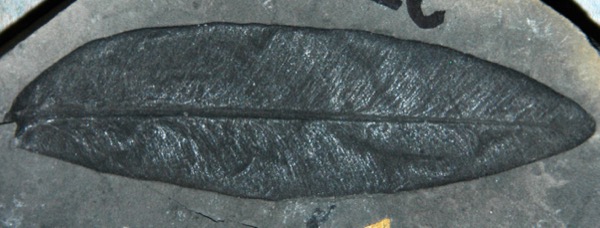
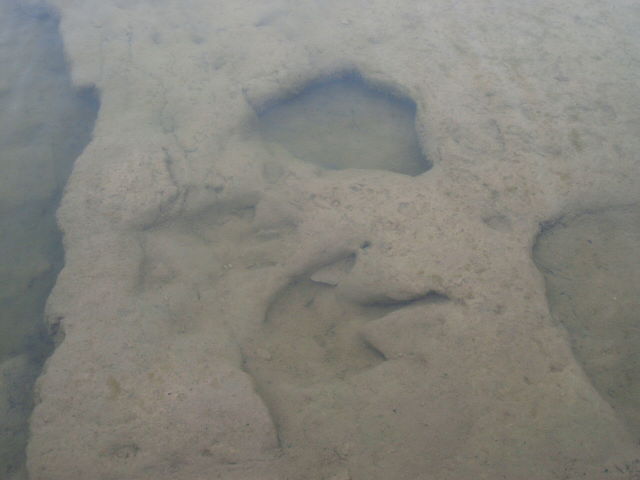
Exceptional preservation: Lagerstätten
Lagerstätten (German: "storage place") are fossil deposits with exceptional preservation, including soft tissues, feathers, stomach contents, and internal organs. The most famous include: the Burgess Shale (Cambrian, Canada), which preserved the first complex animals; the Jehol Biota (Cretaceous, China), with feathered dinosaurs; the Solnhofen Limestone (Jurassic, Germany), where Archaeopteryx was found; and Burmese amber (Cretaceous, Myanmar), with insects, flowers, and even dinosaur tails in 3D. These deposits provide information that millions of "normal" fossils cannot: the actual appearance of the animals, their colors, their diets, and the ecology of entire communities.
How rare is it for a dinosaur to become a fossil?
The classic phrase in paleontology is "one in a million." It is figurative, but it captures the scale of the problem.
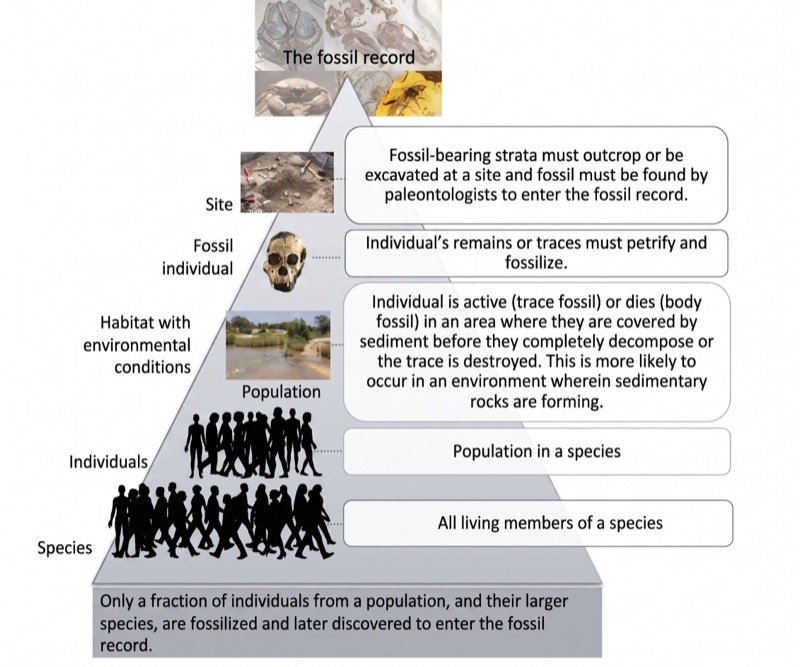
The taphonomic pyramid: of all living species, only a tiny fraction is buried, fossilized, and discovered. Wikimedia Commons, CC BY-SA 4.0
The destruction cascade
When a dinosaur dies, a sequence of events works against fossilization. Scavengers (other dinosaurs, mammals, insects) consume flesh and disarticulate the skeleton. Bacteria decompose soft tissues within weeks. Plant roots infiltrate the bones. Sun exposure causes cracks. Rains and rivers transport and fragment the remains. For every dinosaur we know as a fossil, millions lived and died without leaving a trace.
Most are fragmentary
Even when a dinosaur is fossilized, it is almost never preserved whole. Most dinosaur species are known from a single bone, an isolated tooth, or a skull fragment. Finding 50% of a skeleton is already considered extraordinary. Sue, the most complete Tyrannosaurus rex ever found, has 90% of the skeleton preserved by volume (250 of ~380 bones), an exception rare enough to make her a global celebrity.
Why bones, not flesh?
The fossil record is dominated by hard parts: bones, teeth, shells, exoskeletons. Soft tissues (muscles, organs, skin) decompose too quickly to be preserved, except under exceptional conditions. That is why the actual appearance of most dinosaurs is reconstructed by inference: muscle shape from insertion marks on bones, colors from melanosomes preserved in feathers, and skin from rare impressions in mud.
90%
Sue (T. rex), the most complete
<5%
average specimen completeness
0
100% complete skeletons
165 Mya
duration of the age of dinosaurs
Where do fossils form?
Not all environments preserve fossils equally. Some favor fossilization; others prevent it almost entirely.
High preservation
Floodplains and rivers
Rapid sedimentation during floods. Most dinosaur fossils come from fluvial and alluvial environments.
Lake and pond margins
Fine sediment, calm water, low oxygen at the bottom. The setting of many Lagerstätten.
Volcanic deposits
Volcanic ash covers and seals organisms quickly. The Jehol Biota was preserved by eruptions.
Ocean floors
Continuous sedimentation, anaerobic environment. Marine animals have much higher fossilization potential than terrestrial ones.
Low preservation
Tropical forests
Extremely rapid decomposition, acidic soil, high biological activity. Almost no fossils form in tropical forests.
Mountains and erosion zones
Rocks are being removed, not deposited. Without sedimentation, there is no fossilization.
Deep abyssal ocean
All oceanic crust is recycled by subduction within ~200 million years (Myr). No marine fossil older than the Jurassic survives on oceanic crust.
Glaciated areas
Glaciers scrape and destroy sediments as they advance. Scandinavia and Canada lost almost the entire pre-glacial fossil record.
Exceptional preservation
Resin (amber)
Preserves organisms in 3D with microscopic detail. Limited to very small animals.
Tar pits
La Brea Tar Pits (Los Angeles): thousands of Pleistocene mammals preserved in natural asphalt.
Permafrost
Mammoths with flesh, fur, and DNA preserved in Siberian ice for up to 40,000 years.
Peat bogs and swamps
Acidic and anaerobic environment preserves skin and hair. Human "bog bodies" thousands of years old.
Taphonomic bias: how fossils distort reality
The fossil record is not a random sample of past life. It is a deeply biased sample. Understanding these biases is as important as the fossils themselves.
Environmental bias
Animals that lived near rivers and lakes are far more represented than those that lived in forests or mountains. That means our picture of Mesozoic ecosystems is dominated by animals from alluvial plains. Species from dense forest, mountain slopes, or volcanic islands are almost invisible in the record. We know almost nothing about Cretaceous tropical forest fauna, simply because tropical forests do not preserve fossils.
Size bias
Large animals are more easily preserved and found than small ones. Large bones resist transport and destruction better, and are easier to identify in the field. This creates an illusion that all dinosaurs were huge. In reality, most dinosaur species were the size of a chicken, a dog, or a person. Dinosaurs smaller than 1 meter are severely underrepresented.
Hard parts bias
Organisms without shells, bones, or exoskeletons almost never fossilize. The entire kingdom of worms, jellyfish, soft-bodied octopuses, and countless invertebrates is practically absent from the fossil record. Among vertebrates, animals with denser bones (such as sauropods) are better preserved than those with pneumatized and fragile bones (such as pterosaurs and birds). This deeply distorts biodiversity estimates.
Geographic bias
Mesozoic rocks are not exposed equally on all continents. North America, Argentina, and China have vast stretches of badlands (eroded terrain) where Cretaceous and Jurassic rocks are exposed at the surface. Countries like the USA, Argentina, China, and Mongolia dominate discoveries not because they had more dinosaurs, but because their rocks are exposed and accessible. Vast areas of Africa, India, and Southeast Asia have Mesozoic formations covered by vegetation, agriculture, or cities.
Human sampling bias
Paleontologists tend to search where they have already found fossils. Famous formations (Hell Creek, Morrison, Ischigualasto) receive more attention, resources, and researchers than unexplored regions. Countries with a paleontological tradition and research funding dominate the publications. This creates feedback loops: more discoveries attract more researchers, who make more discoveries in the same place, while vast regions of the planet remain virtually unexplored.
Temporal bias
The older the rock, the more likely it was destroyed by erosion, metamorphism, or subduction. We know many more Late Cretaceous species (83-66 million years ago, Mya) than Middle Triassic ones (247-237 Mya), partly because more Cretaceous rocks have survived. The apparent "explosion" of dinosaur diversity in the Cretaceous may be partly an artifact of preservation, not a faithful reflection of real diversity over time.
What does this mean in practice?
Every statement about dinosaurs carries a margin of uncertainty created by taphonomic bias. When we say that "Tyrannosaurus rex was the largest predator in North America during the Maastrichtian," this is true within the limits of what the fossil record preserved. There may have been a larger predator that lived in dense forests and never fossilized, or that lived in a region whose rocks were destroyed. Modern paleontology incorporates this uncertainty into its models and avoids treating the fossil record as a complete census of the past.
References
Behrensmeyer, A.K., Kidwell, S.M. & Gastaldo, R.A. (2000). Taphonomy and paleobiology. Paleobiology, 26(S4), 103-147.
Wang, S.C. & Dodson, P. (2006). Estimating the diversity of dinosaurs. PNAS, 103(37), 13601-13605.
Kidwell, S.M. & Holland, S.M. (2002). The quality of the fossil record: implications for evolutionary analyses. Annual Review of Ecology and Systematics, 33, 561-588.
Briggs, D.E.G. (2003). The role of decay and mineralization in the preservation of soft-bodied fossils. Annual Review of Earth and Planetary Sciences, 31, 275-301.
Xing, L. et al. (2016). A feathered dinosaur tail with primitive plumage trapped in mid-Cretaceous amber. Current Biology, 26(24), 3352-3360.
Allison, P.A. & Bottjer, D.J. (2011). Taphonomy: bias and process through time. In: Taphonomy: Process and Bias Through Time. Topics in Geobiology 32, Springer.