
Abelisaurus comahuensis
Abelisaurus comahuensis
"Abel's lizard from the Comahue region"
Sobre esta espécie
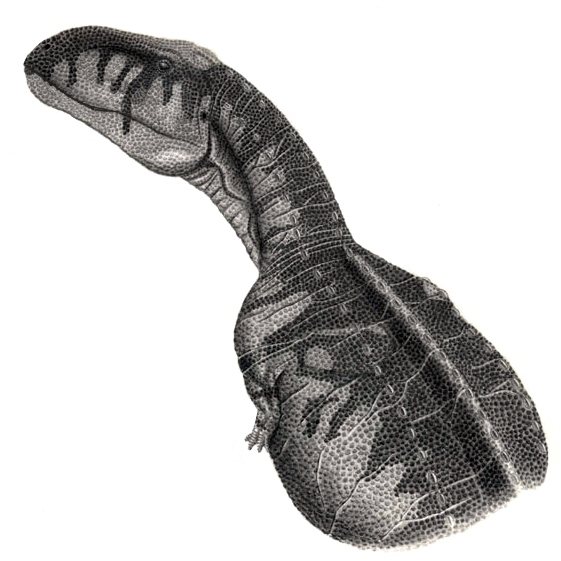
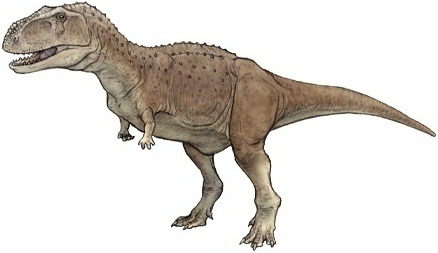
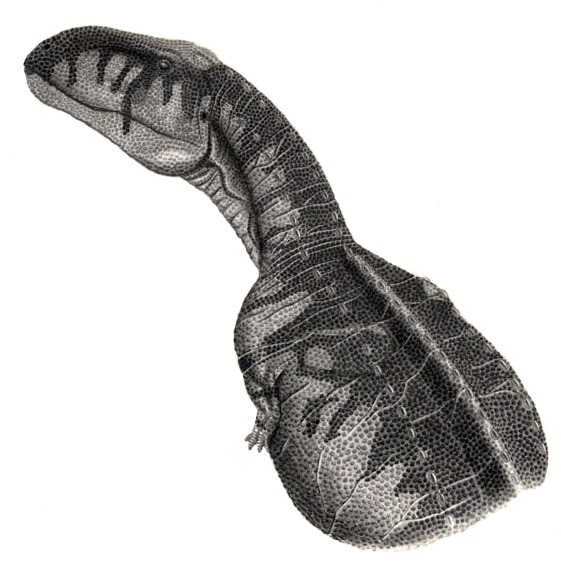
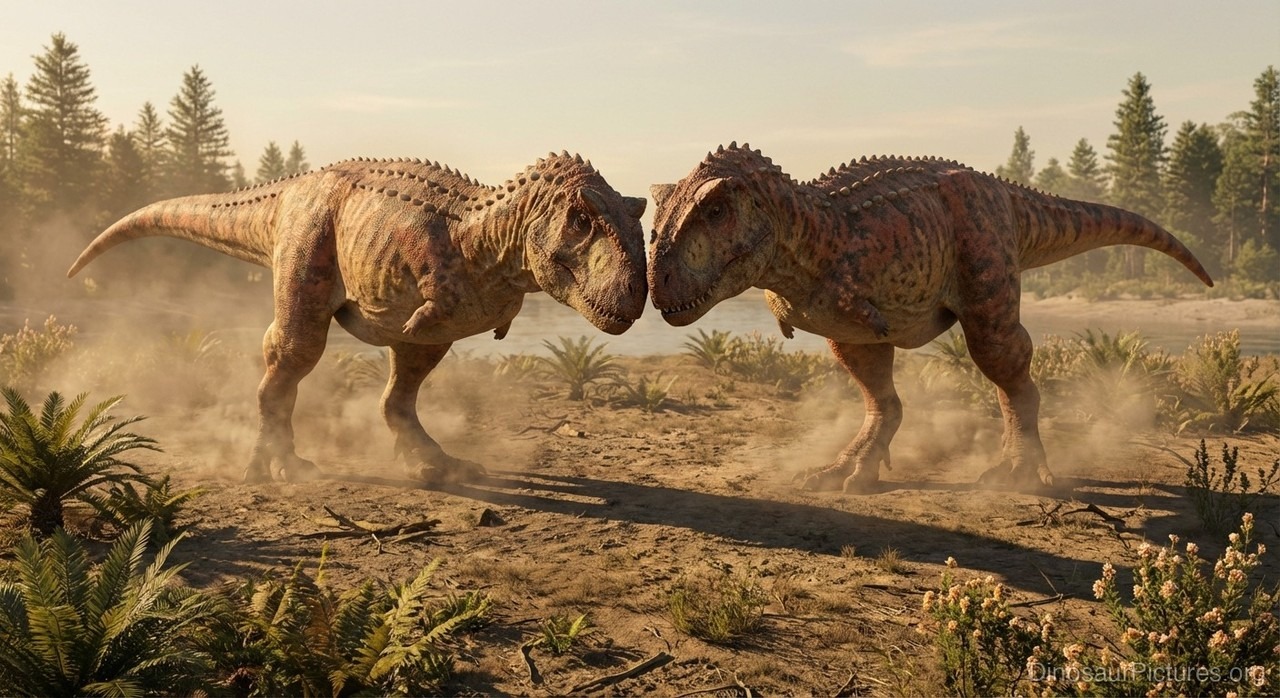
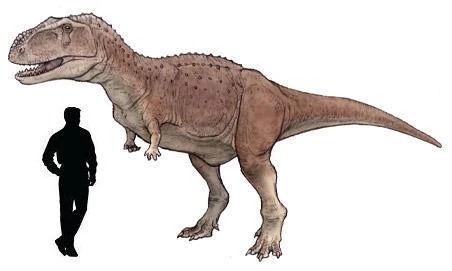
Abelisaurus comahuensis is the dinosaur that gave its name to the entire Abelisauridae family, one of the most successful predator groups of Gondwana. It lived during the Campanian stage of the Late Cretaceous, approximately 83 to 80 million years ago, in what is now Patagonia, Argentina. Known from a single partial skull discovered in 1983, it was a medium-sized bipedal theropod roughly 7.4 meters long and weighing about 1.5 metric tons. The skull, estimated at over 85 centimeters long, bears characteristic rough ridges and large fenestrae that reduced skull weight. Its more derived relatives, such as Carnotaurus and Majungasaurus, became far more famous, but it was Abelisaurus that opened the way for recognition of the entire lineage.
Geological formation & environment
The Anacleto Formation is a Campanian (83 to 80 Ma) geological unit, the youngest of the Neuquén Group and part of the Río Colorado Subgroup, with outcrops in the Argentine provinces of Mendoza, Río Negro, and Neuquén. Composed mainly of reddish and purplish intensely bioturbated mudstones, siltstones, and fine sandstones interbedded with calcareous beds, it records a meandering fluvial system with semiarid to semihumid paleoclimate and marked seasonality. The formation is celebrated for the Auca Mahuevo nesting site, with thousands of titanosaur eggs preserved with embryos, as well as Gasparinisaura and pterosaurs, painting a vivid picture of the ecosystem in which Abelisaurus comahuensis was the apex predator.
Image gallery




_01.jpg)


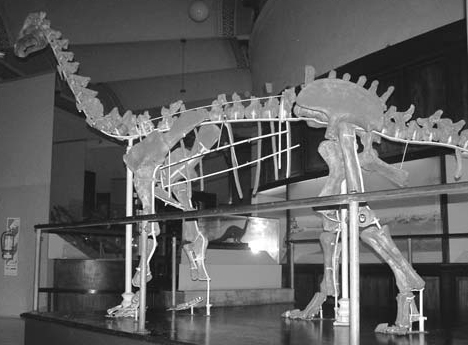

Fossilized skull of the Abelisaurus comahuensis holotype (MPCA 11098), photographed at the exhibition 'Dinosaurios de Patagonia' in Alicante, Spain, 2006. This is the only known fossil of the species.
Kokoo, CC BY-SA 2.5
Ecology and behavior
Habitat
Abelisaurus comahuensis inhabited the floodplains and margins of meandering rivers of the Anacleto Formation during the Campanian, 83 to 80 million years ago, in what is now Argentine Patagonia. The climate was semiarid to semihumid, with strong seasonality inferred from the presence of calcrete levels and frequent discharge channels. Vegetation included ferns, cycads, and conifers. The ecosystem was rich in large-bodied titanosaurs, ornithopods such as Gasparinisaura, and pterosaurs, as well as chelonians, mammals, and smaller crocodyliforms.
Feeding
As the apex predator of the Patagonian Campanian ecosystem, Abelisaurus comahuensis likely hunted medium- to large-bodied titanosaurs such as Neuquensaurus, Pellegrinisaurus, and Antarctosaurus. The tall, short skull with large antorbital fenestrae suggests fast, powerful bites, compensating for a lower bite force than tyrannosaurids with attack speed. Like other abelisaurids, it likely used its muscular neck to hold and shake prey after biting.
Behavior and senses
Based on fossil evidence from related abelisaurids, Abelisaurus was likely a solitary or semi-social predator. The rough ridges on the snout and orbits, analogous to keratin structures in other abelisaurids, suggest intraspecific signaling function for conspecific recognition or mate competition. There is no direct evidence of gregarious behavior in Abelisaurus, but abelisaurids such as Majungasaurus show conspecific bite marks on bones, suggesting occasional cannibalism or aggressive interactions between adults.
Physiology and growth
Although no postcranial bone of Abelisaurus is known, histological studies on related abelisaurids such as Aucasaurus reveal dynamic growth with well-defined annual growth marks, reaching somatic maturity around 11 years of life. Metabolism was likely high mesothermy, similar to other large theropods. The absence of functional forelimbs in abelisaurids more derived than Abelisaurus suggests that arm reduction began relatively early in the phylogeny and continued throughout the Cretaceous, without negative impact on the ecological success of the group.
Paleogeography
Continental configuration

Ron Blakey · CC BY 3.0 · Cretáceous, ~90 Ma
During the Campaniano (~83–80 Ma), Abelisaurus comahuensis inhabited Laramidia, the western half of present-day North America, separated from the east by the Western Interior Seaway, a shallow sea dividing the continent. The continents were in very different positions: India was drifting toward Asia, Antarctica was still connected to Australia, and South America was an isolated island.
Inventário de Ossos
The only known fossil is a partial skull (holotype MPCA 11098), lacking the lower jaw and with much of the right side and palate missing. The entire postcranial skeleton is inferred from other abelisaurids.
Found elements
Inferred elements
Scientific Literature
15 papers in chronological order — from the original description to recent research.
Abelisaurus comahuensis, n.g., n.sp., Carnosauria del Cretácico Tardío de Patagonia
Bonaparte, J.F. e Novas, F.E. · Ameghiniana
Foundational paper that described Abelisaurus comahuensis based on a partial skull collected in 1983 at the Lago Pellegrini quarries, Río Negro, Argentina. Bonaparte and Novas created not only the genus and species but also the family Abelisauridae, recognizing the morphological uniqueness of this Gondwanan theropod group. Published in volume 21 of Ameghiniana, the work was pioneering in identifying a lineage of predators that would dominate the Southern Hemisphere until the end of the Cretaceous.
Carnotaurus sastrei Bonaparte, the horned, lightly built carnosaur from the Middle Cretaceous of Patagonia
Bonaparte, J.F., Novas, F.E. e Coria, R.A. · Contributions in Science
Fundamental work that provided the first detailed vertebral description of a complete abelisaurid, Carnotaurus sastrei, systematically comparing its features with Abelisaurus comahuensis. The study consolidated the concept of Abelisauridae as a monophyletic group and documented for the first time the extreme forelimb reduction in this lineage. Comparisons with the skull of Abelisaurus helped define family synapomorphies, including a tall and short skull, large antorbital fenestrae, and a maxilla with variable tooth count.
The Phylogeny of Ceratosauria (Dinosauria: Theropoda)
Carrano, M.T. e Sampson, S.D. · Journal of Systematic Palaeontology
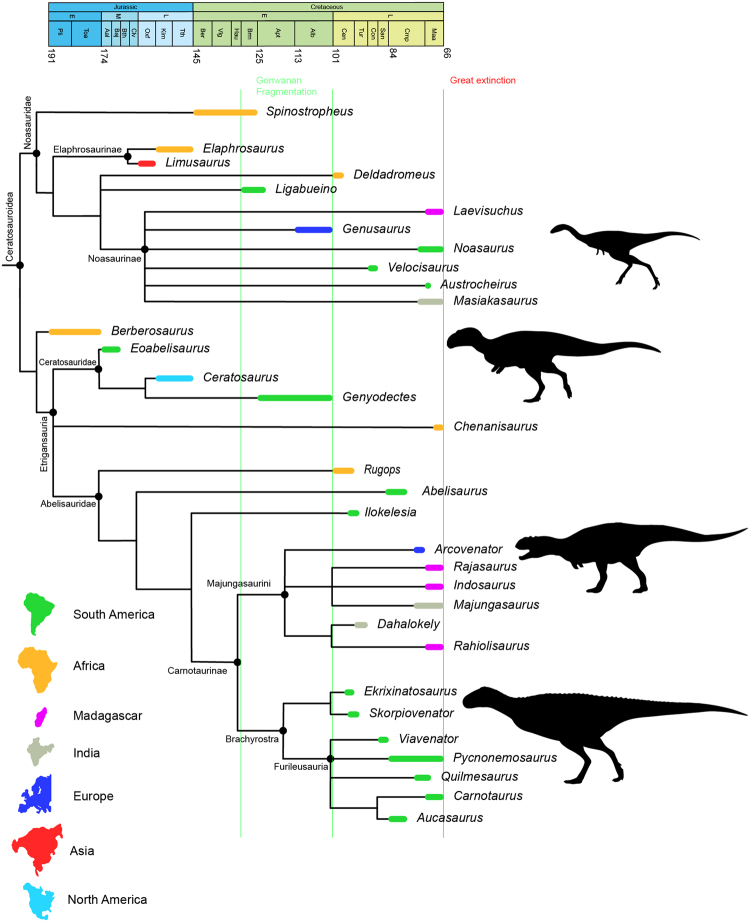
Comprehensive phylogenetic analysis of all Ceratosauria, placing Abelisaurus comahuensis within Abelisauridae and clarifying relationships among the major clades of the group. The study, published in the Journal of Systematic Palaeontology, is a fundamental reference for ceratosaur taxonomy, distinguishing exclusive synapomorphies of Abelisauridae and Noasauridae. Abelisaurus emerges as a basal taxon within the family, outside the more derived clade of carnotaurines, confirming its importance as a phylogenetic reference point for the entire lineage.
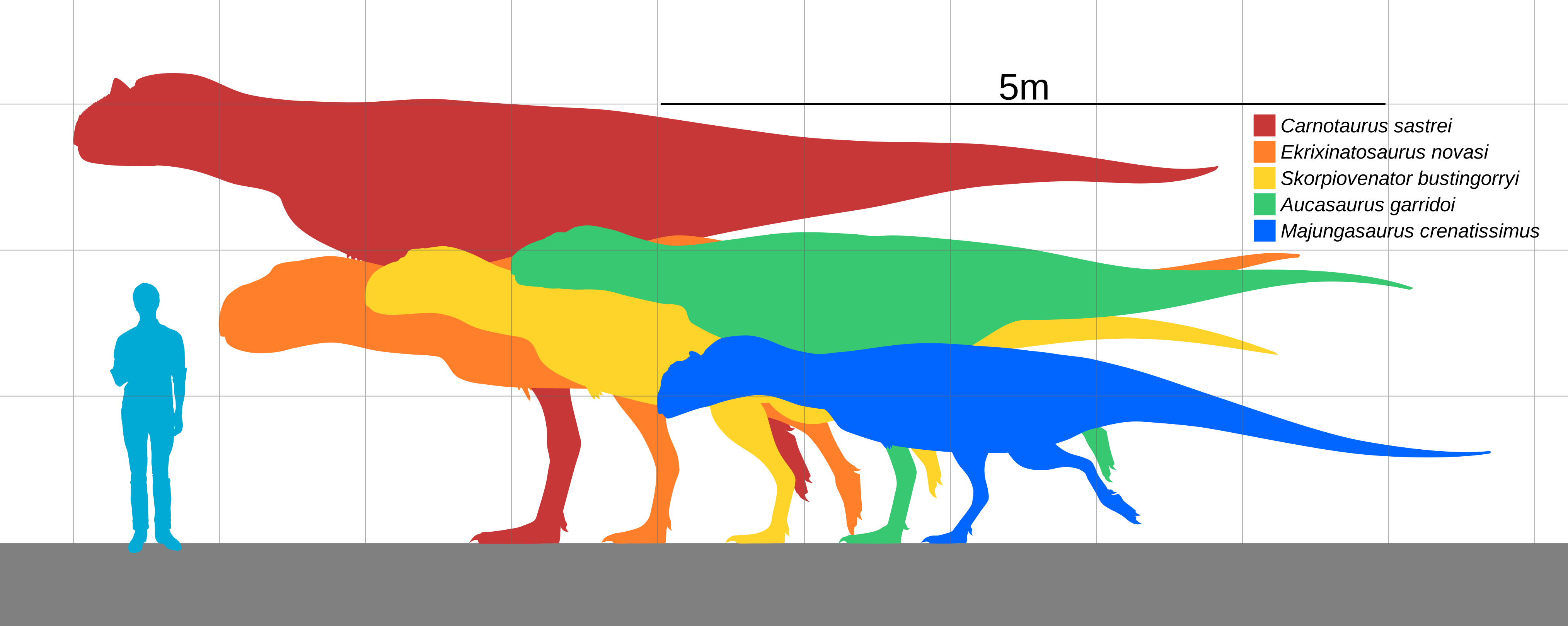

A new close relative of Carnotaurus sastrei Bonaparte, 1985 (Theropoda: Abelisauridae) from the Late Cretaceous of Patagonia
Coria, R.A., Chiappe, L.M. e Dingus, L. · Journal of Vertebrate Paleontology
Description of Aucasaurus garridoi, a new abelisaurid found in the same Anacleto Formation where Abelisaurus was discovered in Patagonia. The work provided a detailed phylogenetic analysis placing Aucasaurus close to Abelisaurus and establishing relationships within South American abelisaurids. In 2010, Gregory Paul proposed that Aucasaurus was a synonym of Abelisaurus garridoi, a proposal later rejected by other researchers who identified distinct morphological differences in the neurocranium, particularly in the floccular recess and cerebral flexure.

New carnivorous dinosaur from the Late Cretaceous of NW Patagonia and the evolution of abelisaurid theropods
Canale, J.I., Scanferla, C.A., Agnolín, F.L. e Novas, F.E. · Naturwissenschaften
Description of Skorpiovenator bustingorryi, a new abelisaurid from Patagonia, accompanied by a phylogenetic analysis that introduced the clade Brachyrostra for the more derived South American abelisaurids. The analysis placed Abelisaurus comahuensis as a basal taxon, outside Brachyrostra, consolidating its position as one of the earliest representatives of the family. The work also discussed evolutionary trends of the skull, forelimbs, and locomotor elements within the lineage, contributing to the understanding of abelisaurid diversification in Gondwana.

Ceratosaur palaeobiology: new insights on evolution and ecology of the southern rulers
Delcourt, R. · Scientific Reports
Comprehensive review of the paleobiology of all ceratosaurs, with direct analysis of the skull of Abelisaurus comahuensis (MPCA 11098). The author examined the specimen firsthand and documented important taphonomic distortion in the snout and posterior skull region, which affects estimates of proportions. The study also discusses the ecological implications of abelisaurid cranial features, including the function of the rough ridges on the snout, which likely supported keratin structures for intraspecific display, behavior analogous to that observed in modern crocodilians.
A New Furileusaurian Abelisaurid from La Invernada (Upper Cretaceous, Santonian, Bajo De La Carpa Formation), Northern Patagonia, Argentina
Gianechini, F.A., Méndez, A.H., Filippi, L.S., Paulina-Carabajal, A., Juárez-Valieri, R.D. e Garrido, A.C. · Journal of Vertebrate Paleontology
Description of Llukalkan aliocranianus, a new abelisaurid from the Santonian of Patagonia, accompanied by a comprehensive phylogenetic analysis that placed Abelisaurus comahuensis as a basal taxon within Abelisauridae, outside the clade Furileusauria to which Carnotaurus, Aucasaurus, and Llukalkan itself belong. The study demonstrated that the clade Furileusauria is characterized by a differentiated inner ear cavity, reinforcing Abelisaurus's position as a primitive abelisaurid that retained ancestral family characteristics.

An exceptional neurovascular system in abelisaurid theropod skull: New evidence from Skorpiovenator bustingorryi
Cerroni, M.A., Canale, J.I., Novas, F.E. e Paulina-Carabajal, A. · Journal of Anatomy
Detailed study of the neurovascular system of abelisaurid skulls using computed tomography of Skorpiovenator bustingorryi, with direct comparison to Abelisaurus comahuensis and other family members. The work identified two distinct patterns of nasal canaliculi: Pattern A (Abelisaurus and Carnotaurus) and Pattern B (Skorpiovenator and Majungasaurus), suggesting functional differences in sensory detection. Analysis of the Abelisaurus skull contributed to understanding how these neurovascular canals, likely related to heat detection and facial sensitivity, evolved throughout the family.

Dinosaur Speed Demon: The Caudal Musculature of Carnotaurus sastrei and Implications for the Evolution of South American Abelisaurids
Persons IV, W.S. e Currie, P.J. · PLOS ONE
Analysis of the caudal musculature of Carnotaurus sastrei using three-dimensional modeling, with implications for running speed and locomotor evolution of South American abelisaurids. The study demonstrated that Carnotaurus was likely the fastest large-bodied theropod of its time, and traced the locomotor phylogeny within the clade that includes Abelisaurus as a basal member. Reconstruction of the muscular tail and inferences about locomotion help understand how the abelisaurid lineage, initiated with Abelisaurus, evolved into increasingly specialized forms for running and hunting in open terrain.

The Late Cretaceous nesting site of Auca Mahuevo (Patagonia, Argentina): Eggs, nests, and embryos of titanosaurian sauropods
Chiappe, L.M., Coria, R.A., Jackson, F. e Dingus, L. · Palaeovertebrata
Study of the extraordinary nesting site of Auca Mahuevo, located in the Anacleto Formation of Patagonia, the same geological unit where Abelisaurus comahuensis was found. The work described thousands of titanosaur eggs with preserved embryos, representing direct evidence of sauropod reproductive behavior that were likely the main prey of Abelisaurus. The faunal richness documented by Chiappe et al. allows reconstruction of the Campanian ecosystem where Abelisaurus lived, with large herds of titanosaurs and their abelisaurid predators.

Myology of the forelimb of Majungasaurus crenatissimus (Theropoda, Abelisauridae) and the morphological consequences of extreme limb reduction
Burch, S.H. · Journal of Anatomy
Detailed reconstruction of the forelimb musculature of Majungasaurus crenatissimus, the Madagascar abelisaurid, with comparisons to other family members including Abelisaurus. The study demonstrated how the extreme arm reduction in abelisaurids resulted in profound muscular transformations, with loss of entire muscles and marked anatomical simplification. Since Abelisaurus represents a more primitive stage of this lineage, the inferences about Majungasaurus musculature help reconstruct how the forelimbs of Abelisaurus were functionally organized.


A Middle Jurassic abelisaurid from Patagonia and the early diversification of theropod dinosaurs
Pol, D. e Rauhut, O.W.M. · Proceedings of the Royal Society B
Description of Eoabelisaurus mefi, the oldest known abelisaurid, from the Middle Jurassic of Patagonia, which extended the family's fossil record by more than 40 million years before Abelisaurus. The study provided a biogeographic and evolutionary context for the origin of abelisaurids in Gondwana and demonstrated that the reduced forelimbs, one of the most striking features of the family, were already developing in the Middle Jurassic. These data allow contextualizing Abelisaurus comahuensis as part of a long evolutionary history of Gondwanan predators.


The hand structure of Carnotaurus sastrei (Theropoda, Abelisauridae): implications for hand diversity and evolution in abelisaurids
Ruiz, J., Torices, A., Serrano, H. e López, V. · Palaeontology
Detailed analysis of the hand structure of Carnotaurus sastrei, revealing that abelisaurids show considerable morphological diversity in forelimbs despite overall reduction. The study documented four digits in the hand of Carnotaurus, including a conical metacarpal IV without phalanx articulation, and discussed the implications for arm function and evolution across the entire Abelisauridae family. Since Abelisaurus is the type member of the family, these data on forelimbs are especially relevant for reconstructing the appearance and function of the animal described in 1985.


New Patagonian Cretaceous theropod sheds light about the early radiation of Coelurosauria
Novas, F.E., Ezcurra, M.D., Agnolín, F.L., Pol, D. e Ortíz, R. · Revista del Museo Argentino de Ciencias Naturales
Analysis of the radiation of coelurosaur theropods in Patagonia during the Cretaceous, offering relevant biogeographic and stratigraphic context for understanding the Campanian ecosystem of the Anacleto Formation, where Abelisaurus comahuensis was found. The work discusses dinosaur communities that coexisted in the region and the paleoclimatic conditions that favored predator diversification. Although focused on coelurosaurs, the study indirectly contributes to understanding the ecological position of Abelisaurus as an apex predator of the ecosystem.


First definitive abelisaurid theropod from the Late Cretaceous of Northwestern Argentina
Agnolín, F.L., Manabe, M., Tsuihiji, T. e Novas, F.E. · Journal of Vertebrate Paleontology
Description of Guemesia ochoai, the first confirmed abelisaurid from Northwestern Argentina (Olmedo Formation, Maastrichtian), with a comprehensive phylogenetic analysis that included Abelisaurus comahuensis as an essential comparison group. The study is relevant for understanding the biogeography and dispersal of abelisaurids across northwestern Argentina, and contributes to understanding how the group diversified throughout the Late Cretaceous. Guemesia is one of the most recent discoveries of Argentine abelisaurids, demonstrating that the family still has unknown representatives awaiting description.


Espécimes famosos em museus
MPCA 11098 (holótipo)
Museo Provincial Carlos Ameghino (Museo de Cipolletti), Cipolletti, Río Negro, Argentina
Only known fossil of Abelisaurus comahuensis: a partial skull 856 mm long, missing the lower jaw, much of the right side and almost all of the palate. The specimen is the holotype and only known representative of the species and genus.
Réplica de exposição
Museo Paleontológico de Castilla-La Mancha, Cuenca, Espanha
Full-scale model of Abelisaurus comahuensis displayed in Cuenca, Spain, alongside a replica of Lohuecotitan pandafilandi. The reconstruction is based on the holotype skull and body proportions of related abelisaurids such as Carnotaurus and Aucasaurus.
In cinema and popular culture
Abelisaurus comahuensis occupies a singular position in pop culture: it is the nominal ancestor of an entire family of predatory dinosaurs that includes Carnotaurus, the star of Dinosaur Revolution (2011) and The Fallen Kingdom (2018), as well as Majungasaurus, the protagonist of several documentary episodes. Abelisaurus itself gained prominence in the Jurassic World franchise when it appeared on the CIA tracker in Dominion (2022) and, more recently, as a character and official merchandise in Jurassic World: Rebirth (2025), with a 12-inch Mattel toy. Before that, it featured in the educational catalog of the Jurassic Park Institute (2002), being the first dinosaur in alphabetical order in the franchise. Its media presence is inversely proportional to its fossil record: while it is depicted with increasing frequency in films and products, it remains known from only a single partial skull. Ironically, it is its phylogenetic position as the type member of Abelisauridae that ensures visibility for the genus, as more complete relatives like Carnotaurus are frequently presented as visual representatives of the entire lineage.

Classificação

Descoberta
Curiosidade
Abelisaurus is the dinosaur that gave its name to an entire family of predators that dominated the Southern Hemisphere for more than 50 million years, yet it is known from only a single fossil: a partial skull without a lower jaw. Paradoxically, the 'patriarch of the family' is one of its anatomically least-known members.