
Allosaurus
Allosaurus fragilis
"Fragile different lizard"
Sobre esta espécie
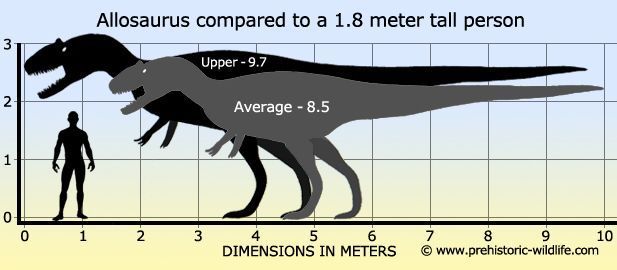
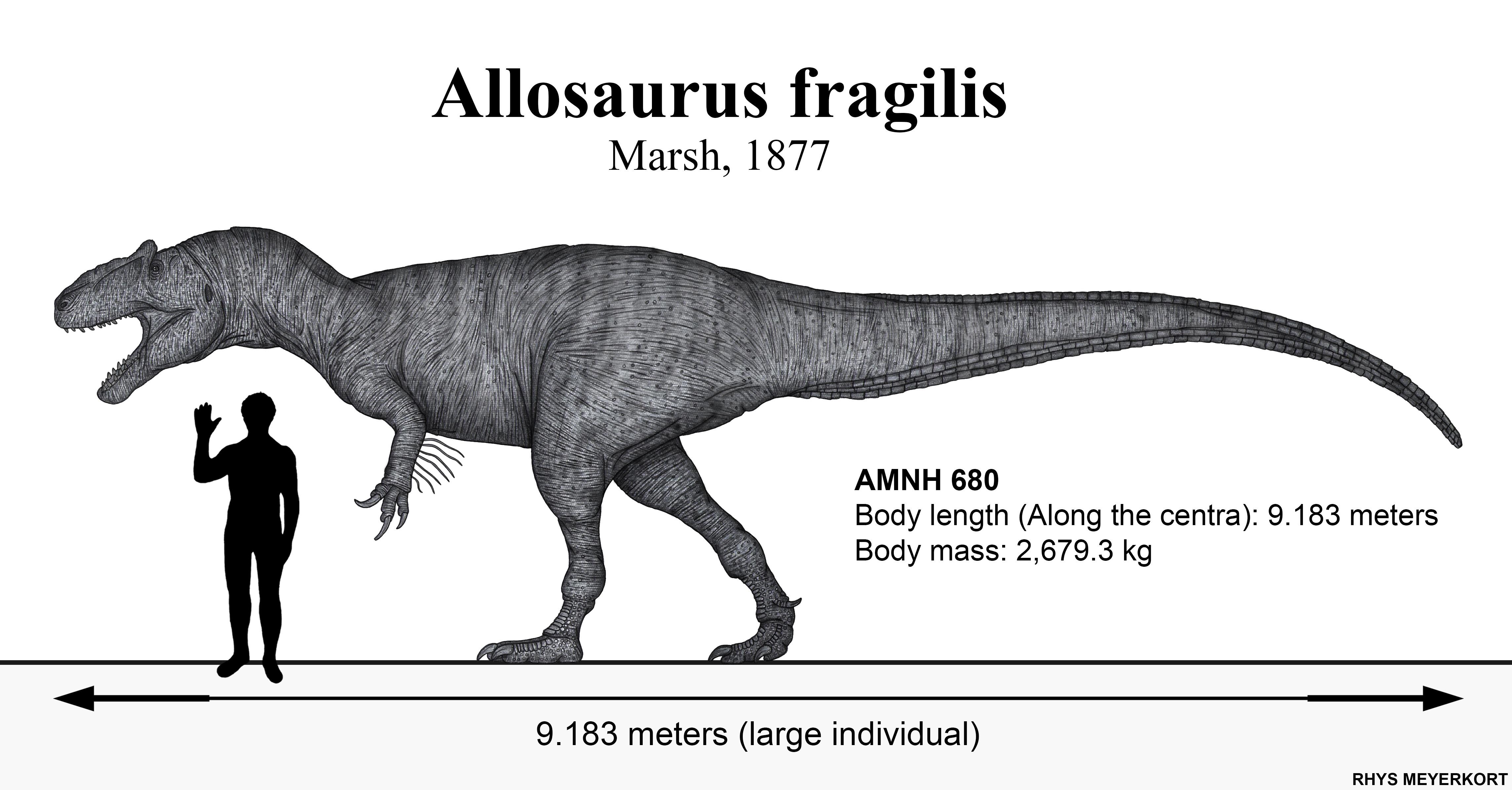
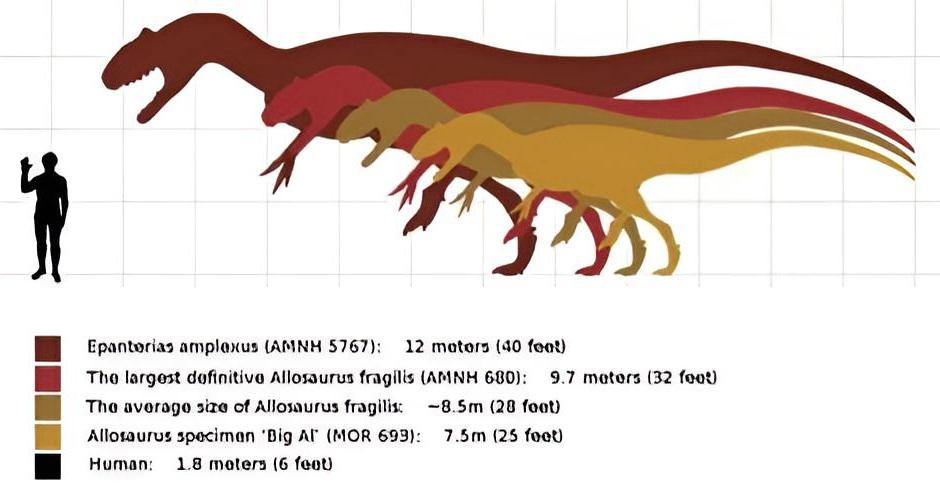
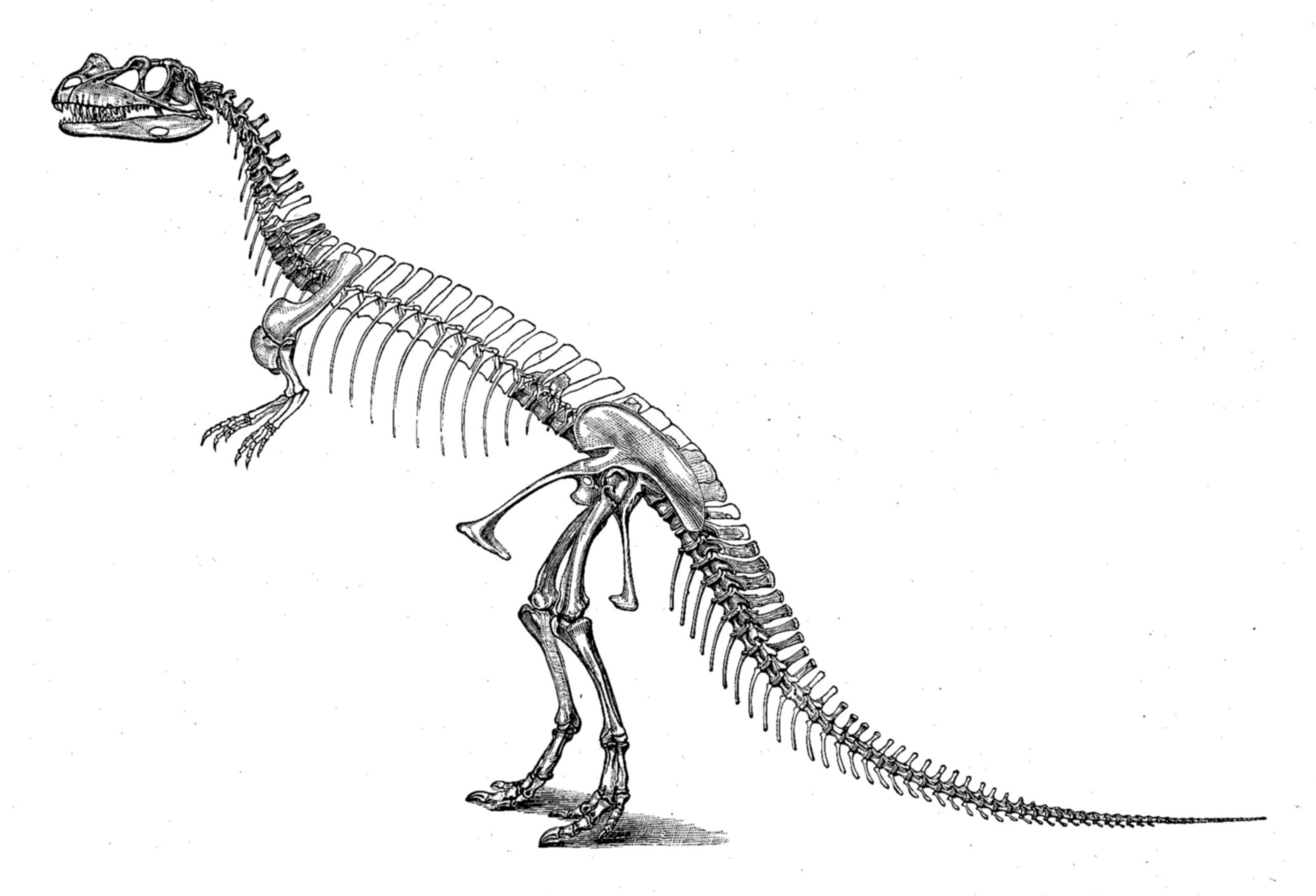
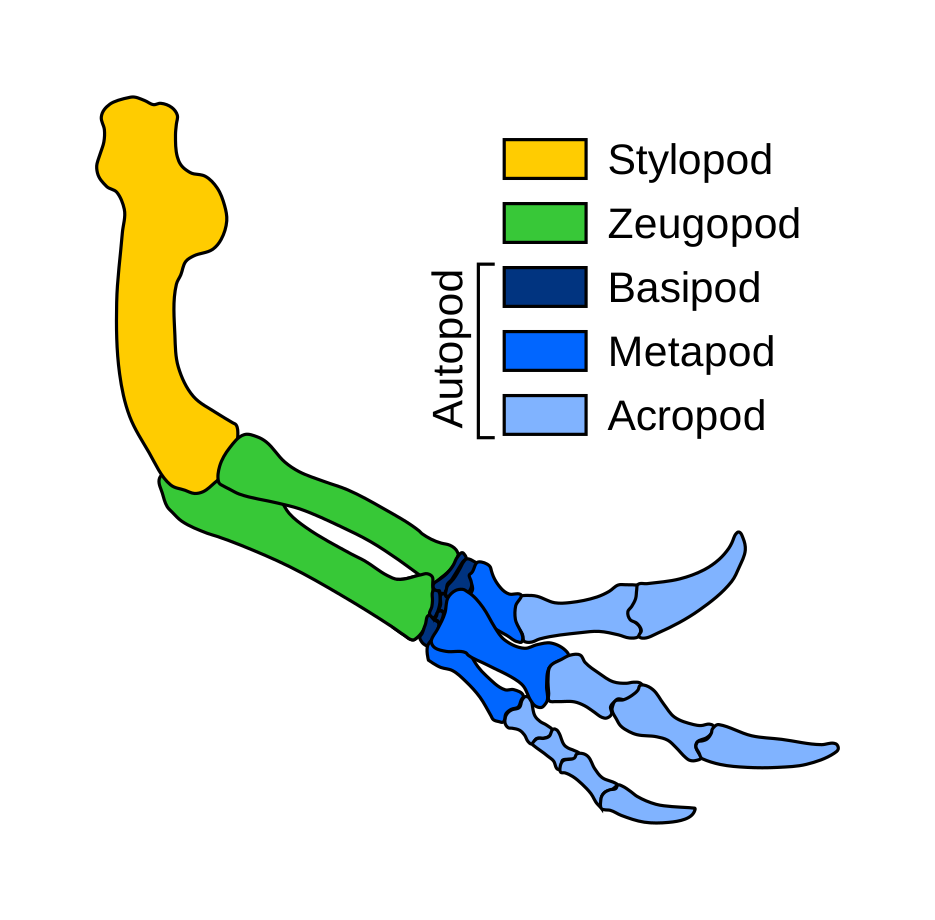
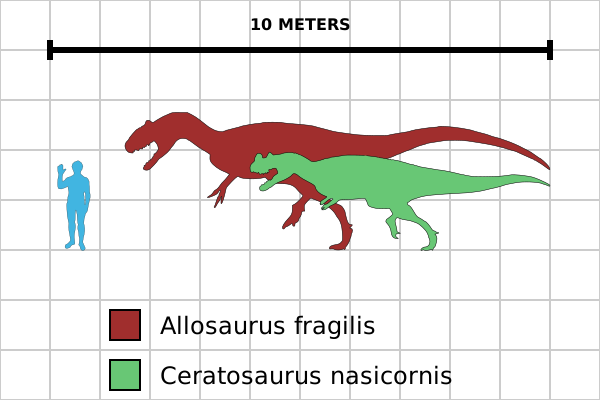
Allosaurus fragilis was the apex predator of the Morrison Formation in the Late Jurassic, 155 to 150 million years ago. Up to 10.5 meters long and weighing around 2,300 kg, it was the largest carnivore in its ecosystem. Its skull was lightweight and highly fenestrated, reducing weight without sacrificing strength. Finite element analyses revealed the skull was designed to withstand vertical and horizontal tensile forces, suggesting a hatchet-style attack with the upper jaws rather than a simple closing bite. It had three fingers on each hand with curved claws up to 25 centimeters long. The Cleveland-Lloyd Quarry 9 in Utah has yielded over 10,000 Allosaurus bones, making it the best-sampled theropod in North America. It was the primary predator of juvenile sauropods, ornithopods, and stegosaurs.
Geological formation & environment
The Morrison Formation is an Upper Jurassic sedimentary unit (Kimmeridgian-Tithonian, 156 to 147 Ma) covering over 1.5 million km² in the western United States. For Allosaurus, the most important sites are Cleveland-Lloyd Dinosaur Quarry 9 (Utah), Dinosaur National Monument (Utah/Colorado), and Felch Quarry 1 (Colorado). Cleveland-Lloyd produced over 10,000 bones from at least 74 Allosaurus individuals, an anomalous concentration explained by a mud trap. The Morrison fauna includes exceptional diversity of sauropods, ornithopods, stegosaurs, and other theropods such as Ceratosaurus and Torvosaurus.
Image gallery


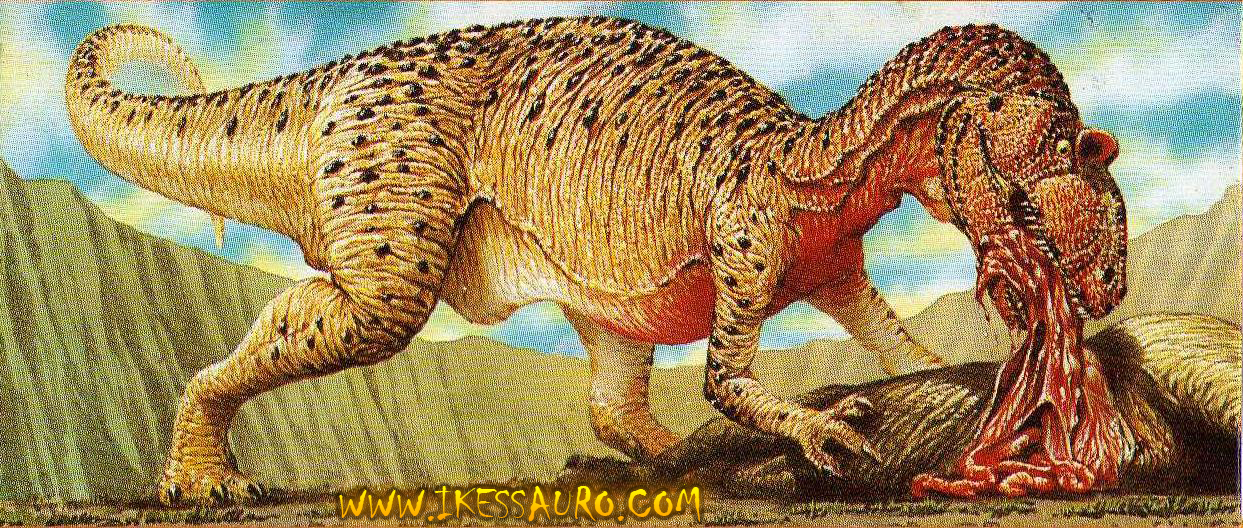
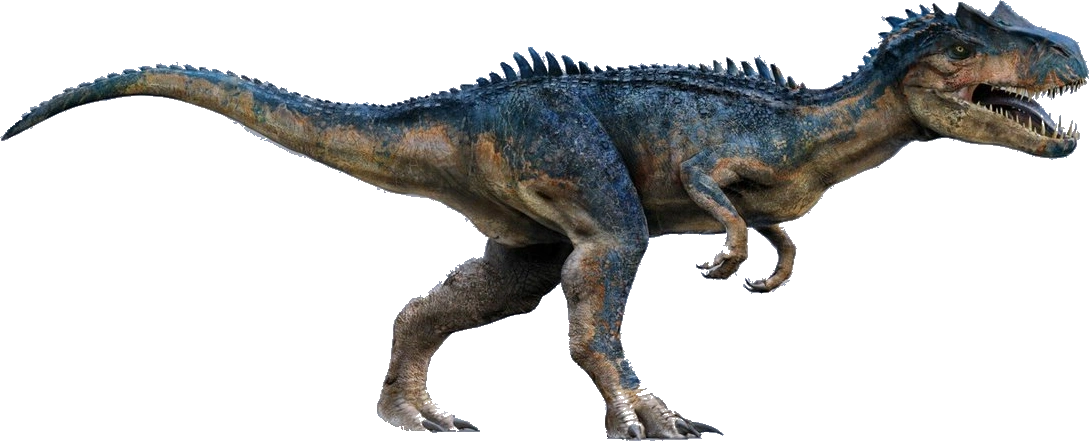
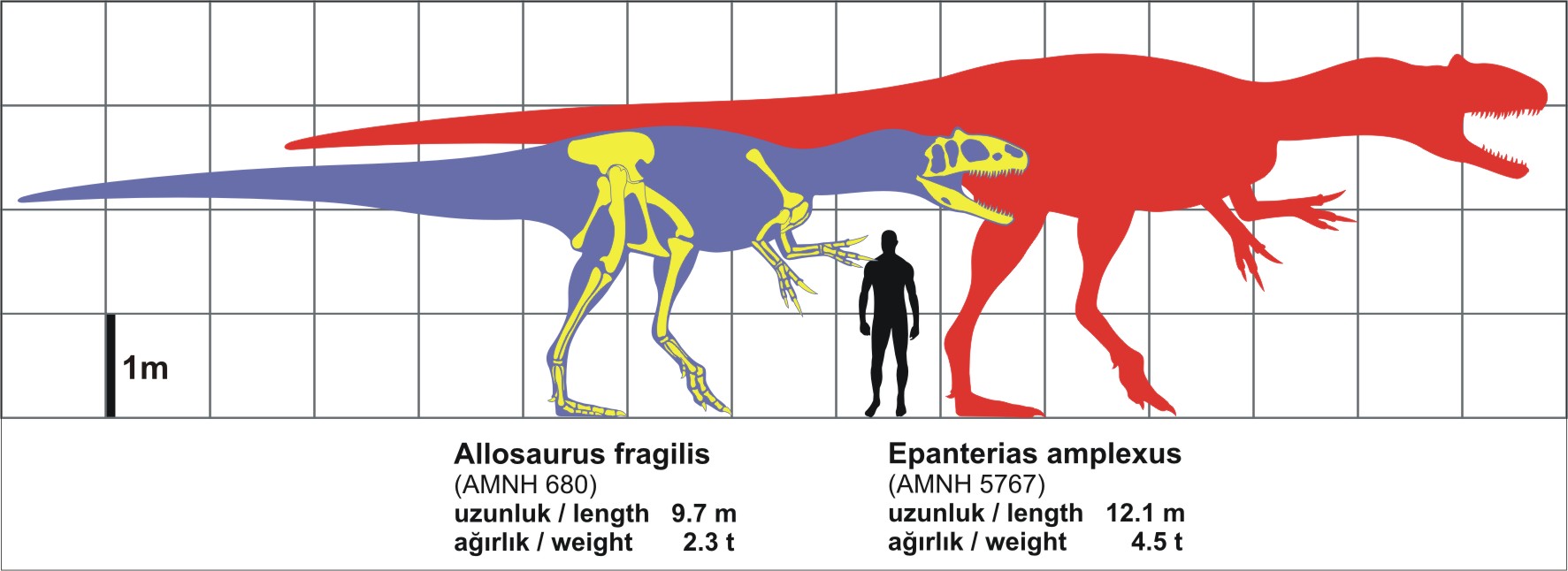
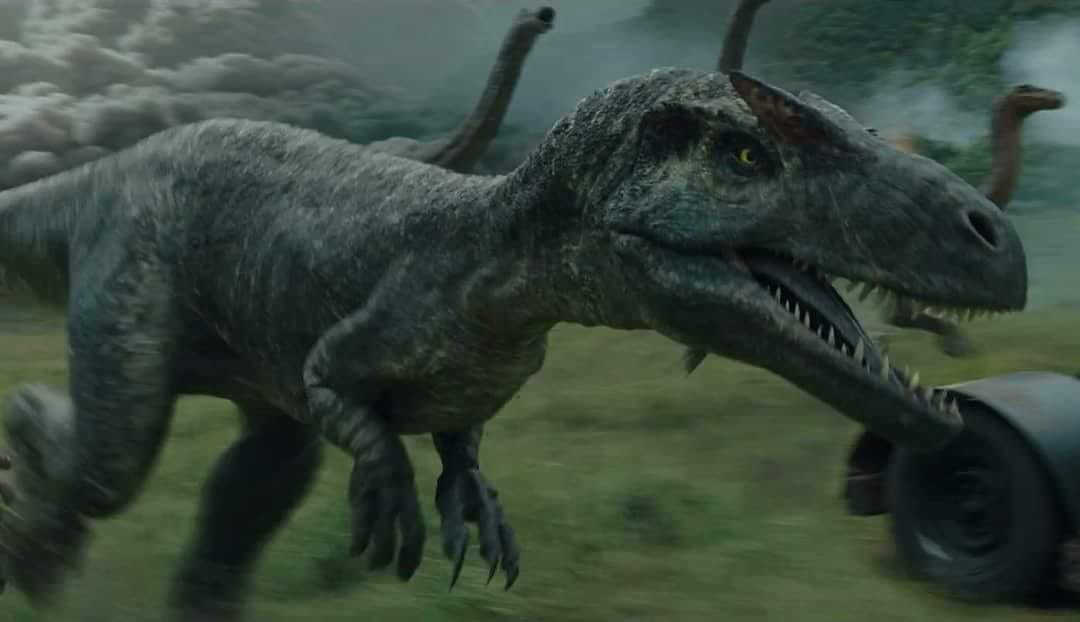
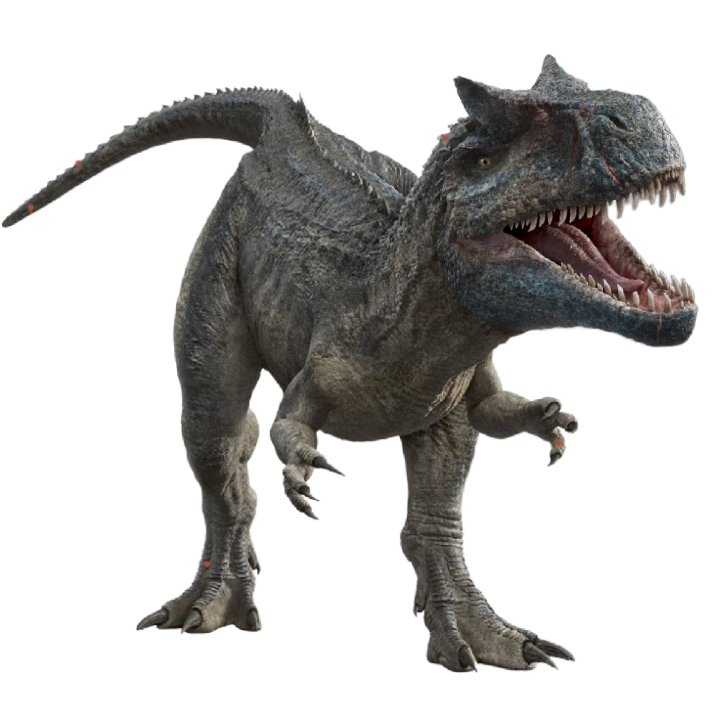
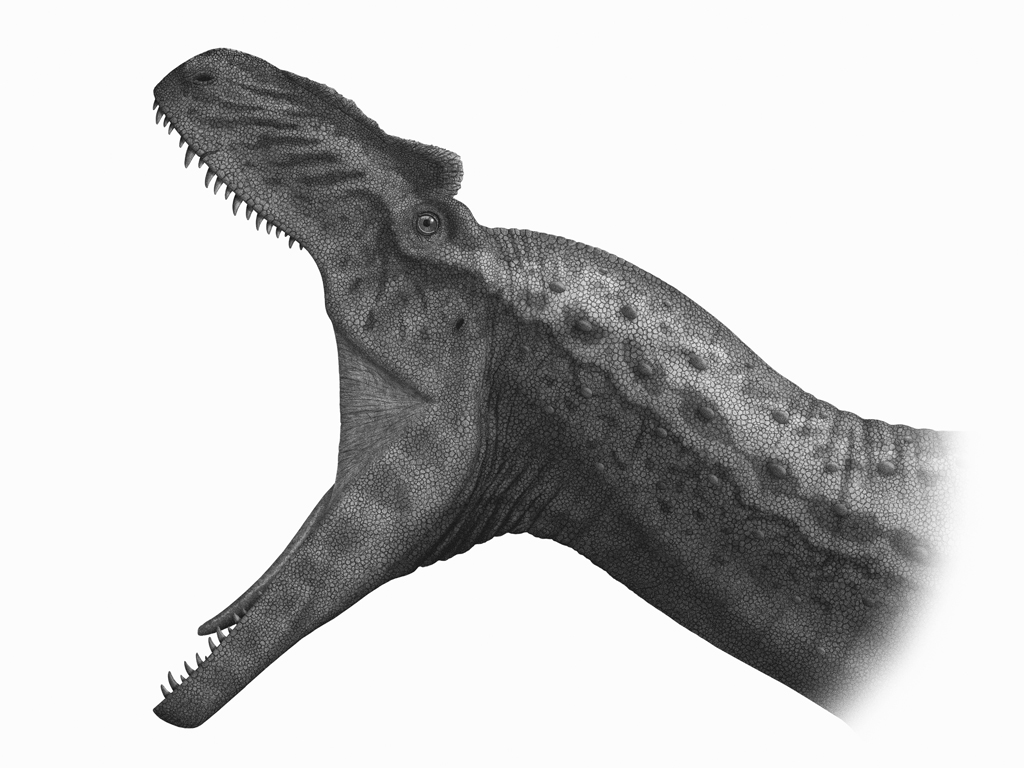
Life reconstruction of Allosaurus fragilis by Fred Wierum (2016), showing the modern horizontal posture and detailed morphology.
Fred Wierum, CC BY-SA 4.0
Ecology and behavior
Habitat
Allosaurus fragilis inhabited the semi-arid floodplains and river plains of the Morrison Formation, sharing its ecosystem with the largest sauropods ever: Apatosaurus, Diplodocus, Brachiosaurus, and Camarasaurus. The climate was seasonal, with intense dry periods and periodic floods that created natural mud traps. Taphonomic studies of Cleveland-Lloyd Quarry 9 suggest the site functioned as a mud trap: prey became stuck and attracted Allosaurus, which in turn also became trapped (Drumheller et al., 2021). The geographic distribution of Allosaurus covered almost the entire extent of the Morrison Formation in Utah, Colorado, Wyoming, Montana, and South Dakota, and related species were recorded in Portugal, indicating a trans-Atlantic land connection in the Jurassic.
Feeding
Allosaurus cranial biomechanics were studied in detail using computed tomography and finite element analysis. The result showed the skull was not optimized for a high-force closing bite like T. rex, but rather to withstand vertical tensile forces: the predator opened its mouth maximally and brought down the upper jaws like a hook or hatchet, tearing flesh rather than crushing it (Rayfield et al., 2001). Bite marks on Stegosaurus and sauropod bones confirm active predation. Estimates indicate Allosaurus was not the primary predator of adult sauropods but hunted juveniles and sick individuals. Isotope analyses of teeth suggest a diverse diet including ornithopods, stegosaurs, and sauropod carrion.
Behavior and senses
Allosaurus behavior is inferred from bite marks, taphonomic patterns, and comparison with modern crocodilians and birds. Bite mark evidence on Apatosaurus and Stegosaurus bones indicates active predation and opportunistic scavenging. The cooperative pack-hunting hypothesis is controversial: Cleveland-Lloyd Quarry shows multiple individuals, but this may reflect aggregation around resources, not coordinated hunting (Drumheller et al., 2021). The presence of sclerotic rings (eye rings) in related specimens suggests Allosaurus had sharp vision, possibly including nocturnal vision. Histological analysis indicates Allosaurus reached sexual maturity around age 10 and maximum longevity of 22 to 28 years.
Physiology and growth
Allosaurus physiology combines intermediate metabolic features confirmed by bone histology. Studies of growth lines (LAGs) reveal accelerated growth rates in the juvenile phase, followed by deceleration in adulthood, similar to the pattern of large theropods like Tyrannosaurus. Core body temperature was likely above ambient, indicating some degree of endothermy (Rayfield et al., 2001). The highly fenestrated skull and pneumatized skeleton (hollow bones filled with air sacs) reduced the animal's total weight without compromising structural strength, a feature that links Allosaurus evolutionarily to birds. The hand claws, up to 25 cm long, were used to grasp prey. Maximum estimated speed was 30 to 35 km/h for adults, making it a more agile predator than T. rex.
Paleogeography
Continental configuration

Ron Blakey · CC BY 3.0 · Jurassic, ~90 Ma
Fóssil sites
Fred Wierum, CC BY-SA 4.0
During the Kimmeridgiano-Titoniano (~155–150 Ma), Allosaurus fragilis inhabited the fragmenting Pangea. North America and Europe were still close, and the North Atlantic was just beginning to open. Climate was warm and humid globally, with no polar ice caps.
Inventário de Ossos
Based on multiple specimens primarily from the Cleveland-Lloyd Quarry 9 in Utah, which alone yielded over 10,000 Allosaurus bones. The holotype specimen YPM 1930 was fragmentary, but the species is now known from material so complete that the entire anatomy can be reconstructed with high confidence. Specimen USNM 4734 from Dinosaur National Monument is among the most complete.
Found elements
Inferred elements
Scientific Literature
15 papers in chronological order — from the original description to recent research.
Notice of new dinosaurian reptiles from the Jurassic Formation
Marsh, O.C. · American Journal of Science
Founding paper in which Marsh describes Allosaurus fragilis based on material collected by Mudge and Williston in Colorado. Marsh recognizes the animal as a large theropod distinct from previously described carnivorous dinosaurs, establishing the genus and species based on vertebrae and fragmentary elements. The name 'different lizard' reflects the unusual vertebra morphology with pneumatic cavities unusual for the era.

Osteology of the carnivorous Dinosauria in the United States National Museum, with special reference to the genera Antrodemus (Allosaurus) and Ceratosaurus
Gilmore, C.W. · United States National Museum Bulletin
Fundamental osteological monograph by Gilmore describing in detail the complete Allosaurus skeleton (published as Antrodemus in this period). Gilmore systematically documents all elements, establishes correct anatômical proportions, and extensively compares with Ceratosaurus. This work provided the anatômical foundation on which decades of later research was built, remaining an essential reference until Madsen's 1976 monograph.


Allosaurus fragilis: a revised osteology
Madsen, J.H. · Utah Geológical Survey Bulletin
Madsen's monograph based on extraordinary material from Cleveland-Lloyd Quarry 9, Utah, with over 10,000 bones from at least 74 individuals. The work reestablishes Allosaurus as the valid name, provides the most complete skeletal reconstruction to date, and documents intraspecific variation. It became the standard anatômical reference for Allosaurus for decades and is the most cited taxonomic work on the species.


A morphometric analysis of Allosaurus
Smith, D.K. · Journal of Vertebrate Paleontology
Smith applies multivariate morphometric analysis to the extensive Allosaurus material to evaluate intraspecific variation, sexual dimorphism, and species validity. Results indicate continuous variation within the species, without clear evidence of sexual dimorphism or multiple sympatric species. The work provides the statistical foundation for evaluating how many Allosaurus species are truly valid in the Morrison Formation.

On the presence of Allosaurus fragilis (Theropoda: Carnosauria) in the Upper Jurassic of Portugal: first evidence of an intercontinental dinosaur species
Pérez-Moreno, B.P., Chure, D.J., Pires, C., Marques da Silva, C., dos Santos, V., Dantas, P., Póvoas, L., Cachão, M., Sanz, J.L. & Galopim de Carvalho, A.M. · Journal of the Geológical Society
Pérez-Moreno and colleagues describe the first record of Allosaurus fragilis outside North America, based on isolated teeth and postcranial material from the Upper Jurassic of Lourinhã, Portugal. The work establishes A. fragilis as the first dinosaur species known simultaneously from both Europe and North America, implying a terrestrial connection between the two continents during the Late Jurassic and opening debate on transatlantic dinosaur biogeography.


Biostratigraphy of dinosaurs in the Upper Jurassic Morrison Formation of the western Interior, U.S.A.
Turner, C.E. & Peterson, F. · New Mexico Museum of Natural History and Science Bulletin
Turner and Peterson construct the biostratigraphic framework for the Morrison Formation, identifying vertical distribution zones for Allosaurus and other species. The work documents that Allosaurus was the dominant large theropod of the Morrison throughout almost the entire Late Jurassic, and analyzes the geographic and temporal distribution patterns of different species and morphotypes within the formation.


A new species of Allosaurus from the Morrison Formation of Dinosaur National Monument (Utah-Colorado) and a revision of the theropod family Allosauridae
Chure, D.J. · Columbia University PhD Dissertation
Chure's doctoral dissertation describing Allosaurus jimmadseni as a new species and revising family Allosauridae. The work analyzes morphological variation within the genus, distinguishes diagnostic features between A. fragilis and A. jimmadseni, and revises phylogenetic relationships of Allosauridae. This research would be formalized in the published description of A. jimmadseni by Chure and Loewen in 2020.


Cranial design and function in a large theropod dinosaur
Rayfield, E.J., Norman, D.B., Horner, C.C., Horner, J.R., Smith, P.M., Thomason, J.J. & Upchurch, P. · Nature
Rayfield and colleagues apply finite element analysis (FEA) to the Allosaurus skull, creating the first complete FEA model of a theropod. The result is the discovery that the skull was designed to withstand axial tensile forces, not for closing bite. This suggests a hatchet or hook-style attack technique tearing soft tissue rather than crushing bones, revolutionizing understanding of Allosaurus predatory behavior.


Forelimb biomechanics of nonavian theropod dinosaurs in predation
Carpenter, K. · Senckenbergiana lethaea
Carpenter analyzes forelimb biomechanics of non-avian theropods including Allosaurus in predation of sauropods. The study models shoulder and arm muscles and calculates claw gripping force. For Allosaurus, demonstrates that forelimbs were sufficiently powerful to restrain smaller prey, but were a secondary tool in the predatory arsenal, with the head being the primary weapon.

Using finite-element analysis to investigate suture morphology: a case study using large carnivorous dinosaurs
Rayfield, E.J. · The Anatômical Record Part A
Rayfield deepens the FEA analysis of the Allosaurus skull, specifically investigating the function of cranial sutures. Results demonstrate that sutures distribute and absorb mechanical stress during attack loads, functioning as shock absorbers. The highly fenestrated and sutured Allosaurus skull was an elegant engineering solution of maximum strength with minimum weight, confirming the attack model proposed in 2001.


Sizing the Jurassic theropod dinosaur Allosaurus: assessing growth strategy and evolution of ontogenetic scaling of limbs
Bybee, P.J., Lee, A.H. & Lamm, E.-T. · Journal of Morphology
Bybee, Lee, and Lamm analyze bone histology from an ontogenetic series of Allosaurus humeri, ulnae, femora, and tíbiae to determine growth strategy and limb allometric scaling. Maximum growth occurred around age 15, with a mass increase of 148 kg per year. Sexual maturity was estimated between ages 13 and 19, with maximum longevity of 22 to 28 years. The limb allometric pattern is similar to that of tyrannosaurids.


Hindlimb allometry in the Late Jurassic theropod dinosaur Allosaurus, with comments on its abundance and distribution
Foster, J.R. & Chure, D.J. · New Mexico Museum of Natural History and Science Bulletin
Foster and Chure analyze hindlimb allometry in Allosaurus using extensive material from Cleveland-Lloyd and other sites. The study demonstrates that hindlimbs show negative allometry, with juveniles being proportionally more gracile. The authors estimate running speed of ~30 km/h for adults and discuss the unusual distribution and abundance of Allosaurus in the Morrison Formation.


A new clade of archaic large-bodied predatory dinosaurs (Theropoda: Allosauroidea) that survived to the latest Mesozoic
Benson, R.B.J., Carrano, M.T. & Brusatte, S.L. · Naturwissenschaften
Benson, Carrano, and Brusatte describe Allosauroidea as a clade that survived to the end of the Mesozoic through megaraptorans and carcharodontosaurids. Phylogenetic analysis positions Allosaurus as a basal member of Allosauroidea, with implications for understanding the radiation of large carnivorous theropods from Jurassic to Cretáceous. The study reveals that Allosaurus descendants dominated terrestrial ecosystems on multiple continents.

Cranial anatomy of Allosaurus jimmadseni, a new species from the lower part of the Morrison Formation (Upper Jurassic) of Western North America
Chure, D.J. & Loewen, M.A. · PeerJ
Chure and Loewen formalize the description of Allosaurus jimmadseni as a species distinct from A. fragilis based on exceptionally complete cranial material from the Natural History Museum of Utah. The study provides the most detailed anatômical analysis of any Allosaurus specimen and demonstrates that the two species coexisted in the Morrison at slightly different time intervals, with A. jimmadseni being older.


High frequencies of theropod bite marks provide evidence for feeding, scavenging, and possible cannibalism in a stressed Late Jurassic ecosystem
Drumheller, S.K., McHugh, J.B., Kane, M., Riedel, A. & D'Amore, D.C. · PLOS ONE
Drumheller and colleagues analyze the high frequency of theropod bite marks on Cleveland-Lloyd material, including marks attributable to Allosaurus on conspecific bones. The study documents evidence of predation, scavenging, and possible cannibalism in the stressed ecosystem represented by the site. The abnormally high frequency of bite marks suggests periodic food resource scarcity in the Morrison Formation.


Classificação
Descoberta
Curiosidade
The Cleveland-Lloyd Dinosaur Quarry in Utah is the world's largest deposit of Allosaurus bones, with over 10,000 bones from at least 74 individuals in a single site. The most accepted explanation for this extraordinary concentration is a natural mud trap: Allosaurus was attracted to stuck prey and became trapped itself.