
Amargasaurus cazaui
Amargasaurus cazaui
"La Amarga lizard (honoring geologist Luis Cazau)"
Sobre esta espécie
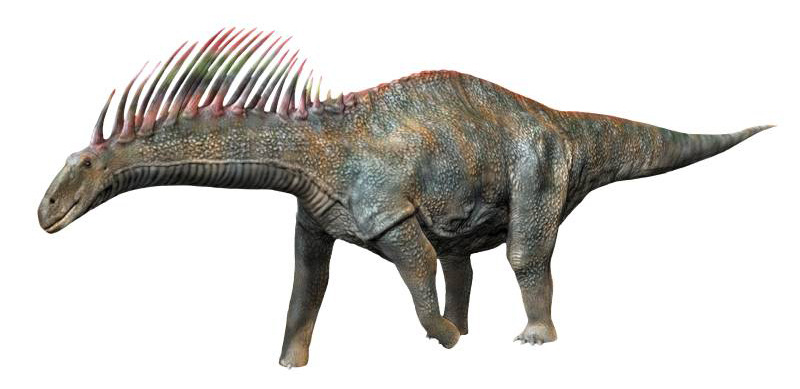
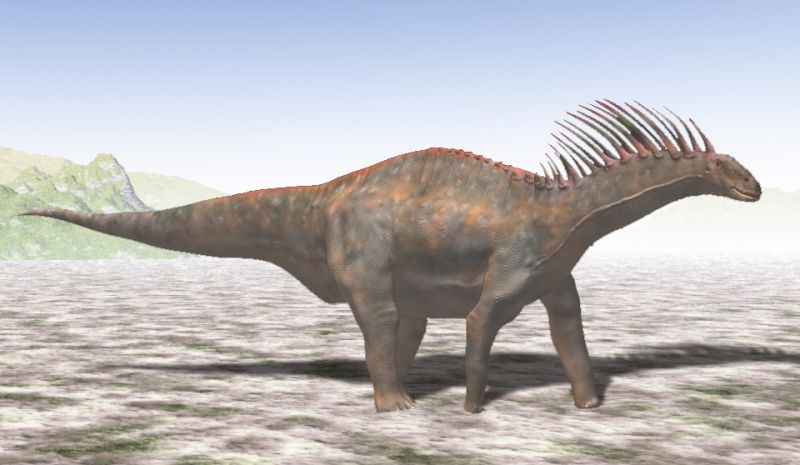
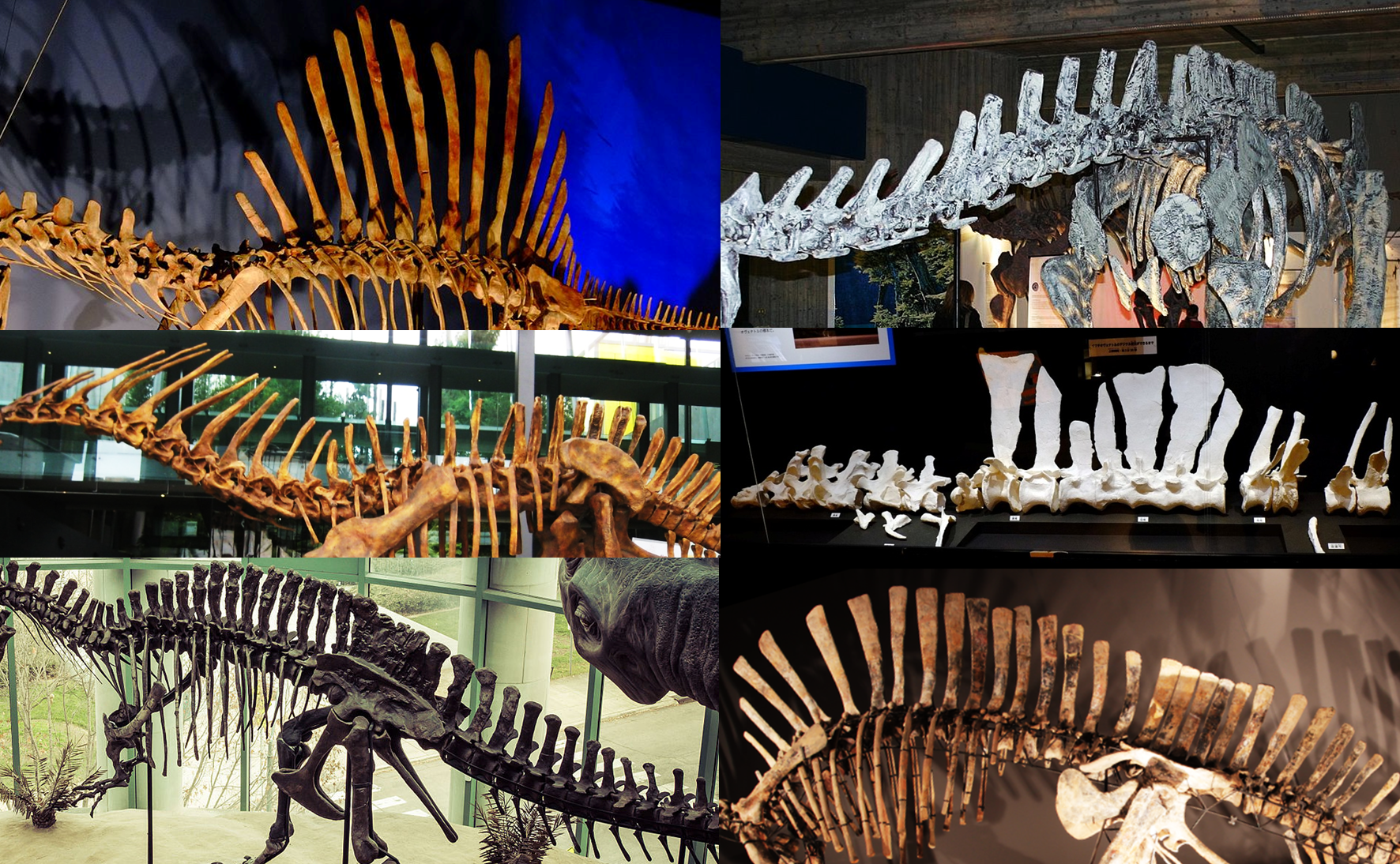
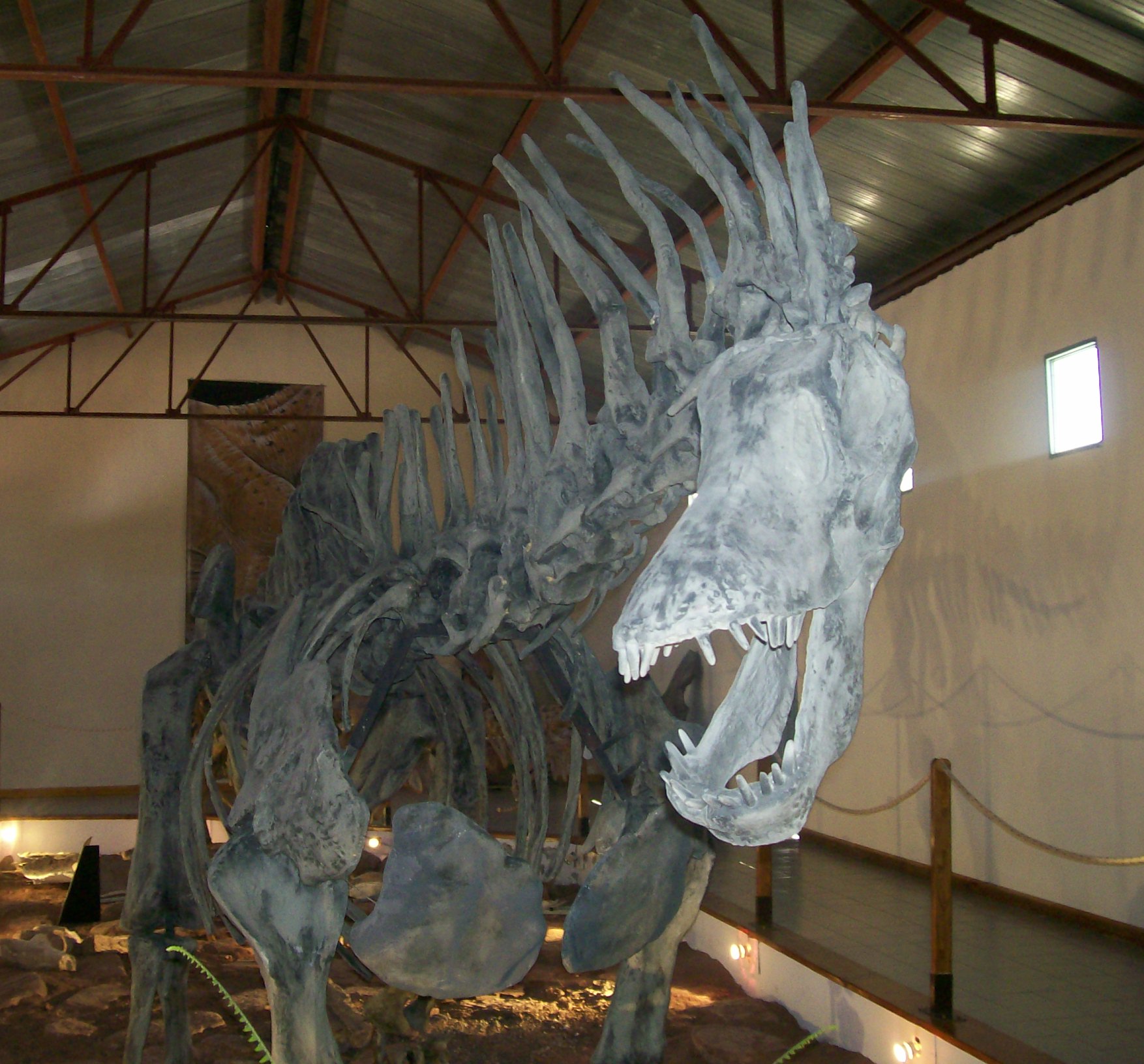
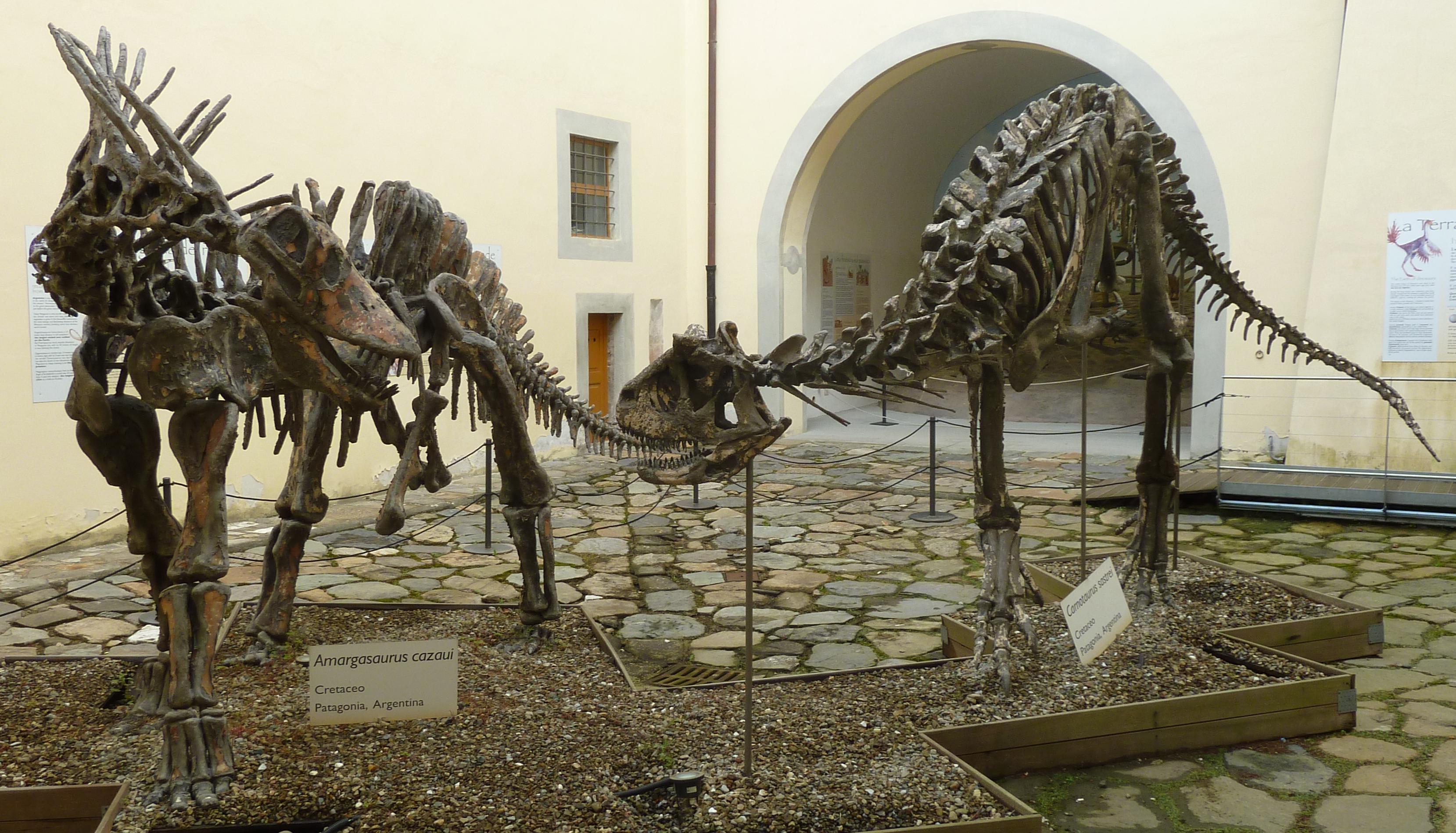
Amargasaurus cazaui is one of the most recognizable sauropods of the Early Cretaceous, thanks to two parallel rows of extremely elongated neural spines running along its neck and back. Discovered in 1984 in the La Amarga Formation of Neuquén, Argentina, and described in 1991 by Leonardo Salgado and José Bonaparte, it is one of the best-preserved Early Cretaceous sauropod skeletons ever found. Measuring around 9 to 10 meters in length and approximately 2.6 metric tons, it was small for a sauropod, but its cervical spines, reaching up to 60 cm in height, made it unmistakable. Recent studies suggest these spines supported a skin sail, possibly used for thermoregulation or display.
Geological formation & environment
The La Amarga Formation is a Barremian-Aptian geological unit (~129-122 Ma) of the Neuquén Basin, with outcrops in the Argentine provinces of Neuquén, Río Negro, and Mendoza. Most vertebrate fossils, including Amargasaurus, come from the Puesto Antigual Member, the oldest part of the formation, composed mainly of sandstones deposited by braided rivers in an alluvial fluvial setting. The La Amarga arroyo, located 70 km south of Zapala, is the excavation site of holotype MACN-N 15, collected in February 1984.
Image gallery




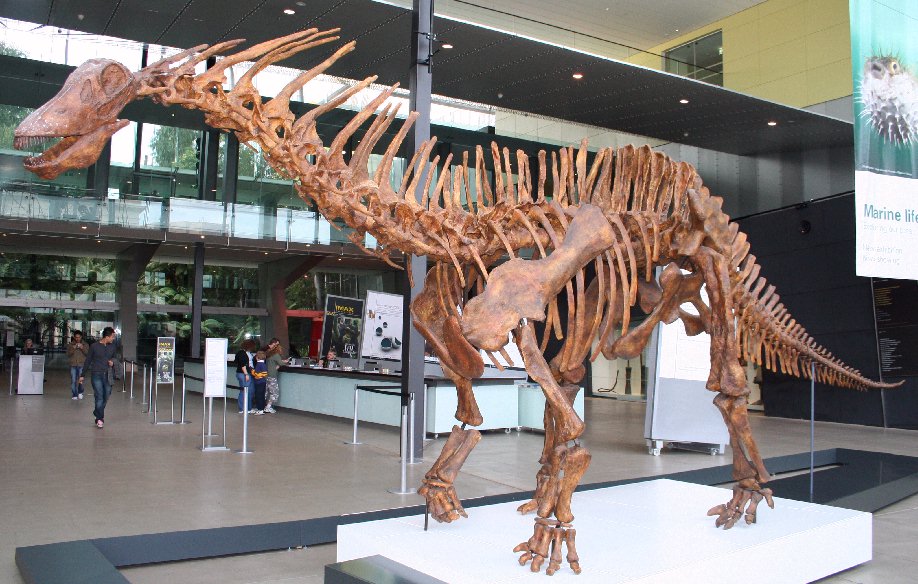


Skeletal reconstruction of Amargasaurus cazaui (holotype MACN-N 15) by Gunnar Bivens (2024). Known bones in white; inferred in gray. Estimated total length: 13.34 m.
Gunnar Bivens, CC BY 3.0
Ecology and behavior
Habitat
Amargasaurus lived during the Barremian-Aptian (~129-122 Ma) in what is now the Argentine Patagonia (Neuquén). The La Amarga Formation was dominated by fluvial systems with braided rivers, swamps, and paleosols developed under semi-arid to subhumid conditions. Associated fauna included other sauropods (Zapalasaurus, Amargatitanis), ceratosaurs (Ligabueino), the crocodylomorph Amargasuchus, and the mammal Vincelestes, indicating a diverse riparian forest ecosystem.
Feeding
Neuroanatomical analyses (Carabajal et al., 2014) and craniocervical musculature studies (Militello et al., 2026) indicate Amargasaurus was a mid-height browser. With its habitual snout position at only 80 cm above ground and a maximum reach of 2.7 m, it specialized in low to intermediate vegetation: ferns, cycads, and small conifers. This strategy reduced competition with other sauropods in the La Amarga Formation that browsed at different heights.
Behavior and senses
There is no direct evidence of gregarious behavior in Amargasaurus, but the cervical skin sail, supported by the neural spines, likely played a role in intraspecific recognition, social hierarchy, or mate selection. The intense vascularization of the spines (Cerda et al., 2022) suggests the structure was metabolically active. Histological studies indicate the holotype was a young adult at least 10 years old, still growing when it died.
Physiology and growth
Bone histology of Amargasaurus (Windholz and Cerda, 2021) reveals highly vascularized fibrolamellar bone with cyclical growth marks (LAGs), consistent with an intermediate metabolism between reptiles and full endotherms, with seasonality. The holotype individual grew rapidly in early stages and decelerated progressively. The neural spines are bony with fibrolamellar cortical bone, indicating rapid-growth structures typical of vertebrates with high metabolic demands.
Paleogeography
Continental configuration

Ron Blakey · CC BY 3.0 · Cretáceous, ~90 Ma
During the Barremiano-Aptiano (~129–122 Ma), Amargasaurus cazaui inhabited Laramidia, the western half of present-day North America, separated from the east by the Western Interior Seaway, a shallow sea dividing the continent. The continents were in very different positions: India was drifting toward Asia, Antarctica was still connected to Australia, and South America was an isolated island.
Inventário de Ossos
The holotype MACN-N 15 includes a partial skull (temporal region and braincase), 13 cervical vertebrae, 9 dorsals, 5 sacrals, and several articulated caudals, ribs, shoulder girdle, partial ilium, and limb fragments. It is one of the most complete Early Cretaceous sauropod skeletons collected in South America.
Found elements
Inferred elements
Scientific Literature
15 papers in chronological order — from the original description to recent research.
Un nuevo sauropodo dicraeosauridae, Amargasaurus cazaui gen. et sp. nov., de la Formación La Amarga, Neocomiano de la Provincia del Neuquén, Argentina
Salgado, L. e Bonaparte, J.F. · Ameghiniana
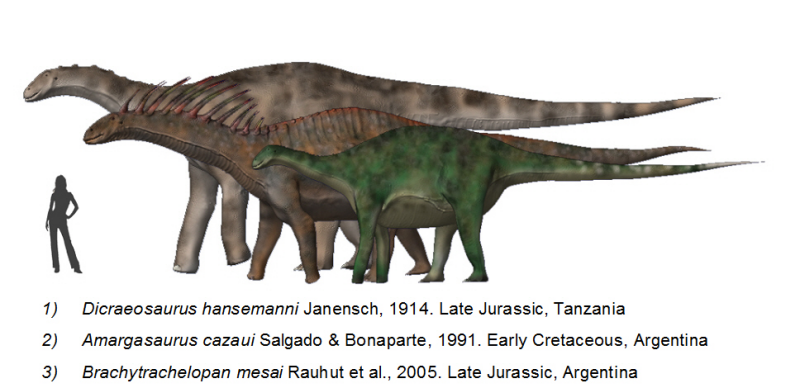
Foundational paper that formally described Amargasaurus cazaui, published in Ameghiniana 28(3-4):333-346. Salgado and Bonaparte described holotype MACN-N 15, collected in 1984 by Guillermo Rougier. The study placed the species within Dicraeosauridae, with exceptionally long bifurcated neural spines as its main autapomorphy. Comparison with Jurassic African Dicraeosaurus hansemanni showed Amargasaurus to be more derived, with even more elongated and bifurcated presacral spines and longer basipterygoid processes.
Cranial osteology of Amargasaurus cazaui Salgado and Bonaparte (Sauropoda, Dicraeosauridae) from the Neocomian of Patagonia
Salgado, L. e Calvo, J.O. · Ameghiniana
Published in Ameghiniana 29(4):337-346, this study deepened the analysis of Amargasaurus's partial skull, describing the temporal and basicranial regions of holotype MACN-N 15. Salgado and Calvo detailed the unusually long basipterygoid processes and cranial proportions that distinguish Amargasaurus from other dicraeosaurids. The work laid the foundation for subsequent studies on head posture and feeding behavior.
Neural spine elongation in dinosaurs: sailbacks or buffalo-backs?
Bailey, J.B. · Journal of Paleontology
This seminal paper proposed that the elongated neural spines of dinosaurs like Amargasaurus supported not a thin skin sail but a denser soft-tissue structure similar to the hump of modern bison. Bailey presented biomechanical analysis and comparisons with extant ungulates, arguing the hump would be more functional for thermoregulation and energy storage. The alternative hump hypothesis influenced decades of debate about the function of Amargasaurus spines.
Pneumaticity and soft-tissue reconstructions in the neck of diplodocid and dicraeosaurid sauropods
Schwarz, D., Frey, E. e Meyer, C.A. · Acta Palaeontologica Polonica
Published in Acta Palaeontologica Polonica 52(1):167-188, this study reconstructed the axial soft-tissue system of Amargasaurus and other diplodocoids using comparative morphology with crocodilians and birds. The authors determined that the distribution of external pneumatic structures is similar between diplodocids and dicraeosaurids. The analysis identified supravertebral pneumatic diverticula and an elaborate ligament system connecting the cervical spines, supporting the sail hypothesis.
The sauropod diversity of the La Amarga Formation (Barremian), Neuquén (Argentina)
Apesteguía, S. · Gondwana Research
Published in Gondwana Research 12:533-546, this work inventoried the remarkable diversity of sauropods from the La Amarga Formation. Apesteguía identified isolated bones from dicraeosaurids (including Amargasaurus), rebbachisaurids (Zapalasaurus), basal titanosaurs, and new materials revealing additional clades. The coexistence of multiple sauropods suggests feeding-niche partitioning, with different browsing heights reducing competition among species.
A phylogenetic analysis of Diplodocoidea (Saurischia: Sauropoda)
Whitlock, J.A. · Zoological Journal of the Linnean Society
Published in the Zoological Journal of the Linnean Society 161(4):872-915, this study provided one of the most comprehensive phylogenetic analyses of Diplodocoidea, including Amargasaurus cazaui. Whitlock recovered Suuwassea as a basal dicraeosaurid (the only Laurasian member) and identified two distinct rebbachisaurid clades. The work established important relationships between South American and African dicraeosaurids, providing biogeographic context for the origin and dispersal of Amargasaurus's group.


A new long-spined dinosaur from Patagonia sheds light on sauropod defense system
Gallina, P.A., Apesteguía, S., Canale, J.I. e Haluza, A. · Scientific Reports
Published in Scientific Reports 9:1392, this paper described Bajadasaurus pronuspinax, a dicraeosaurid with anteriorly curved cervical spines. Phylogenetic analysis recovered Bajadasaurus as sister taxon to a clade including Amargasaurus, Brachytrachelopan, and Dicraeosaurus. The persistence of extremely long spines for 15 million years across dicraeosaurids led the authors to propose these structures functioned as passive defense against predators, providing crucial evolutionary context for interpreting Amargasaurus spines.
Braincase, neuroanatomy, and neck posture of Amargasaurus cazaui (Sauropoda, Dicraeosauridae) and its implications for understanding head posture in sauropods
Carabajal, A.P., Carballido, J.L. e Currie, P.J. · Journal of Vertebrate Paleontology
Published in Journal of Vertebrate Paleontology 34(4):870-882, this study applied CT scanning to Amargasaurus's neurocranium. The 3D reconstruction of the endocranium and inner ear showed that when the lateral semicircular canal is horizontal, the occipital condyle points postero-ventrally, indicating the head was held with the muzzle angled downward. This is consistent with mid-height vegetation browsing, with the habitual snout position at 80 cm above ground and a maximum reach of 2.7 m.
Paleohistology of two dicraeosaurid dinosaurs (Sauropoda; Diplodocoidea) from La Amarga Formation (Barremian–Aptian, Lower Cretaceous), Neuquén Basin, Argentina: Paleobiological implications
Windholz, G.J. e Cerda, I.A. · Cretaceous Research
Published in Cretaceous Research 128:104965, this study examined the bone microstructure of the Amargasaurus cazaui holotype. Histological analysis revealed the individual was a young adult, at least 10 years old. Cortical bone showed highly vascularized fibrolamellar tissue interrupted by cyclical growth marks (LAGs), indicating rapid growth with seasonality. Clear separation between ossified epiphyses and diaphyses confirmed the animal had not reached maximum adult size.
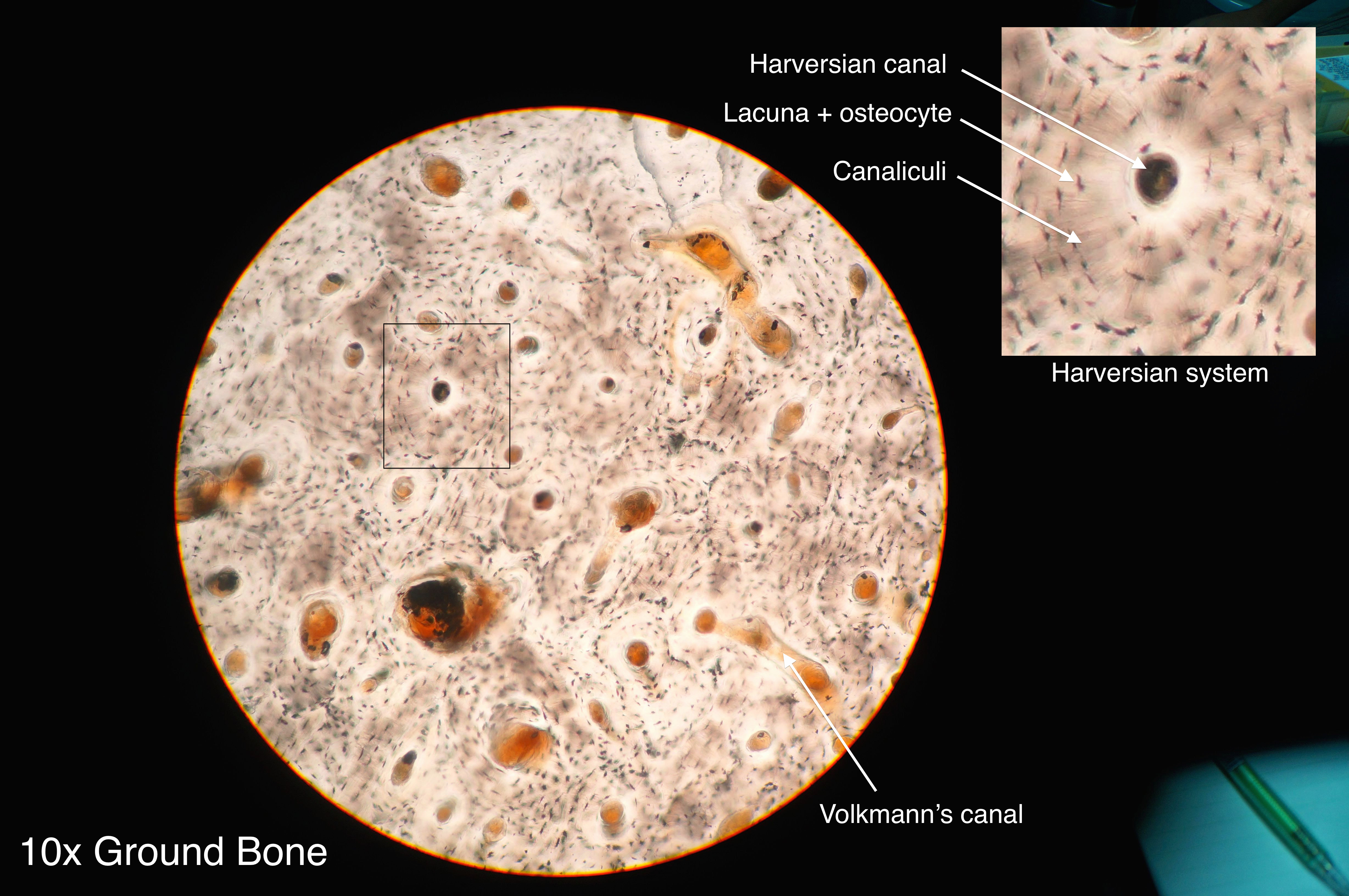
Osteohistology of the hyperelongate hemispinous processes of Amargasaurus cazaui (Dinosauria: Sauropoda): Implications for soft tissue reconstruction and functional significance
Cerda, I.A., Novas, F.E., Carballido, J.L. e Salgado, L. · Journal of Anatomy
Published in Journal of Anatomy 240(6):1005-1019, this study examined in detail the bone microstructure of Amargasaurus cervical and dorsal neural spines. Cortical bone consists of highly vascularized fibrolamellar bone with cyclical growth marks. The absence of evidence for a keratinous sheath, combined with oblique Sharpey's fibers indicating robust interspinous ligaments, strongly supports the hypothesis of a skin sail covering the structures. The Sharpey fibers suggest successive spines were connected by a ligament system.


New Dicraeosauridae (Sauropoda, Diplodocoidea) remains from the La Amarga Formation (Barremian–Aptian, Lower Cretaceous), Neuquén Basin, Patagonia, Argentina
Windholz, G.J., Baiano, M.A., Bellardini, F. e Garrido, A.C. · Cretaceous Research
Published in Cretaceous Research 117:104629, this paper reported new dicraeosaurid materials from the La Amarga Formation, the same unit that produced Amargasaurus cazaui. Two associated anterior dorsal vertebrae (MOZ-Pv 6126-1 and MOZ-Pv 6126-2) do not belong to any described species, indicating greater dicraeosaurid diversity in the Neuquén Basin than previously recognized. Phylogenetic analysis reaffirmed Amargasaurus's relationships within Dicraeosauridae.

A specimen-level phylogenetic analysis and taxonomic revision of Diplodocidae (Dinosauria, Sauropoda)
Tschopp, E., Mateus, O. e Benson, R.B.J. · PeerJ
Published in PeerJ 3:e857, this is one of the most comprehensive phylogenetic studies of diplodocoids. Amargasaurus cazaui (MACN-N 15) was included as a dicraeosaurid representative, with Dicraeosauridae as sister group to Diplodocidae. The analysis confirmed that Diplodocidae consistently forms a sister group with Dicraeosauridae, together forming Flagellicaudata. The paper also reinstated Brontosaurus as a valid genus, demonstrating the power of specimen-level analyses for resolving diplodocoid relationships.


The occiput of Amargasaurus (Sauropoda, Dicraeosauridae): Reconstruction of the craniocervical muscular insertions with comments on feeding strategy
Militello, M. et al. · Journal of Anatomy
Published in Journal of Anatomy 248(2):284-306, this study reconstructed the craniocervical musculature of Amargasaurus using the EPB (extant phylogenetic bracket) approach, comparing with extant archosaur anatomy. Results indicate that muscle insertions on the occiput are consistent with a mid-height feeding strategy, confirming neuroanatomical data from Carabajal et al. (2014). The study provides the most complete muscular reconstruction available for any dicraeosaurid.


Evolution of titanosaurid sauropods. I: Phylogenetic analysis based on the postcranial evidence
Salgado, L., Coria, R.A. e Calvo, J.O. · Ameghiniana
Published in Ameghiniana 34(1):3-32, this work conducted phylogenetic analysis of titanosaurs and related groups, using Amargasaurus cazaui as a representative dicraeosaurid and reference point for calibrating relationships of derived sauropods. The study contributed to understanding relationships between diplodocoids and titanosaurs, two of the main sauropod groups of the Cretaceous, and provided foundational context for interpreting Amargasaurus's phylogenetic position within Sauropoda.

A new dicraeosaurid sauropod from the Lower Cretaceous (Mulichinco Formation, Valanginian, Neuquén Basin) of Argentina
Carballido, J.L., Garrido, A.C., Windholz, G.J. e Apesteguía, S. · Cretaceous Research
Published in Cretaceous Research 93:33-48, this work described a new dicraeosaurid from the Neuquén Basin, older than Amargasaurus (Valanginian vs. Barremian-Aptian). Phylogenetic analysis repositioned relationships within Dicraeosauridae and provided evolutionary context for the origin of Amargasaurus's extremely long cervical spines. The study indicates that elongated neural spines evolved progressively within the clade, with Amargasaurus representing the point of maximum specialization.

Espécimes famosos em museus
MACN-N 15 (Holótipo)
Museo Argentino de Ciencias Naturales Bernardino Rivadavia, Buenos Aires, Argentina
The only known specimen of Amargasaurus cazaui. Includes a partial skull (temporal region and braincase), 13 cervical vertebrae, 9 dorsals, 5 sacrals, several articulated caudals, ribs, scapula, coracoid, partial ilium, and limb fragments. It is one of the most complete Early Cretaceous sauropod skeletons from South America.
Monte Esquelético (Réplica MEF)
Museo Paleontológico Egidio Feruglio, Trelew, Chubut, Argentina
Full-scale replica of holotype MACN-N 15, mounted in a dynamic posture for public display. The MEF is one of Patagonia's leading paleontology museums and an active research center for dinosaurs from the La Amarga Formation and adjacent units.
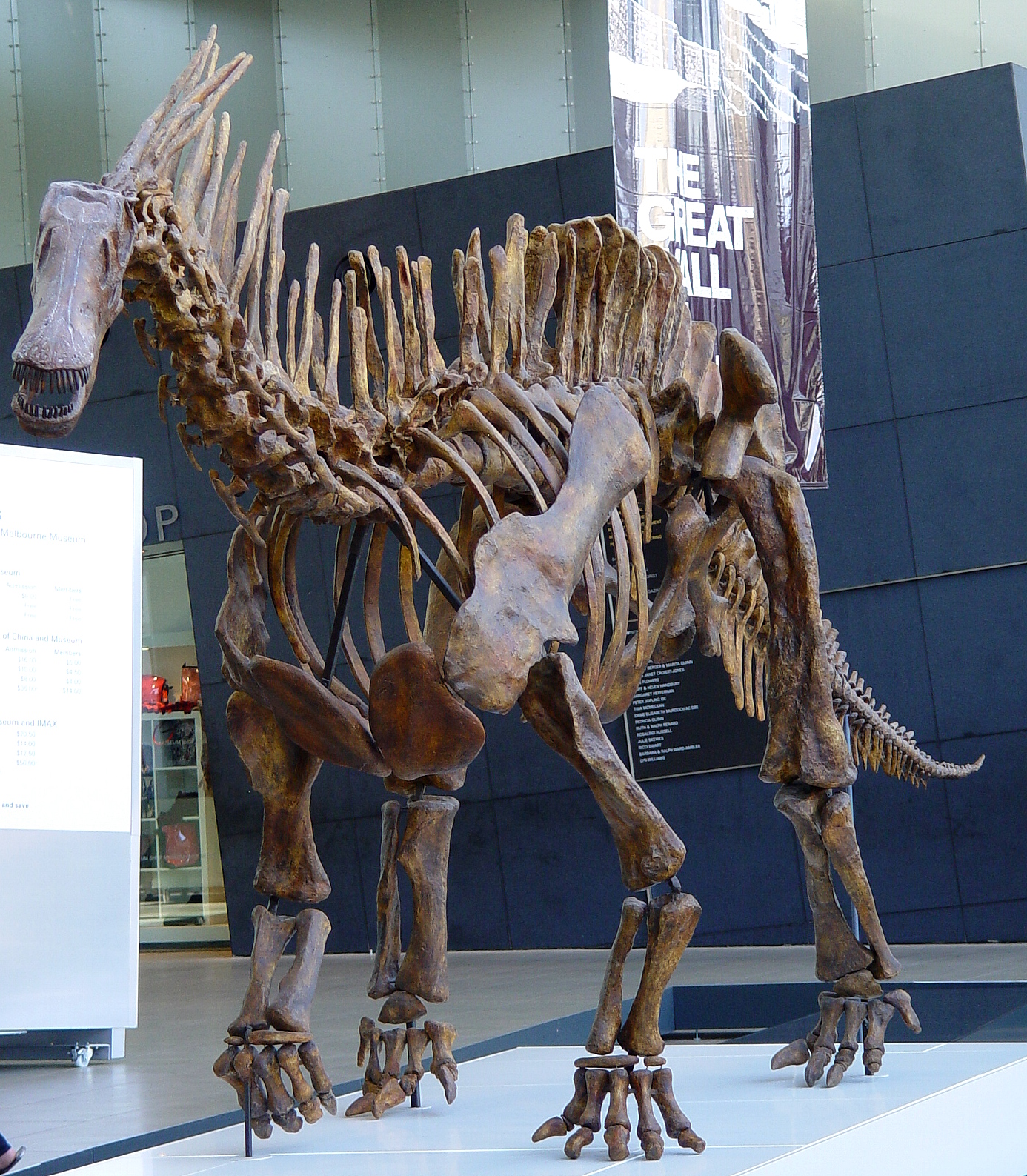
Monte Esquelético (Melbourne Museum)
Melbourne Museum, Melbourne, Austrália
Replica of holotype MACN-N 15 mounted in the foyer of the Melbourne Museum since 2000. One of the first Amargasaurus replica mounts outside Argentina, helping popularize the animal with Australian and international audiences.
In cinema and popular culture
Amargasaurus cazaui never achieved the same level of fame as Tyrannosaurus or Triceratops in popular culture, but its unmistakable silhouette ensures memorable appearances in games and animated series. In the children's animation Dinosaur Train (PBS, 2010), it came to life as Martin, a gentle sauropod with a spine sail, introducing the species to a generation of children. In the gaming world, Amargasaurus appears in Dinosaur King (Sega, 2007), where the spines were depicted as independent keratinized horns, an interpretation rendered obsolete by the 2022 histological studies. In Jurassic World Evolution 2 (Frontier, 2021), it received one of the most accurate depictions in interactive media, with size and behavior consistent with scientific data. The animal also appears in the mobile game Jurassic World: The Game and the live-action series Dino Dan: Trek's Adventures. Although not included in the main Jurassic Park or Jurassic World films, Amargasaurus's growing popularity in paleontology forums and dinosaur-dedicated social media suggests its public recognition is on a steady rise.

Classificação

Descoberta
Curiosidade
Amargasaurus's cervical spines were the longest ever recorded in any sauropod: the eighth cervical vertebra bore spines up to 60 cm tall. If connected by a skin sail (as current science suggests), this structure would have been larger than a medieval shield and likely changed color or flushed when the animal was agitated.