
Apatosaurus
Apatosaurus ajax
"Deceptive lizard (Ajax, hero from Greek mythology)"
Sobre esta espécie
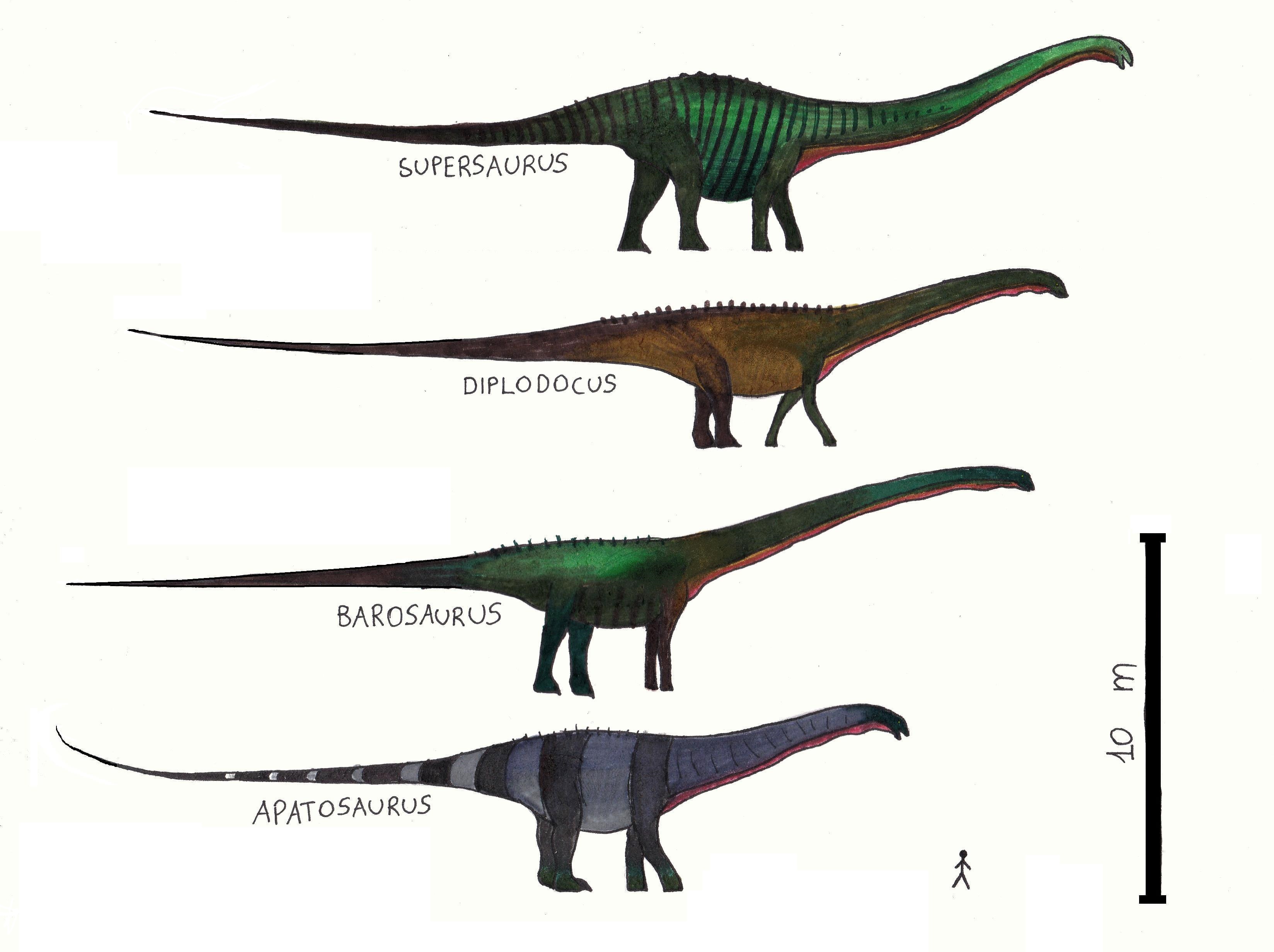
Apatosaurus ajax is the type species of the genus Apatosaurus, described by Othniel Charles Marsh in 1877 from bones discovered in Morrison, Colorado. One of the largest known diplodocids, it reached 21 to 22 meters in length and 16 to 22 tonnes. Its neck was notably more robust and thicker than those of its relatives Diplodocus and Brontosaurus, with ventrolaterally displaced cervical ribs. The species stood at the center of one of paleontology's greatest taxonomic controversies: the name Brontosaurus was considered its synonym for 112 years, until Tschopp, Mateus, and Benson (2015) demonstrated that Brontosaurus constitutes a distinct and valid genus.
Geological formation & environment
The Morrison Formation is one of the most important sedimentary sequences for dinosaur paleontology in the world. Deposited between 156 and 147 million years ago during the Late Jurassic (Kimmeridgian to Tithonian ages), it covers much of the western United States. The environment was a broad semi-arid alluvial plain with pronounced wet and dry seasons, crossed by seasonal rivers and dotted with shallow lakes. Fossils of Apatosaurus ajax are exclusive to the upper Brushy Basin Member, dated to 152–151 Ma, in Colorado, Wyoming, and Oklahoma. The formation preserved the greatest sauropod diversity known from a single ecosystem: Diplodocus, Brachiosaurus, Camarasaurus, and Apatosaurus itself.
Image gallery


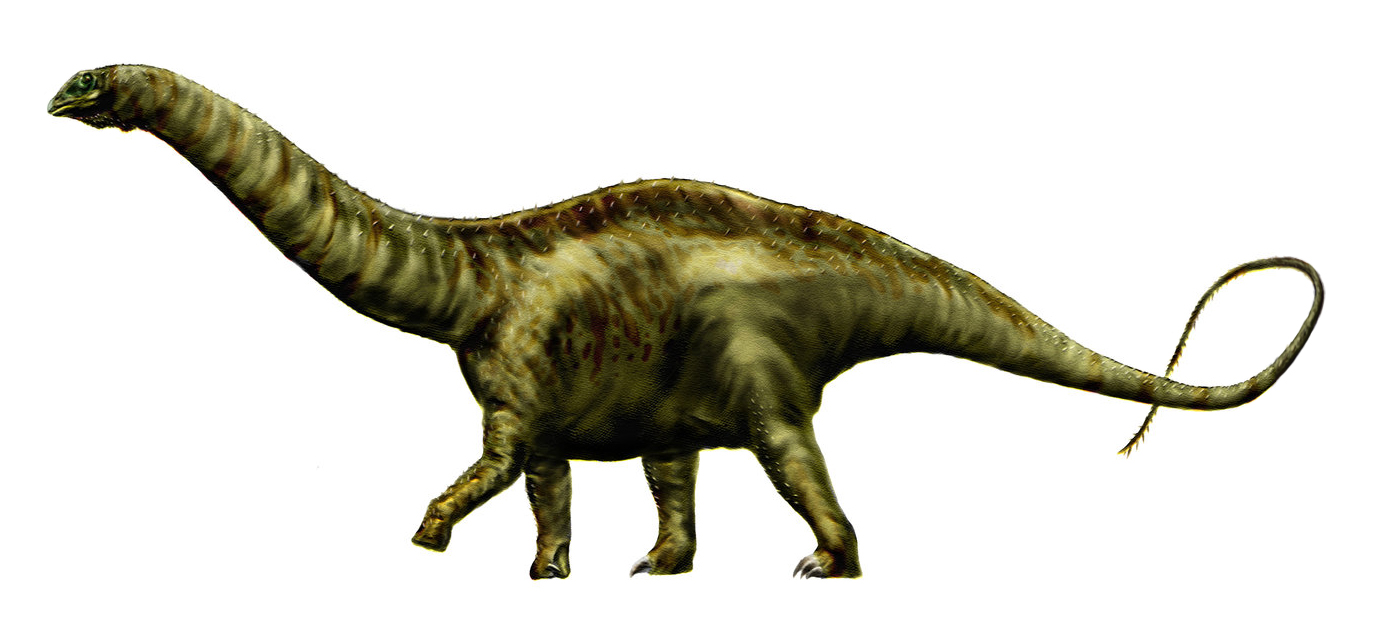
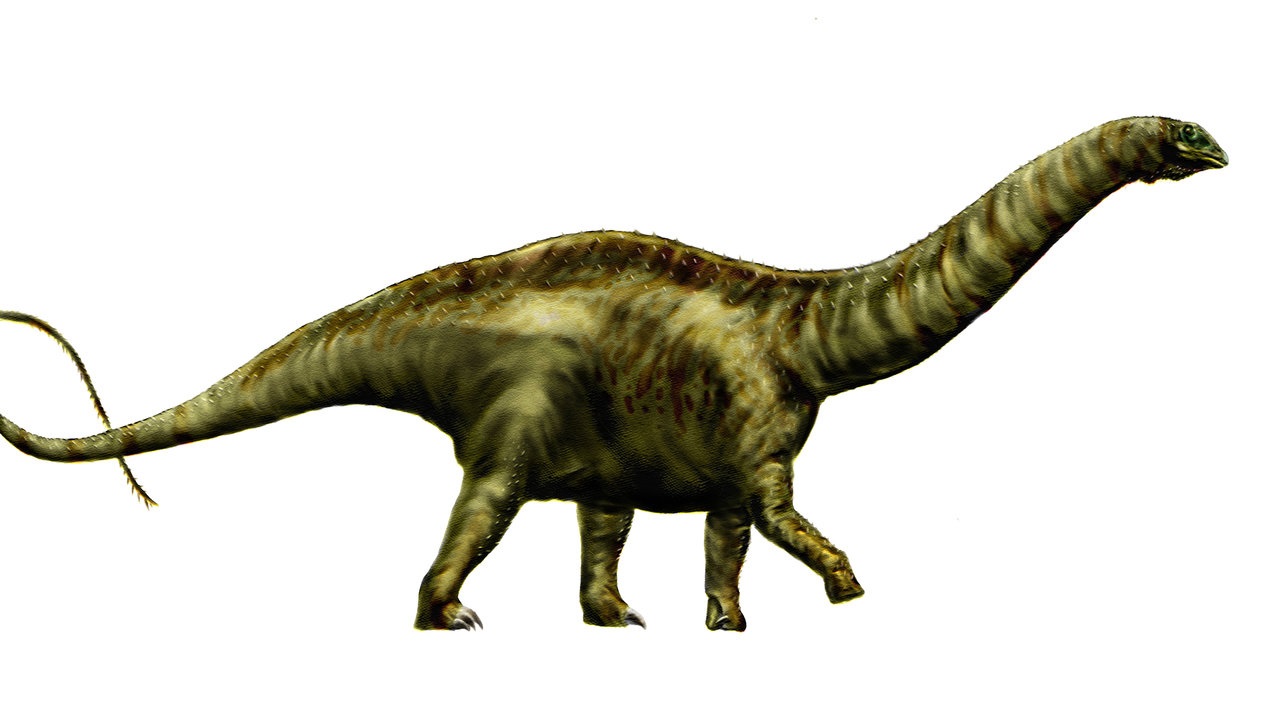


Mounted skeleton of Apatosaurus ajax (NSMT-PV 20375) at the National Museum of Nature and Science, Tokyo, Japan. This is the most complete specimen referable to the type species and the main A. ajax mount currently on display in the world.
Momotarou2012 — CC BY-SA 3.0
Ecology and behavior
Habitat
Apatosaurus ajax inhabited the alluvial plains and open forests of the Morrison Formation, a semi-arid environment with distinct wet and dry seasons in what is now the western United States. The ecosystem was dominated by ferns, cycads, ginkgoes, horsetails, and conifers such as Brachyphyllum. Seasonal rivers, shallow ponds, and floodplains concentrated the densest vegetation. A. ajax shared its habitat with Diplodocus, Brachiosaurus, Camarasaurus, Stegosaurus, and the predatory theropods Allosaurus and Ceratosaurus. Fossils of A. ajax are exclusively from the upper Brushy Basin Member, dated to 152–151 Ma.
Feeding
A strict herbivore, Apatosaurus ajax fed on low to medium-height vegetation using its simple pencil-like teeth concentrated at the front of a broad snout. Dental microwear analyses in apatosaurines (Whitlock 2011) indicate nonselective, wide-sweep ground-level grazing, sweeping ferns, horsetails, and low conifer foliage with lateral head movements. The exceptionally robust neck of A. ajax, with ventrolaterally displaced cervical ribs, may have allowed different torque than the more gracile necks of Diplodocus, potentially accessing denser or more resistant vegetation. Consumption estimates for sauropods of this size indicate hundreds of kilograms of vegetation per day.
Behavior and senses
Behavioral evidence for Apatosaurus ajax is inferred from functional morphology and comparison with relatives. The Purgatoire River tracksite (Colorado), one of the world's largest, preserves parallel Apatosaurus trails suggesting movement in groups, potentially herds. The exceptionally robust neck, with differentiated cervical ribs, was interpreted by Taylor et al. (2015) as a possible adaptation for intraspecific neck-to-neck combat between males, similar to giraffe 'necking' behavior. Myhrvold and Currie's (1997) 'supersonic whip' hypothesis, based on computer modeling of the Apatosaurus tail, suggests that the long, tapering tail could produce sonic sounds for communication or defense.
Physiology and growth
Apatosaurus ajax displayed the highly pneumatized axial skeleton typical of sauropods: vertebrae with internal cavities filled by air sac diverticula similar to the avian respiratory system, reducing weight without sacrificing structural strength. Wedel and Taylor (2013) also described pneumaticity in caudal vertebrae, indicating a far more extensive respiratory system than previously imagined. Bone histology (Curry 1999) indicates rapid, sustained growth in youth, suggesting elevated, possibly mesothermic or endothermic metabolism. Gigantothermy: the colossal body volume retained metabolic heat even without full endothermy. The animal is estimated to have reached adult size in approximately 10 years.
Paleogeography
Continental configuration

Ron Blakey · CC BY 3.0 · Jurassic, ~90 Ma
During the Kimmeridgiano–Titoniano (~152–151 Ma), Apatosaurus ajax inhabited the fragmenting Pangea. North America and Europe were still close, and the North Atlantic was just beginning to open. Climate was warm and humid globally, with no polar ice caps.
Inventário de Ossos
The holotype YPM 1860, collected in Morrison (Colorado) in 1877, is an incomplete juvenile skeleton that includes cervical, dorsal, and caudal vertebrae, as well as hind limb bones. No skull was found associated with the holotype; the cranial morphology of the genus was only established in 1975 by McIntosh and Berman, who demonstrated it resembles that of Diplodocus. A more complete specimen, NSMT-PV 20375, displayed at the National Museum of Nature and Science in Tokyo, provided additional information about the species. Specimen BYU 17096 ('Einstein') preserves the most complete skull referred to the genus.
Found elements
Inferred elements
Scientific Literature
15 papers in chronological order — from the original description to recent research.
Notice of new dinosaurian reptiles from the Jurassic formation
Marsh, O.C. · American Journal of Science, Series 3
The founding paper in which Othniel Charles Marsh names Apatosaurus ajax based on specimen YPM 1860, collected by Arthur Lakes near Morrison, Colorado. Published in the American Journal of Science in 1877, it establishes the genus based on cervical and dorsal vertebrae and hind limb bones. Marsh distinguishes the new animal by its colossal size and vertebral form. The name Apatosaurus, from Greek for 'deceptive lizard', was chosen because the caudal ribs resembled those of lizards but differed enough to initially mislead researchers. The specific epithet ajax honors the Greek hero from mythology. This paper inaugurates the taxonomic history of one of the most famous dinosaur genera.


Principal Characters of American Jurassic Dinosaurs, Part II
Marsh, O.C. · American Journal of Science
Continuation of Marsh's anatomical descriptions of North American Jurassic dinosaurs, with special focus on Apatosaurus. In this paper, Marsh presents detailed illustrations of the sacrum and scapulocoracoid of Apatosaurus ajax, providing the first visual representations of the animal for the scientific community. The figures, drawn at one-tenth natural size, become the primary reference for subsequent studies of the diplodocid pelvic and pectoral girdles. The publication occurs two years after the founding paper and consolidates A. ajax as one of the most robust sauropods known from the Morrison Formation, distinguished from other taxa in the same formation by vertebral morphology and limb proportions.

Structure and Relationships of Opisthocoelian Dinosaurs. Part I, Apatosaurus Marsh
Riggs, E.S. · Publications of the Field Columbian Museum, Geological Series
Decisive paper in which Elmer Riggs of the Field Museum of Chicago compares Apatosaurus ajax with Brontosaurus excelsus from Como Bluff (Wyoming) and concludes that the features Marsh used to separate the two genera, mainly vertebral and limb proportions, reflect ontogenetic differences: the Apatosaurus ajax holotype (YPM 1860) would be a juvenile individual. Under the principle of nomenclatural priority, Apatosaurus (1877) takes precedence over Brontosaurus (1879), and Riggs creates the combination Apatosaurus excelsus. The synonymization, published in a relatively obscure journal, took decades to be accepted by the public. The name Brontosaurus, already embedded in popular imagination since the 1880s, survived as an informal synonym for 112 years until the 2015 revalidation.

Osteology of Apatosaurus, with special reference to specimens in the Carnegie Museum
Gilmore, C.W. · Memoirs of the Carnegie Museum
Comprehensive osteological monograph by Charles Gilmore systematically describing every skeletal element of Apatosaurus, with special reference to Carnegie Museum specimens. One of the most important contributions is the correction of previous forelimb reconstructions: Gilmore demonstrates that the radius and ulna remained parallel in life, never crossing as shown in reconstructions of the period. The work establishes the classic anatomical reference for the genus and is cited as the basis for virtually all subsequent osteological studies. The 125 pages of detailed description, accompanied by illustrated plates, make this paper the Victorian equivalent of Brochu's T. rex monograph.
Description of the Palate and Lower Jaw of the Sauropod Dinosaur Diplodocus (Reptilia: Saurischia) with Remarks on the Nature of the Skull of Apatosaurus
McIntosh, J.S. & Berman, D.S. · Journal of Paleontology
Revolutionary study correcting a 70-year error in Apatosaurus (and by extension Brontosaurus) reconstruction. Since 1905, museum mounts had displayed Camarasaurus-type skulls because no skull had been found directly associated with Apatosaurus postcranial skeletons. McIntosh and Berman analyze available skull specimens and demonstrate that the correct cranial morphology is diplodocid: narrow, low skull with simple pencil-like teeth at the front. A skull found in 1909 with Carnegie Museum specimen CM 3018, which had remained unstudied for decades, confirms the conclusion. The correction was gradually adopted by museums from 1979 onward.

Ontogenetic histology of Apatosaurus (Dinosauria: Sauropoda): new insights on growth rates and longevity
Curry, K.A. · Journal of Vertebrate Paleontology
Classic histological study by Kristina Curry analyzing bone microstructure in an ontogenetic series of Apatosaurus radii, ulnae, and scapulae. Examination of lines of arrested growth (LAGs) and fibrolamellar bone tissue reveals three distinct osteogenic phases: rapid, sustained growth during most of ontogeny, gradual deceleration as adult size is approached, and eventual cessation. Age estimates of approximately 10 years for large sub-adults refute the hypothesis that slow, indeterminate growth was required for sauropods to reach extreme sizes. The paper inaugurated systematic application of bone histology to sauropods and established the rapid growth paradigm for the group, comparable to modern birds.


Neck Posture and Feeding Habits of Two Jurassic Sauropod Dinosaurs
Stevens, K.A. & Parrish, J.M. · Science
Seminal study by Kent Stevens and Michael Parrish using articulated digital reconstructions of Apatosaurus and Diplodocus necks to infer neutral cervical posture. Using the DinoMorph program, the authors model intervertebral joints and conclude both diplodocids held their necks in a slightly downward-inclined position at rest, with the head near ground level. The result suggests low-level feeding rather than high-canopy browsing. The paper sparked intense debate that shaped decades of research: Taylor et al. (2009) would challenge the horizontal neutral posture, arguing that living terrestrial animals hold their necks in an elevated position. The controversy remains unresolved for Apatosaurus ajax, whose exceptionally robust neck may have imposed different constraints.

A new specimen of Apatosaurus ajax (Sauropoda: Diplodocidae) from the Morrison Formation (Upper Jurassic) of Wyoming, USA
Upchurch, P., Tomida, Y. & Barrett, P.M. · National Science Museum Monographs
Detailed description of specimen NSMT-PV 20375 from Wyoming, on display at the National Museum of Nature and Science in Tokyo. This is one of the most complete specimens referable to Apatosaurus ajax, providing new information on the anatomy of the type species of the genus, previously known mainly from the juvenile holotype YPM 1860. Upchurch, Tomida, and Barrett's work is particularly important because it consolidates the diagnosis of A. ajax and distinguishes it from A. louisae, facilitating subsequent phylogenetic assessments. The 108-page monograph includes systematic description of vertebrae, pelvic girdle, pectoral girdle, and limbs, with extensive comparisons with other Morrison Formation diplodocids.
Caudal Pneumaticity and Pneumatic Hiatuses in the Sauropod Dinosaurs Giraffatitan and Apatosaurus
Wedel, M.J. & Taylor, M.P. · PLOS ONE
Wedel and Taylor describe pneumaticity in mid-caudal vertebrae of Apatosaurus, an anatomical feature previously unrecognized. The authors find that the most distal pneumatic vertebrae are separated from other pneumatic elements by gaps of 3 to 7 non-pneumatic vertebrae. This erratic developmental pattern indicates that diverticular air sacs extended through living animals far more extensively than skeletal traces suggest. For Apatosaurus, the discovery has implications for respiratory physiology: the avian-style air sac system likely contributed significantly to oxygen processing in animals with such extreme body volume. Published in PLOS ONE, the paper is pioneering in studying caudal pneumaticity in sauropods and opens a new research line on respiratory physiology in Jurassic giants.
The Articulation of Sauropod Necks: Methodology and Mythology
Stevens, K.A. · PLOS ONE
Stevens examines neck articulation in sauropods including Apatosaurus based on cervical vertebral geometry: pronounced opisthocoely and zygapophyseal geometry significantly constrain cervical column flexibility. Results indicate that sauropod necks were largely straight in their natural state, capable of sweeping large feeding areas but with limited retraction ability. The study directly addresses the DinoMorph methodology of Stevens and Parrish (1999) and responds to critiques by Taylor et al. (2009), who argued that digital reconstructions underestimated cervical mobility. For Apatosaurus ajax, with its exceptionally robust neck, biomechanical constraints may have differed from those of Diplodocus, with implications for the species' feeding strategies.
A specimen-level phylogenetic analysis and taxonomic revision of Diplodocidae (Dinosauria, Sauropoda)
Tschopp, E., Mateus, O. & Benson, R.B.J. · PeerJ
The most important diplodocid paleontology paper of the 21st century. Tschopp, Mateus, and Benson conduct the most comprehensive phylogenetic analysis ever performed for Diplodocidae, scoring 81 operational taxonomic units for 477 morphological characters. The central result: Brontosaurus is recovered as a valid genus distinct from Apatosaurus, ending 112 years of synonymization initiated by Riggs in 1903. The diagnosis of Apatosaurus ajax as the type species is confirmed, and the taxonomy of the genus is clarified. The study also establishes phylogenetic positions for dozens of previously unclassified specimens, and redefines the limits of Apatosaurinae within Diplodocidae. The revalidation of Brontosaurus generated enormous global media coverage, becoming one of the most cited paleontological papers of the decade.

Why sauropods had long necks; and why giraffes have short necks
Taylor, M.P. & Wedel, M.J. · PeerJ
Taylor and Wedel analyze why sauropod necks, including that of Apatosaurus ajax, reached extreme lengths. The paper systematically evaluates six hypotheses for cervical elongation: high-canopy vegetation access, aquatic surface feeding, wide-area sweeping, thermoregulation, sexual selection, and neutral evolution. The conclusion is that feeding advantage is the primary selective factor. The analysis emphasizes that the Apatosaurus/Brontosaurus neck is morphologically distinct from those of Diplodocus and Brachiosaurus, with much more robust cervical ribs and ventrolaterally oriented parapophyseal rami, suggesting different usage strategies within the same ecosystem. For A. ajax specifically, the exceptionally robust neck may have allowed different torque movements than those possible for its more gracile relatives.
Broad-Scale Patterns of Late Jurassic Dinosaur Paleoecology
Noto, C.R. & Grossman, A. · PLOS ONE
Noto and Grossman apply Ecological Structure Analysis to over 100 dinosaur taxa from twelve Late Jurassic fossil assemblages worldwide, including the Morrison Formation where Apatosaurus ajax is the reference diplodocid. Results show that assemblages from similar climatic environments share similar ecological structure, with distinct proportions of high-browsing herbivores (sauropods) versus low-browsing herbivores (ornithischians). The Morrison Formation is characterized by high proportions of giant sauropods like Apatosaurus, Diplodocus, and Brachiosaurus, coexisting in a seasonal semi-arid environment. The study provides the global paleoecological context to understand why A. ajax and its relatives were so successful in the Late Jurassic of North America.
Inferences of Diplodocoid (Sauropoda: Dinosauria) Feeding Behavior from Snout Shape and Microwear Analyses
Whitlock, J.A. · PLOS ONE
Whitlock combines snout shape analysis and dental microwear microscopy to infer feeding behavior in diplodocoids, including Apatosaurus ajax. The study identifies two distinct feeding strategies: diplodocids with squared snouts engaged in nonselective, wide-gape ground-level grazing, while brachiosaurid relatives engaged in selective high-level browsing. Apatosaurus, with its intermediate snout and exceptionally robust neck, appears to have occupied an ecologically distinct niche from other family members. The dental microwear analysis provides the first quantitative evidence for dietary niche partitioning among the Morrison Formation's giant herbivores.

Supersonic Sauropods? Tail Dynamics in the Diplodocids
Myhrvold, N.P. & Currie, P.J. · Paleobiology
Pioneering study by Nathan Myhrvold and Philip Currie using computer simulation to model tail dynamics in Apatosaurus louisae, a taxon directly related to A. ajax within Apatosaurinae. Results suggest the long, tapering diplodocid tail could be cracked like a bullwhip, with the tip reaching supersonic velocities and producing a sonic boom. The hypothesis proposes this behavior served communicative or defensive functions. The paper generated enormous scientific and media impact. Later analyses contested whether supersonic velocities were truly achievable given muscular friction, but even if partially refuted, the paper established a new paradigm in sauropod paleoethology and is frequently cited as an example of computational physics applied to paleontology.
Espécimes famosos em museus
YPM 1860 (Holótipo)
Yale Peabody Museum of Natural History, New Haven, Connecticut, EUA
Holotype of Apatosaurus ajax, collected by Arthur Lakes near Morrison, Colorado, in 1877. Incomplete juvenile skeleton that includes cervical, dorsal, and caudal vertebrae, along with hind limb bones. The immaturity of the specimen was the cause of the taxonomic confusion with Brontosaurus pointed out by Riggs in 1903.
NSMT-PV 20375
Museu Nacional de Natureza e Ciência, Tóquio, Japão
The most complete specimen referable to Apatosaurus ajax, collected in Wyoming and described in detail by Upchurch, Tomida, and Barrett (2004). Displayed at the National Museum of Nature and Science in Tokyo, it is the main A. ajax mount currently accessible to the public. Analysis of the specimen provided updated diagnoses of the species and clarified its differences relative to A. louisae.
BYU 17096 ('Einstein')
Brigham Young University Museum of Paleontology, Provo, Utah, EUA
Specimen referred to Apatosaurus sp. with the most complete skull known for the genus. The nickname 'Einstein' reflects the wealth of cranial information the specimen provides. It includes a well-preserved braincase, a rare element in sauropods and fundamental to understanding the group's neuroanatomy and phylogeny.
In cinema and popular culture
Apatosaurus ajax has a pop culture presence marked by a central irony: for decades, it was known to the public as Brontosaurus, the name science had suppressed in 1903. The Land Before Time (1988) established the apatosaurine Littlefoot as one of the most beloved dinosaur characters in children's animation. When Dinosaurs Roamed America (2001) depicted the predator-prey dynamic between Apatosaurus and Allosaurus with pioneering CGI. But it was in Jurassic World (2015) that Apatosaurus finally received its proper name in big-budget cinema, with an emotional dying animal scene praised by scientific critics as one of the most accurate genus depictions in film. Notably, 2015 was also the year Tschopp et al. revalidated Brontosaurus, restoring Apatosaurus to a strictly defined genus. A. ajax's journey in pop culture mirrors that of its name in science: always present, but frequently confused with another.

Classificação
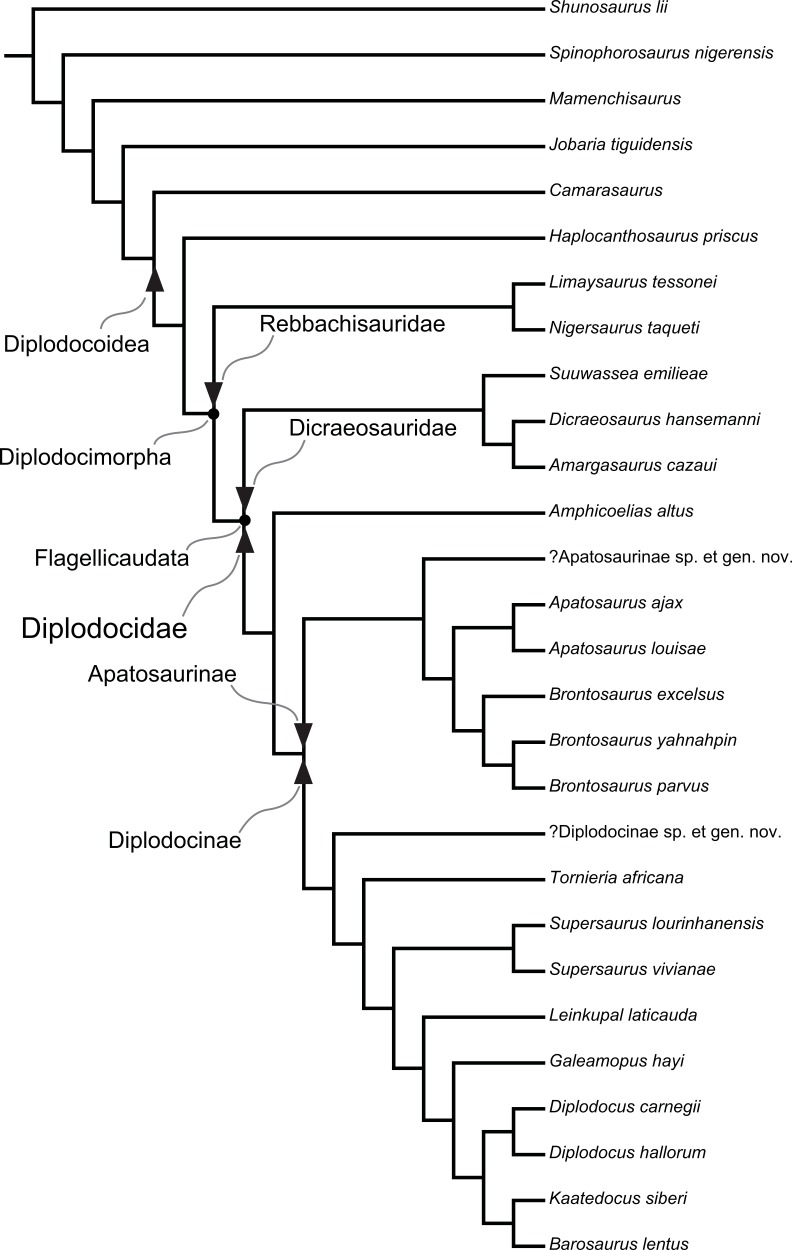
Descoberta
Curiosidade
Apatosaurus ajax was for 112 years the 'invisible' name behind the famous Brontosaurus: when Elmer Riggs synonymized the two genera in 1903, the name Apatosaurus (1877) prevailed by priority, but the public kept using Brontosaurus for generations. In 2015, when Tschopp et al. revalidated Brontosaurus as a separate genus, A. ajax returned to being exactly what it always was: the type species of a distinct genus, not a replacement for Brontosaurus. The 112-year taxonomic confusion was caused, ironically, by A. ajax's own holotype being juvenile: if Marsh had collected an adult, Riggs would likely never have synonymized the two genera.