
Archaeopteryx
Archaeopteryx lithographica
"Ancient wing from the lithographic stone"
Sobre esta espécie
Archaeopteryx lithographica is one of the most famous and important fossils in the history of science. It lived approximately 150 million years ago during the Late Jurassic, on the islands covering what is now the German state of Bavaria. About 0.5 meters long and estimated at half a kilogram, it was roughly the size of a raven. It combined features of theropod dinosaurs, including teeth, claws, and a long bony tail, with true feathers and wing asymmetry typical of modern flying birds. Thirteen specimens have been found in the Solnhofen Limestone, including the celebrated Berlin Exemplar, considered the most iconic transitional fossil between dinosaurs and birds.
Geological formation & environment
The Solnhofen Limestone, formally called the Altmühltal Formation, is a Late Jurassic (Tithonian, approximately 150 Ma) Konservat-Lagerstätte located in Bavaria, Germany. The ultra-fine-grained limestone layers formed in hypersaline, anoxic lagoons of an epicontinental sea, separated from the ocean by coral and sponge reefs. The anoxic bottom conditions of the lagoons prevented scavenger and decomposer bacteria activity, allowing exceptional preservation of soft tissues, feathers, scales, and even skin impressions. The formation produced, in addition to Archaeopteryx, exceptional fossils of pterosaurs, fish, dragonflies, jellyfish, and plants.
Image gallery
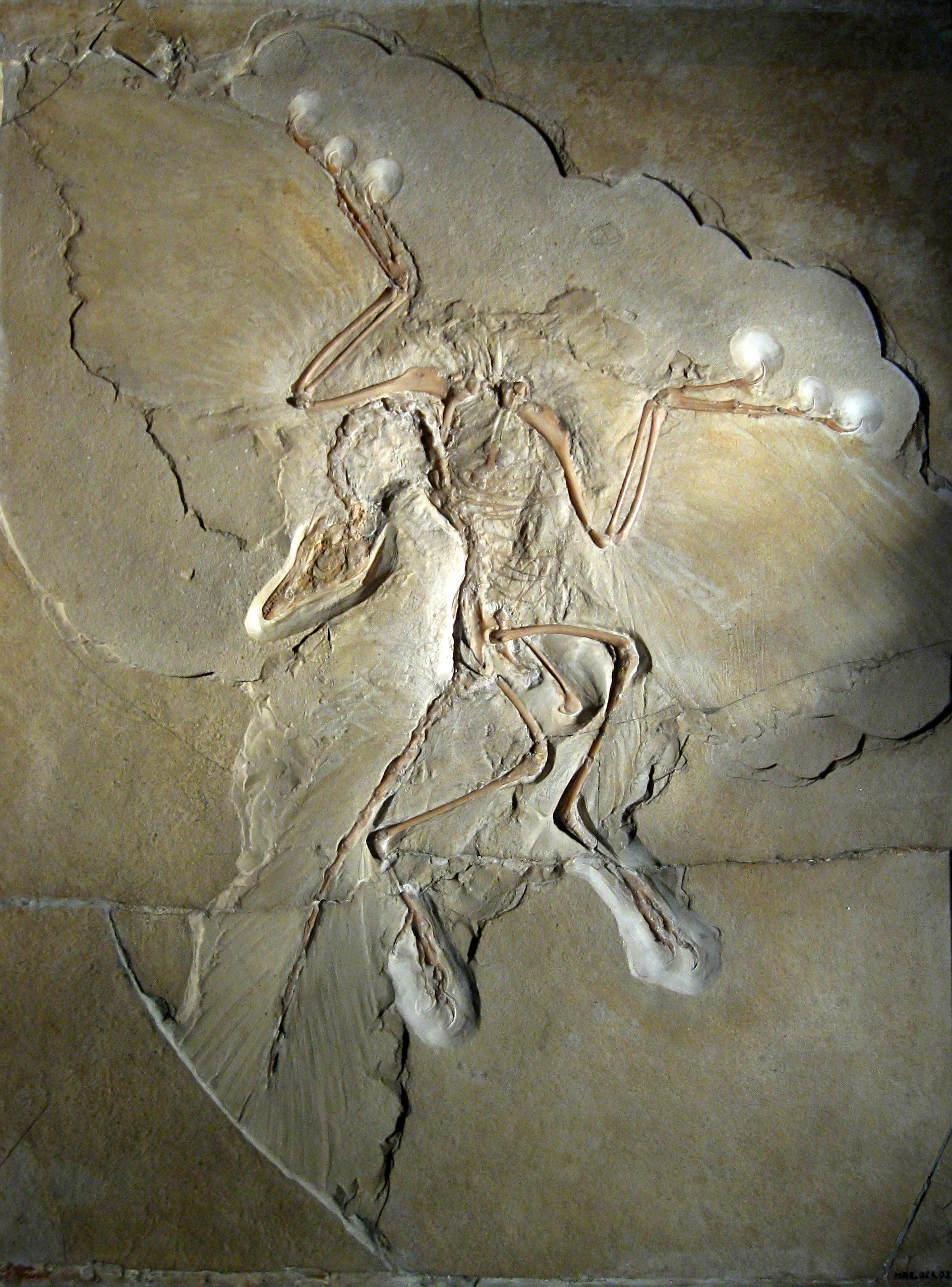
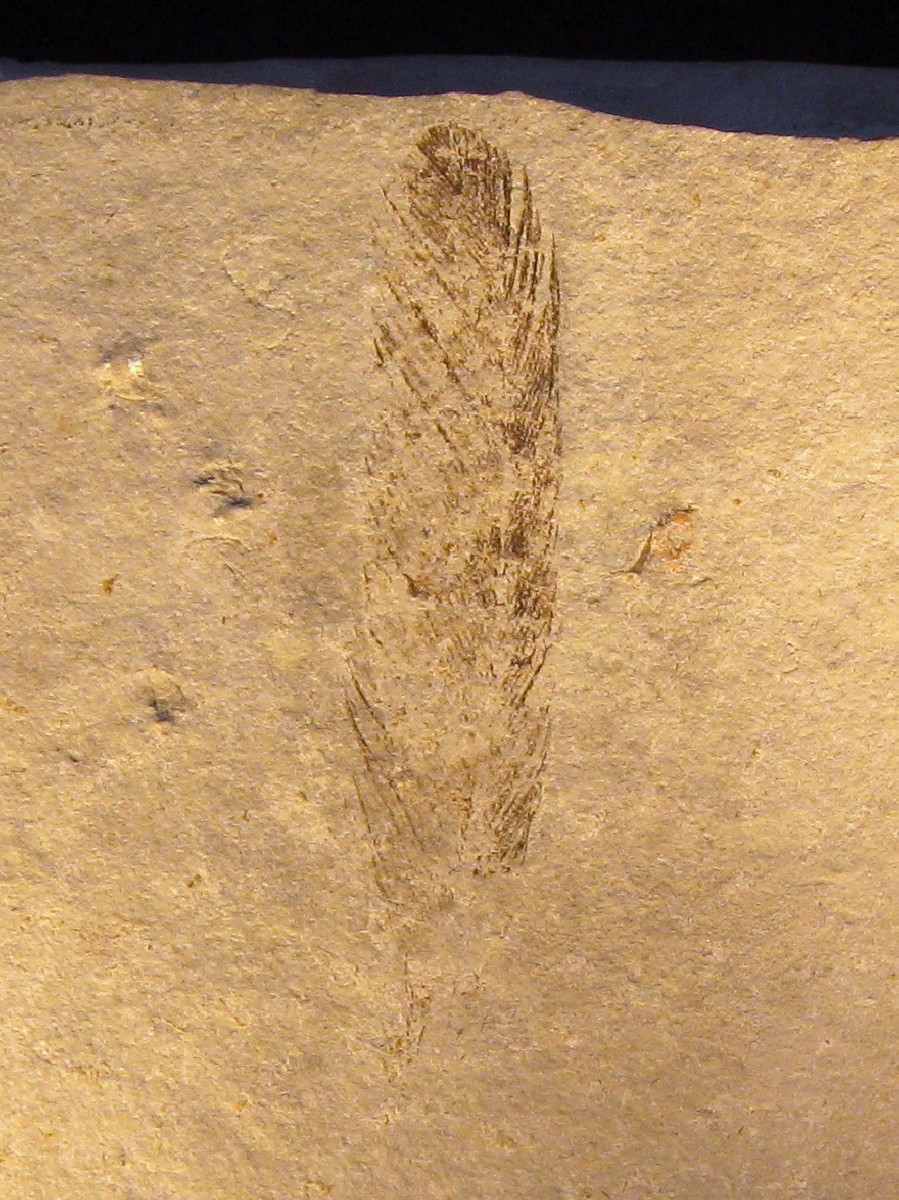

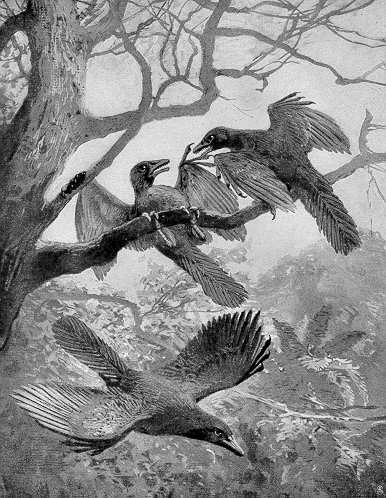


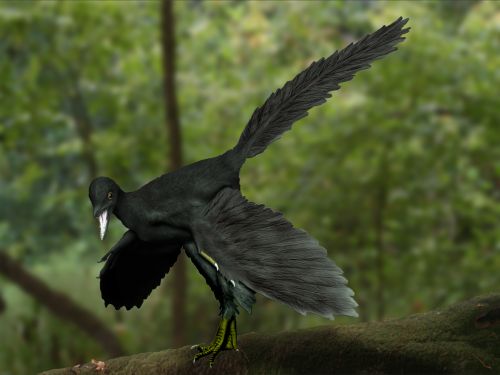


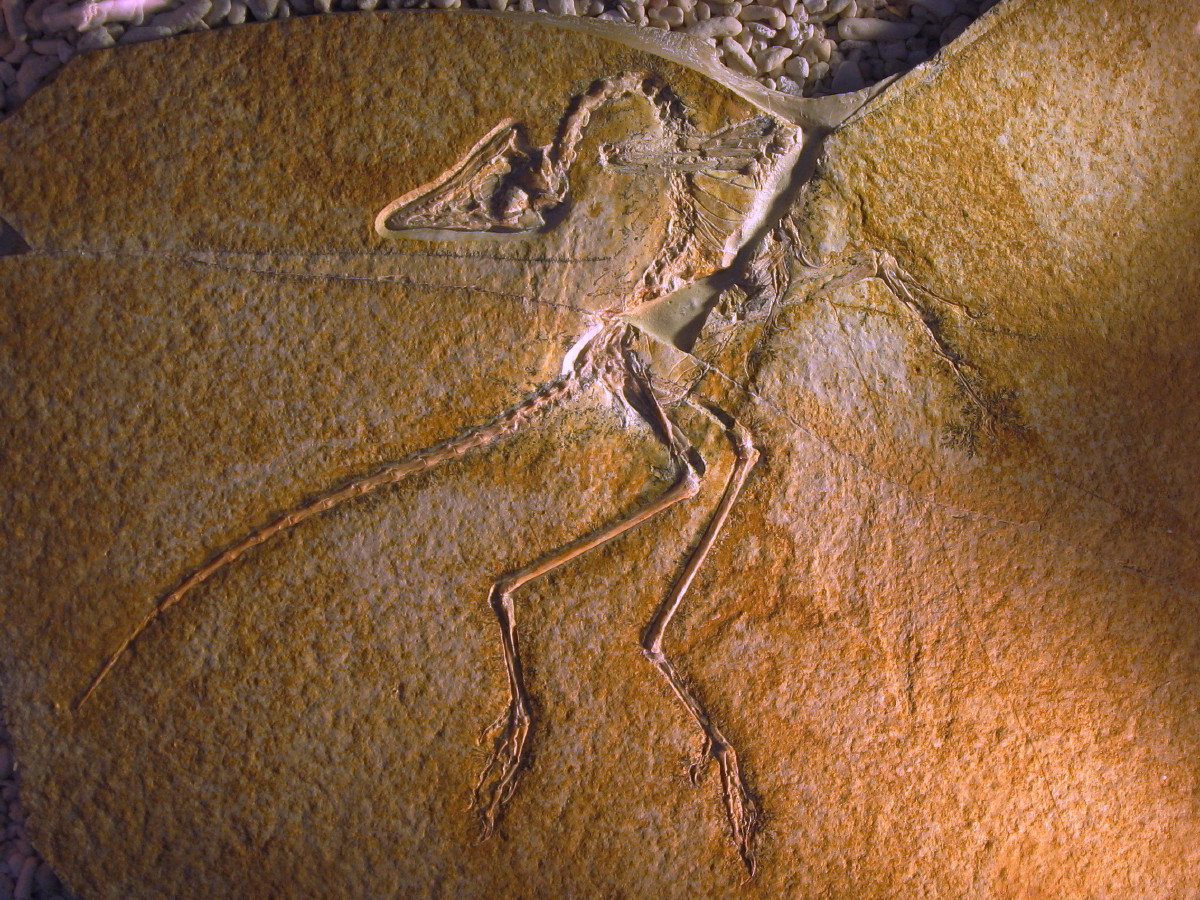
Berlin Exemplar (HMN 1880/81) of Archaeopteryx lithographica, the most complete and famous of all 13 known specimens. Discovered in 1877 in Blumenbach, near Eichstätt. Museum für Naturkunde, Berlin.
H. Raab (Vesta) — CC BY-SA 3.0
Ecology and behavior
Habitat
Archaeopteryx inhabited the shallow, low islands of the Solnhofen archipelago in the Late Jurassic of present-day Bavaria. The environment was a shallow epicontinental sea with hypersaline, anoxic lagoons separated by coral and sponge reefs. The climate was warm and semi-arid with no defined seasons. Island vegetation included ferns, horsetails, and primitive conifers. Associated fauna included pterosaurs, Compsognathus, crocodilians, and abundant marine invertebrates.
Feeding
Archaeopteryx was carnivorous, likely feeding on large insects, small lizards, amphibians, and small vertebrates. Its teeth were relatively small and non-serrated, suitable for capturing live prey of moderate size. Foot and wing claws suggest active capture behavior. Geochemical studies revealed sulfate traces in feathers, consistent with an occasional diet of marine or aquatic prey.
Behavior and senses
Archaeopteryx behavior is inferred indirectly from morphology. Claw morphology suggests arboreal or climbing behavior, though debate between a terrestrial versus arboreal lifestyle remains. The presence of leg feathers indicates possible use of all four surfaces as lift planes, similar to Microraptor. The furcula and wing proportions suggest some capacity for active flight or gliding, possibly using ascending air currents.
Physiology and growth
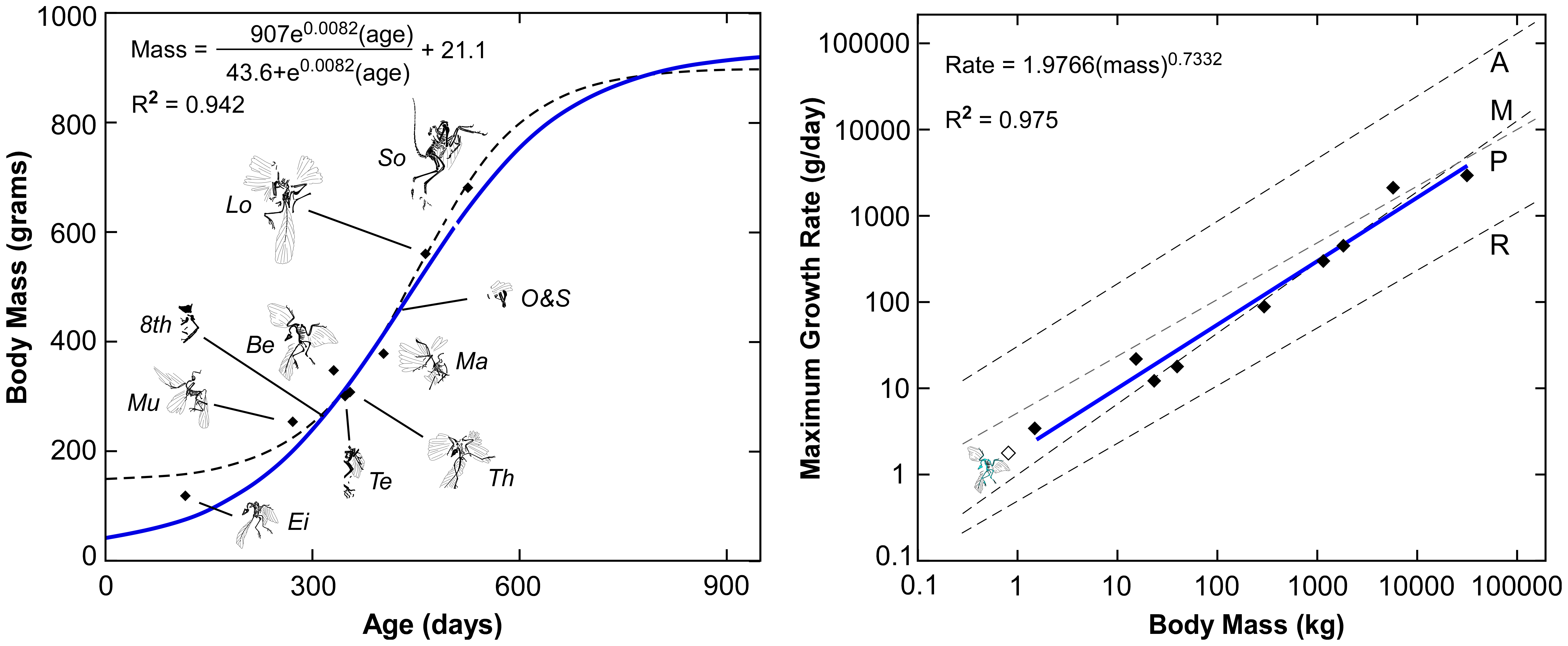
Bone histology of Archaeopteryx revealed slow-growing parallel-fibered tissue similar to ectothermic reptiles, but within the minimum range of endothermic vertebrates. The brain, reconstructed by CT scanning, had expanded visual lobes and cerebellum like modern birds. Melanosome analysis indicates black melanin-bearing feathers providing mechanical strength. No consensus exists on whether Archaeopteryx was fully endothermic, mesothermic, or advanced ectothermic.
Paleogeography
Continental configuration

Ron Blakey · CC BY 3.0 · Jurassic, ~90 Ma
Fóssil sites
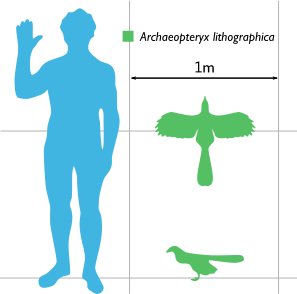
Matt Martyniuk (Dinoguy2) — CC BY-SA 3.0
During the Titoniano (~152–148 Ma), Archaeopteryx lithographica inhabited the fragmenting Pangea. North America and Europe were still close, and the North Atlantic was just beginning to open. Climate was warm and humid globally, with no polar ice caps.
Inventário de Ossos
Based on all 13 known specimens collectively. The Berlin Exemplar (HMN 1880/81, Museum für Naturkunde) is the most complete, preserving feather impressions and most of the skeleton. No individual specimen exceeds 80% completeness.
Found elements
Inferred elements
Scientific Literature
15 papers in chronological order — from the original description to recent research.
Archaeopteryx lithographica (Vogel-Feder) und Pterodactylus von Solenhofen
Meyer, H. von · Neues Jahrbuch für Mineralogie, Geognosie, Geologie und Petrefaktenkunde
Founding publication in which Hermann von Meyer officially names Archaeopteryx lithographica based on an isolated feather found in the Solnhofen quarries of Bavaria. The name combines the Greek archaios (ancient) with pteryx (wing or feather). Meyer recognized the feather as belonging to a Jurassic animal with simultaneously reptilian and avian characteristics. Two months later, a nearly complete skeleton was discovered in the same region, consolidating the taxon's importance. The isolated feather, catalogued as MB.Av.100, is today housed at the Museum für Naturkunde in Berlin and was later confirmed as part of Archaeopteryx's flight plumage by 2020 studies.

On the Archeopteryx of Von Meyer, with a Description of the Fossil Remains of a Long-Tailed Species, from the Lithographic Stone of Solenhofen
Owen, R. · Philosophical Transactions of the Royal Society of London
Richard Owen, the greatest comparative anatomist of the Victorian era and creator of the term 'dinosaur,' presents the first complete osteological analysis of the London Specimen of Archaeopteryx. Owen describes the animal as essentially a bird, arguing that reptilian features such as teeth and a long bony tail were of lesser importance. This position would later conflict with Thomas Huxley's interpretation of Archaeopteryx as an intermediate link between reptiles and birds. The paper is accompanied by a life-size double lithograph of the specimen, becoming a fundamental anatomical reference for decades of subsequent research.

On the Animals which are most nearly intermediate between Birds and Reptiles
Huxley, T.H. · Annals and Magazine of Natural History
Thomas Henry Huxley, Darwin's chief defender, presents the most influential 19th-century argument on the origin of birds. Analyzing Archaeopteryx alongside Compsognathus and other dinosaurs, Huxley proposes that birds descended from dinosaurian reptiles, specifically from small theropods, and that Archaeopteryx is the closest known intermediate. This publication establishes the avian origin hypothesis more than 130 years before its broad scientific acceptance in the 1970s through John Ostrom's work. Huxley's intuition remains fundamentally correct in the light of modern paleontology.
Allometric Scaling in the Earliest Fossil Bird, Archaeopteryx lithographica
Houck, M.A., Gauthier, J.A. & Strauss, R.E. · Science
Houck, Gauthier, and Strauss apply allometric scaling analysis to osteological data from all Archaeopteryx specimens known at the time, demonstrating that all are consistent with a single ontogenetic growth series. This suggests all belong to the same species, Archaeopteryx lithographica, resolving debates about multiple species. The absence of certain bone fusions in all specimens indicates none had reached full skeletal maturity at death. Growth patterns resemble those of fast-growing endothermic vertebrates, not ectothermic reptiles, providing early indirect evidence that Archaeopteryx metabolism was closer to that of modern birds than to lizards.
Structure and function of hindlimb feathers in Archaeopteryx lithographica
Longrich, N. · Paleobiology
Nick Longrich analyzes the morphology of leg feathers on the Berlin Specimen of Archaeopteryx, demonstrating these feathers have characteristics of flight feathers: vane asymmetry, curved shafts, and self-stabilizing overlap patterns. These features indicate the hindlimbs functioned as aerodynamic surfaces contributing to lift generation. The 'four-winged dinosaur' hypothesis, previously associated only with Cretaceous Microraptor, would therefore predate the Cretaceous, already present in Archaeopteryx. This work is fundamental for understanding the origin of avian flight and suggests that biplane flight, or at least four-surface gliding, may have been a transitional evolutionary stage.

The avian nature of the brain and inner ear of Archaeopteryx
Alonso, P.D., Milner, A.C., Ketcham, R.A., Cookson, M.J. & Rowe, T.B. · Nature
Alonso and colleagues perform CT scanning of the London Specimen's braincase, reconstructing the brain and inner ear endocasts in 3D. Results reveal that Archaeopteryx's brain closely resembled that of modern birds: expanded visual lobes, enlarged cerebellum, and inner ear semicircular canals with geometry typical of flying vertebrates. In contrast, non-avian dinosaurs have inner ear canals that are less developed. This study provides the first neuroanatomical evidence that Archaeopteryx possessed sensory capabilities compatible with active flight, answering positively a question that skeletal morphology alone could not definitively resolve.


Narrow Primary Feather Rachises in Confuciusornis and Archaeopteryx Suggest Poor Flight Ability
Nudds, R.L. & Dyke, G.J. · Science
Nudds and Dyke measure the primary feather rachis thickness of Archaeopteryx and Confuciusornis, comparing with modern birds of different flight capabilities. The conclusion is controversial: rachises are proportionally far thinner relative to body mass than in any modern bird capable of active flight, suggesting these early birds were incapable of powered flapping flight and were limited to gliding. The study generated immediate debate: Philip Currie and Luis Chiappe contested the methodology, arguing it is difficult to accurately measure fossilized rachises and that preservation may have altered dimensions. The controversy remains open, but the paper stimulated more rigorous research on flight biomechanics in Mesozoic birds.
Was Dinosaurian Physiology Inherited by Birds? Reconciling Slow Growth in Archaeopteryx
Erickson, G.M., Rauhut, O.W.M., Zhou, Z., Turner, A.H., Inouye, B.D., Hu, D. & Norell, M.A. · PLOS ONE
Erickson and colleagues analyze the bone histology of Archaeopteryx specimens, revealing that long bones are composed of nearly avascular parallel-fibered tissue typical of slow-growing ectothermic reptiles. Growth curve analysis indicates Archaeopteryx grew at an exponential rate similar to non-avian dinosaurs, but three times slower than modern precocial birds. The data places Archaeopteryx within the lowest range of endothermic vertebrates, suggesting that the rapid metabolism characteristic of modern birds had not fully evolved in the Late Jurassic. These data refute the hypothesis that dinosaurian physiology was inherited in totality by the first birds.


Archaeopteryx feathers and bone chemistry fully revealed via synchrotron imaging
Bergmann, U., Morton, R.W., Manning, P.L., Sellers, W.I., Farrar, S., Huntley, K.G., Wogelius, R.A. & Larson, P. · Proceedings of the National Academy of Sciences
Bergmann and colleagues use synchrotron rapid scanning X-ray fluorescence (SRS-XRF) imaging on the Thermopolis Archaeopteryx Specimen, revealing that portions of the feathers are not mere impressions in limestone, but remnant body fossil structures with elemental compositions completely different from the geological matrix. Phosphorus and sulfur are retained in soft tissue; zinc and copper are found in bones. This non-destructive technique reveals the fossil's chemistry without damaging it. Results provide data on taphonomy, bone composition, and melanosome presence, contributing to subsequent feather coloration studies.


New evidence on the colour and nature of the isolated Archaeopteryx feather
Carney, R.M., Vinther, J., Shawkey, M.D., D'Alba, L. & Ackermann, J. · Nature Communications
Carney and colleagues perform the first color analysis on an Archaeopteryx feather, applying scanning electron microscopy and energy-dispersive X-ray analysis (EDX) to the isolated feather MB.Av.100. Fossilized melanosomes are compared against a database of 87 modern bird species. Statistical analysis predicts with 95% probability that the original color was black. As in extant birds, extensive melanization would have provided structural advantages to the flight feather: melanin makes feathers more resistant to mechanical and bacterial degradation. This discovery suggests Archaeopteryx had black wing feathers, similar to many modern seabirds with efficient flight.
An Archaeopteryx-like theropod from China and the origin of Avialae
Xu, X., You, H., Du, K. & Han, F. · Nature
Xu and colleagues describe Xiaotingia zhengi, a new theropod from China morphologically similar to Archaeopteryx. Including the new taxon in comprehensive phylogenetic analysis shifts Archaeopteryx from Avialae to Deinonychosauria, placing it closer to dromaeosaurids and troodontids than to true birds. This paper generated intense debate in the paleontological community, challenging 150 years of consensus that Archaeopteryx was the most primitive known bird. Subsequent studies reached divergent conclusions on phylogenetic placement, with some recovering Archaeopteryx within Avialae and others within Deinonychosauria, demonstrating the instability of basal Paraves phylogenetic relationships.


A Well-Preserved Archaeopteryx Specimen with Theropod Features
Mayr, G., Pohl, B. & Peters, D.S. · Science
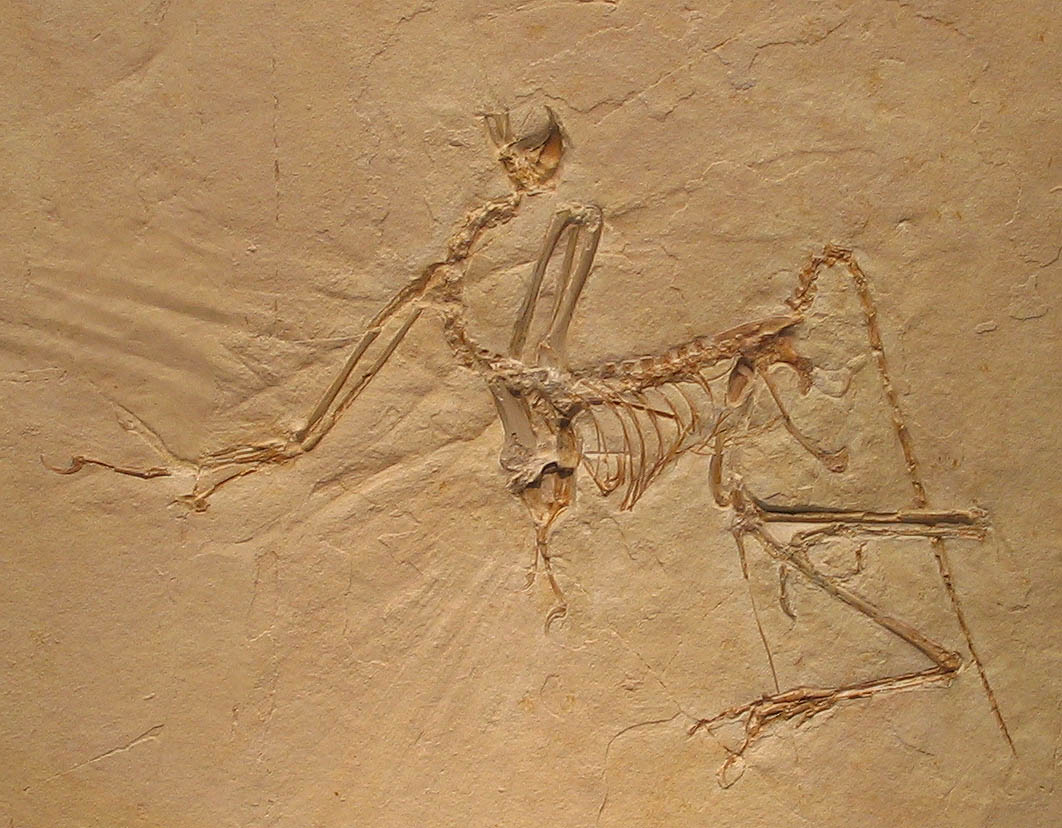
Mayr, Pohl, and Peters describe the tenth skeletal specimen of Archaeopteryx, discovered in the Solnhofen region with exceptionally good bone preservation. The specimen reveals a key anatomical feature: the second toe is hyperextensible, a feature previously known only from dromaeosaurids (such as Velociraptor) and Cretaceous Rahonavis from Madagascar. This discovery provides additional anatomical evidence for the close evolutionary relationship between deinonychosaurs and avialans, corroborating the hypothesis of avian origin from theropod dinosaurs with sickle claws. The specimen also shows body outline preservation indicating possible trunk feathers.


New specimen of Archaeopteryx provides insights into the evolution of pennaceous feathers
Foth, C., Tischlinger, H. & Rauhut, O.W.M. · Nature
Foth, Tischlinger, and Rauhut describe a new Archaeopteryx specimen (the eleventh skeletal), exceptionally preserved in the Solnhofen Limestone, revealing for the first time that the entire body was covered in pennaceous feathers. The specimen shows long, symmetric feathers on the tibiotarsus but short feathers on the tarsometatarsus, plus contour feathers on the trunk. Analysis of feather distribution on limbs and tail strongly suggests that pennaceous feathers evolved for reasons other than flight, possibly for display or thermal insulation. This work is fundamental for understanding avian feather evolution and the emergence of flight as a secondary function of structures originally adaptive for other purposes.
The oldest Archaeopteryx (Theropoda: Avialiae): a new specimen from the Kimmeridgian/Tithonian boundary of Schamhaupten, Bavaria
Rauhut, O.W.M., Foth, C. & Tischlinger, H. · PeerJ
Rauhut, Foth, and Tischlinger describe the twelfth skeletal specimen of Archaeopteryx, from the Painten Formation of Schamhaupten, Bavaria. This specimen is dated to the Kimmeridgian/Tithonian boundary, making it the oldest representative of the genus and predating the Solnhofen specimens. New material reveals previously unknown anatomical details: postorbital in contact with the jugal, a separate prefrontal and coronoid, and opisthocoelous mid-cervical vertebrae. These features have implications for Archaeopteryx phylogenetic relationships and Avialae Late Jurassic biogeography. The study was published open access in PeerJ.


Wing bone geometry reveals active flight in Archaeopteryx
Voeten, D.F.A.E., Cubo, J., de Margerie, E., Röper, M., Beyrand, V., Bureš, S., Tafforeau, P. & Sanchez, S. · Nature Communications
Voeten and colleagues use phase-contrast synchrotron microtomography in three Archaeopteryx specimens to analyze the cross-sectional geometry of wing bones. Results show that Archaeopteryx wing bone architecture exhibits a combination of cross-sectional geometric properties uniquely shared with volant birds, particularly those occasionally using short-distance flapping flight. These data refute the hypothesis that Archaeopteryx was exclusively a glider and support active powered flight by wing flapping, with a more anterodorsally-posteroventrally oriented flight stroke than in modern birds. The study uses non-destructive advanced imaging methodology.
Espécimes famosos em museus
Exemplar de Berlim (HMN 1880/81)
Museum für Naturkunde, Berlim, Alemanha
The most complete and famous Archaeopteryx specimen, discovered in 1877 in Blumenbach near Eichstätt. Called the 'Mona Lisa of fossils', it preserves feather impressions in exceptional detail and has been central to debates on bird origins since the 19th century.
Espécime de Thermopolis (WDC CSG-100)
Wyoming Dinosaur Center, Thermopolis, Wyoming, EUA
Described in 2005 by Mayr, Pohl, and Peters as the tenth skeletal specimen, with exceptional bone preservation that revealed the hyperextensible second toe previously unknown in Archaeopteryx. It was subjected to synchrotron chemical analysis by Bergmann et al. in 2010.
Espécime de Eichstätt (JM SoS 2257)
Jura-Museum, Eichstätt, Alemanha
The smallest known skeletal specimen of Archaeopteryx, possibly representing a juvenile. Formally described in 1974, it is one of the most studied specimens for questions of ontogenetic growth and size variation within the species.
In cinema and popular culture
Archaeopteryx occupies a singular place in popular culture: it is cited more as scientific evidence than as a fictional character. Its feathered silhouette with claws and teeth has become a universal symbol of the transition between dinosaurs and birds, appearing in museums, textbooks, and documentaries worldwide. In animated cinema, it gained personification in The Land Before Time franchise films, where the character Avie brought the species to young audiences. In Disney's classic animated film Fantasia (1940), an Archaeopteryx ancestor appears briefly in the prehistoric sequence. Modern productions like Life on Our Planet (Netflix, 2023) adopted scientifically updated reconstructions with dense plumage and dynamic behavior, while franchises like Jurassic World acknowledge its existence in their fictional universe. Archaeopteryx is the dinosaur most frequently mentioned in popular science articles about the origin of birds, maintaining constant cultural relevance since its discovery in 1861.

Classificação
Descoberta
Curiosidade
The Berlin Exemplar of Archaeopteryx, considered the most important fossil ever discovered for evolutionary theory, has been called the 'Mona Lisa of fossils'. Darwin learned of its existence two years after publishing 'On the Origin of Species' and saw it as perfect proof of his theory.