
Ceratosaurus nasicornis
Ceratosaurus nasicornis
"Horned lizard with nasal horn"
Sobre esta espécie
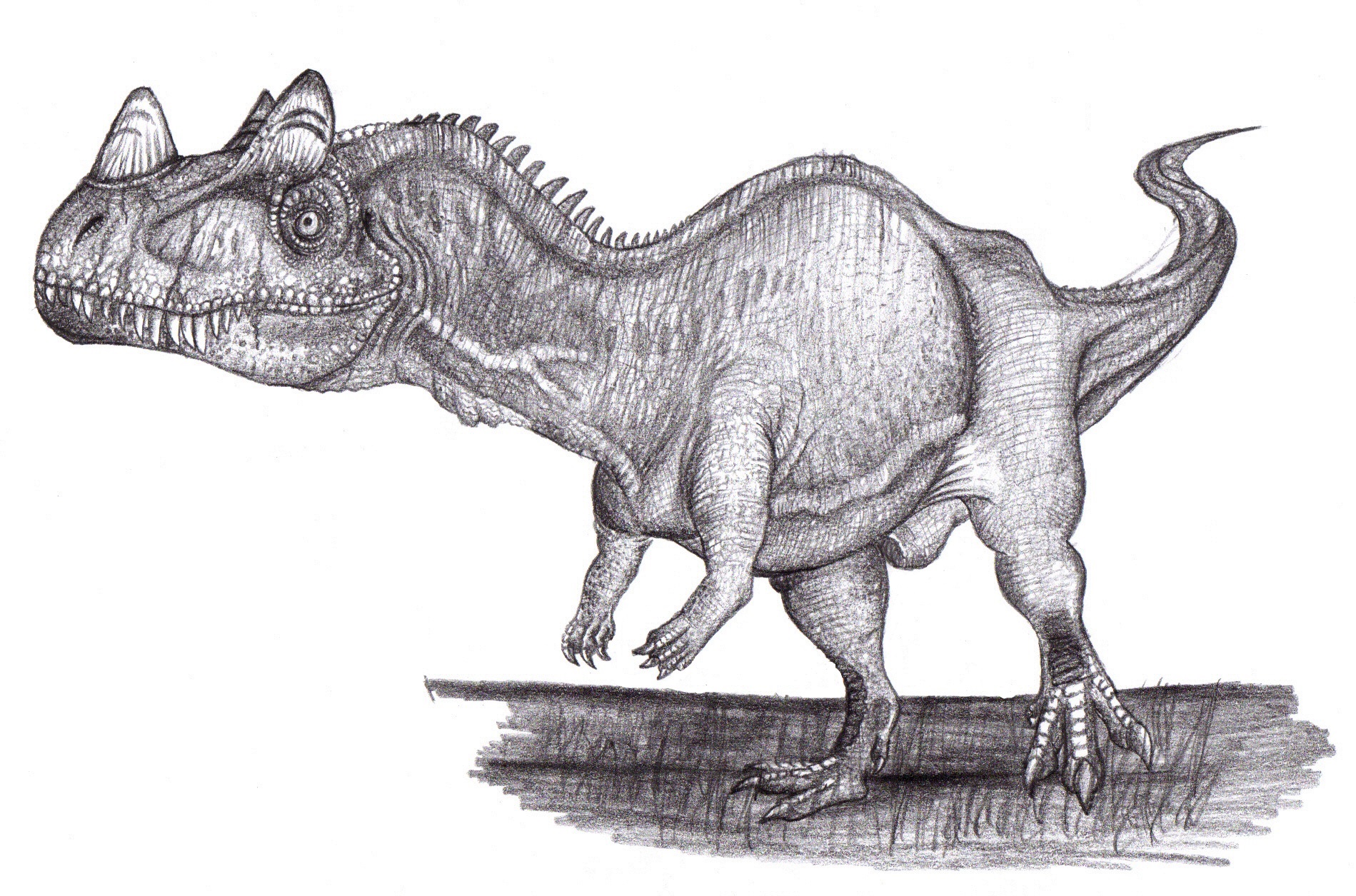
Ceratosaurus nasicornis was one of the most distinctive predators of the Late Jurassic of North America. It lived approximately 153 to 148 million years ago in the Morrison Formation, sharing its ecosystem with Allosaurus and Torvosaurus. Its most striking feature is a prominent bony horn on the midline of the snout, along with a pair of ridges over the eyes. It was also the only theropod known to have osteoderms: small bony plates running along the dorsal midline. At roughly 6 meters long and 500 kg, it was an agile mid-sized predator, formally described by Othniel Charles Marsh in 1884.
Geological formation & environment
The Morrison Formation is a sequence of Late Jurassic sedimentary rocks (Kimmeridgian-Tithonian, approximately 156 to 147 Ma) extending over more than 1.5 million km² across the western United States, covering states such as Colorado, Utah, Wyoming, Montana, and New Mexico. Deposited under a semiarid climate with seasonal rivers and floodplains, the Morrison hosts one of the world's richest and most diverse dinosaur faunas: giant sauropods such as Apatosaurus, Diplodocus, and Brachiosaurus; theropods like Allosaurus, Ceratosaurus, and Torvosaurus; ornithischians such as Stegosaurus and Camptosaurus. This formation is the epicenter of North American paleontology and the stage of the famous Bone War between Marsh and Cope in the 19th century.
Image gallery


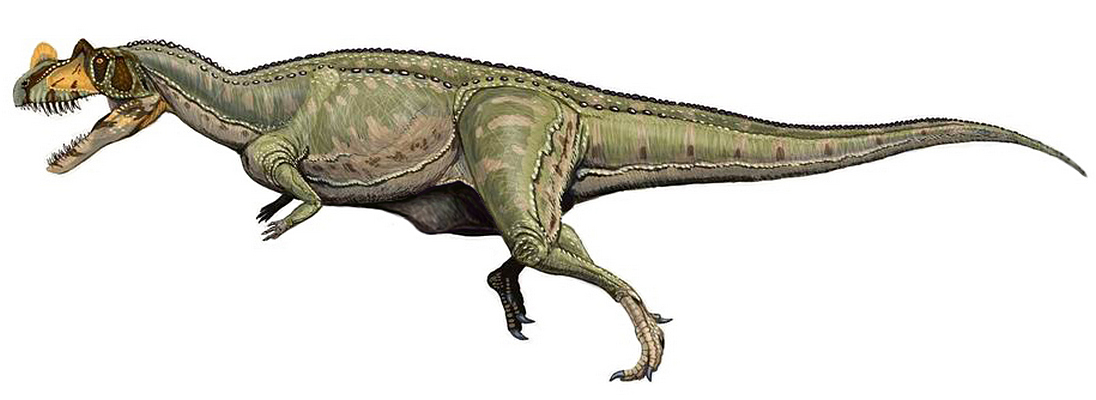


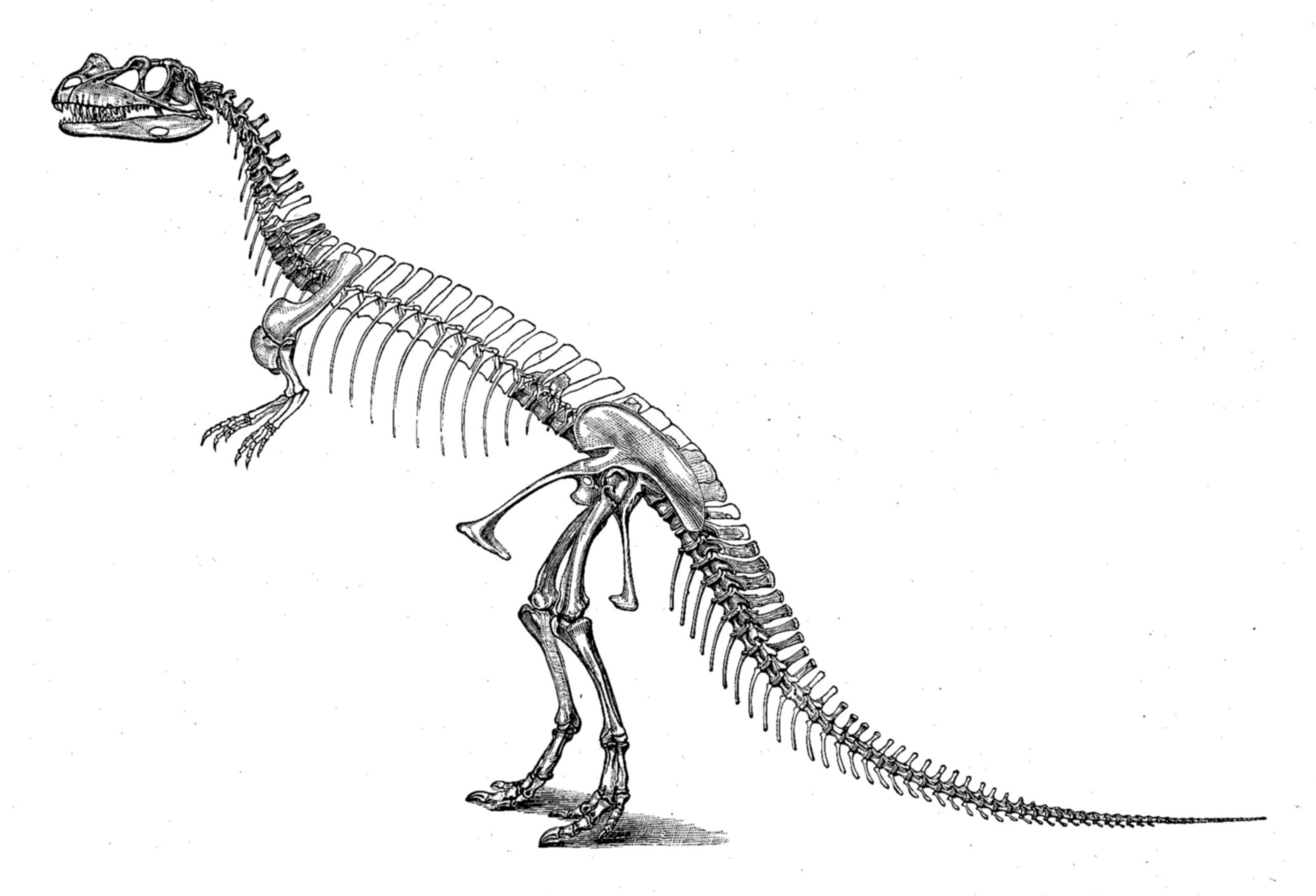


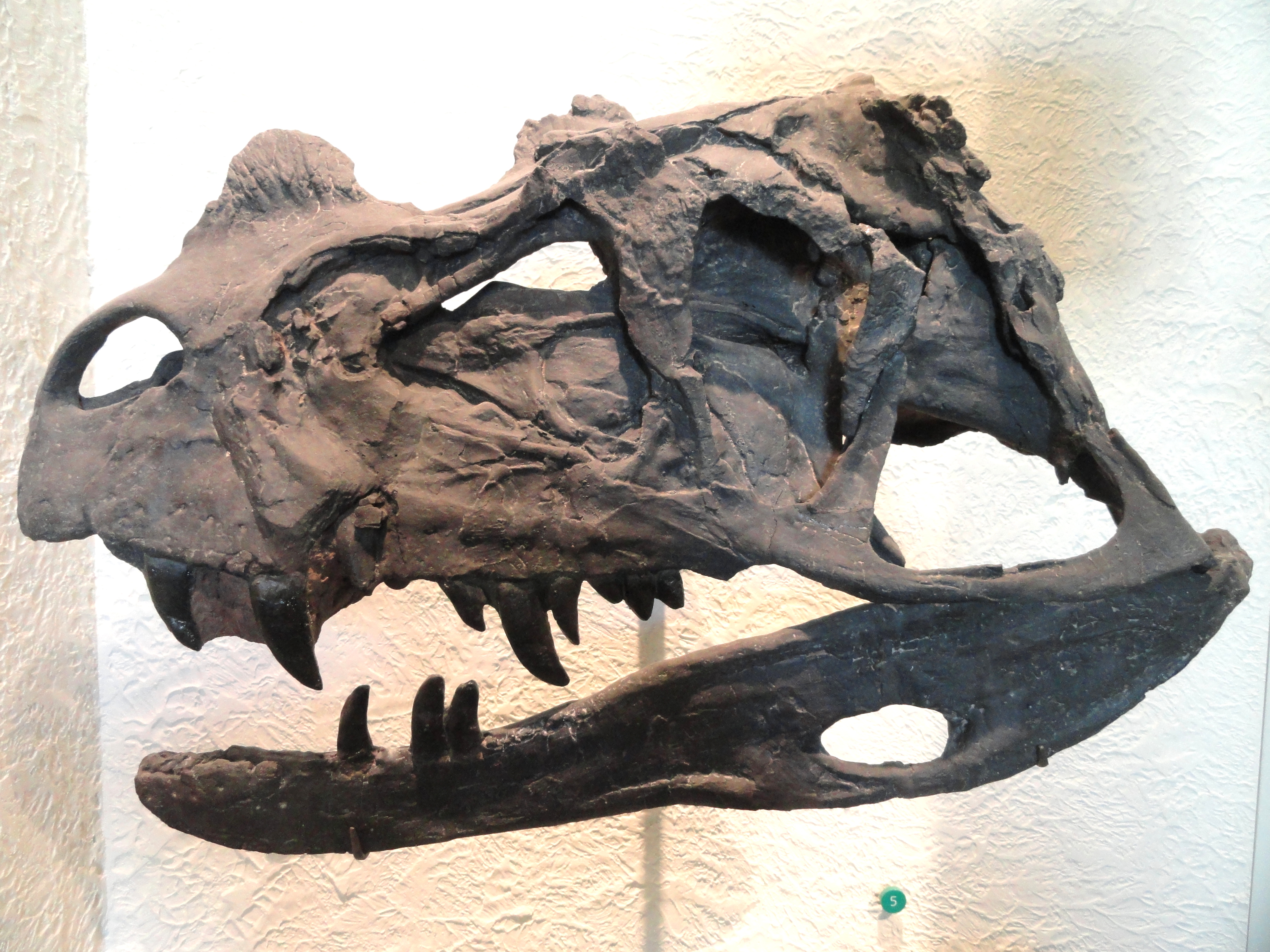

Scientific reconstruction of Ceratosaurus nasicornis showing the prominent nasal horn, supraorbital ridges, and dorsal osteoderms characteristic of this unique Late Jurassic species.
TotalDino — CC BY 4.0
Ecology and behavior
Habitat
Ceratosaurus nasicornis inhabited the semiarid alluvial plains of the Morrison Formation, an environment with marked seasonality: alternating wet and dry seasons. The ecosystem included seasonal rivers and lakes, floodplains, riparian conifer and fern forests, and vast open areas. It shared this environment with other large predators such as Allosaurus fragilis and Torvosaurus tanneri, along with large herbivores including Apatosaurus, Diplodocus, Brachiosaurus, Stegosaurus, and Camptosaurus.
Feeding
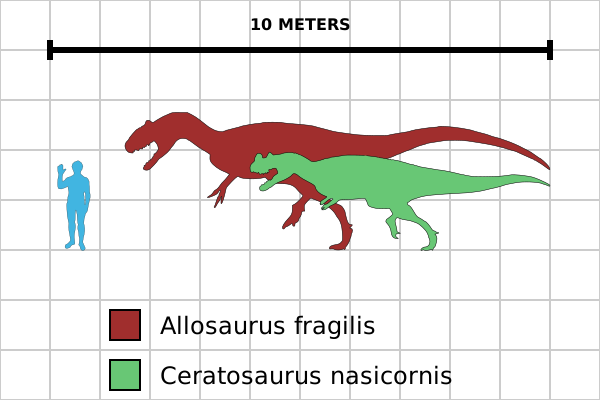
Ceratosaurus was an active carnivore with characteristic dentition: teeth longer and more laterally compressed than Allosaurus, forming efficient serrated blades for cutting meat. Cranial morphology analyses suggest it hunted medium-sized prey, including ornithopods and juvenile sauropods. Its narrower snout compared to Allosaurus produced distinct bite force patterns, possibly favoring smaller prey. Niche partitioning studies indicate the three large Morrison predators — Ceratosaurus, Allosaurus, and Torvosaurus — avoided direct competition by targeting different prey sizes.
Behavior and senses
Little is known with certainty about Ceratosaurus social behavior from direct evidence. The prominent nasal horn and supraorbital ridges suggest display function — intraspecific recognition, sexual selection, or territorial dominance demonstrations. Dorsal osteoderms may have served thermoregulatory or display functions. The presence of multiple specimens at some localities such as Cleveland-Lloyd Quarry suggests possible social tolerance, but does not confirm gregarious behavior. Bone histology studies confirm rapid growth, indicating a relatively short immaturity period.
Physiology and growth
The bone histology study by Sombathy et al. (2025) revealed Ceratosaurus nasicornis had fibrolamellar bone tissue with high vascular density, indicating exceptionally fast growth rates for a theropod of its size, comparable to some tyrannosaurids. This suggests elevated metabolism, consistent with advanced endothermy or mesothermy. Ceratosaurus is the only known non-avian theropod with postcranial osteoderms, dermal bone plates that may have had thermoregulatory function. The relatively robust hindlimb musculature and pelvic girdle indicate good locomotor capacity.
Paleogeography
Continental configuration

Ron Blakey · CC BY 3.0 · Jurassic, ~90 Ma
During the Kimmeridgiano-Titoniano (~153–148 Ma), Ceratosaurus nasicornis inhabited the fragmenting Pangea. North America and Europe were still close, and the North Atlantic was just beginning to open. Climate was warm and humid globally, with no polar ice caps.
Inventário de Ossos
The holotype USNM 4735, discovered in 1883 at Garden Park, Colorado, is a near-complete skeleton of 5.3 to 5.7 meters. Additional specimens such as MWC 1 (Fruita, Colorado) and UMNH VP 5278 (Utah) contributed cranial and postcranial bones that substantially refined anatomical knowledge of the species.
Found elements
Inferred elements
Scientific Literature
15 papers in chronological order — from the original description to recent research.
Principal characters of American Jurassic dinosaurs, Part VIII: The order Theropoda
Marsh, O.C. · American Journal of Science
The founding paper of Ceratosaurus studies. Othniel Charles Marsh describes the genus and species Ceratosaurus nasicornis from a near-complete skeleton collected by Marshall Felch at Garden Park, Colorado. Marsh highlights the prominent nasal horn, fused ankle bones, and distinctive dentition as diagnostic for the new taxon. The name 'nasicornis' derives from the Latin nasus (nose) and cornu (horn), reflecting its most striking feature. This is the primary reference for all research on the species and establishes the morphological parameters that would guide decades of study. Marsh also compares the new dinosaur with European Megalosaurus and other Morrison theropods, placing Ceratosaurus as a distinct and powerful predator of the North American Jurassic.
Osteology of the carnivorous Dinosauria in the United States National Museum, with special reference to the genera Antrodemus (Allosaurus) and Ceratosaurus
Gilmore, C.W. · Bulletin of the United States National Museum
Classic osteological monograph by Charles W. Gilmore providing the most complete anatomical description of Ceratosaurus until the mid-20th century. Based on holotype USNM 4735, the work systematically describes each skeletal element with high-quality illustrations. Gilmore documents the dorsal osteoderms, a structure without parallel in other Morrison Formation theropods, and compares Ceratosaurus anatomy in detail with Allosaurus. The work includes precise bone measurements, discussion of posture and locomotion, and dentition analysis. Published in the Bulletin of the United States National Museum (vol. 110), this monograph became a mandatory reference for over eight decades and is still cited in virtually all subsequent studies.


Ceratosaurus (Dinosauria, Theropoda): A Revised Osteology
Madsen, J.H. & Welles, S.P. · Utah Geological Survey Miscellaneous Publication
Revised osteological monograph updating Gilmore's (1920) work in light of new specimens and modern methods. Madsen and Welles describe two new taxa — C. dentisulcatus (Fruita, Colorado) and C. magnicornis (Cleveland-Lloyd, Utah) — based on articulated skeletons. The work provides detailed description of skeletal elements previously ignored or poorly documented, revisits genus taxonomy, and discusses phylogenetic implications of morphological differences between specimens. Today both new species are generally considered synonyms of C. nasicornis, but the monograph remains a fundamental anatomical reference and the most complete catalog of known intraspecific variation in Ceratosaurus.
The phylogeny of Ceratosauria (Dinosauria: Theropoda)
Carrano, M.T. & Sampson, S.D. · Journal of Systematic Palaeontology
Most comprehensive phylogenetic analysis of Ceratosauria published to date, encompassing nearly 40 taxa from the Late Jurassic through Late Cretaceous. Carrano and Sampson recover Ceratosaurus as the sister taxon to Neoceratosauria (encompassing Noasauridae and Abelisauridae) and provide new phylogenetic definitions for major ceratosaurian clades. The work shows Ceratosaurus represents a basal lineage that diverged before the great abelisaurid radiation in Gondwana. The analysis uses 243 morphological characters and establishes a topology that would be refined in subsequent studies. This paper is the most cited phylogenetic reference for Ceratosaurus placement within Theropoda.

New information on the forearm and manus of Ceratosaurus nasicornis Marsh, 1884 (Dinosauria, Theropoda), with implications for theropod forelimb evolution
Carrano, M.T. & Choiniere, J. · Journal of Vertebrate Paleontology
Anatomical study focused on the forearm and manus of Ceratosaurus nasicornis, revealing previously unknown morphological details. Carrano and Choiniere describe the great morphological similarity of the Ceratosaurus hand with those of other basal theropods, contrasting with the highly derived hands of tetanurans. The work discusses implications for forelimb evolution in theropod dinosaurs, a central topic in discussions about bird origins. The analysis shows Ceratosaurus retained a plesiomorphic forearm morphological state allowing direct comparisons with other Jurassic theropods. This paper substantially updates anatomical knowledge and is fundamental for theropod phylogeny discussions.
Ceratosaur palaeobiology: new insights on evolution and ecology of the southern rulers
Delcourt, R. · Scientific Reports
Comprehensive review of ceratosaur palaeobiology using Ceratosaurus nasicornis as a key outgroup to analyze neoceratosaur diversification in Gondwana during the Cretaceous. Delcourt examines phylogenetic relationships, ecology, and functional morphology across Ceratosauria, including data on cranial anatomy, skin impressions, and inferred integumentary structures in abelisaurids. The work proposes the new clade Etrigansauria to encompass Ceratosauridae and Abelisauroidea, and discusses how Ceratosaurus represents the ancestral condition for this entire evolutionary radiation. Published in Scientific Reports (Nature), the paper is open access and has become a fundamental reference for ceratosaur palaeobiology.

Osteohistology of the unusually fast-growing theropod dinosaur Ceratosaurus
Sombathy, R., O'Connor, P.M. & D'Emic, M.D. · Journal of Anatomy
Bone histological analysis of multiple Ceratosaurus nasicornis specimens reveals exceptionally fast growth rates for a non-avian theropod of its size. Sombathy and colleagues identify fibrolamellar bone tissue with high vascular density, indicating rapid and sustained growth throughout ontogeny, comparable to rates seen in some tyrannosaurids. The study also shows Ceratosaurus is the only theropod known with postcranial osteoderms, and these additional bony elements did not compromise locomotor agility. Published in 2025, it is the most recent and complete bone histology study on the species, providing critical data on the physiology and metabolism of this Jurassic predator.


Comments on the ecology of Jurassic theropod dinosaur Ceratosaurus (Dinosauria: Theropoda) with critical reevaluation for supposed semiaquatic lifestyle
Yun, C. · Volumina Jurassica
Critical review of ecological hypotheses for Ceratosaurus nasicornis, specifically addressing the semiaquatic lifestyle hypothesis. Yun systematically analyzes evidence proposed by previous researchers, including supposed lateral tail undulation and habitat associations. The analysis shows that external naris position at the snout tip (unlike the elevated position in crocodilians) made a minimal-exposure head-at-water posture improbable. The study concludes available evidence does not support a semiaquatic lifestyle and Ceratosaurus was a conventional terrestrial predator. Published in Volumina Jurassica (vol. XVII), the paper clarifies ecological debates spanning decades.

The implications of a dry climate for the paleoecology of the fauna of the Upper Jurassic Morrison Formation
Engelmann, G.F., Chure, D.J. & Fiorillo, A.R. · Sedimentary Geology
Sedimentological and paleobotanical analysis demonstrates the Morrison Formation was deposited under a semiarid climate with pronounced seasonal variation, not the lush tropical environment often imagined. Engelmann, Chure, and Fiorillo reconstruct an environment of alluvial plains with seasonal rivers, conifer and fern vegetation, and severe dry seasons. For Ceratosaurus and other large Morrison predators, this dry climate had profound ecological implications: large herbivores concentrated near water sources during the dry season, creating predation opportunities. The work also discusses how climatic conditions influenced fossil preservation patterns and faunal assemblage structure.


Southern hemisphere ceratosaurs evolved feeding mechanics paralleling those of Northern hemisphere tyrannosaurids
Rowe, A.J., Cerroni, M.A. & Rayfield, E.J. · Scientific Reports
Cranial biomechanics study using finite element analysis (FEA) of ceratosaur skulls including Ceratosaurus nasicornis, revealing that southern hemisphere ceratosaurs evolved feeding mechanics convergently similar to northern hemisphere tyrannosaurids. Ceratosaurus skull stress patterns differ from those of abelisaurids, reflecting different ecological strategies. The work shows the longer, narrower snout of Ceratosaurus produced a characteristic bite force pattern, different from the short, tall snout of Gondwanan abelisaurids. Published in Scientific Reports in 2026, it is the most recent cranial biomechanics study on the species.


Reassessment of theropod material from the Late Jurassic of Portugal and implications for the biogeography of Ceratosaurus
Turner, A.H. & Pol, D. · Journal of Vertebrate Paleontology
Reassessment of theropod material from the Lourinhã Formation of Portugal previously attributed to Ceratosaurus, discussing biogeographic implications of the genus occurring on both sides of the early Atlantic. The study analyzes teeth and bone fragments to determine if Portuguese material can reliably be attributed to the same genus as the North American Morrison Formation form. Implications are significant for understanding terrestrial connections or dispersal events between North America and Europe during the Late Jurassic. This paper is central to Ceratosaurus biogeography discussion and demonstrates the species distribution was potentially broader than previously thought.

Skull and tooth morphology as indicators of niche partitioning in sympatric Morrison Formation theropods
Henderson, D.M. · Gaia
Analysis of skull and tooth morphology of Morrison Formation theropods including Ceratosaurus nasicornis, Allosaurus fragilis, and Torvosaurus tanneri, proposing that morphological differences reflect niche partitioning among sympatric predators. Henderson shows Ceratosaurus, with its narrower snout, longer teeth, and smaller body compared to Allosaurus, likely preyed on smaller prey or used distinct hunting techniques. The work pioneered application of quantitative morphometric analysis to infer predatory ecology from the Morrison Formation fossil record and establishes a coexistence model for the three large predators of this ecosystem.

A juvenile skull of Dysalotosaurus lettowvorbecki (Ornithischia: Iguanodontia), and implications for cranial ontogeny, phylogeny, and taxonomy in ornithopod dinosaurs
Hübner, T.R. & Rauhut, O.W.M. · Zoological Journal of the Linnean Society
Cranial ontogeny study in ornithopod dinosaurs including comparative analysis with the contemporary Morrison Formation fauna, including Ceratosaurus nasicornis as an ecosystem predator. The work discusses growth patterns in Late Jurassic dinosaurs and compares faunal assemblages from the Morrison (North America) and Tendaguru (Tanzania) formations, where Ceratosaurus or related ceratosaurs were also reported. This multifaunal context is fundamental for understanding Ceratosaurus ecological role across different Late Jurassic environments.


The dinosaurs of North America
Marsh, O.C. · Annual Report of the United States Geological Survey
Comprehensive illustrated review of North American dinosaurs known at the time, including expanded discussion of Ceratosaurus nasicornis. Marsh provides skeletal reconstructions, comparative anatomy, and discussion of relationships among major Morrison Formation theropod groups. This inaugural work establishes Ceratosaurus as one of the most distinctive predators of the North American Jurassic and includes the first artistic reconstructions of the animal, influencing public perception of the species for decades. Published as a U.S. Geological Survey annual report, it became a reference work of 19th-century North American paleontology.

The Princeton Field Guide to Dinosaurs
Paul, G.S. · Princeton University Press
Encyclopedic dinosaur field guide with skeletal reconstructions and life restorations, including updated skeletal analysis of Ceratosaurus nasicornis based on all known specimens. Paul provides size and mass estimates based on his proprietary skeletal reconstruction methodology, placing the holotype USNM 4735 at 5.3 meters and the larger specimen UMNH VP 5278 at approximately 7 meters. Paul's reconstructions of Ceratosaurus became the most widely adopted visual references in scientific and popular paleontological literature. This work is continuously cited in subsequent anatomical studies as the basis for species body proportions.

Espécimes famosos em museus

USNM 4735 (Holótipo)
National Museum of Natural History (Smithsonian), Washington, D.C.
Holotype of Ceratosaurus nasicornis, discovered at Felch Quarry 1, Garden Park, Colorado. It is a near-complete skeleton of 5.3 to 5.7 meters in length. The skull measures 55 cm. It formed the basis of Marsh's (1884) original description and Gilmore's (1920) monograph.
MWC 1 (Ceratosaurus de Fruita)
Dinosaur Journey Museum, Fruita, Colorado
Specimen from the Fruita Paleontological Area (Colorado) including a complete skull with mandible, nasal bones, and various postcranial elements. Madsen and Welles (2000) used this material to describe C. dentisulcatus, today considered a synonym of C. nasicornis. The skull is the best preserved of the species.
UMNH VP 5278
Natural History Museum of Utah, Salt Lake City
Specimen from the Cleveland-Lloyd Dinosaur Quarry (Utah), the largest known Ceratosaurus, estimated at approximately 7 meters long and 1,000 to 1,240 kg. Madsen and Welles (2000) described this material as C. magnicornis, today considered a synonym of C. nasicornis. It represents one of the largest documented individuals of the species.
In cinema and popular culture
Ceratosaurus nasicornis made its screen debut in 1940, in the 'Rite of Spring' sequence of Disney's Fantasia, which marked the first large-scale appearance of a ceratosaur in cinema. Decades later, the animal gained renewed prominence with its appearance in Jurassic Park III (2001), directed by Joe Johnston, in one of the film's most discussed scenes: the moment when the dinosaur approaches the human group at the riverbank, sniffs Spinosaurus dung, and quietly retreats. The scene was praised for its brevity and suggestion of natural animal behavior. In 2001, the Discovery Channel documentary When Dinosaurs Roamed America presented Ceratosaurus as a central character of the Late Jurassic, in a narrative of predation and interspecific competition with Allosaurus that would become a reference in education about the Morrison Formation fauna. The History Channel's Jurassic Fight Club (2008) amplified this rivalry in dramatic confrontation episodes between the two predators. Today Ceratosaurus appears regularly in games like Jurassic World Alive and in digital educational content, recognized by its distinctive silhouette with the nasal horn.

Classificação
Descoberta
Curiosidade
Ceratosaurus nasicornis is the only known non-avian theropod with osteoderms along its back: small dermal bony plates, similar to those of crocodiles, that ran along the dorsal midline. No other large Morrison Formation predator shared this feature. To complete its set of unique characteristics, it had a nasal horn, ridges over the eyes, and proportionally longer teeth than Allosaurus. It was, in short, the most ornamented predator in its ecosystem.