
Daspletosaurus torosus
Daspletosaurus torosus
"Frightful and muscular lizard"
Sobre esta espécie
Daspletosaurus torosus was one of the largest terrestrial predators of the Campanian in North America, approximately 9 meters long and weighing 2.5 metric tons. It inhabited what is now Alberta, Canada, between 77 and 74 million years ago. A member of the tribe Daspletosaurini within the family Tyrannosauridae, it was a direct ancestor in the lineage leading to Tyrannosaurus rex. It possessed the largest teeth among tyrannosaurids of its time, proportionally larger than those of T. rex itself, and was the first tyrannosaurid for which stomach contents were identified, revealing it preyed on hadrosaurs. Healed bite marks on skulls indicate intraspecific combat.
Geological formation & environment
The Oldman Formation, part of the Judith River Group, is a geological unit from the middle Campanian (79.5 to 77 Ma) of Alberta, Canada, deposited on coastal floodplains during the peak of the Cretaceous Interior Seaway. It is the formation of the Daspletosaurus torosus holotype. The overlying Dinosaur Park Formation (76.5 to 74.8 Ma) is one of the world's richest in dinosaurs, with at least 35 identified species, including multiple Daspletosaurus specimens. Both formations were deposited in low-altitude environments near the coast of the Interior Seaway, with subtropical climate and mixed conifer and flowering plant vegetation.
Image gallery
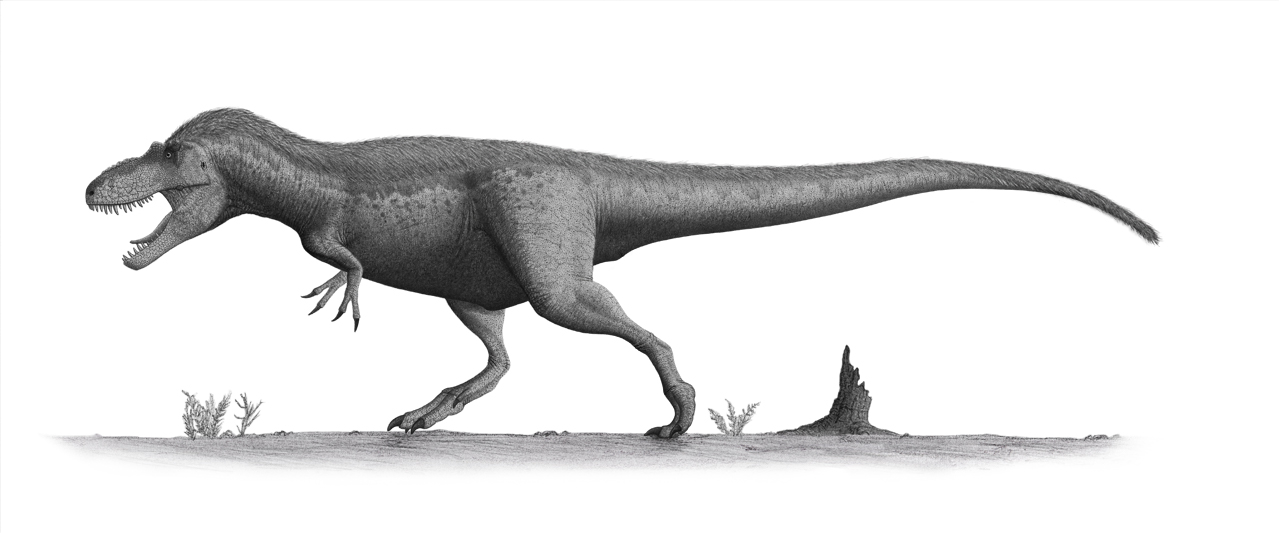


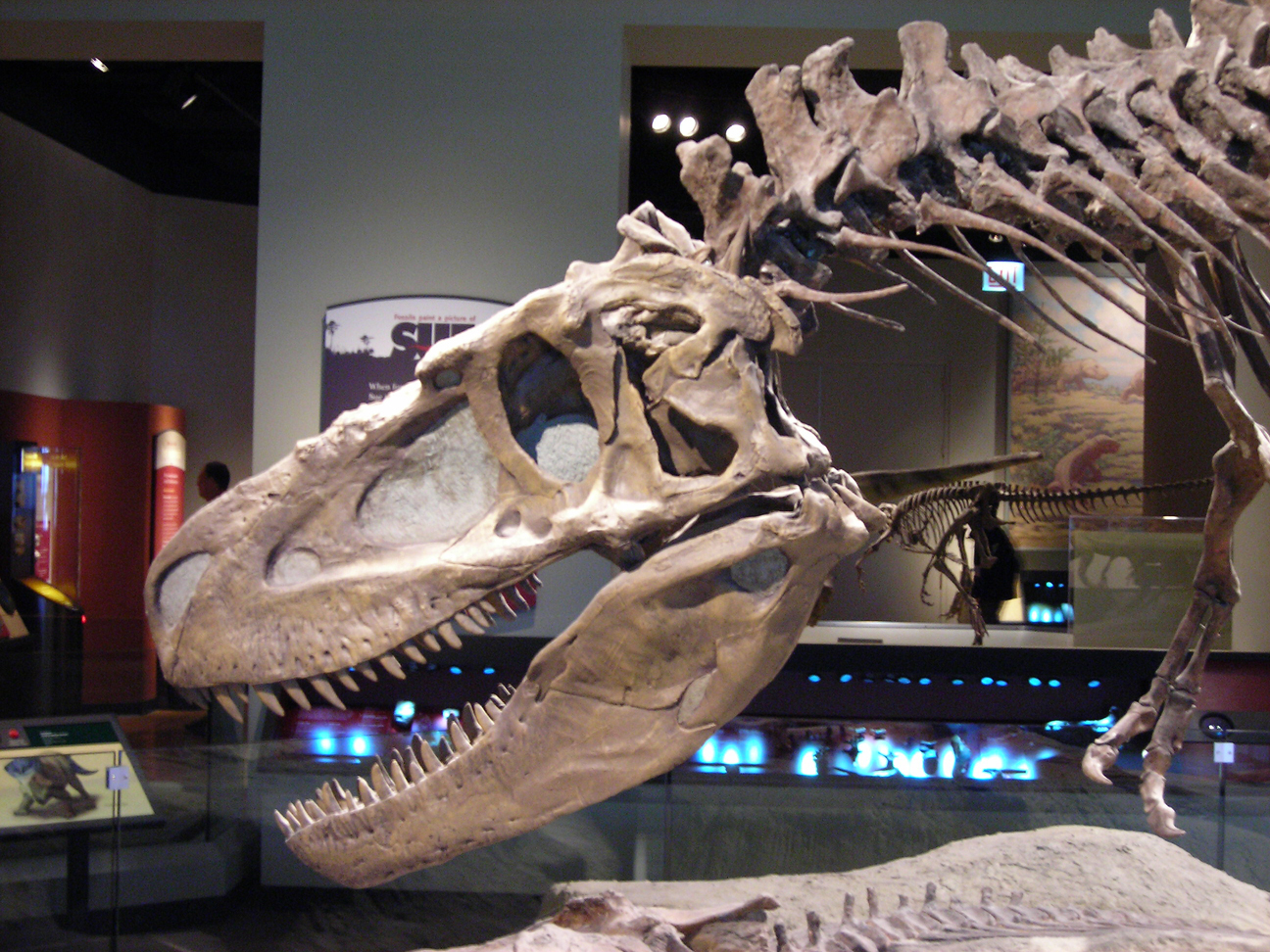


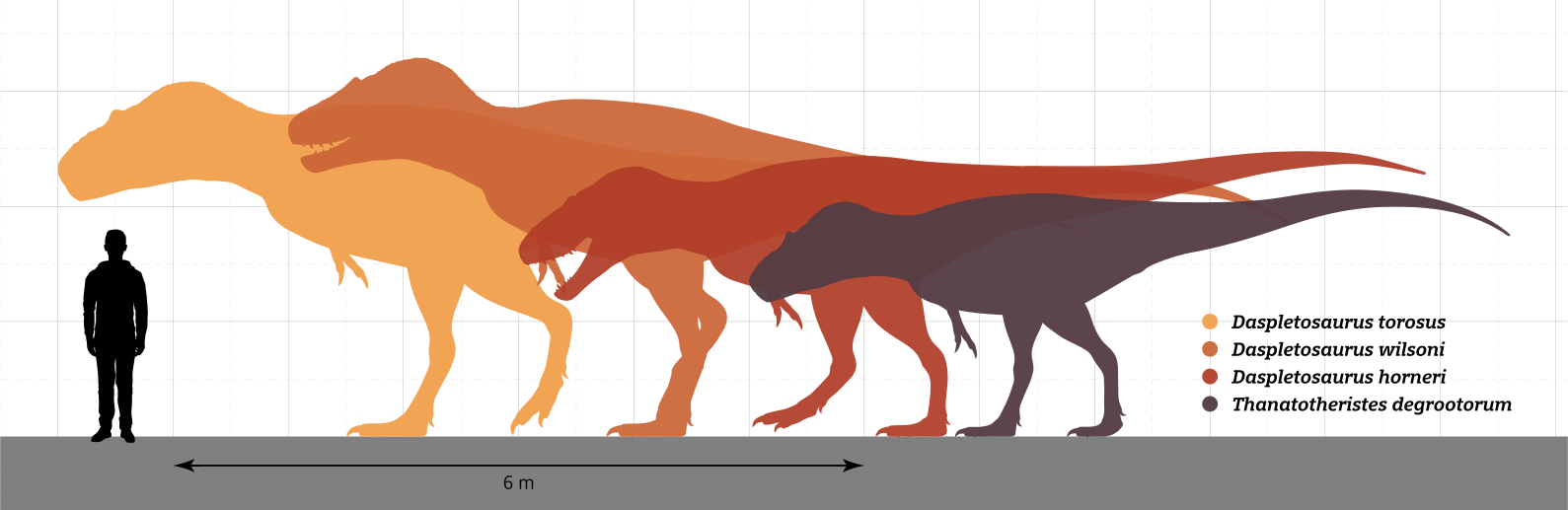


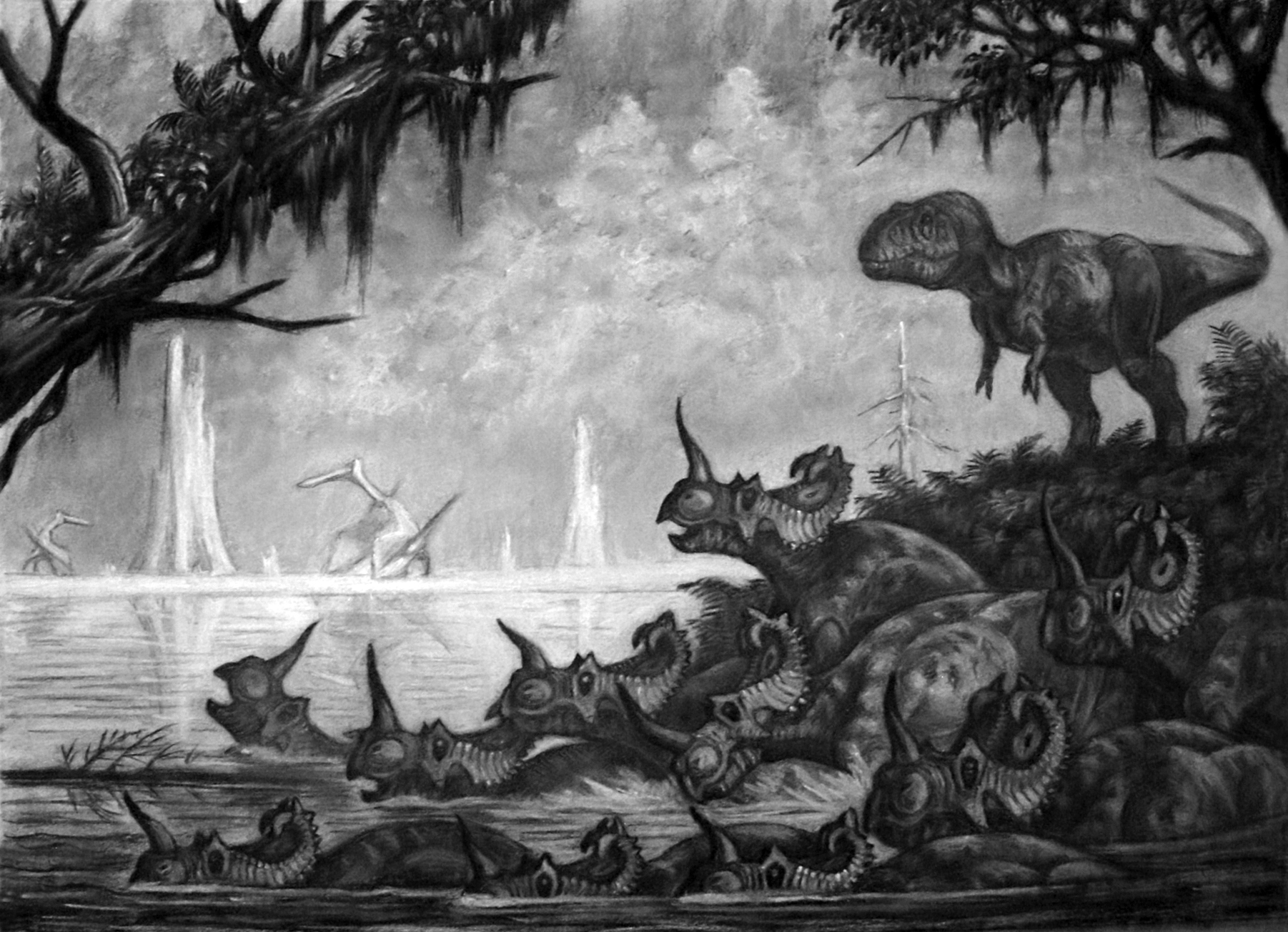
Life restoration of Daspletosaurus torosus showing the animal's general appearance with horizontal posture and robust musculature. Art by Steveoc 86 (2007).
Steveoc 86 — CC BY-SA 2.5
Ecology and behavior
Habitat
Daspletosaurus torosus inhabited the subtropical coastal plains of Laramidia, the western sub-continent formed when the Cretaceous Interior Seaway divided North America 77 to 74 million years ago. The environment was dominated by extensive conifer forests, palms, and flowering plants at various stages of evolution, cut through by river deltas and flood plains. The climate was warm and humid, without polar ice caps, with a higher average annual temperature than today. The Dinosaur Park Formation ecosystem is one of the best-documented of the Campanian, with a rich herbivore fauna including Centrosaurus, Parasaurolophus, and Euoplocephalus.
Feeding
As an apex predator, Daspletosaurus torosus was an ambush carnivore that hunted hadrosaurs, ceratopsids, and likely young individuals of smaller tyrannosaurids. Stomach contents described by Varricchio (2001) confirm that juvenile hadrosaurs were part of its diet. Its teeth, proportionally larger than those of T. rex, suggest a bite designed for deep penetration and retention of bulky prey. Hone & Tanke (2015) indicate active interactions with other tyrannosaurids, including possible cannibalism. The absence of large forelimb claws suggests the head was the primary capture weapon.
Behavior and senses
Behavioral evidence for Daspletosaurus torosus is exceptionally rich for a tyrannosaurid. Hone & Tanke (2015) document multiple healed premortem injuries to the skull of an immature specimen, indicating intraspecific combat. Craniofacial bites suggest dominance behavior similar to that observed in modern crocodilians. The possibility of group social behavior, raised by the Dinosaur Planet series (2003), remains speculative, as bonebed evidence with multiple individuals is more robust for D. horneri than for D. torosus. The facial sensory system described by Carr et al. (2017) suggests complex intraspecific communication.
Physiology and growth
Bone histology studied by Erickson et al. (2004) demonstrates that Daspletosaurus torosus was a fast-growing animal with elevated metabolism, consistent with endothermic or mesothermic thermoregulation similar to modern birds and crocodilians. Growth was uneven: slow in the juvenile phase, explosive during an approximately 4-year subadult spurt, and slow again in adulthood. Daspletosaurus grew at lower rates than T. rex, reaching its maximum size in approximately 20 years. The complex braincase described by Paulina Carabajal et al. (2021) reveals large olfactory bulbs, suggesting keen smell as a primary hunting tool.
Paleogeography
Continental configuration

Ron Blakey · CC BY 3.0 · Cretáceous, ~90 Ma
During the Campaniano (~77–74 Ma), Daspletosaurus torosus inhabited Laramidia, the western half of present-day North America, separated from the east by the Western Interior Seaway, a shallow sea dividing the continent. The continents were in very different positions: India was drifting toward Asia, Antarctica was still connected to Australia, and South America was an isolated island.
Inventário de Ossos
Based on the holotype CMN 8506 (skull, shoulder, forelimb, pelvis, femur, and cervical, dorsal, sacral, and first eleven caudal vertebrae) and several additional specimens from the Dinosaur Park Formation. No individual specimen is complete, but the known material collectively allows reliable skeletal reconstruction.
Found elements
Inferred elements
Scientific Literature
15 papers in chronological order — from the original description to recent research.
Tyrannosaurs from the Late Cretaceous of western Canada
Russell, D.A. · National Museum of Natural Sciences, Publications in Palaeontology
The founding paper formally naming and describing Daspletosaurus torosus for the first time, based on the holotype CMN 8506, a partial skull and skeleton collected in 1921 by Charles Mortram Sternberg from the Oldman Formation of Alberta. Russell establishes diagnostic characters: robust size comparable to Albertosaurus, proportionally larger maxillary teeth, and general tyrannosaurid morphology. The generic name combines the Greek δασπλής ('frightful') with σαυρος ('lizard'), and the specific epithet torosus from Latin means 'muscular.' The work places Daspletosaurus in a more derived position than Albertosaurus, identifying it as a close relative of Tyrannosaurus. This original description remains the fundamental taxonomic reference for all subsequent research on the species.
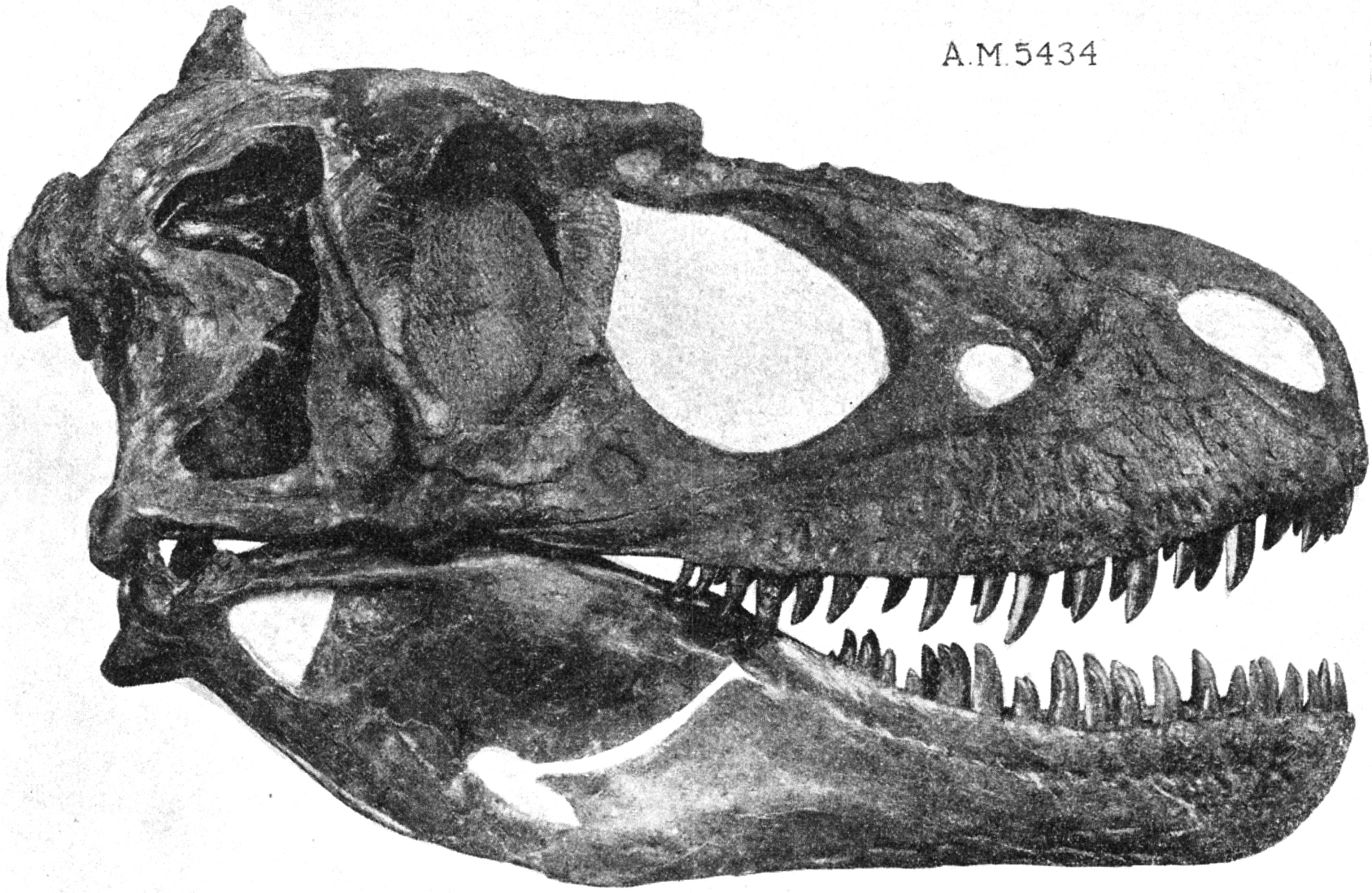
Cranial anatomy of tyrannosaurid dinosaurs from the Late Cretaceous of Alberta, Canada
Currie, P.J. · Acta Palaeontologica Polonica
A detailed comparative study of the cranial anatomy of Albertan tyrannosaurids, including Daspletosaurus torosus, Albertosaurus sarcophagus, and Gorgosaurus libratus. Currie systematically describes skull elements, identifying diagnostic characters for each taxon. For Daspletosaurus, the work documents the proportionally longer rostrum, morphology of orbital and postorbital processes, and cranial pneumatization patterns. The study includes comparisons with Asian tyrannosaurids and suggests specific phylogenetic relationships. This is the classic cranial morphological reference for Daspletosaurus, widely cited in all subsequent literature on North American tyrannosaurids.

Gigantism and comparative life-history parameters of tyrannosaurid dinosaurs
Erickson, G.M., Makovicky, P.J., Currie, P.J., Norell, M.A., Yerby, S.A. & Brochu, C.A. · Nature
A landmark study using bone histology to reconstruct life-history parameters for tyrannosaurids, including Daspletosaurus. Growth curves reveal a remarkable pattern: after a slow juvenile phase, there was an approximately four-year rapid growth spurt during which the animal gained approximately 180 kg per year. Sexual maturity coincided with the start of the spurt, and maximum adult size was reached in about 20 years. Daspletosaurus grew more slowly than T. rex, consistent with its smaller adult size. The work demonstrates that gigantism in Tyrannosaurus was achieved through extension of the rapid growth period, not acceleration of the growth rate itself. A fundamental reference for understanding Daspletosaurus developmental biology.
Craniofacial ontogeny in Tyrannosauridae (Dinosauria, Coelurosauria)
Carr, T.D. · Journal of Vertebrate Paleontology
A fundamental study documenting ontogenetic changes in tyrannosaurid craniofacial morphology. The work is especially important for Daspletosaurus torosus because it formally reassigns specimen FMNH PR308, previously identified as Gorgosaurus libratus and displayed as such at the Field Museum in Chicago for decades, to Daspletosaurus torosus based on diagnostic cranial characters detected through growth. Carr demonstrates that several characters used to distinguish tyrannosaurid taxa change significantly with ontogeny, making identification of juveniles difficult. The work establishes robust ontogenetic criteria for identifying Daspletosaurus specimens at different growth stages.


The phylogeny and evolutionary history of tyrannosauroid dinosaurs
Brusatte, S.L. & Carr, T.D. · Scientific Reports
A comprehensive phylogenetic analysis of Tyrannosauroidea using a merged dataset from previous publications, analyzed with both parsimony and Bayesian approaches for the first time for the group. Results provide a framework for interpreting the biogeography and evolutionary history of tyrannosauroids. In parsimony analysis, both species of Daspletosaurus form a clade of derived tyrannosaurines closely related to Tyrannosaurus. Bayesian analysis renders Daspletosaurus paraphyletic, showing tension between methodologies. The work suggests T. rex may have been an Asian migrant to North America, and that Daspletosaurus occupied a central position in the evolutionary transition to the giant Maastrichtian forms.

A new tyrannosaur with evidence for anagenesis and crocodile-like facial sensory system
Carr, T.D., Varricchio, D.J., Sedlmayr, J.C., Roberts, E.M. & Moore, J.R. · Scientific Reports
A study describing what would be named Daspletosaurus horneri from the Two Medicine Formation of Montana, positioning it as the sister taxon of D. torosus and providing evidence for anagenesis: gradual evolution within a lineage without branching. The work also finds that tyrannosaurid facial foramina, including those of Daspletosaurus, were likely associated with integumentary sensory organs analogous to those of modern crocodilians, suggesting high facial sensitivity, possibly used for partner recognition, egg manipulation, or prey location. This discovery profoundly changed how we conceive of tyrannosaurid behavior and facial appearance.
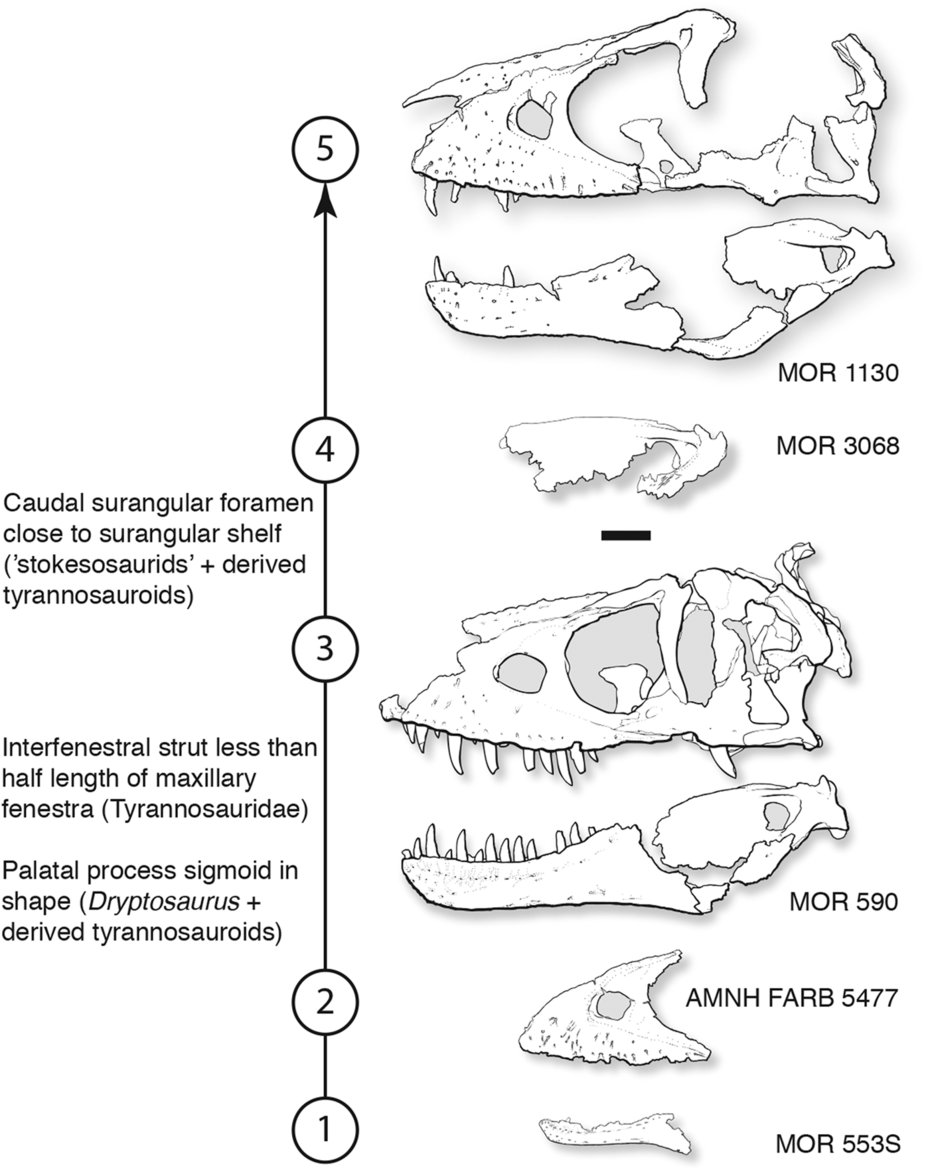

Pre- and postmortem tyrannosaurid bite marks on the remains of Daspletosaurus (Tyrannosaurinae: Theropoda) from Dinosaur Provincial Park, Alberta, Canada
Hone, D.W.E. & Tanke, D.H. · PeerJ
Analysis of an immature Daspletosaurus specimen from Dinosaur Provincial Park showing two distinct categories of injuries to the skull and mandible. Premortem injuries show evidence of healing, indicating the animal survived attacks from another large theropod, likely a conspecific. Postmortem injuries were caused by bites from a large tyrannosaurid after the carcass had begun decomposing. This study provides direct evidence of intraspecific craniofacial combat in tyrannosaurids, behavior analogous to that observed in modern crocodilians, and raises the possibility of cannibalism in the group. It represents the most direct behavioral evidence available for Daspletosaurus.
Gut contents from a Cretaceous tyrannosaurid: implications for theropod dinosaur digestive tracts
Varricchio, D.J. · Journal of Paleontology
A pioneering study describing stomach contents from a partial Daspletosaurus skeleton from the Two Medicine Formation of Montana. Remains include acid-etched hadrosaur juvenile vertebrae and a fragmentary dentary, consistent with gastric acid action. This is the first direct evidence of gut contents from a tyrannosaurid, confirming that Daspletosaurus preyed on hadrosaurs. The work also discusses theropod digestive tract anatomy based on comparisons with modern birds and reptiles. The discovery provides unique behavioral data that cannot be inferred from skeletal morphology alone.
Reassessment of a juvenile Daspletosaurus from the Late Cretaceous of Alberta, Canada with implications for the identification of immature tyrannosaurids
Voris, J.T., Zelenitsky, D.K., Therrien, F. & Currie, P.J. · Scientific Reports
Taxonomic reassessment of a juvenile tyrannosaurid specimen from the Dinosaur Park Formation of Alberta previously attributed to Daspletosaurus. Using comparative anatomical and phylogenetic analyses, the authors conclude that TMP 1994.143.1 instead belongs to the albertosaurine Gorgosaurus libratus. The finding reduces the juvenile record of Daspletosaurus to two isolated cranial elements, showing how ontogeny complicates identification of young tyrannosaurid specimens. A newly discovered postorbital from the Dinosaur Park Formation represents a small juvenile Daspletosaurus, marginally expanding the ontogenetic record of the species.

Two braincases of Daspletosaurus (Theropoda: Tyrannosauridae): anatomy and comparison
Paulina Carabajal, A., Currie, P.J., Dudgeon, T.W., Larsson, H.C.E. & Miyashita, T. · Canadian Journal of Earth Sciences
CT-based digital reconstruction of the two known Daspletosaurus braincases, revealing brain endocast, inner ear, and cranial nerve pathways with unprecedented precision. The study documents unique neuroanatomical features of holotype CMN 8506: elongate common carotid canal, distinct basisphenoid recess chamber, asymmetry in the basipterygoid foramen, and laterally reduced subcondylar recess. Comparison of the two specimens reveals more variation in braincase morphology than previously recognized in tyrannosaurids. The work provides data on Daspletosaurus sensory biology, including auditory capacity and aspects of vision.


A transitional species of Daspletosaurus Russell, 1970 from the Judith River Formation of eastern Montana
Warshaw, E.A. & Fowler, D.W. · PeerJ
Description of a new tyrannosaurid species, Daspletosaurus wilsoni, recovered from Montana and dated to approximately 76.5 Ma. The specimen occupies a chronological and morphological position intermediate between D. torosus and D. horneri, with a unique combination of ancestral and derived characters, including the autapomorphy of an elongate, dorsoventrally narrow mylohyoid foramen. Phylogenetic analysis positions D. wilsoni as sister taxon to more derived forms, strengthening anagenesis evidence within the genus Daspletosaurus, with implications for how speciation occurred in late Campanian tyrannosaurids.
A Subadult Frontal of Daspletosaurus torosus (Theropoda: Tyrannosauridae) from the Late Cretaceous of Alberta, Canada with Implications for Tyrannosaurid Ontogeny and Taxonomy
Yun, C.G. · PalArch's Journal of Vertebrate Palaeontology
Description of an isolated frontal bone of Daspletosaurus torosus from the Dinosaur Park Formation of Alberta, belonging to a large subadult individual. The study provides new data on ontogenetic changes in tyrannosaurid cranial morphology. The subadult frontal indicates that although the ontogeny of Daspletosaurus torosus was generally similar to that of Tyrannosaurus rex, there were specific differences. Furthermore, the work concludes that some autapomorphies recently suggested for certain tyrannosaurid taxa are inadequate due to their broad distribution within the clade, with implications for the validity of some described species.


A new chasmosaurine ceratopsid from the Judith River Formation, Montana
Ryan, M.J., Russell, A.P. & Hartman, S. · New Perspectives on Horned Dinosaurs: The Royal Tyrrell Museum Ceratopsian Symposium
Although focused on a new ceratopsid, this work is relevant to Daspletosaurus torosus because it documents the paleoenvironment and contemporary fauna of the Judith River Formation, where Daspletosaurus specimens are known. The study places Daspletosaurus in the ecological context of one of the richest Campanian ecosystems of Laramidia, with a diversity of large herbivores as potential prey. The documented paleoecology complements behavioral data from other sources, showing the diversity of prey available to Daspletosaurus in Campanian ecosystems.
Revised geochronology, correlation, and dinosaur stratigraphic ranges of the Santonian-Maastrichtian (Late Cretaceous) formations of the Western Interior of North America
Fowler, D.W. · PLOS ONE
Revision of the geochronology and correlation of the Late Cretaceous formations of North America, including the Oldman and Dinosaur Park formations of Alberta, where Daspletosaurus torosus is found. The work refines the absolute ages of these formations and the stratigraphic distributions of dinosaurs, including Daspletosaurus. The revised chronological data directly affect interpretation of evolutionary relationships within the genus Daspletosaurus and its placement in the context of Campanian tyrannosaurid evolution. It provides the fundamental temporal framework for understanding the evolutionary sequence within the genus.


Implications of a diet rich in fibrous plants for the shoulder height and bite force in ankylosaurs, ceratopsids, and hadrosaurs of Dinosaur Park Formation
Mallon, J.C. & Anderson, J.S. · Palaeogeography, Palaeoclimatology, Palaeoecology
Study of dietary niche partitioning among large herbivores of the Dinosaur Park Formation, the ecosystem of Daspletosaurus torosus. The work documents how ankylosaurs, ceratopsids, and hadrosaurs divided food resources, which directly affects how we understand prey availability for Daspletosaurus. The paleocommunity structure described — with rare apex predators and abundant, diverse herbivores — provides the paleoecological context for Daspletosaurus's lifestyle. The study demonstrates that the Campanian ecosystem of Alberta was one of the richest in megaherbivore diversity in the Mesozoic.


Espécimes famosos em museus
CMN 8506 (holótipo)
Canadian Museum of Nature, Ottawa, Canadá
Holotype of Daspletosaurus torosus, collected in 1921 from the Oldman Formation of Alberta. Includes skull, shoulder, forelimb, pelvis, femur, and cervical, dorsal, sacral, and first eleven caudal vertebrae. Basis of Russell's (1970) original description.
FMNH PR308
Field Museum of Natural History, Chicago, Estados Unidos
Specimen originally catalogued as AMNH 5434 and identified as Gorgosaurus libratus, later acquired by the Field Museum and reassigned to Daspletosaurus torosus by Thomas Carr in 1999. Displayed as Albertosaurus libratus for decades before reclassification.
RTMP 2001.36.1
Royal Tyrrell Museum of Palaeontology, Drumheller, Canadá
Specimen collected in 2001 from the Oldman Formation of Alberta. It provided additional material for comparative studies on Daspletosaurus torosus anatomy and was used in ontogeny and cranial morphology analyses.
In cinema and popular culture
Daspletosaurus torosus never achieved the stardom of T. rex or Velociraptor in commercial cinema, but built a consistent presence in specialized documentaries. Its most impactful debut was in the Discovery Channel series Dinosaur Planet (2003), where it starred in the episode 'Little Das' Hunt' with an unusual level of narrative characterization for documentaries: a young male trying to find his place in the family hierarchy. The BBC brought it back in Planet Dinosaur (2011) in the episode 'Last Killers', this time as an opportunistic hunter of Centrosaurus migrations, in a cinematic storm setting. The same CGI model was reused in Deadly Dinosaurs: With Steve Backshall (2016). In 2022, Apple TV's Prehistoric Planet series, narrated by David Attenborough and produced by Jon Favreau, represented it with the highest level of scientific fidelity yet achieved in popular media, incorporating the past decade's advances in facial morphology and developmental biology. Daspletosaurus remains a cult figure among paleontology enthusiasts, recognized as the direct ancestor of T. rex in the tyrannosaurid lineage.

Classificação

Descoberta
Curiosidade
Daspletosaurus torosus was the first tyrannosaurid for which stomach contents were identified: a specimen from the Two Medicine Formation of Montana preserved inside its abdominal cavity vertebrae and a fragmentary hadrosaur juvenile dentary with acid erosion marks. Dinner confirmed 77 million years ago.