Deinonychus
Deinonychus antirrhopus
"Terrible claw without counterpart (reference to the sickle-shaped claw on the second toe)"
Sobre esta espécie
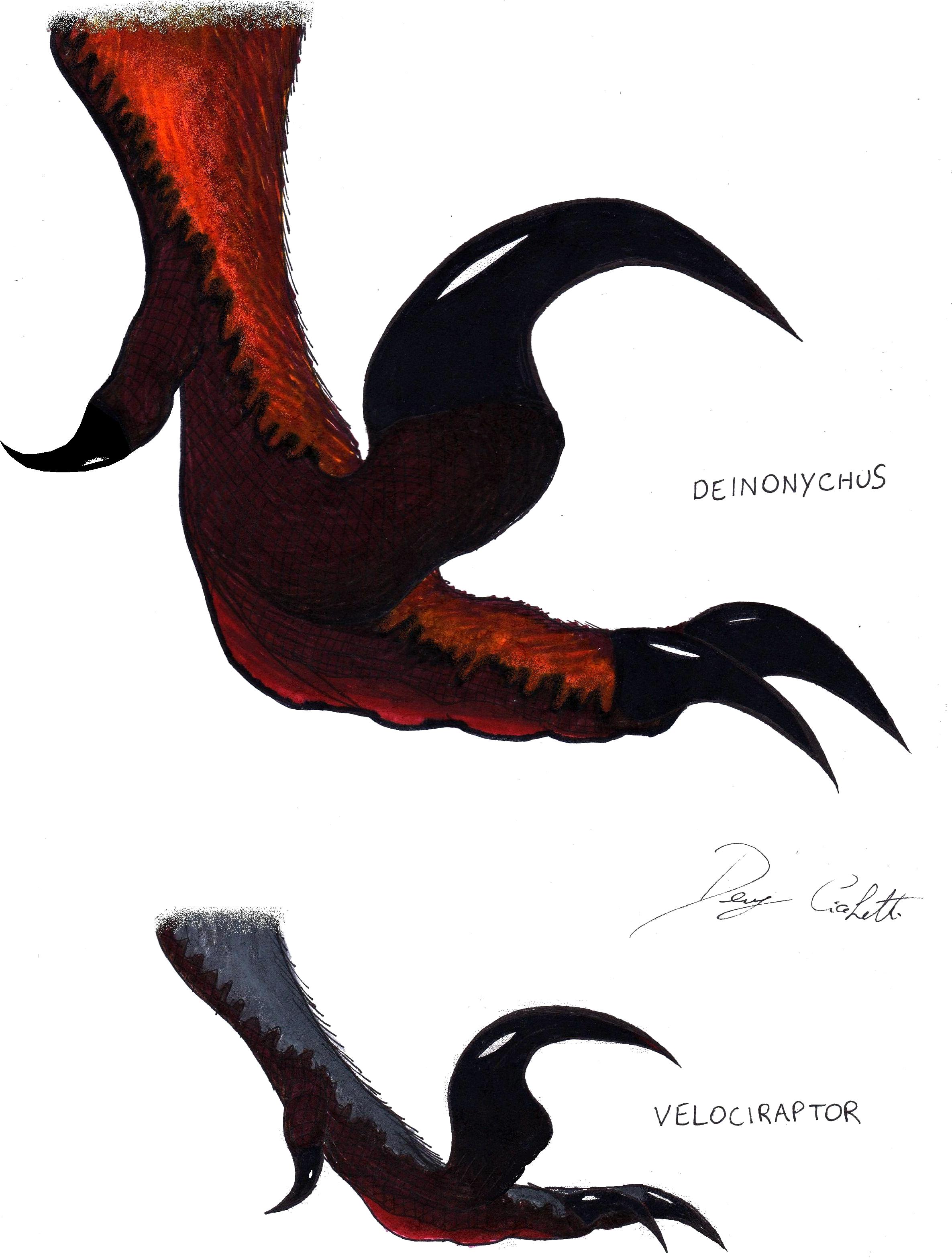
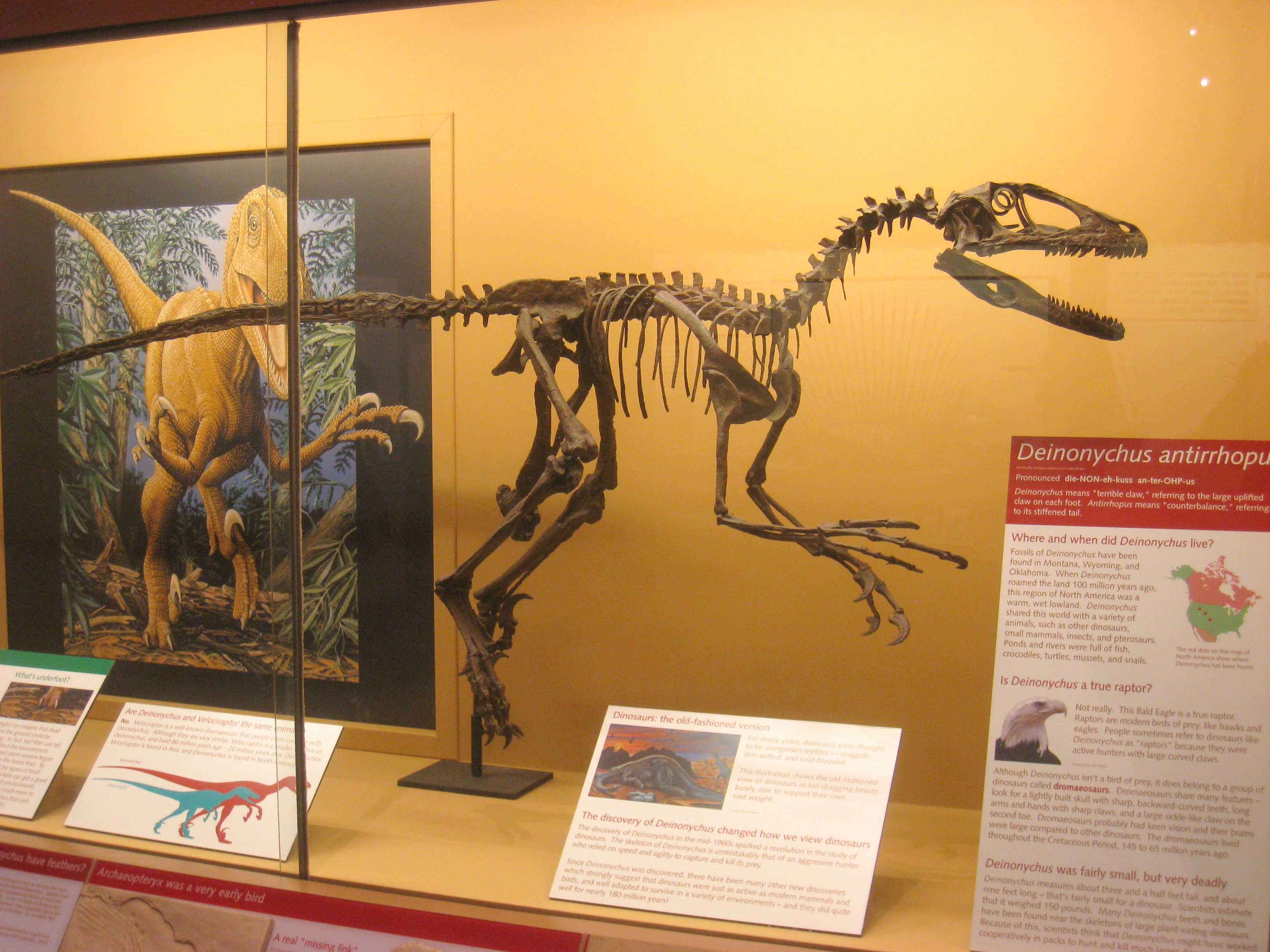
Deinonychus antirrhopus was one of the most sophisticated predators of the Early Cretaceous of North America. At approximately 3.4 meters long and 85 kg, it was distinguished by an enormous sickle-shaped claw on the second toe, measuring over 12 centimeters. Described by John Ostrom in 1969, Deinonychus revolutionized paleontology by demonstrating that dinosaurs could be agile, active animals, possibly endothermic. This discovery initiated the so-called 'Dinosaur Renaissance' and directly influenced the creation of Jurassic Park. The animal was also pivotal in establishing the hypothesis that birds are descended from theropod dinosaurs.
Geological formation & environment
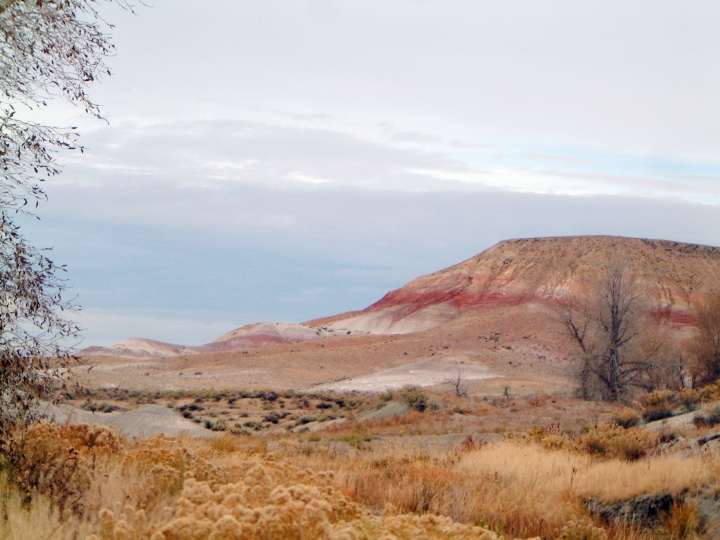
The Cloverly Formation is an Early Cretaceous geological unit (Aptian-Albian, approximately 119-108 Ma) that outcrops in Montana, Wyoming, and Utah in the United States. It represents a fluvio-deltaic system in a tropical to subtropical environment, with meandering rivers, lakes, and floodplains. In addition to Deinonychus antirrhopus, the formation preserved the ornithopod Tenontosaurus tilletti, the nodosaurid Sauropelta edwardsorum, the crocodilian Goniopholis, and various species of fish, turtles, and early mammals. The Antlers Formation of Oklahoma is correlatable to the Cloverly and preserves the same fauna.
Image gallery





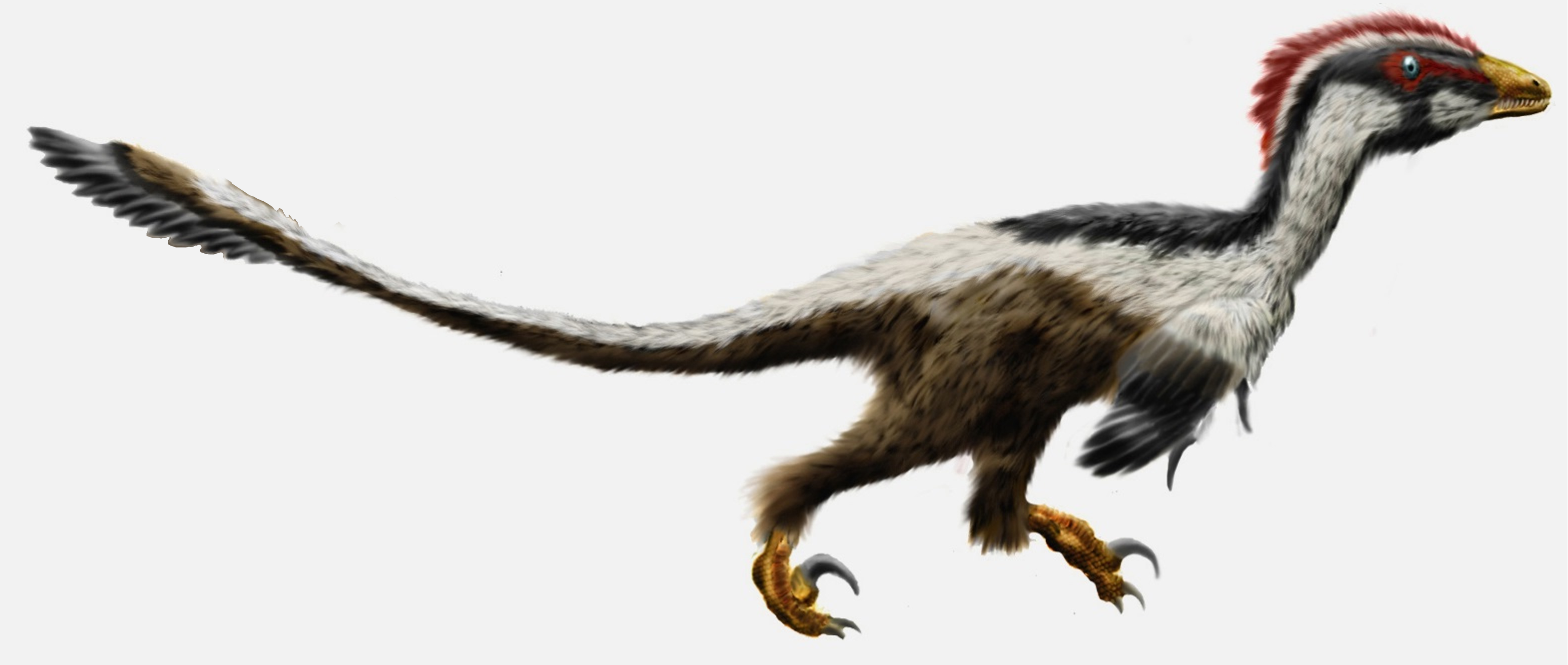


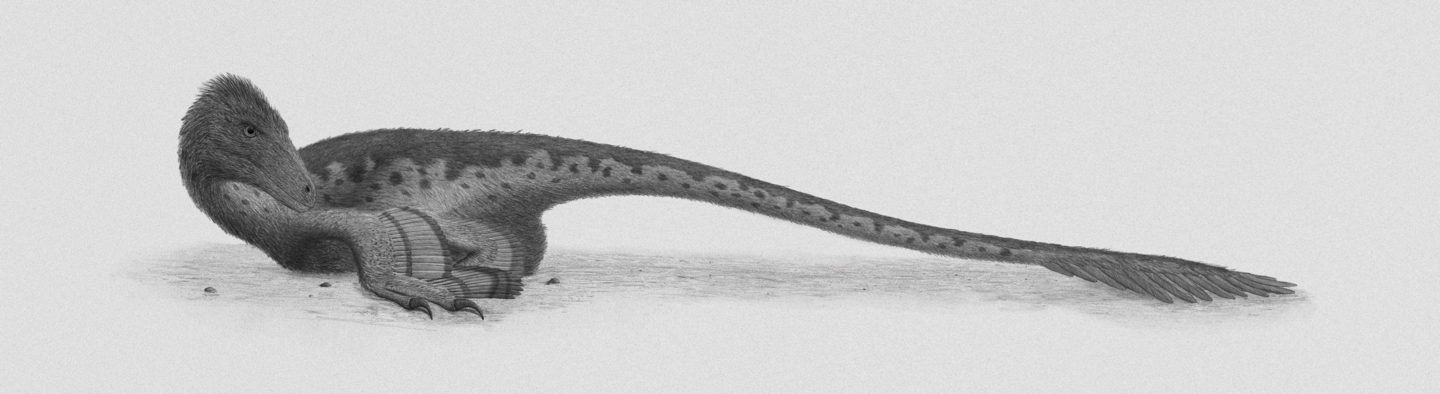
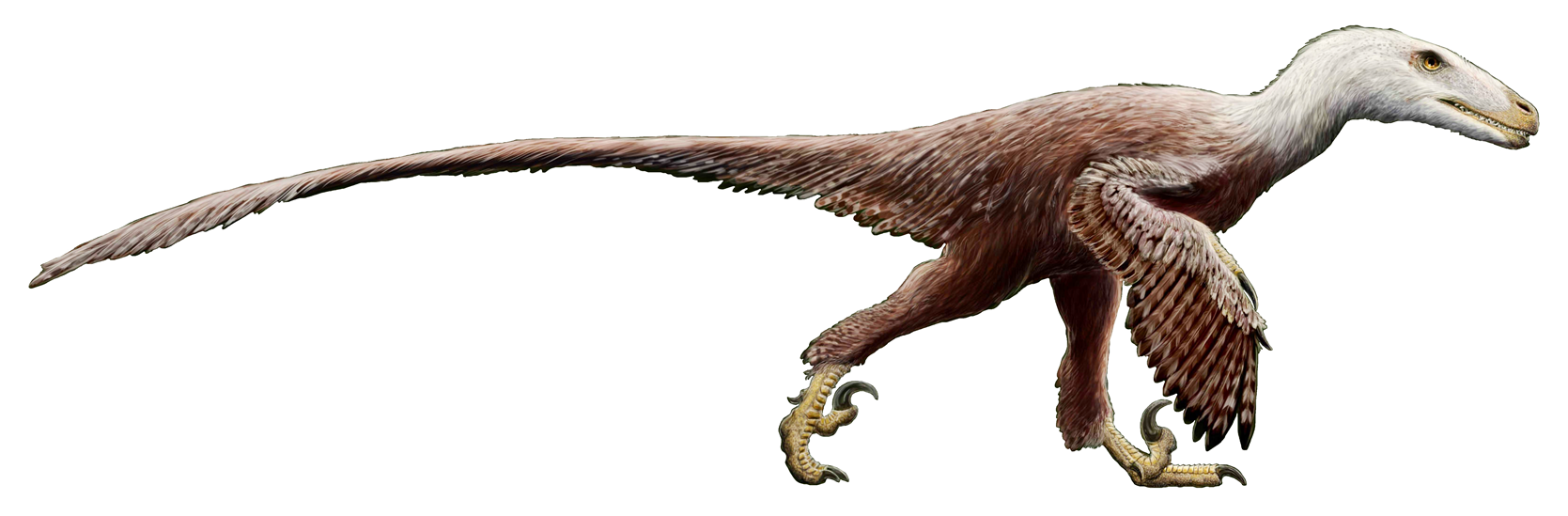
Scientific reconstruction of Deinonychus antirrhopus by Emily Willoughby (2014), with proportions based on Scott Hartman's skeletal diagram and plumage consistent with close relatives.
Emily Willoughby — CC BY-SA 4.0
Ecology and behavior
Habitat
Deinonychus antirrhopus inhabited the alluvial plains and riparian forests of the Cloverly Formation, in the Early Cretaceous of Montana, Wyoming, and Oklahoma, approximately 115 to 108 million years ago. The environment was tropical to subtropical, with meandering rivers, swamps, and extensive floodplains. Vegetation included tree ferns, conifers, cycads, and the earliest angiosperms. The ecosystem was shared with Tenontosaurus, Sauropelta, and the enormous Acrocanthosaurus.
Feeding
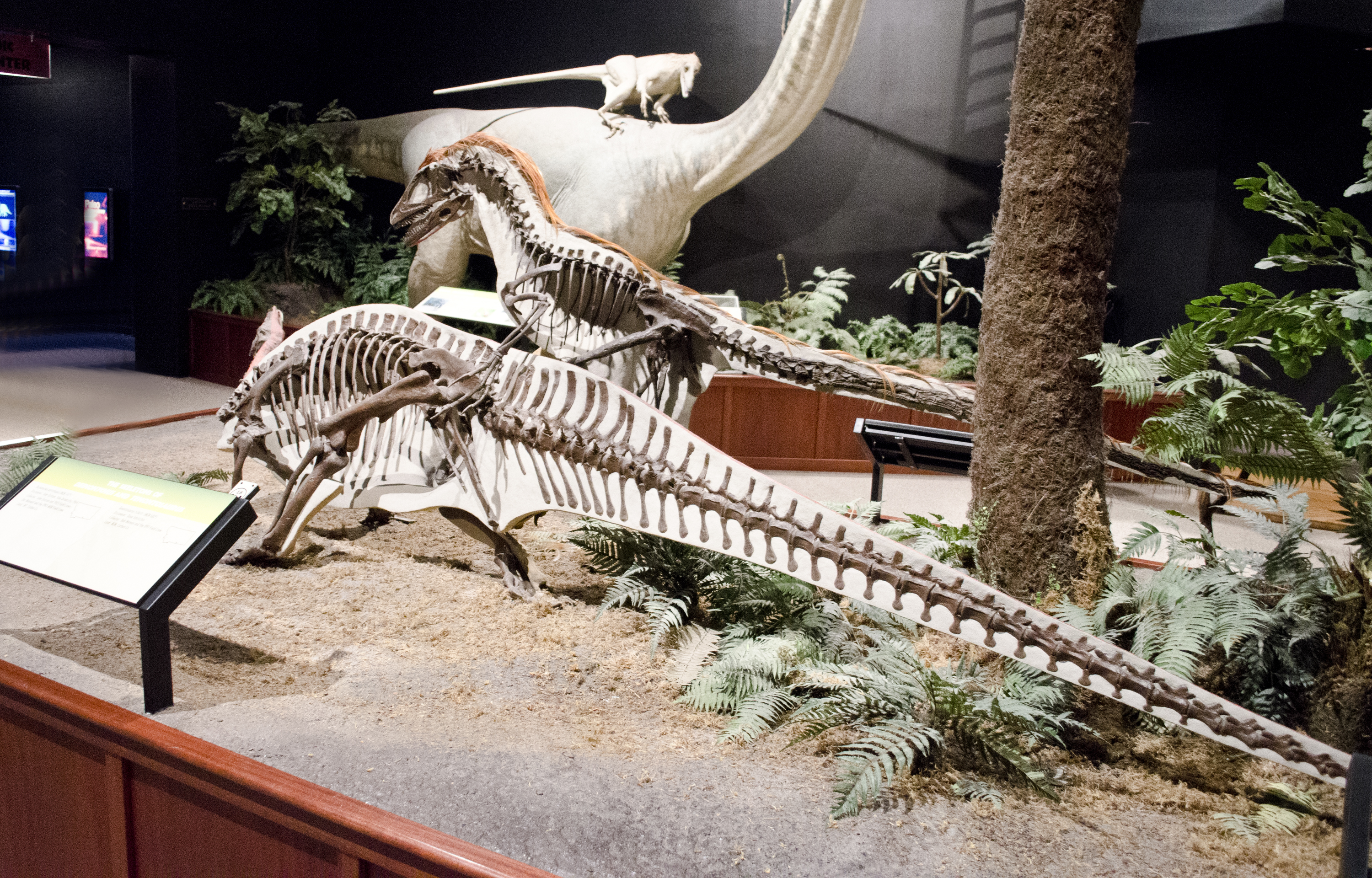
Deinonychus was an active and sophisticated predator. Isotopic analysis by Frederickson et al. (2020) indicates that adults fed primarily on Tenontosaurus, while juveniles consumed smaller prey. The sickle claw of the second digit was used to immobilize living prey, according to Fowler et al.'s (2011) Raptor Prey Restraint model. Bite force estimated at 4,100 to 8,200 N by Gignac et al. (2010) suggests bone-crushing capability. The laterally compressed, serrated teeth were adapted for slicing flesh.
Behavior and senses
The social behavior of Deinonychus is debated. The classic pack hunting hypothesis, popularized by Jurassic Park, was challenged by Roach and Brinkman (2007) and by the isotopic analysis of Frederickson et al. (2020), which indicates that juveniles and adults had different diets, suggesting absence of cooperative behavior between age groups. The possible egg associated with specimen AMNH 3015 (Grellet-Tinner and Makovicky, 2006) suggests brooding behavior, similar to modern birds.
Physiology and growth
Ostrom's 1969 description was fundamental to the argument that dinosaurs were endothermic. Bone histology by Parsons and Parsons (2015) confirms rapid, determinate growth, with highly vascularized fibrolamellar tissue in juveniles, similar to modern birds. Plumage is inferred from close relatives such as Zhenyuanlong and other feather-preserved dromaeosaurids. Endothermy is now widely accepted for Deinonychus, which would have had elevated metabolism and stable body temperature.
Paleogeography
Continental configuration

Ron Blakey · CC BY 3.0 · Cretáceous, ~90 Ma
During the Aptiano-Albiano (~119–108 Ma), Deinonychus antirrhopus inhabited Laramidia, the western half of present-day North America, separated from the east by the Western Interior Seaway, a shallow sea dividing the continent. The continents were in very different positions: India was drifting toward Asia, Antarctica was still connected to Australia, and South America was an isolated island.
Inventário de Ossos
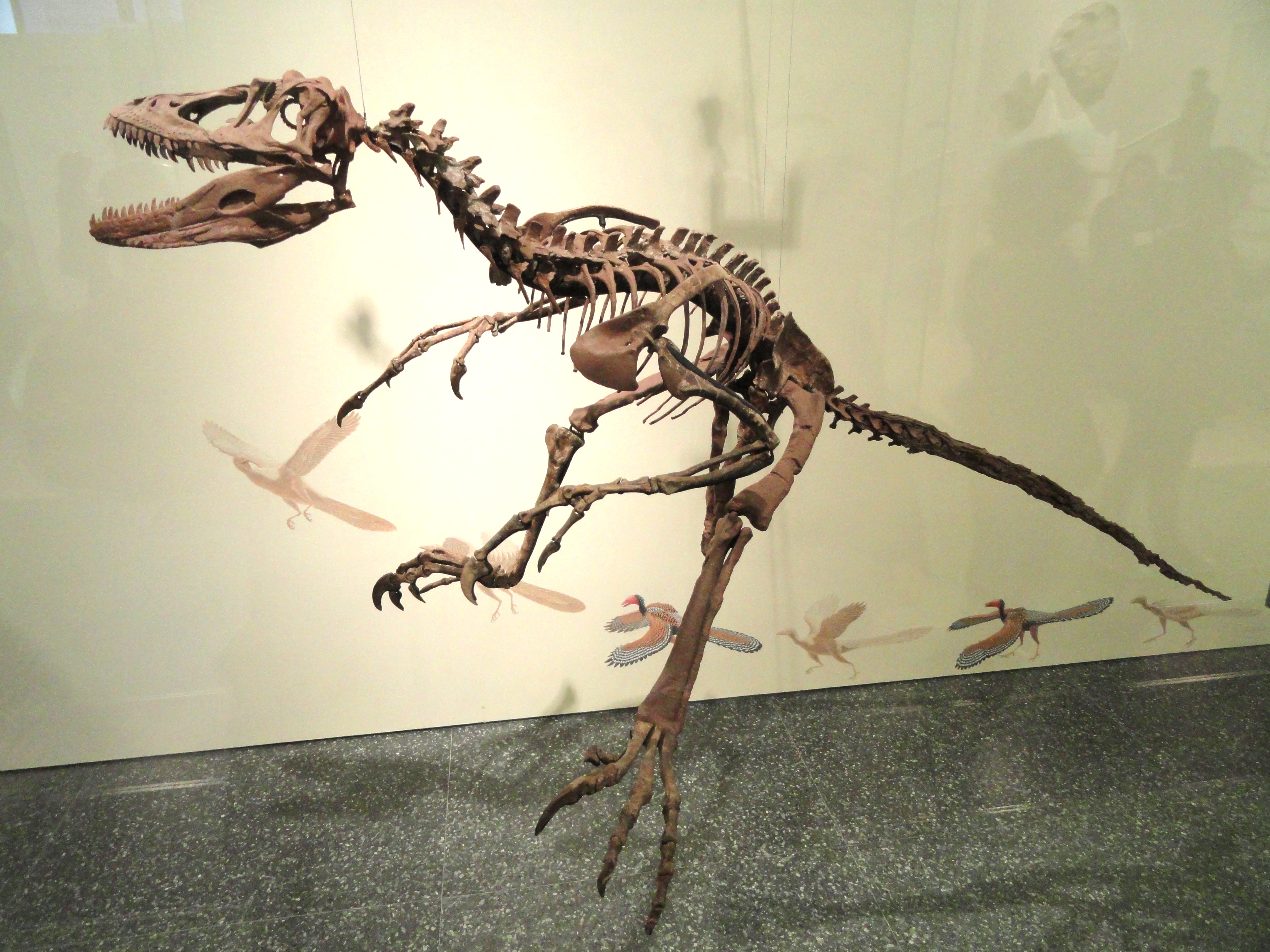
Based on multiple specimens from the Cloverly Formation (Montana and Wyoming) and the Antlers Formation (Oklahoma). The type specimen YPM 5205 (Yale Peabody Museum) consists of a complete left foot. Specimen AMNH 3015 is the most complete and is displayed at the American Museum of Natural History, while MCZ 4371 is at the Museum of Comparative Zoology at Harvard.
Found elements
Inferred elements
Scientific Literature
15 papers in chronological order — from the original description to recent research.
Osteology of Deinonychus antirrhopus, an unusual theropod from the Lower Cretaceous of Montana
Ostrom, J.H. · Bulletin of the Peabody Museum of Natural History
This is the founding paper of Deinonychus antirrhopus, published as a 165-page monograph in the Peabody Museum Bulletin at Yale. John Ostrom details the skeleton of the animal, including the enormous sickle-shaped claw on the second toe, and argues that the animal was active, agile, and likely warm-blooded. The erect bipedal stance, rigid tail used as a counterbalance, and grasping forelimbs made Deinonychus a transformative case for paleontology. This work initiated the Dinosaur Renaissance.
The ancestry of birds
Ostrom, J.H. · Nature
Seminal paper published in Nature in which Ostrom argues, based on similarities in the wrist skeleton between Deinonychus and Archaeopteryx, that birds are descended from coelurosaurian theropod dinosaurs. The work was the intellectual catalyst of the Dinosaur Renaissance, presenting concrete anatomical evidence that dinosaurs were not slow, primitive reptiles but close relatives of modern birds. The discovery of Deinonychus made this hypothesis plausible and defensible.
On a new specimen of the Lower Cretaceous theropod dinosaur Deinonychus antirrhopus
Ostrom, J.H. · Breviora
In this monograph published by the Museum of Comparative Zoology at Harvard, Ostrom describes new Deinonychus antirrhopus material and makes important corrections to the 1969 paper. Most significantly, an element previously described as a pubis was reidentified as a coracoid, a shoulder girdle element. The work demonstrates the process of scientific refinement and the importance of new specimens for correcting initial interpretations, while providing additional anatomical data about the animal.
First occurrence of Deinonychus antirrhopus (Dinosauria: Theropoda) from the Antlers Formation (Lower Cretaceous: Aptian-Albian) of Oklahoma
Brinkman, D.L.; Cifelli, R.L.; Czaplewski, N.J. · Oklahoma Geological Survey Bulletin
This paper records for the first time the presence of Deinonychus antirrhopus in the Antlers Formation of Oklahoma, significantly expanding the known geographic distribution of the species. Previously restricted to the Cloverly Formation of Montana and Wyoming, the species is now also known from southern Laramidia. The authors describe isolated teeth and other skeletal elements attributable to Deinonychus, and discuss the paleobiogeographic implications of this discovery for understanding dromaeosaurid distribution patterns in the Early Cretaceous of North America.
A reevaluation of cooperative pack hunting and gregariousness in Deinonychus antirrhopus and other nonavian theropod dinosaurs
Roach, B.T.; Brinkman, D.L. · Bulletin of the Peabody Museum of Natural History
Roach and Brinkman critically review the popular hypothesis that Deinonychus hunted in cooperative packs, like wolves or lions. The authors analyze the behavior of living diapsid reptiles and argue that this hypothesis is unlikely and unparsimonious for an animal with presumably reptilian physiology. The alternative interpretation proposed resembles the behavior of Komodo monitors: competition over carcasses, not cooperative hunting. The work had direct impact on subsequent behavioral reconstructions and Jurassic Park cinematography.
A possible egg of the dromaeosaur Deinonychus antirrhopus: phylogenetic and biological implications
Grellet-Tinner, G.; Makovicky, P. · Canadian Journal of Earth Sciences
Grellet-Tinner and Makovicky describe an egg shell fragment in contact with the articulated gastralia of specimen AMNH 3015, interpreting the association as evidence of brooding behavior in Deinonychus. The eggshell microstructure is consistent with a theropod origin, and skeletochronological analysis indicates the specimen was an adult of breeding age. The work suggests that, like close relatives (oviraptorids, troodontids), Deinonychus likely brooded its eggs, a behavior that may have given rise to bird flight.

The predatory ecology of Deinonychus and the origin of flapping in birds
Fowler, D.W.; Freedman, E.A.; Scannella, J.B.; Kambic, R.E. · PLOS ONE
Fowler and colleagues propose the Raptor Prey Restraint (RPR) model, whereby Deinonychus captured and restrained prey analogously to modern raptorial birds such as hawks and eagles. The sickle claw would function to hold living prey beneath the predator's body weight, while the wings would provide balance. This model has revolutionary implications: it suggests that flight in birds may have initially arisen as a behavioral adaptation for predation rather than locomotion alone. The paper generated broad debate and reshaped the understanding of feather function in dromaeosaurids.
A description of Deinonychus antirrhopus bite marks and estimates of bite force using tooth indentation simulations
Gignac, P.M.; Makovicky, P.J.; Erickson, G.M.; Walsh, R.P. · Journal of Vertebrate Paleontology
Gignac and colleagues describe bite marks on a Tenontosaurus tilletti specimen from the Cloverly Formation produced by Deinonychus. Tooth indentation experiments on bovine bone indicate approximately 4,100 N of bite force were required to produce the observed marks, with a peak estimate of 8,200 N. These values are surprisingly high for an animal of only 85 kg, suggesting Deinonychus could break bones with its bite. The work provides direct evidence of predator-prey interaction between these two Lower Cretaceous taxa.

A review of dromaeosaurid systematics and paravian phylogeny
Turner, A.H.; Makovicky, P.J.; Norell, M.A. · Bulletin of the American Museum of Natural History
Turner, Makovicky, and Norell publish the most comprehensive review of dromaeosaurid systematics to that date, with 206 pages and cladistic analysis of all known taxa. The work consolidates the position of Deinonychus within Dromaeosaurinae, clarifies the relationships between the main dromaeosaurid clades (Microraptoria, Velociraptorinae, Dromaeosaurinae, Unenlagiinae), and discusses the position of Paravia in relation to birds. It is the mandatory reference paper for any phylogenetic discussion about the group.
Morphological variations within the ontogeny of Deinonychus antirrhopus (Theropoda, Dromaeosauridae)
Parsons, W.L.; Parsons, K.M. · PLOS ONE
Parsons and Parsons examine morphological variations throughout the ontogeny of Deinonychus antirrhopus, using histological analysis of bone sections to determine individual ages. The adult specimen MOR 1178 was estimated at 13 to 14 years of age. Juveniles exhibit loosely woven, highly vascularized fibrolamellar tissue, typical of rapid growth, while adults show growth arrest lines. Results suggest Deinonychus had determinate growth, similar to modern birds. The paper is the primary bone histology reference for the species.


Dinosaur killer claws or climbing crampons?
Manning, P.L.; Payne, D.; Pennicott, J.; Barrett, P.M.; Ennos, R.A. · Biology Letters
Manning and colleagues perform a comparative biomechanical analysis of the claw curvature of Deinonychus and Velociraptor against claws of living birds and mammals. Results indicate that the famous sickle claw of the second digit was better adapted for climbing vertical surfaces than for slashing prey, challenging the popular view that it served as a lethal evisceration weapon. The authors propose the claw functioned as a climbing crampon, possibly for ascending trees or the prey itself to maintain control during predation.


Ontogenetic dietary shifts in Deinonychus antirrhopus (Theropoda; Dromaeosauridae): insights into the ecology and social behavior of raptorial dinosaurs through stable isotope analysis
Frederickson, J.A.; Engel, M.H.; Cifelli, R.L. · Palaeogeography, Palaeoclimatology, Palaeoecology
Frederickson, Engel, and Cifelli perform stable carbon (d13C) and oxygen (d18O) isotope analysis on Deinonychus teeth from two sites in the Cloverly Formation and the Antlers Formation. Results show different isotopic patterns between small (juvenile) and large (adult) teeth, indicating that individuals of different ages consumed different prey. Adults show an isotopic signal close to Tenontosaurus, consistent with predation of that species. The work challenges the pack hunting hypothesis and suggests absence of cooperative behavior among different age groups.

Re-examining ratio based premaxillary and maxillary characters in Eudromaeosauria (Dinosauria: Theropoda): divergent trends in snout morphology between Asian and North American taxa
Powers, M.J.; Sullivan, C.; Currie, P.J. · Palaeogeography, Palaeoclimatology, Palaeoecology
Powers, Sullivan, and Currie reexamine snout morphology characters in eudromaeosaurids using ratio-based analyses of premaxillary and maxillary proportions. For Deinonychus, results indicate a short and deep maxilla similar to brachycephalic canids, suggesting specialization for capturing and processing large, resistant prey. The authors identify divergent evolutionary trends between Asian and North American taxa, with implications for dromaeosaurid feeding ecology and biogeography in the Cretaceous.

New dromaeosaurids (Dinosauria: Theropoda) from the Lower Cretaceous of Utah, and the evolution of the dromaeosaurid tail
Senter, P.; Kirkland, J.I.; DeBlieux, D.D.; Madsen, S.; Toth, N. · PLOS ONE
Senter and colleagues describe new dromaeosaurids from the Lower Cretaceous Cedar Mountain Formation of Utah and perform comprehensive phylogenetic analysis of the group. The work includes detailed analysis of tail evolution in Dromaeosauridae, with implications for understanding Deinonychus locomotion and behavior. The phylogenetic analysis positions the new taxa and consolidates relationships among Early Cretaceous North American dromaeosaurids, including Deinonychus from the Cloverly Formation.
New dromaeosaurid dinosaur (Theropoda, Dromaeosauridae) from New Mexico and biodiversity of dromaeosaurids at the end of the Cretaceous
Jasinski, S.E.; Sullivan, R.M.; Dodson, P. · Scientific Reports
Jasinski, Sullivan, and Dodson describe Dineobellator notohesperus, the first diagnostic dromaeosaurid from the latest Maastrichtian of the southern United States. The phylogenetic analysis conducted in the work includes Deinonychus antirrhopus and consolidates its position in Dromaeosaurinae, along with other North American Cretaceous taxa. The paper provides the most updated cladogram of dromaeosaurid relationships, situating Deinonychus within the group's diversity and evidencing the long evolutionary history of the lineage in North America.
Espécimes famosos em museus
AMNH 3015
American Museum of Natural History, Nova York
The most complete known Deinonychus antirrhopus specimen, displayed in an attack posture in the paleontology hall of the American Museum of Natural History. It was the specimen that Grellet-Tinner and Makovicky (2006) associated with a possible dromaeosaurid egg, suggesting brooding behavior.
YPM 5205
Yale Peabody Museum, New Haven
The type specimen of Deinonychus antirrhopus, consisting mainly of a complete left foot with the characteristic sickle claw. Collected by Ostrom during the 1964-1966 expeditions to the Cloverly Formation of Montana, it was the basis of the original 1969 description and remains at the Yale Peabody Museum where Ostrom worked.
MCZ 4371
Museum of Comparative Zoology, Harvard University, Cambridge
Significant Deinonychus antirrhopus specimen on display at the Museum of Comparative Zoology at Harvard University. Collected during Ostrom's original expeditions to the Cloverly Formation, this specimen includes cranial and post-cranial elements that contributed to understanding the complete anatomy of the animal.
In cinema and popular culture
Deinonychus occupies a singular place in popular culture: it is the dinosaur that most influenced the modern imagination without ever appearing under its true name on screen. Michael Crichton based the Velociraptors of his novel Jurassic Park almost entirely on Deinonychus, using the size, intelligence, and behavior described by John Ostrom in 1969. Steven Spielberg's team directly consulted Ostrom's papers to create the raptors in the 1993 film, which remains the most culturally impactful representation of the animal. In documentaries, Deinonychus appeared in Jurassic Fight Club (History Channel, 2008), where it hunts Tenontosaurus in packs, a hypothesis now contested; in Clash of the Dinosaurs (Discovery Channel, 2009); in Monsters Resurrected (Discovery Channel, 2010), depicted without feathers and inaccurately; and in Life on Our Planet (Netflix, 2023), where it is shown with plumage as an active hunter, although group hunting remains questionable. The scientific representation of the animal has evolved dramatically since 1993: from scaly reptile to feathered animal close to birds.

Classificação

Descoberta
Curiosidade
The famous Velociraptors from the film Jurassic Park (1993) are based almost entirely on Deinonychus: Michael Crichton used the size and behavior of Deinonychus but chose the name Velociraptor because it sounded more dramatic. The real Velociraptor was only 0.5 m tall, smaller than a turkey, while Deinonychus measured 3.4 m in length.