
Dreadnoughtus
Dreadnoughtus schrani
"Fears nothing (honoring Adam Schran, donor who funded the excavations)"
Sobre esta espécie
Dreadnoughtus schrani was one of the largest land animals ever to exist. Discovered in Patagonian Argentina in 2005 by Kenneth Lacovara and formally described in 2014, this giant titanosaur lived between 77 and 70 million years ago, during the Late Cretaceous. At roughly 26 meters long and an estimated mass of 65 tonnes, it was the size of a dozen African elephants. The holotype is one of the most complete giant titanosaur skeletons ever found, with approximately 70% of the bones preserved, making it exceptional for an animal of this size. The genus name references the dreadnought battleships of the early 20th century, warships so powerful they 'feared nothing.' The species honors Adam Schran, the philanthropist who funded the field expeditions.
Geological formation & environment
Dreadnoughtus schrani was found in the Cerro Fortaleza Formation, exposed in southern Santa Cruz Province, Patagonian Argentina. The formation dates to the Campanian through Maastrichtian (~77-70 Ma) of the Late Cretaceous. The depositional environment was an alluvial plain with rivers of variable flow, subject to periodic floods that created favorable conditions for rapid fossilization of carcasses. The climate was warmer and more humid than present-day values at the same latitude, with araucaria and podocarpaceous forests dominating the landscape. The associated fauna included other smaller titanosaurs, abelisaurid and coelurosaurian theropods, crocodilians, and turtles. The flora included conifers, tree ferns, and diversifying angiosperms. The Cerro Fortaleza Formation is temporally correlated with other productive Patagonian formations, such as the Allen Formation and the Los Alamitos Formation.
Image gallery


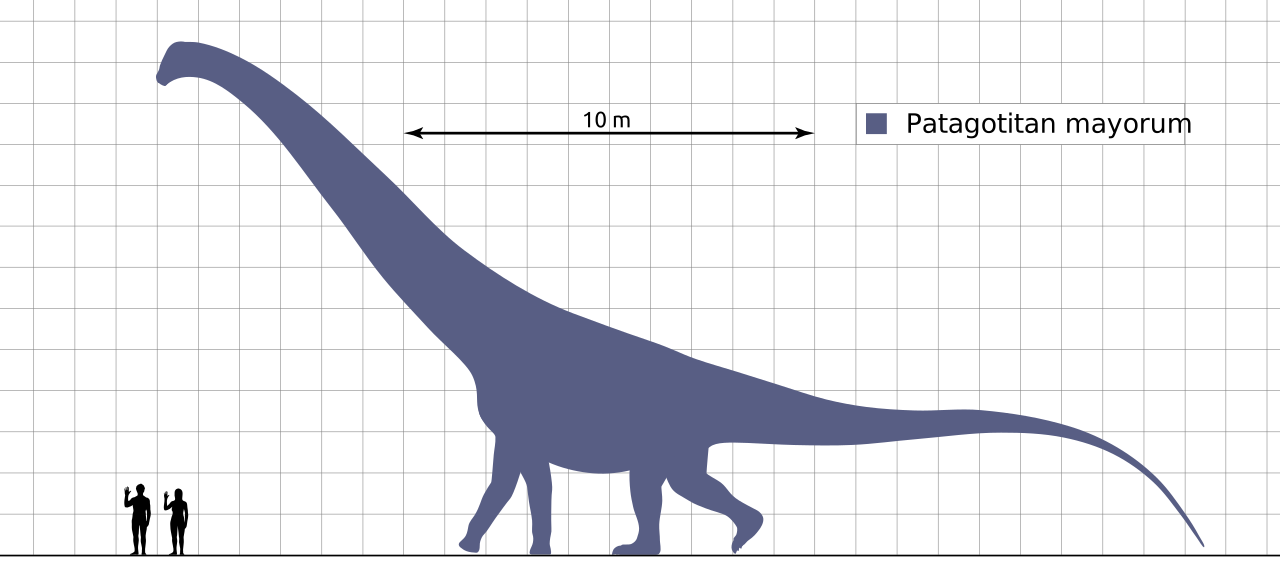
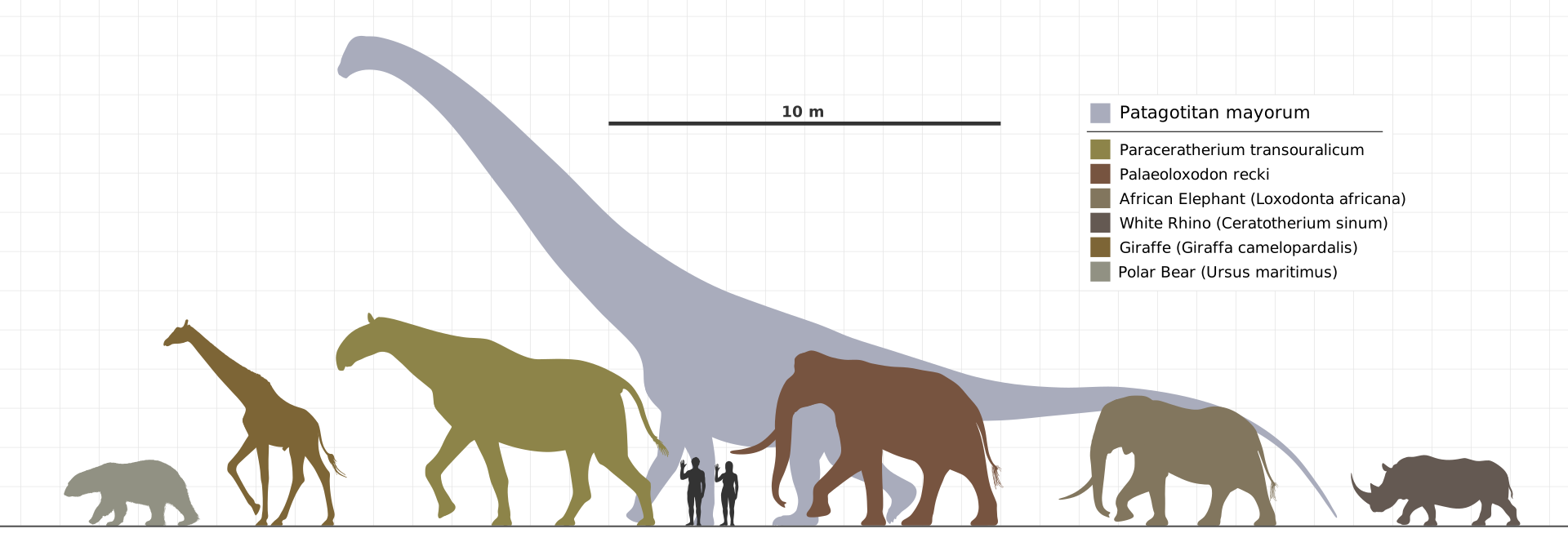


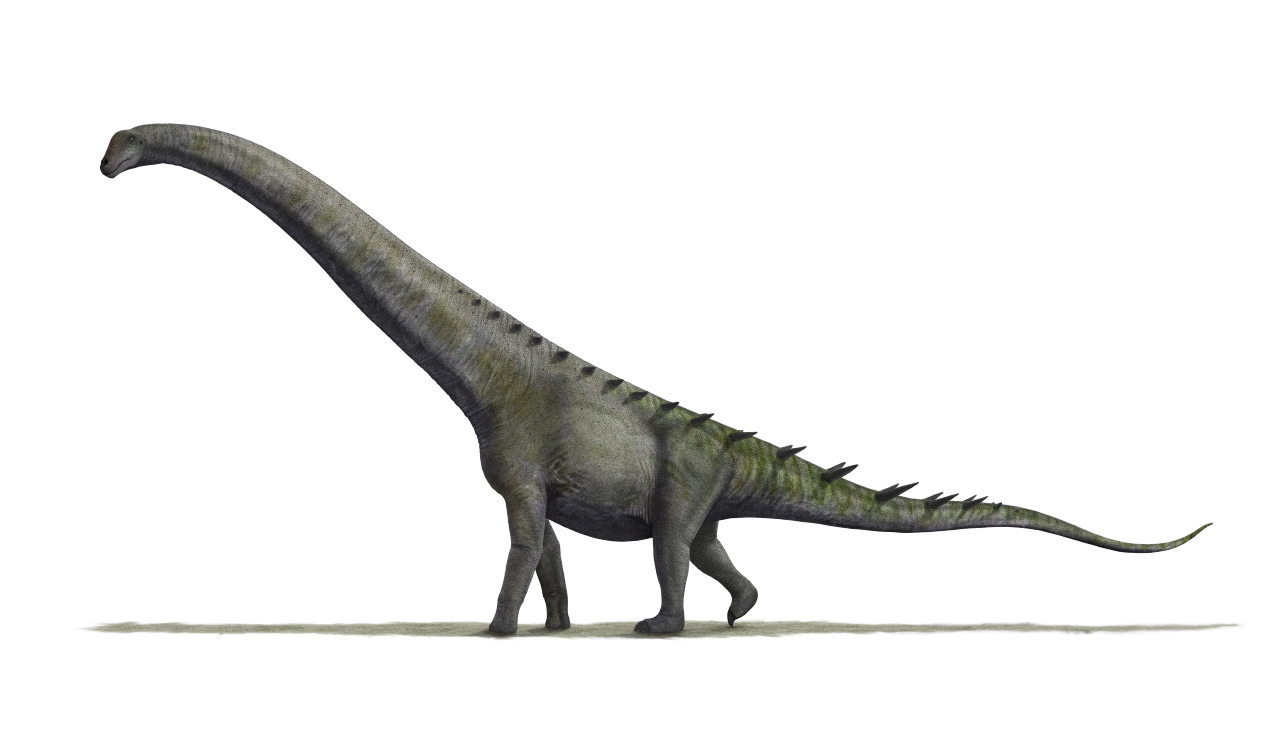
Artistic reconstruction of Dreadnoughtus schrani by Nobu Tamura, illustrating the body proportions of the giant titanosaur.
Nobu Tamura, CC BY-SA 3.0
Ecology and behavior
Habitat
Dreadnoughtus inhabited what is now southern Patagonian Argentina, in the Cerro Fortaleza Formation (Campanian-Maastrichtian, ~77-70 Ma). The environment was an alluvial plain crossed by rivers of variable flow, with conifer forests (araucarias and podocarpaceous trees), tree ferns, and diversifying angiosperms. The climate was warm and humid, with mean annual temperatures significantly higher than present-day values at the same latitude. South America was isolated from North America during much of this period, allowing the independent evolution of an endemic fauna. The presence of two Dreadnoughtus individuals at the same site may indicate gregarious behavior or death from a catastrophic event such as a flood. The associated fauna included other smaller titanosaurs, theropods, crocodilians, turtles, and freshwater fish.
Feeding
Like all sauropods, Dreadnoughtus was herbivorous. With its long neck and massive body, it had access to a wide range of vegetation, from ground-level plants to mid-canopy trees. The teeth, typical of titanosaurs, were small and cylindrical, adapted for stripping leaves and thin branches without chewing. Food was processed by gastroliths (stomach stones) and by microbial fermentation in the enormous digestive system. The metabolic rate needed to sustain an animal of 40 to 65 tonnes required daily consumption of hundreds of kilograms of plant matter. The likely diet included araucaria leaves, ferns, podocarpaceous trees, and possibly expanding angiosperms. The feeding strategy was bulk processing: low selectivity, high volume.
Behavior and senses
Dreadnoughtus behavior is inferred by comparison with other titanosaurs and sauropods in general. The presence of two individuals at the same site suggests at least some degree of gregariousness. Titanosaurs are known for colonial nesting sites, such as Auca Mahuevo in Argentina, where thousands of eggs were found. Dreadnoughtus likely laid eggs in nests dug into the ground and may have exhibited some degree of parental care, though this is speculative. The colossal adult size rendered it virtually invulnerable to predators. Even the largest Late Cretaceous theropods of Patagonia would have posed a threat only to juveniles and subadults. Bone histology analysis by Lacovara et al. (2014) indicates the holotype was still actively growing, suggesting the animal was killed prematurely, possibly by flooding.
Physiology and growth
Dreadnoughtus exhibited physiological adaptations typical of giant sauropods: a respiratory system with air sacs connected to pneumatic spaces in the bones, similar to modern birds, which increased respiratory efficiency and reduced body density. The dorsal vertebrae possessed complex pneumatic chambers (documented by Voegele et al. 2017), a solution for maintaining structural integrity with minimal weight. Metabolism was likely intermediate between ectothermic and endothermic (mesothermic), consistent with isotopic studies of other sauropods. Growth rate was rapid in early years of life, with gradual deceleration. The holotype, despite its colossal size, had not yet reached full skeletal maturity. The circulatory system needed to generate extremely high blood pressure to pump blood to the brain, situated several meters above the heart.
Paleogeography
Continental configuration

Ron Blakey · CC BY 3.0 · Cretáceous, ~90 Ma
During the Campaniano-Maastrichtiano (~77–70 Ma), Dreadnoughtus schrani inhabited Laramidia, the western half of present-day North America, separated from the east by the Western Interior Seaway, a shallow sea dividing the continent. The continents were in very different positions: India was drifting toward Asia, Antarctica was still connected to Australia, and South America was an isolated island.
Inventário de Ossos
Based on the holotype (MPM-PV 1156). With ~70% of the skeleton preserved, it is one of the most complete giant titanosaurs ever found. A second partial individual was also recovered from the same site. Most giant titanosaurs are known from less than 20% of their bones, making Dreadnoughtus an exceptional reference for understanding the anatomy of this group.

Found elements
Inferred elements
Scientific Literature
15 papers in chronological order — from the original description to recent research.
Un nuevo y gigantesco saurópodo titanosaurio de la Formación Río Limay (Albiano-Cenomaniano) de la Provincia del Neuquén, Argentina
Bonaparte, J.F. & Coria, R.A. · Ameghiniana
Bonaparte and Coria describe Argentinosaurus huinculensis, one of the largest dinosaurs ever found, from material in the Río Limay Formation of Neuquén Province. The specimen includes dorsal vertebrae of colossal proportions, ribs, sacrum, and tibia. The dorsal vertebrae exceed 1.5 meters in width, and the tibia measures 1.55 meters long. Body mass estimates reach 70 to 80 tonnes. The work establishes Patagonian Argentina as the center of titanosaur gigantism evolution and provides the first comparative context for the super-sauropods that would be discovered in subsequent decades, including Dreadnoughtus. The description is relatively brief given the fragmentary material, but inaugurates a new scale of understanding about the maximum size attained by terrestrial vertebrates.

Titanosauria: A phylogenetic overview
Curry Rogers, K. · The Sauropods: Evolution and Paleobiology
Curry Rogers presents the first comprehensive phylogenetic analysis of Titanosauria, incorporating all known genera up to 2005 and scoring over 200 morphological characters. The work resolves several polytomies from previous studies and identifies Lithostrotia and Saltasauridae as well-supported clades. The analysis documents how titanosaurs diversified across Gondwana during the Cretaceous, achieving representation on every continent. The proposed phylogeny serves as a framework for placing newly discovered species, including Dreadnoughtus. The study demonstrates that gigantism evolved independently in multiple titanosaur lineages, and that South America was the main radiation center of the group.


A new Cretaceous terrestrial ecosystem from Gondwana with the description of a new sauropod dinosaur
Calvo, J.O. et al. · Anais da Academia Brasileira de Ciências
Calvo and colleagues describe Futalognkosaurus dukei, a giant titanosaur from the Portezuelo Formation (Turonian-Coniacian) of Neuquén. The specimen is notable for its completeness: it includes cervical, dorsal, and caudal vertebrae, ribs, pelvic girdle, and limb elements. Phylogenetic analysis places Futalognkosaurus and Mendozasaurus in a new clade, Lognkosauria, characterized by extremely robust and laterally expanded cervical vertebrae. Dreadnoughtus would later be placed in this same clade. The work also reconstructs the associated ecosystem, including theropods, pterosaurs, crocodilians, turtles, and fish. The length estimate for Futalognkosaurus reaches 32 meters, making it one of the largest dinosaurs with a reasonably complete skeleton.
A giant articulated titanosaur from Patagonia, Argentina
González Riga, B.J. et al. · Cretaceous Research
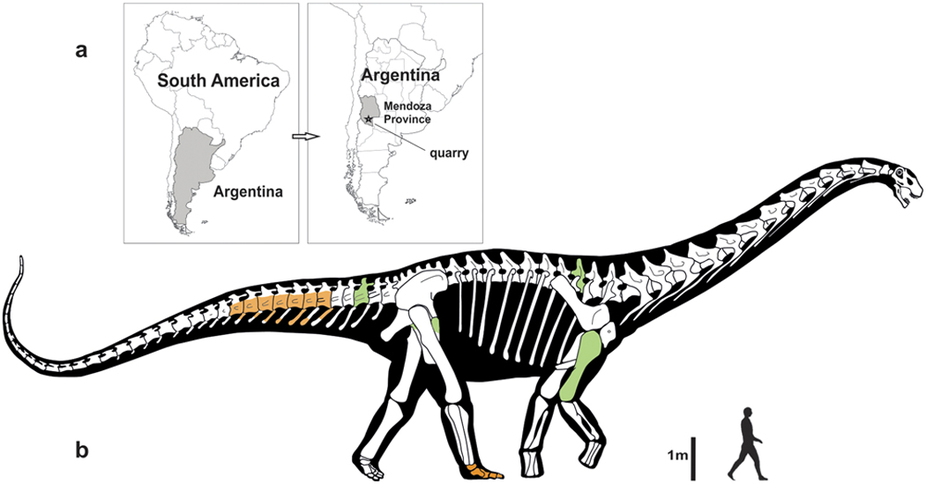
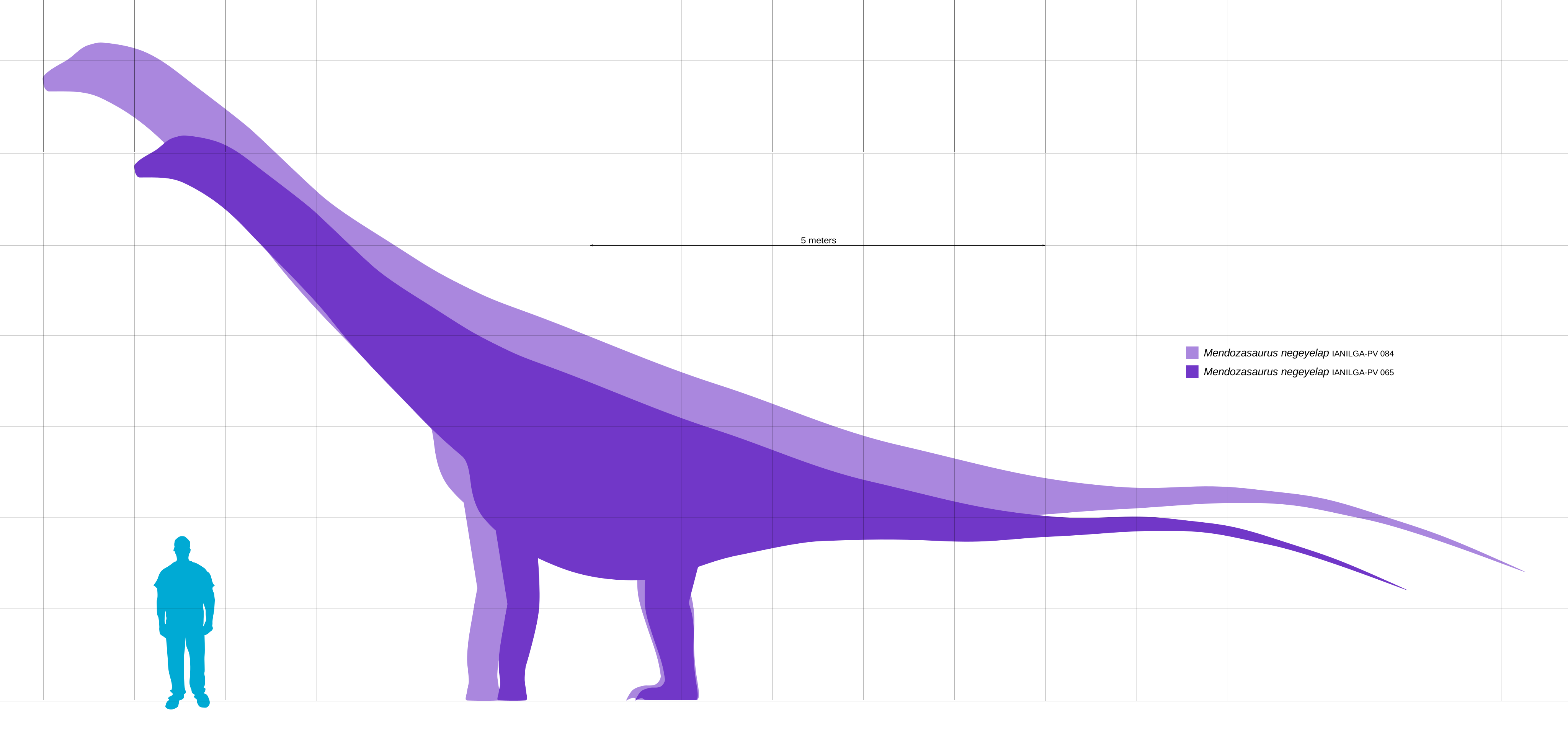
González Riga and colleagues describe exceptionally articulated material from a giant titanosaur from Mendoza Province. The specimen preserves cervical, dorsal, sacral, and caudal vertebrae in articulation, along with ribs, pelvic elements, and hindlimb bones. The articulation allows precise reconstruction of the animal's posture and length. Phylogenetic analysis places the taxon within Lognkosauria. The work contributes to understanding the diversity of giant titanosaurs in Patagonia and demonstrates that exceptional articulation of some specimens enables biomechanical inferences that disarticulated material does not. Comparison with other lognkosaurs, including Futalognkosaurus, reveals shared patterns of vertebral robustness.
The early evolution of titanosauriform sauropod dinosaurs
D'Emic, M.D. · Zoological Journal of the Linnean Society
D'Emic presents a comprehensive review and phylogenetic analysis of titanosauriform sauropod relationships, incorporating 28 ingroup taxa scored for 178 characters. The analysis recovers a well-resolved tree supporting Titanosauria as monophyletic and identifies several previously unrecognized clades. Ancestral state reconstructions suggest that several diagnostic titanosaurian features, including procoelous caudal vertebrae and robust build, evolved stepwise through the Early Cretaceous. The work provides the broadest phylogenetic context for placing subsequent discoveries like Dreadnoughtus within the titanosaur radiation. The analysis demonstrates that titanosaurs represent the most diverse and globally distributed group of Cretaceous sauropods.
A gigantic, exceptionally complete titanosaur sauropod dinosaur from southern Patagonia, Argentina
Lacovara, K.J. et al. · Scientific Reports
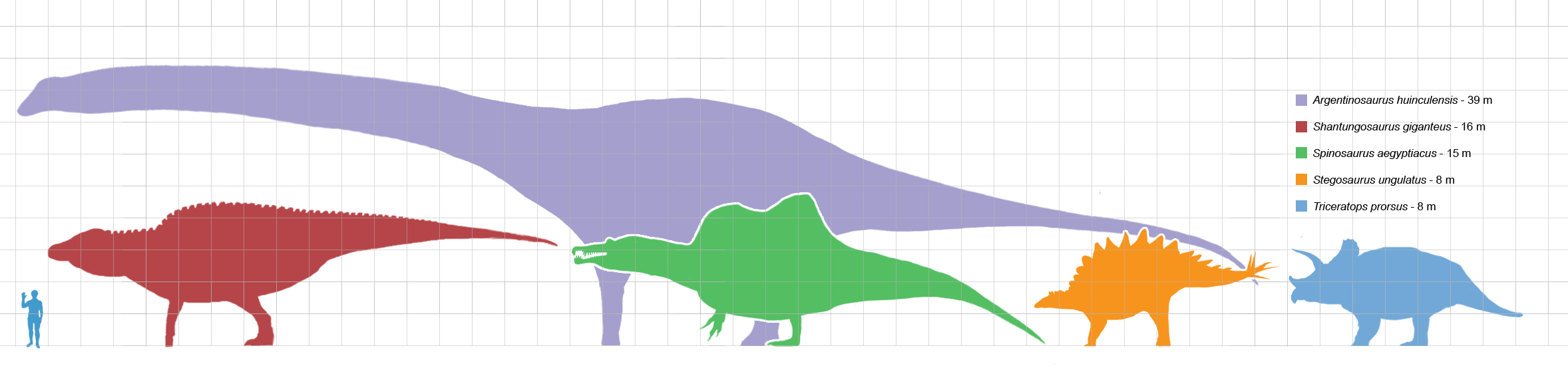
The founding paper of Dreadnoughtus schrani. Kenneth Lacovara and colleagues describe a giant titanosaur from over 100 skeletal elements recovered from the Cerro Fortaleza Formation (Campanian-Maastrichtian) of southern Patagonian Argentina. The holotype (MPM-PV 1156) preserves approximately 70% of the skeleton, excluding the skull. Body mass estimated from limb bone measurements reaches 59,300 kg, making it the largest land animal for which mass can be calculated directly from osteometry rather than volumetric extrapolation. A second partial individual was found at the same site. Phylogenetic analysis places Dreadnoughtus as sister taxon to Futalognkosaurus within Lognkosauria. The authors note that the holotype was likely not fully mature, as bone tissue indicates active growth. An even larger animal may have been the full adult size. The name honors the dreadnought battleships and philanthropist Adam Schran.


Downsizing a giant: re-evaluating Dreadnoughtus body mass
Bates, K.T. et al. · Biology Letters
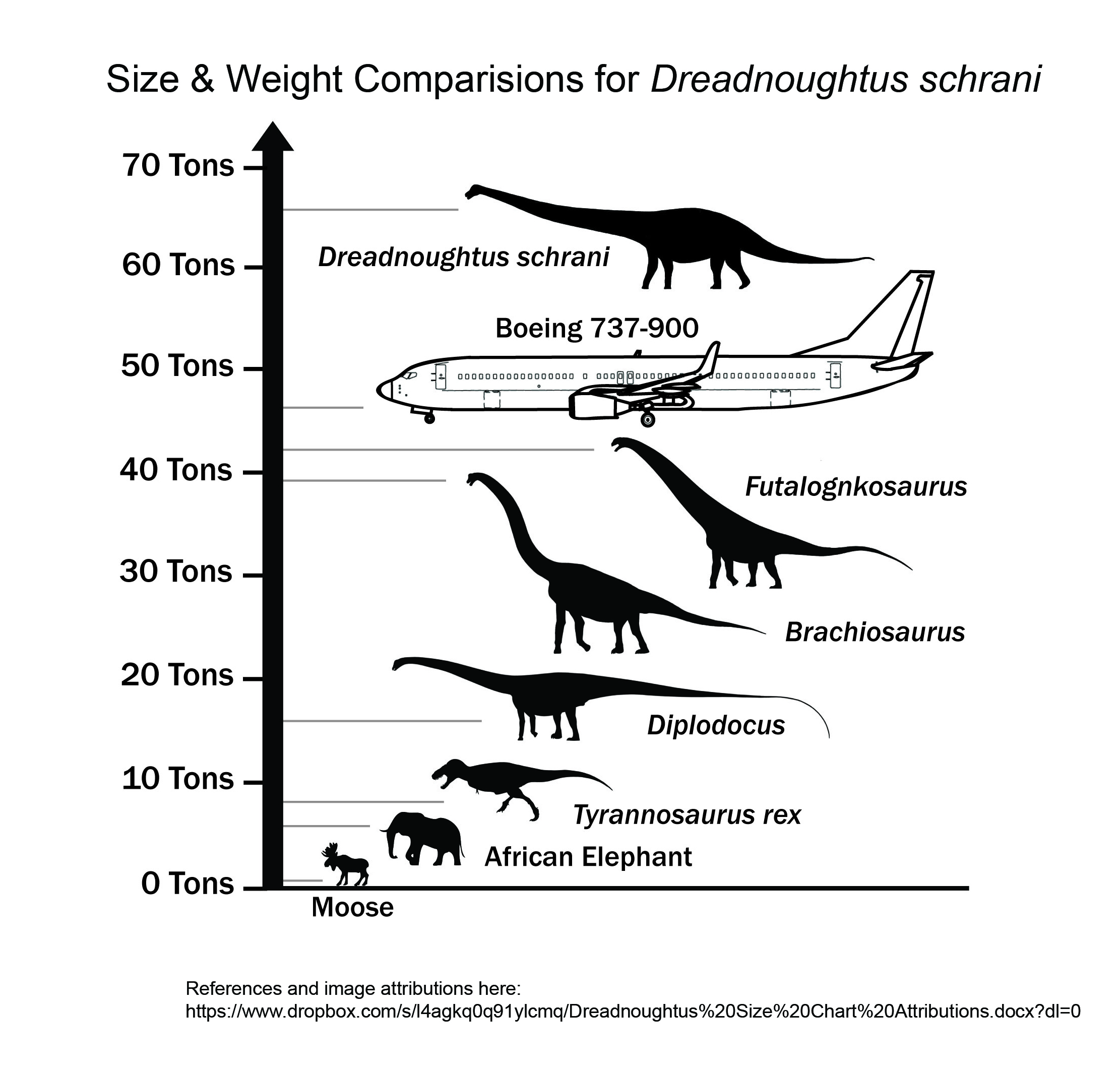
Bates and colleagues apply 3D volumetric reconstruction methods to the same Dreadnoughtus specimen described by Lacovara et al. (2014) and obtain substantially lower mass estimates: 22,100 to 38,200 kg, versus the original 59,300 kg. The discrepancy highlights the sensitivity of mass estimates to methodology. Scaling equations based on limb bone circumference (Lacovara's method) tend to overestimate mass in very large animals because the relationship between bone circumference and body mass is not linear at extreme sizes. Volumetric reconstruction, based on digital 3D body models, is considered more reliable as it accounts for the actual body shape. The debate between the two methods became an emblematic case in giant sauropod paleontology.

Response to 'Downsizing a giant': Dreadnoughtus body mass is still exceptionally large
Lacovara, K.J. et al. · Biology Letters
Lacovara and colleagues respond to the criticisms of Bates et al. (2015) regarding the Dreadnoughtus mass estimate. The authors acknowledge that different methods produce different estimates, but argue that limb-bone-based estimates remain valid because they are calibrated against extant quadrupeds. They present revised estimates of 49,000 kg using updated scaling equations. They emphasize that the holotype was still actively growing at death, meaning full adult mass would have been even greater. The debate illustrates a fundamental problem in paleontology: for the largest known land animals, no modern analogs exist to calibrate models with precision. The actual mass of Dreadnoughtus likely fell between 40,000 and 65,000 kg.
Appendicular osteology of Dreadnoughtus schrani, a giant titanosaurian (Sauropoda, Titanosauria) from the Upper Cretaceous of Patagonia, Argentina
Ullmann, P.V. & Lacovara, K.J. · Journal of Vertebrate Paleontology
Ullmann and Lacovara provide a detailed osteological description of the appendicular skeleton of Dreadnoughtus schrani, including scapula, coracoid, sternal plates, humerus, ulna, radius, metacarpals, ilium, ischium, pubis, femur, tibia, fibula, and astragalus. Comparisons with other titanosaurs reveal a unique combination of characters, including extremely robust humeri and femora with distinctive muscle attachment sites. The Dreadnoughtus humerus is proportionally wider than that of any other titanosaur, suggesting exceptionally developed forelimb musculature. The femur measures 1.91 meters long. This work is the definitive anatomical reference for Dreadnoughtus limbs and documents essential characters for future phylogenetic and biomechanical analyses.
New information on the Cretaceous sauropod dinosaurs of Zhejiang Province, China: impact on Laurasian titanosauriform phylogeny and biogeography
Mannion, P.D. et al. · Royal Society Open Science
Mannion and colleagues describe new Cretaceous sauropod material from Zhejiang Province, China, and use it to revise the phylogeny of Laurasian titanosauriforms. The revised phylogenetic analysis incorporates 80 operational taxonomic units and 542 characters, one of the most comprehensive matrices ever built for sauropods. The resulting topology recovers Dreadnoughtus within a broader phylogenetic context, confirming its position within Lognkosauria. The work tests the biogeographic implications of titanosaur distribution across Gondwana and Laurasia, concluding that multiple intercontinental dispersal events occurred during the Cretaceous. The analysis is an important reference for modern Titanosauria systematics.


A new giant titanosaur sheds light on body mass evolution among sauropod dinosaurs
Carballido, J.L. et al. · Proceedings of the Royal Society B
Carballido and colleagues describe Patagotitan mayorum, a titanosaur from the Cerro Barcino Formation (Albian) of Chubut Province, Argentina. Based on six individuals, Patagotitan has an estimated mass of 69,000 kg, making it the largest animal for which body mass can be accurately estimated. Phylogenetic analysis places Patagotitan within Lognkosauria, closely related to Dreadnoughtus and Futalognkosaurus. Analysis of body mass evolution demonstrates that extreme gigantism evolved multiple times independently within Titanosauria. Patagotitan reinforces Patagonia's position as the birthplace of the largest land animals in history. Direct comparison with Dreadnoughtus allows calibration of mass estimates and understanding of phylogenetic relationships within the clade of the most colossal titanosaurs.

Osteology of the dorsal vertebrae of the giant titanosaurian sauropod dinosaur Dreadnoughtus schrani from the Late Cretaceous of Argentina
Voegele, K.K. et al. · Acta Palaeontologica Polonica
Voegele and colleagues provide a detailed osteological description of the dorsal vertebrae of Dreadnoughtus schrani. The study reveals a complex internal pneumatic architecture featuring large camerae and smaller camellae permeating the bone interior. These pneumatic cavities reduce bone mass while maintaining structural integrity, a key adaptation for gigantism. Comparisons with other titanosaurs demonstrate that Dreadnoughtus possessed a unique combination of vertebral diagnostic characters. The work documents how advanced pneumatization allowed titanosaurs to reach colossal body masses without making the skeleton prohibitively heavy, a biological engineering solution reminiscent of the truss structures used in civil engineering.


The caudal osteology of Dreadnoughtus schrani, a giant titanosaurian (Sauropoda: Titanosauria) from the Upper Cretaceous of Patagonia, Argentina
Voegele, K.K., Lacovara, K.J. & Ullmann, P.V. · Cretaceous Research
Voegele, Lacovara, and Ullmann describe in detail 32 caudal vertebrae from the Dreadnoughtus schrani holotype. The caudal series shows a progressive transition from strongly procoelous (anteriorly concave) in anterior vertebrae to biconvex posteriorly, a pattern shared with other titanosaurs. Pneumatic features are present in the anteriormost caudals but absent posteriorly. The caudal morphology supports the placement of Dreadnoughtus within Lognkosauria. The work completes the axial description of the animal and provides essential data for total length reconstructions and biomechanical analyses of the tail. The titanosaur tail was an important functional structure, serving as counterweight to the long neck and possibly as a defensive weapon.
Time-calibrated models support congruency between Cretaceous continental rifting and titanosaurian evolutionary history
Gorscak, E. & O'Connor, P.M. · Biology Letters
Gorscak and O'Connor build time-calibrated phylogenetic models for Titanosauria, incorporating over 50 taxa including Dreadnoughtus, Patagotitan, and Futalognkosaurus. Results reveal that major divergences within Titanosauria correlate with Cretaceous continental rifting events. The separation of South America from Africa, and the subsequent isolation of landmasses, drove the diversification of titanosaur lineages across Gondwana. The study places Dreadnoughtus within a broader biogeographic context, demonstrating that South American titanosaurs represent an endemic radiation that flourished after continental isolation. The work combines paleontology with tectonic geology to explain why Patagonia produced so many giant titanosaurs.

Osteology of the pectoral girdle and forelimb of Dreadnoughtus schrani, a giant titanosaurian (Sauropoda, Titanosauria) from the Late Cretaceous of Patagonia, Argentina
Voegele, K.K. et al. · Journal of Vertebrate Paleontology
Voegele and colleagues provide the detailed description and comparison of the pectoral girdle and forelimb of Dreadnoughtus schrani, including scapula, coracoid, sternal plates, humerus, ulna, and radius. The forelimb is remarkably robust, with a humerus measuring 1.60 meters. Comparisons demonstrate that Dreadnoughtus possessed the most robustly built forelimb among known titanosaurs, consistent with supporting its enormous body mass. The scapula has a distally expanded blade suggesting exceptional pectoral musculature. The coracoid is proportionally large. The work completes the series of detailed osteological descriptions of Dreadnoughtus and provides the foundation for future biomechanical reconstructions of the animal.


Espécimes famosos em museus
MPM-PV 1156 (Holótipo)
Museo Padre Molina, Río Gallegos, Argentina
The holotype of Dreadnoughtus schrani, with over 100 skeletal elements preserved. It is the most complete giant titanosaur ever found. Excavated between 2005 and 2009 from the Cerro Fortaleza Formation, Santa Cruz Province.
MPM-PV 3546 (Segundo indivíduo)
Museo Padre Molina, Río Gallegos, Argentina
Second partial individual found at the same site as the holotype. Includes fragmentary appendicular and axial elements. Its presence at the same location may indicate gregarious behavior or death in a common catastrophic event.
In cinema and popular culture
Dreadnoughtus schrani entered public consciousness in September 2014, when Scientific Reports published its formal description and the news spread through international media. The evocative name, referencing the dreadnought battleships, captured popular imagination and secured coverage in newspapers, magazines, and TV programs worldwide. Kenneth Lacovara, the discoverer, contributed to outreach with a TED Talk that accumulated over 1.5 million views and the book 'Why Dinosaurs Matter' (2017). Dreadnoughtus's appearance in Jurassic World: Dominion (2022) consolidated its presence in popular culture, showing it as a peaceful giant in the BioSyn Sanctuary. In the gaming world, the species appears in Jurassic World Evolution, Jurassic World Evolution 2, and Jurassic World: The Game. The Apple TV+ series Prehistoric Planet (2022) presented Patagonian titanosaurs in high-fidelity reconstructions reflecting the type of environment and behavior Dreadnoughtus would have exhibited. Unlike T. rex, Dreadnoughtus is neither villain nor hero: it is presented as a silent colossus, a living monument to evolution's capacity to produce animals of nearly incomprehensible proportions.

Classificação

Descoberta
Curiosidade
Despite being one of the largest land animals ever, the Dreadnoughtus holotype was still growing when it died. Analysis of its bones shows active growth tissue, meaning a fully mature Dreadnoughtus would have been even larger than the specimen we know.