
Gallimimus
Gallimimus bullatus
"Chicken mimic with bulla"
Sobre esta espécie
Gallimimus bullatus is the largest known ornithomimosaur, living approximately 70 million years ago in what is now Mongolia. At up to 6 meters long and around 440 kg, it was a swift biped capable of reaching between 42 and 56 km/h. Toothless, it had a rounded keratinous beak and long neck, adapted to an apparently herbivorous diet. Discovered during Polish-Mongolian expeditions in the 1960s, it became the most complete and well-documented ornithomimosaur of the Cretaceous, and gained worldwide fame by appearing in the herd stampede scene of the 1993 film Jurassic Park.
Geological formation & environment
The Nemegt Formation is one of the world's most dinosaur-rich geological formations, deposited in the Late Cretaceous (early Maastrichtian, ~70 Ma) in the Nemegt Basin in the Gobi Desert of Mongolia. The environment was radically different from older Mongolian formations: large meandering rivers, floodplains, and shallow lakes created a rich and diverse ecosystem. The fauna included the large predator Tarbosaurus bataar, the giant Deinocheirus mirificus, the sauropods Nemegtosaurus and Opisthocoelicaudia, the hadrosaurs Saurolophus and Barsboldia, and the therizinosaur Therizinosaurus cheloniformis. Among ornithomimosaurs, Gallimimus bullatus was the most abundant and largest-bodied.
Image gallery

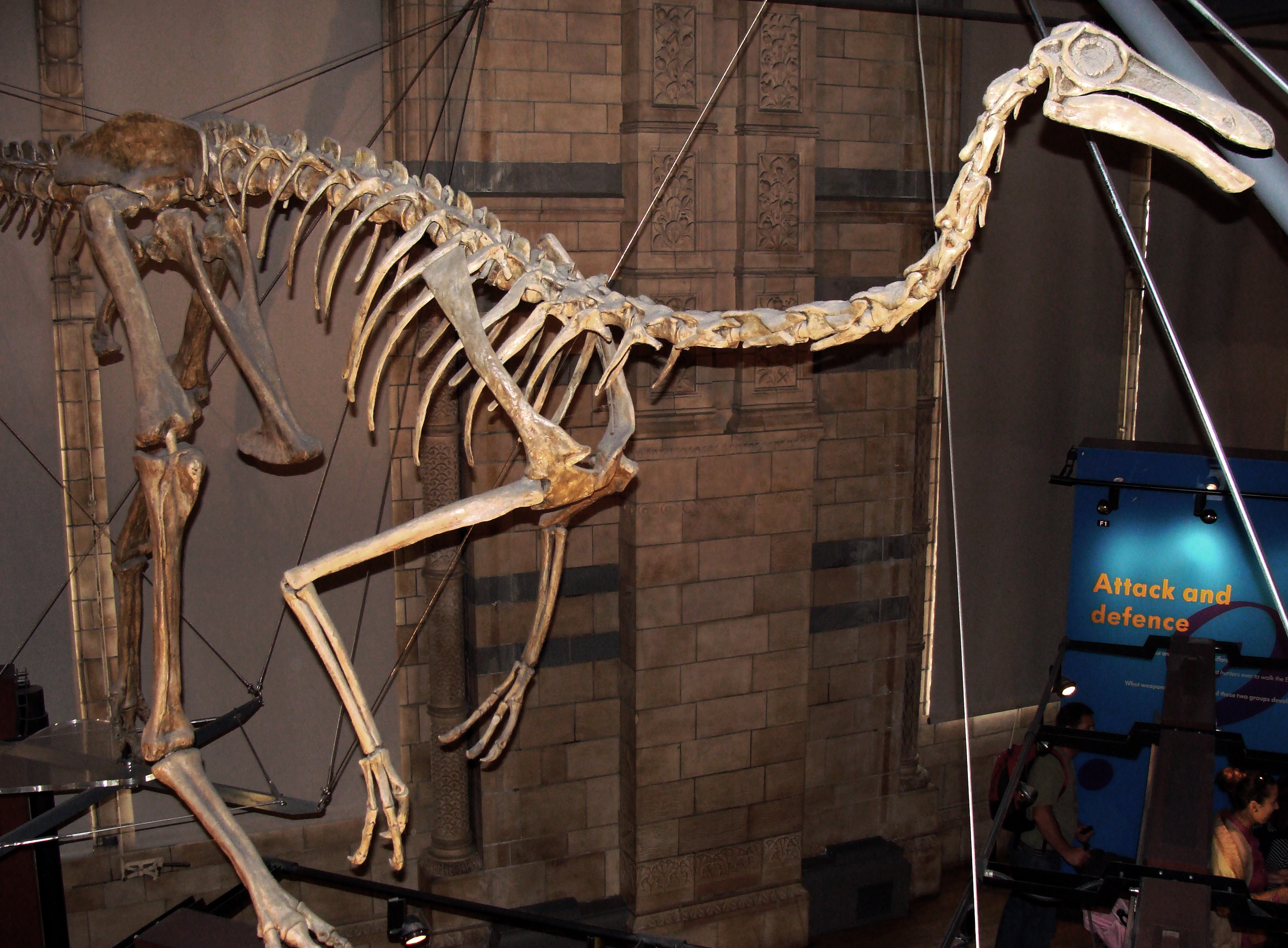


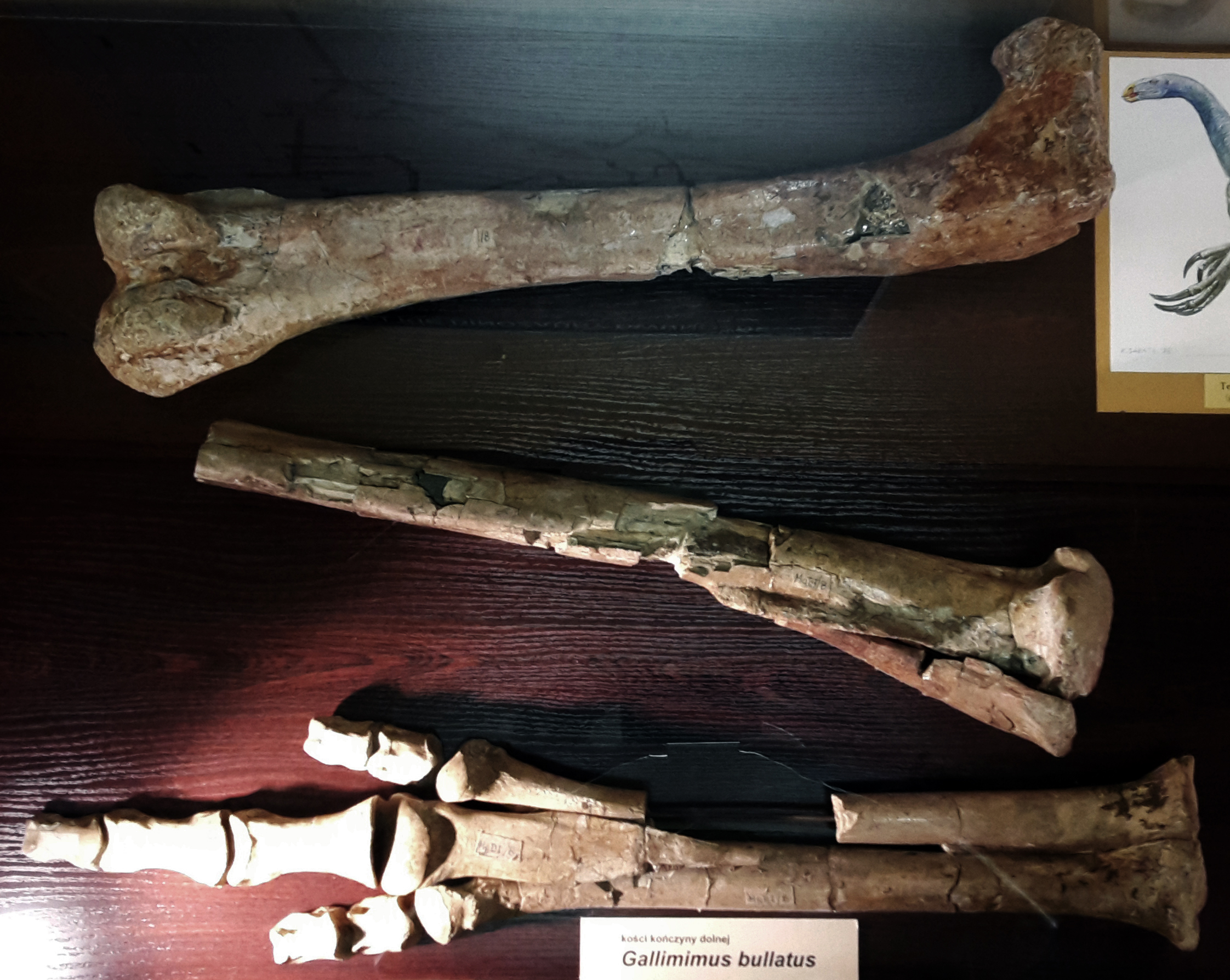


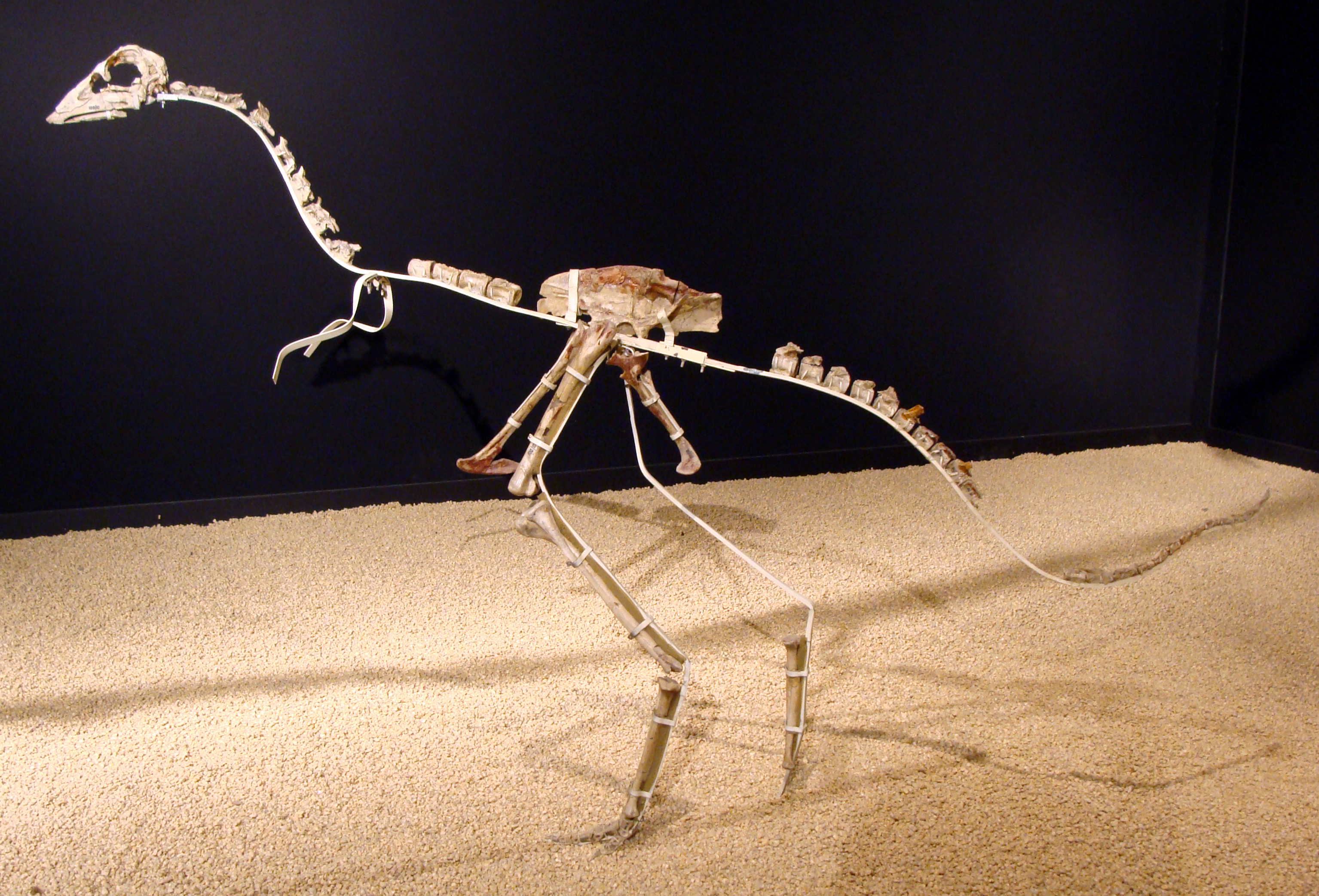


Holotype skeleton IGM 100/11 of Gallimimus bullatus at the Experimentarium in Hellerup, Denmark. This is the adult specimen discovered in 1964 by Zofia Kielan-Jaworowska and formally described in 1972.
FunkMonk — CC BY-SA 3.0 / GNU FDL
Ecology and behavior
Habitat
Gallimimus bullatus lived in the Nemegt Formation of present-day Mongolia, approximately 70 million years ago during the Maastrichtian. The environment was dominated by large meandering rivers, floodplains, and shallow lakes, similar to the present-day Okavango Delta. The climate was more humid than earlier Mongolian formations (Djadokhta, Baruungoyot), with estimated mean annual temperature around 7.6°C and monsoonal precipitation patterns. Vegetation included araucarian conifers, ginkgoes, and diverse angiosperms. Gallimimus coexisted with Tarbosaurus (the largest predator), Therizinosaurus, Deinocheirus, Saurolophus, and Nemegtosaurus.
Feeding
The current scientific consensus, based on the work of Barrett (2005) and Norell et al. (2001), points to herbivory as the primary diet of Gallimimus bullatus. The rounded keratinous beak without cutting structures, combined with evidence of a gizzard (gastroliths) and Barrett's energy analysis, rule out both carnivory and filter-feeding as primary diets. Gallimimus likely fed on low vegetation, leaves, and possibly fruits, pulling branches toward the beak with the short forelimbs. The absence of teeth and cranial morphology suggest processing of soft or medium-sized plant material.
Behavior and senses
Multiple lines of evidence indicate that Gallimimus bullatus was gregarious: parallel and overlapping trackways documented by Lee et al. (2018) in the Nemegt Formation suggest group movement; the Jurassic Park (1993) herd scene was based on consultation with paleontologists about the species' behavior; and bone beds with multiple specimens in related Asian ornithomimosaurs (Kobayashi & Lü, 2003) reinforce the pattern. The estimated speed of 42 to 56 km/h would be the primary defense against predators like Tarbosaurus. The wing-like plumage in adults, inferred from Ornithomimus, suggests display or brooding behavior.
Physiology and growth
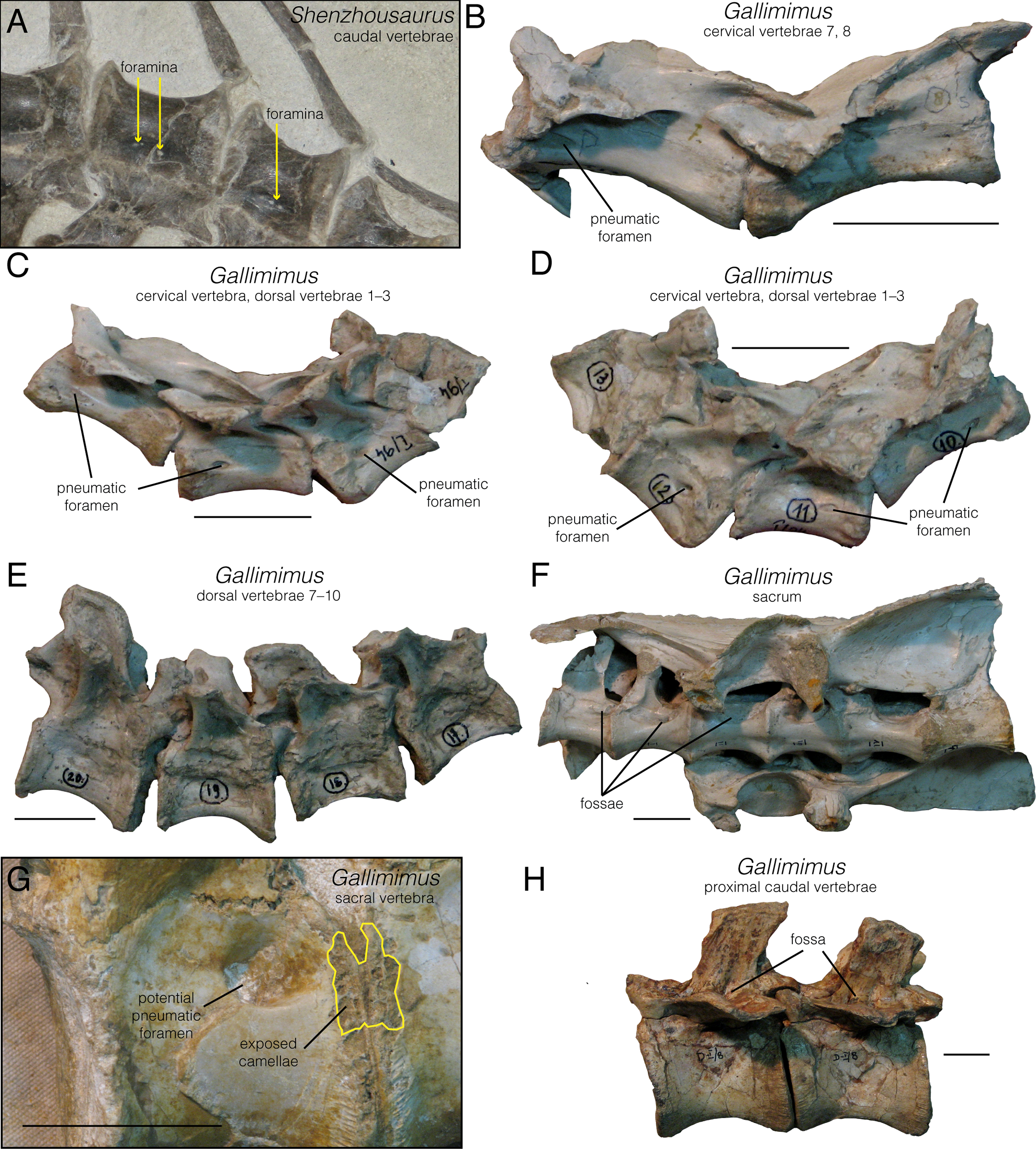
Bone histology analyzed by Rensberger and Watabe (2000) revealed that Gallimimus had bone microstructure more similar to birds than to reptiles, suggesting elevated metabolism and endothermy (warm-bloodedness). The extensive skeletal pneumatization documented by Watanabe et al. (2015) reduced bone mass despite the large body size and is associated with air sac systems similar to those of modern birds. The plumage inferred from Ornithomimus would have functioned as thermal insulation. All these elements point to a physiologically active animal with metabolism close to that of modern ratites.
Paleogeography
Continental configuration

Ron Blakey · CC BY 3.0 · Cretáceous, ~90 Ma
During the Maastrichtiano (~72–66 Ma), Gallimimus bullatus inhabited Laramidia, the western half of present-day North America, separated from the east by the Western Interior Seaway, a shallow sea dividing the continent. The continents were in very different positions: India was drifting toward Asia, Antarctica was still connected to Australia, and South America was an isolated island.
Inventário de Ossos
Based on multiple specimens of different sizes. The holotype IGM 100/11, discovered at Tsaagan Khushuu in 1964, is a large adult. Juvenile specimens (ZPAL MgD-I/1, ZPAL MgD-I/94) and the smallest specimen IGM 100/10 were also collected by the Polish-Mongolian expeditions. The combined material allowed documentation of the full ontogeny of the species.
Found elements
Inferred elements
Scientific Literature
15 papers in chronological order — from the original description to recent research.
A new dinosaur, Gallimimus bullatus n. gen., n. sp. (Ornithomimidae) from the Upper Cretaceous of Mongolia
Osmólska, H., Roniewicz, E. & Barsbold, R. · Palaeontologia Polonica
Founding paper of Gallimimus bullatus research. Osmólska, Roniewicz, and Barsbold formally describe the new genus and species based on specimens collected during the Polish-Mongolian expeditions of 1963 to 1965 in the Nemegt Formation. The holotype IGM 100/11, a large adult discovered at Tsaagan Khushuu by Zofia Kielan-Jaworowska in 1964, is described in detail. The authors establish diagnostic characters: long neck with vertebrae resembling modern galliform birds (origin of the 'chicken mimic' name), rounded toothless beak, short forelimbs with proportionally smaller hands than other ornithomimosaurs, and a bulbous bulla at the base of the skull (origin of the specific epithet 'bullatus'). At 103 pages of detailed osteological analysis, this work remains the primary anatomical reference for the species.
Coossified tarsometatarsi in theropod dinosaurs and their bearing on the problem of bird origins
Osmólska, H. · Palaeontologia Polonica
Osmólska analyzes the fused tarsometatarsus in theropod dinosaurs, including ornithomimosaurs like Gallimimus bullatus, and discusses the implications of this anatomical character for understanding evolutionary relationships between theropods and modern birds. The presence of a partially fused tarsometatarsus in Gallimimus, similar to the avian metatarsus, is interpreted as an intermediate evolutionary state and provides important evidence for the debate on bird origins from theropod dinosaurs. The work contextualizes Gallimimus within the broader coelurosaur phylogeny and anticipates discussions that would be central to paleontology in subsequent decades, when the theropod hypothesis of bird origins became consensus.

Speeds and gaits of dinosaurs
Thulborn, R.A. · Palaeogeography, Palaeoclimatology, Palaeoecology
Thulborn applies biomechanical equations derived from trackway analysis and limb proportions to estimate locomotion speeds for dozens of dinosaur species. For Gallimimus bullatus, estimates yield speeds up to 56 km/h, placing it among the fastest known dinosaurs. Thulborn's method relates relative stride length to hindlimb length, and results corroborate the hypothesis that ornithomimosaurs were cursorial runners comparable to modern ostriches. The absence of a hallux (first toe) and the hindlimb proportions of Gallimimus, with tibia and metatarsus longer than the femur, are features Thulborn identifies as adaptations for high-speed running.
Structure and function of the pectoral girdle and forelimb of Struthiomimus altus (Theropoda: Ornithomimidae)
Nicholls, E.L. & Russell, A.P. · Palaeontology
Nicholls and Russell conduct detailed functional analysis of the pectoral girdle and forelimbs in Struthiomimus altus, with explicit comparative data from Gallimimus bullatus. The work demonstrates that, contrary to what the slender arm morphology might suggest, ornithomimosaurs possessed well-developed forelimbs with specific range of motion: arms could be extended forward and downward, but not laterally. Gallimimus in particular has proportionally smaller hands than other ornithomimosaurs, with subequal fingers — no claw specialization. The authors interpret the hands as adapted for pulling branches toward the beak during feeding, not for capturing prey, corroborating a herbivorous or generalist omnivorous diet.
The phylogenetic position of the Tyrannosauridae: implications for theropod systematics
Holtz, T.R. · Journal of Paleontology
Holtz proposes a comprehensive phylogenetic analysis of theropods and introduces the clade Bullatosauria to group ornithomimosaurs and troodontids, based on the shared presence of a bulbous parasphenoidal bulla — the same character that gave rise to the specific epithet of Gallimimus bullatus. This work repositions Gallimimus within the coelurosaur phylogeny, connecting it to groups sharing unique cranial features. Although Bullatosauria was subsequently challenged by more recent analyses, Holtz's work was fundamental in systematizing the debate on ornithomimosaur phylogenetic relationships and establishing cladistic methodology as the standard in dinosaur paleontology.

A new ornithomimid dinosaur with gregarious habits from the Late Cretaceous of China
Kobayashi, Y. & Lü, J.-C. · Acta Palaeontologica Polonica
Kobayashi and Lü describe a new ornithomimosaur from the Late Cretaceous of Shandong, China, based on specimens from a bone bed suggesting gregarious behavior. The phylogenetic analysis places the new taxon within Ornithomimidae, close to Gallimimus bullatus. The work is relevant to understanding Gallimimus for two reasons: first, it establishes that gregarious behavior — walking and foraging in groups — was likely a shared characteristic of derived ornithomimosaurs; second, the phylogenetic analysis provides a new framework for relationships among Ornithomimidae members, refining the position of Gallimimus as one of the most derived and largest-bodied known ornithomimosaurs.
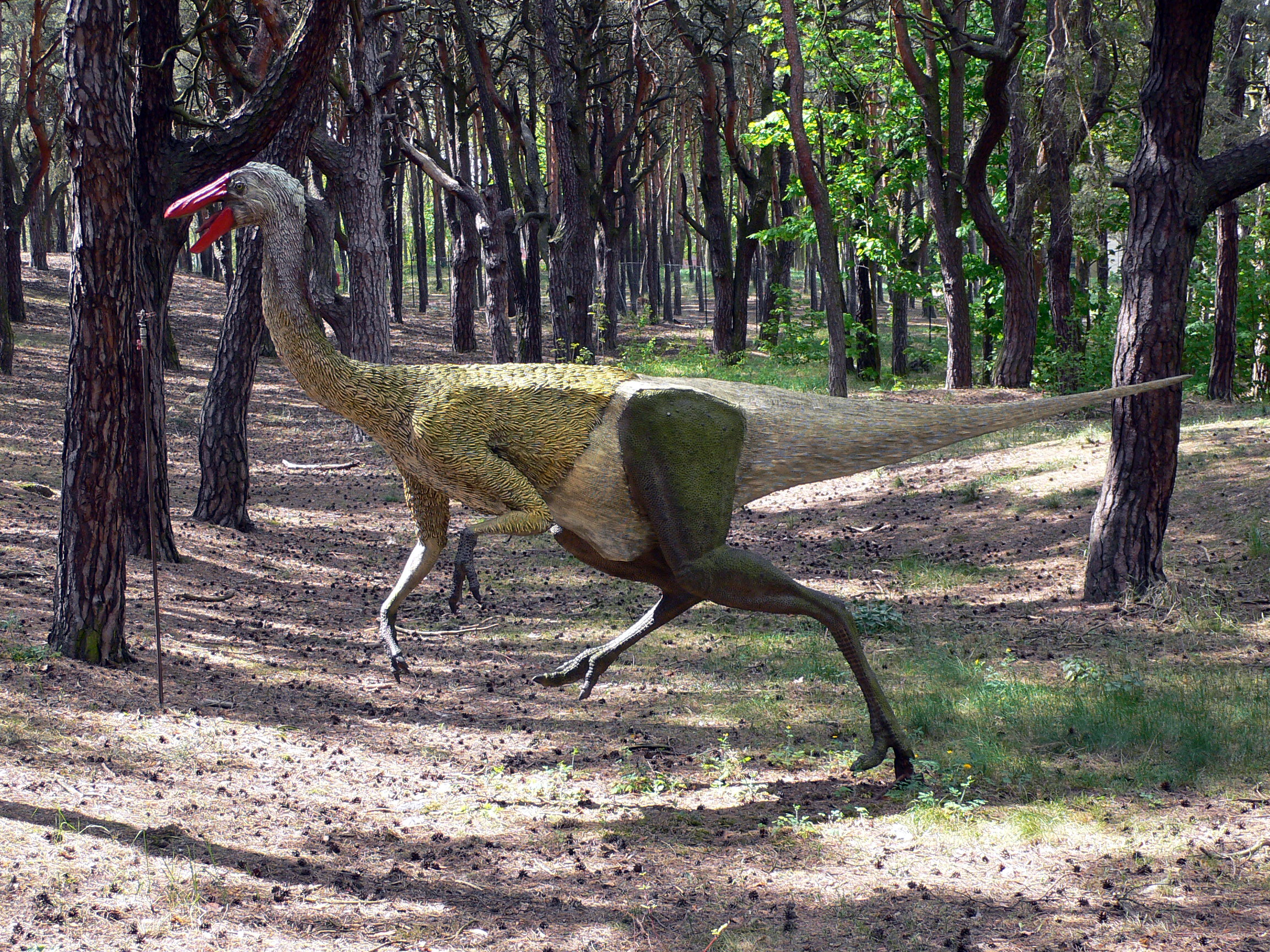

The beaks of ostrich dinosaurs
Norell, M.A., Makovicky, P.J. & Currie, P.J. · Nature
Norell, Makovicky, and Currie describe soft tissue structures preserved in skulls of Gallimimus bullatus and Ornithomimus, revealing the extent and form of the keratinous beak (rhamphotheca) in ornithomimid dinosaurs. The discovery is fundamental: the beak was not simply a covering for the snout bones, but a more complex structure with grooves and ridges compatible with filtering small organisms from water or soil, analogous to the beak of modern flamingos and ducks. This work redirected the debate on ornithomimosaur diet, previously focused on generalist herbivory or insectivory, toward the possibility of filter-feeding in aquatic or semi-aquatic environments. The evidence of preserved soft tissue in Gallimimus is exceptional and demonstrates the preservation potential of non-mineralized structures in Nemegt Formation fossils.

The diet of ostrich dinosaurs (Theropoda: Ornithomimosauria)
Barrett, P.M. · Palaeontology
Barrett conducts a comprehensive re-assessment of anatomical, taphonomical, and palaeoecological evidence for ornithomimosaur diet, including Gallimimus bullatus, resolving a decades-long controversy. The central argument: the combination of a keratinous rhamphotheca (toothless beak) with gastric mill evidence (gizzard stones) in at least one specimen is 'strongly indicative of a herbivorous habit'. Barrett dismisses the suspension-feeding hypothesis on biomechanical grounds, and the carnivore hypothesis for lack of cutting structures. Minimum daily energy budget estimates for two derived ornithomimosaur genera demonstrate their herbivorous diet was energetically viable under Nemegt Formation conditions. This paper represents the current scientific consensus on Gallimimus diet.

Ornithomimids from the Nemegt Formation of Mongolia
Kobayashi, Y. & Barsbold, R. · Journal of the Paleontological Society of Korea
Kobayashi and Barsbold present a comprehensive study of ornithomimid dinosaurs from the Nemegt Formation of Mongolia, documenting the taxonomic diversity, morphological variation, and distribution of Gallimimus bullatus, Anserimimus planinychus, and related taxa across different Nemegt localities. The work specifically analyzes differences in hand morphology among Nemegt ornithomimosaurs, identifying that Gallimimus has the proportionally smallest metacarpals and phalanges among derived ornithomimosaurs — which, paradoxically, may be related to its larger body size. Gallimimus is confirmed as the most abundant and widely distributed ornithomimosaur in the Nemegt Formation, found in at least four distinct localities.

Fine structure of bone in dinosaurs, birds and mammals
Rensberger, J.M. & Watabe, M. · Nature
Rensberger and Watabe analyze the bone microstructure of Gallimimus bullatus and other ornithomimosaurs, comparing canaliculi (channels connecting bone cells) and collagen fiber bundles with those of modern birds and mammals. The result is revealing: the fine bone structure of Gallimimus and other ornithomimosaurs is more similar to that of birds than to mammals or non-avian reptiles. This discovery provides independent histological evidence for the evolutionary proximity between ornithomimosaurs and birds, complementing morphology-based phylogenetic analyses. The work implies that Gallimimus metabolism and physiology were closer to those of modern birds than ectothermic reptiles, with accelerated bone remodeling rates consistent with high metabolic activity.


Feathered non-avian dinosaurs from North America provide insight into wing origins
Zelenitsky, D.K. et al. · Science
Zelenitsky and colleagues describe feather impressions in three Ornithomimus specimens from the Late Cretaceous of Alberta, Canada. The most surprising finding: adults possessed wing-like structures on forelimbs absent in juveniles, suggesting these structures were secondary sexual characteristics used in courtship, display, or brooding. Since Gallimimus is phylogenetically close to Ornithomimus within Ornithomimidae, this evidence is extendable: adult Gallimimus likely had similar plumage, including wing-like structures on forelimbs. The work provides the first direct evidence of feathers in ornithomimosaurs and has profound implications for visual reconstructions of Gallimimus, which should be depicted with abundant plumage rather than scaly skin as in the film Jurassic Park.
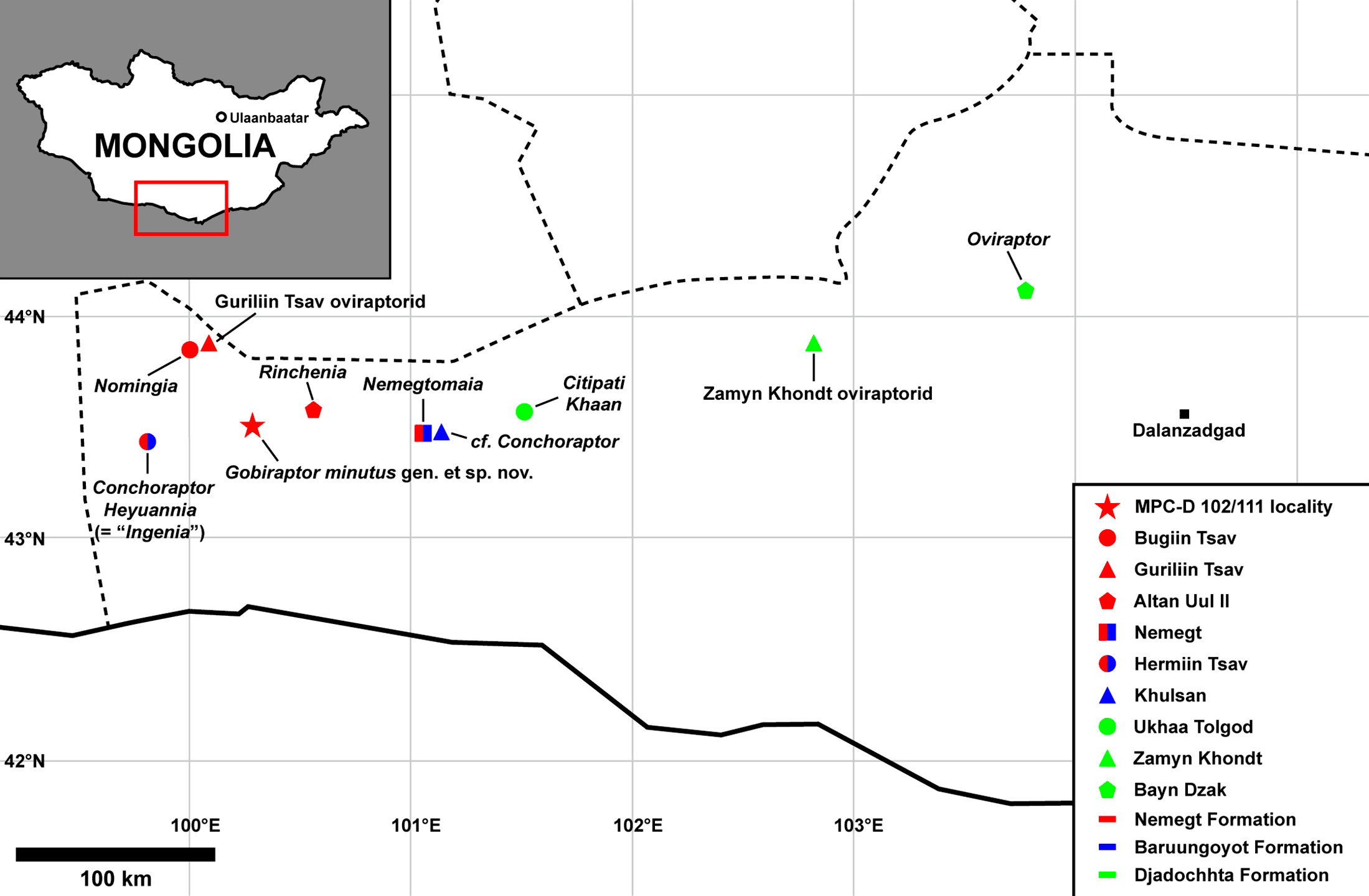

First ornithomimid (Theropoda, Ornithomimosauria) from the Upper Cretaceous Djadokhta Formation of Tögrögiin Shiree, Mongolia
Chinzorig, T. et al. · Scientific Reports
Chinzorig and colleagues describe the first ornithomimosaur from the Djadokhta Formation of Tögrögiin Shiree, Mongolia, and conduct a phylogenetic analysis recovering four most parsimonious trees. The strict consensus tree places Gallimimus within a derived clade of ornithomimosaurs together with Anserimimus, Struthiomimus, and Ornithomimus, with basal ornithomimosaurs (Haplocheirus to Harpymimus) as successive taxa. The work includes a complete cladogram (Figure 7) showing relationships within Ornithomimosauria and confirms that Gallimimus represents the evolutionary culmination in body size within the group. The comparative morphological analysis details the arctometatarsalian metatarsus proportions that Gallimimus shares with derived but not basal ornithomimosaurs.


Theropod trackways associated with a Gallimimus foot skeleton from the Nemegt Formation, Mongolia
Lee, H.-J. et al. · Palaeogeography, Palaeoclimatology, Palaeoecology
Lee and colleagues describe theropod trackways associated with a Gallimimus bullatus foot skeleton from the Nemegt Formation of Mongolia, allowing direct identification of Gallimimus tracks and providing data on locomotion speed, gait, and behavioral patterns. This is a rare find: the direct correspondence between trackways and the skeleton of the producer allows calibration of biomechanical locomotion models with real empirical data. Analysis of the trackways suggests Gallimimus moved in groups (gregarious movement), with multiple parallel and overlapping footprints. Speeds calculated from the trackways are consistent with Thulborn's (1982) estimates, but provide direct data rather than extrapolations.

Vertebral pneumaticity in the ornithomimosaur Archaeornithomimus (Dinosauria: Theropoda) revealed by computed tomography imaging and reappraisal of axial pneumaticity in Ornithomimosauria
Watanabe, A. et al. · PLOS ONE
Watanabe and colleagues use computed tomography to document vertebral pneumatization in Archaeornithomimus, and conduct a systematic reappraisal of axial pneumatization across all Ornithomimosauria. The most relevant result for Gallimimus: together with Deinocheirus and Archaeornithomimus, Gallimimus bullatus has the most pneumatized skeleton among all ornithomimosaurs. Pneumatization — invasion of air sacs into bones — is associated with high vascularization, elevated metabolism, and in the case of Gallimimus, likely functioned to reduce bone mass despite the large body size. The work includes an Ornithomimosauria phylogeny (Figure 9 documents pneumatization states by taxon, with Gallimimus clearly identified), reinforcing Gallimimus's position as one of the most derived ornithomimosaurs.
Large-bodied ornithomimosaurs inhabited Appalachia during the Late Cretaceous of North America
Chinzorig, T. et al. · PLOS ONE
Chinzorig and colleagues describe large-bodied ornithomimosaur remains from the Late Cretaceous of Mississippi and North Carolina, using scaling equations calibrated on Gallimimus bullatus and other ornithomimosaurs to estimate body mass. The work is relevant to Gallimimus for multiple reasons: it demonstrates that ornithomimosaurs of similar size to Gallimimus existed in North America during the same period; it uses Gallimimus as a scaling reference to estimate size in incomplete fragments; and provides an updated review of the paleogeographic distribution of large derived ornithomimosaurs. The study includes a comparative body mass table of ornithomimosaurs where Gallimimus bullatus (~440 kg) is the largest-bodied Asian taxon with sufficient material for reliable estimates.
Espécimes famosos em museus
IGM 100/11 (Holótipo)
Instituto de Geologia da Mongólia / Museu Central de Dinossauros, Ulaanbaatar
The holotype of Gallimimus bullatus, a large adult collected at Tsaagan Khushuu during the 1964 Polish-Mongolian expedition. Originally preserved lying on its back with the skull under the pelvis. It is the largest known specimen of the species and the basis for the entire original 1972 description.
ZPAL MgD-I/1 (Juvenil)
Academia Polonesa de Ciências (ZPAL), Varsóvia
One of the most important juvenile specimens of Gallimimus bullatus, also collected at Tsaagan Khushuu in 1965. The skull of ZPAL MgD-I/1 was studied by Norell et al. (2001), who documented the presence of preserved soft tissue in the beak. It is displayed at the Polish Academy of Sciences in Warsaw and has a cast at the Muséum national d'Histoire naturelle in Paris.
Espécimes montados do Natural History Museum
Natural History Museum, Londres
The Natural History Museum in London houses one of the most accessible mounted Gallimimus bullatus skeletons for Western audiences. The mounted specimen allows observation of the complete proportions of the animal, including the long neck, toothless beak, and cursorial hindlimbs with tibia longer than femur.
In cinema and popular culture
Gallimimus bullatus is, among all dinosaurs, the one that owes its fame most to cinema. The Jurassic Park (1993) herd scene was a technical milestone in cinema history: it was the first time computer graphics were used to create a crowd of living creatures in motion. Industrial Light & Magic used footage of ostriches and wildebeest as reference, and the result convinced even the most skeptical critics that CGI could replace animatronics. The species returned in The Lost World (1997), Jurassic World (2015), Fallen Kingdom (2018), and Dominion (2022), becoming one of the most recurring members of the franchise. Ironically, the cinematic portrayal correctly captured the animal's gregarious behavior, but got almost everything else visually wrong: the real Gallimimus was likely covered in dense feathers, like a giant feathered ratite, not the scaly reptilian skin seen in the films. The most curious fun fact: Phil Tippett, the legendary animatronics supervisor responsible for creatures in earlier films, upon seeing CGI tests of Gallimimus, reportedly said he was 'extinct' — and Steven Spielberg included this line, as a joke, in the film's own dialogue.

Classificação
Descoberta
Curiosidade
The Gallimimus herd scene in Jurassic Park (1993) was the first time in cinema history that computer graphics were used to create a crowd of moving creatures. Phil Tippett, the animatronics supervisor, reportedly said he was 'extinct' when he saw the CGI result — but ended up being credited as 'Dinosaur Supervisor' in the film.