
Giraffatitan
Giraffatitan brancai
"Giraffe titan"
Sobre esta espécie
Giraffatitan brancai was a giant brachiosaurid sauropod that lived during the Kimmeridgian to Tithonian of the Late Jurassic, approximately 154 to 150 million years ago, in what is now Tanzania. At 26 meters in length and estimated body mass of 35,000 to 40,000 kg, it was one of the largest land animals of its time. Giraffatitan's morphology is characterized by forelimbs significantly longer than the hindlimbs, resulting in a forward-sloping back and an extremely long and high neck that allowed the animal to reach the vegetation of tree canopies in the East African Jurassic forest. Unlike many sauropods that held the neck horizontally, Giraffatitan's skeletal proportions indicate the neck was raised at a steep angle, giving the animal a vertical silhouette reminiscent of a giraffe, hence the name. The separation of Giraffatitan from Brachiosaurus as a distinct genus was proposed by Paul (1988) and confirmed by Taylor (2009) after detailed cladistic analysis. Key anatomical differences include skull configuration, taller and with a more prominent nasofrontal crest in Giraffatitan, and cervical vertebrae proportions, more elongate and with lower robustness index in Giraffatitan than in Brachiosaurus altithorax from North America. The validity of Giraffatitan as a separate genus is currently consensus in the paleontological community, though some authors have suggested both could belong to the same genus with subgenus status. Fossil material of Giraffatitan brancai is exceptionally rich for a giant sauropod: German expeditions to Tanzania between 1909 and 1913, led by Werner Janensch, recovered remains of dozens of individuals, including materials from at least five partially articulated individuals. The composite specimen HMN SII, mounted at the Museum für Naturkunde in Berlin, is the tallest mounted dinosaur skeleton in the world, at 13.27 meters. The logistical operation of the Tendaguru expeditions was one of the largest paleontological endeavors in history: more than 250 African workers transported hundreds of tons of fossilized material over 60 kilometers from the East African coast under extremely adverse conditions.
Geological formation & environment
The Tendaguru Formation (also called the Tendaguru Beds) is a stratigraphic unit from the Late Jurassic to Early Cretaceous (Kimmeridgian-Berriasian, ~154-132 Ma) outcropping in Lindi, southeastern Tanzania, near the city of Lindi. The formation takes its name from Mount Tendaguru, where the first discoveries were made by a German mining engineer named Bernhard Wilhelm Sattler in 1906. The stratigraphic sequence is composed of three main fossiliferous members (Upper, Middle and Lower Members) separated by marine layers, indicating the region was a low-gradient coast with periodic marine transgressions during the Late Jurassic. The sauropod-rich terrestrial layers, including Giraffatitan, are intercalated with marine layers preserving mollusks and echinoderms, witnessing sea-level fluctuations during the deposition period. The vertebrate fauna of Tendaguru is extraordinarily diverse and includes giant sauropods (Giraffatitan brancai, Janenschia robusta, Tendaguria tanzaniensis), theropods (Elaphrosaurus bambergi, Ceratosaurus-like forms), ornithischians (Kentrosaurus aethiopicus, Dysalotosaurus lettowvorbecki), and pterosaurs. Faunal similarity with the Morrison Formation of North America, contemporary but geographically separated by the nascent Atlantic Ocean, is remarkable and suggests that in the Late Jurassic there were still possibilities for intercontinental dispersal between the two continents, probably through island archipelagos along the forming Mid-Atlantic Ridge.
Image gallery


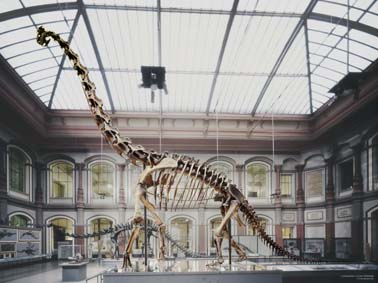
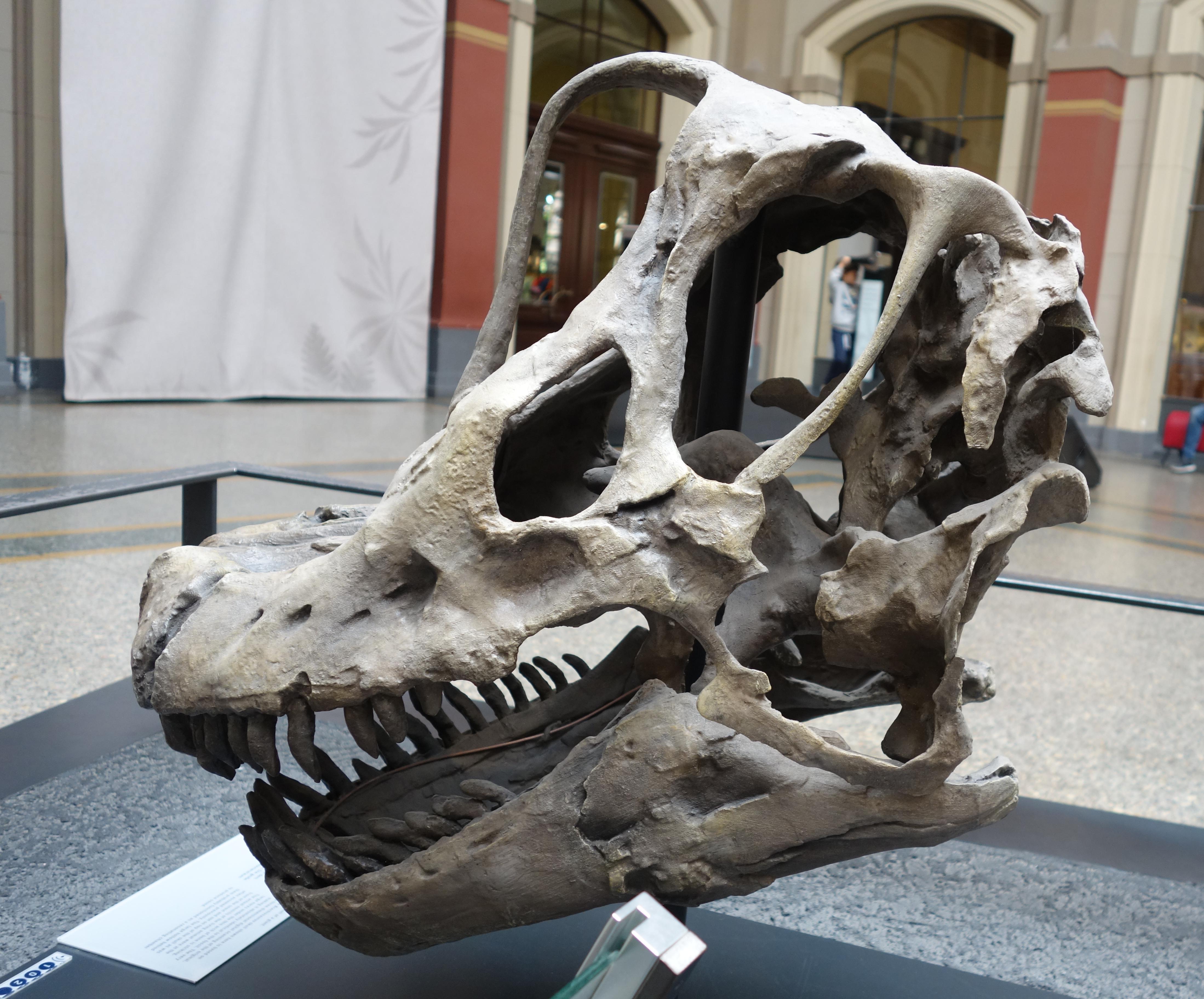
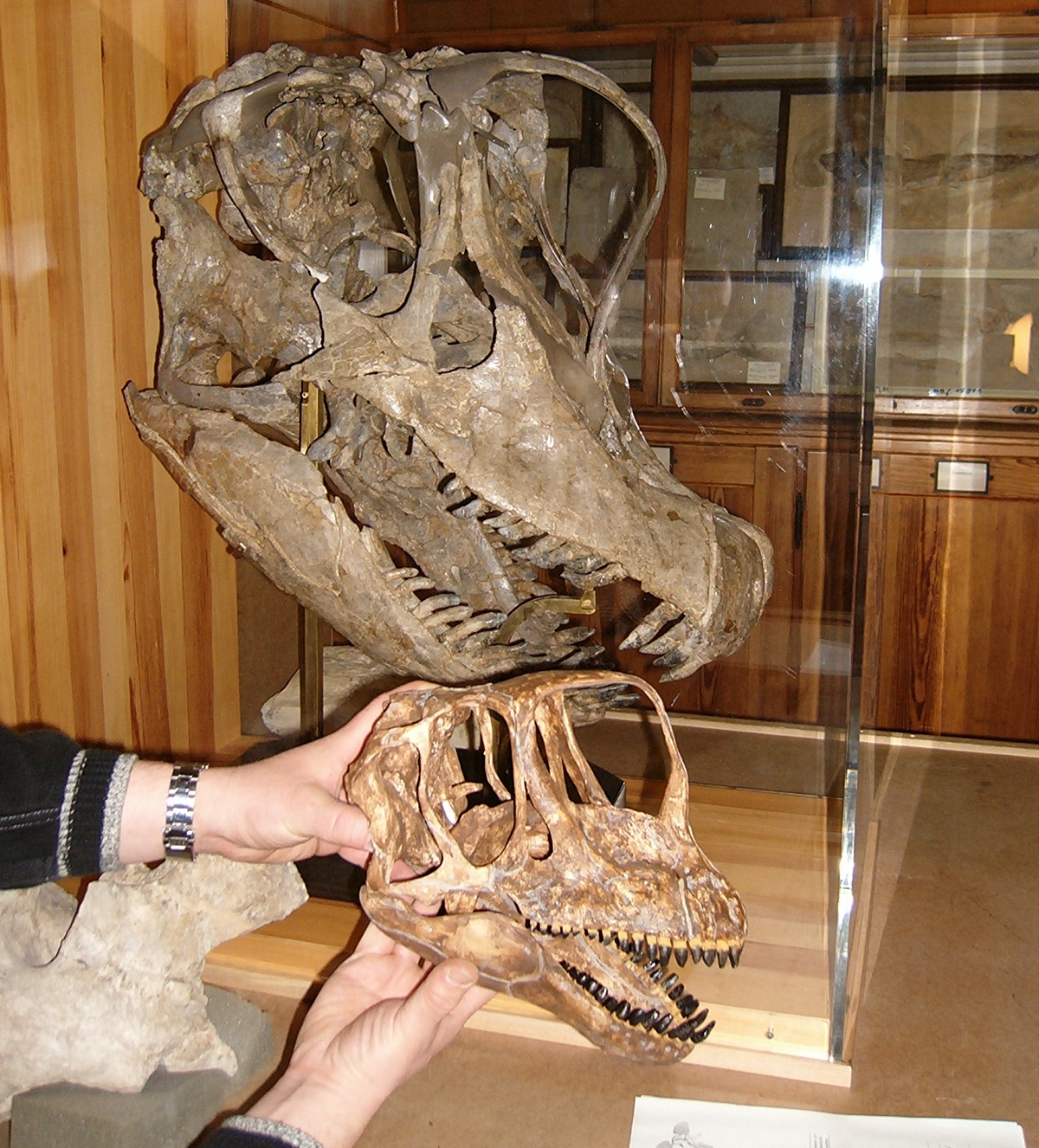
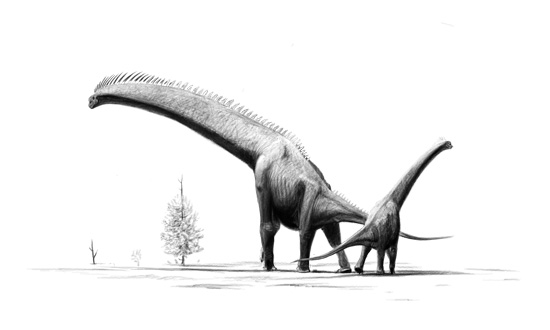


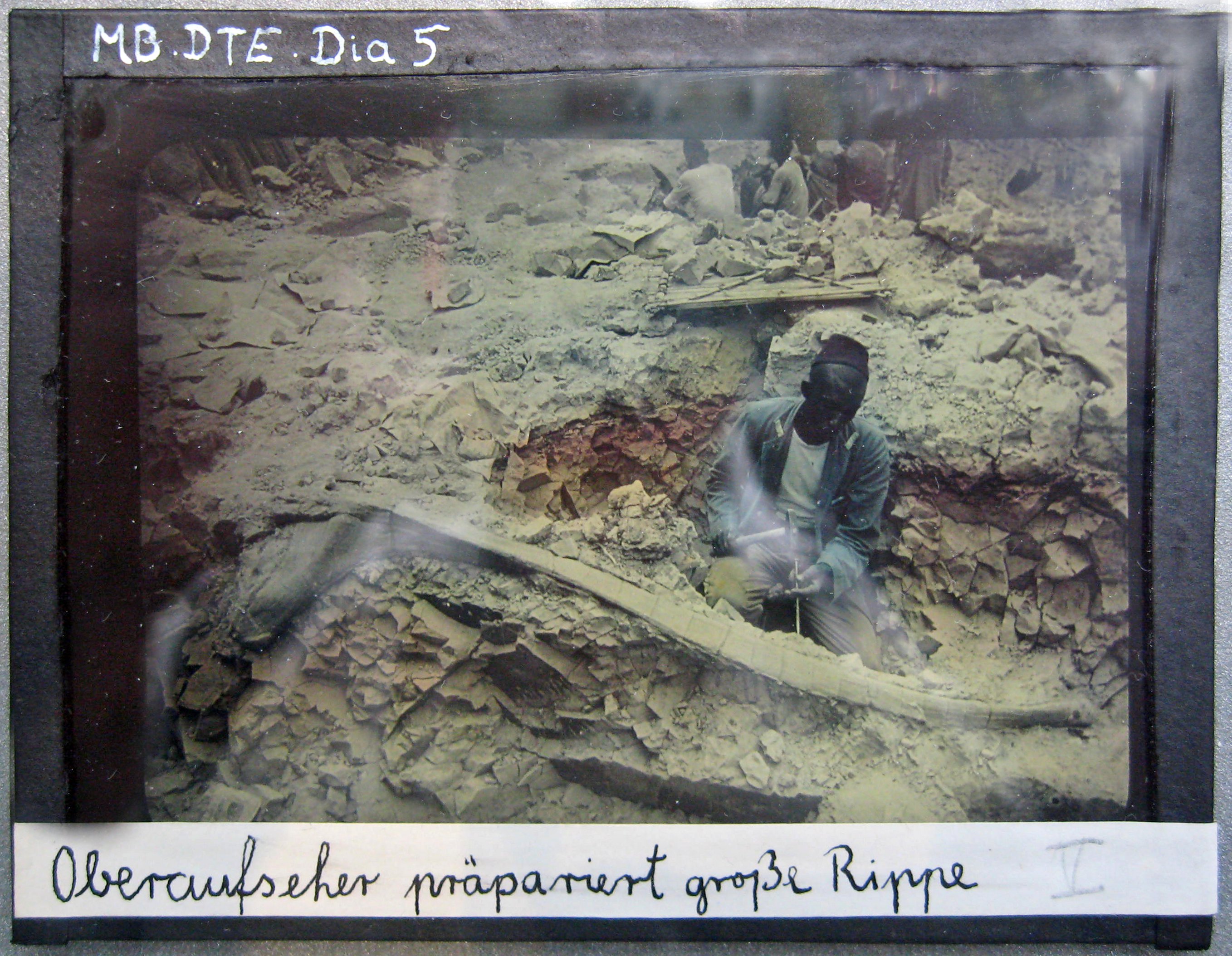
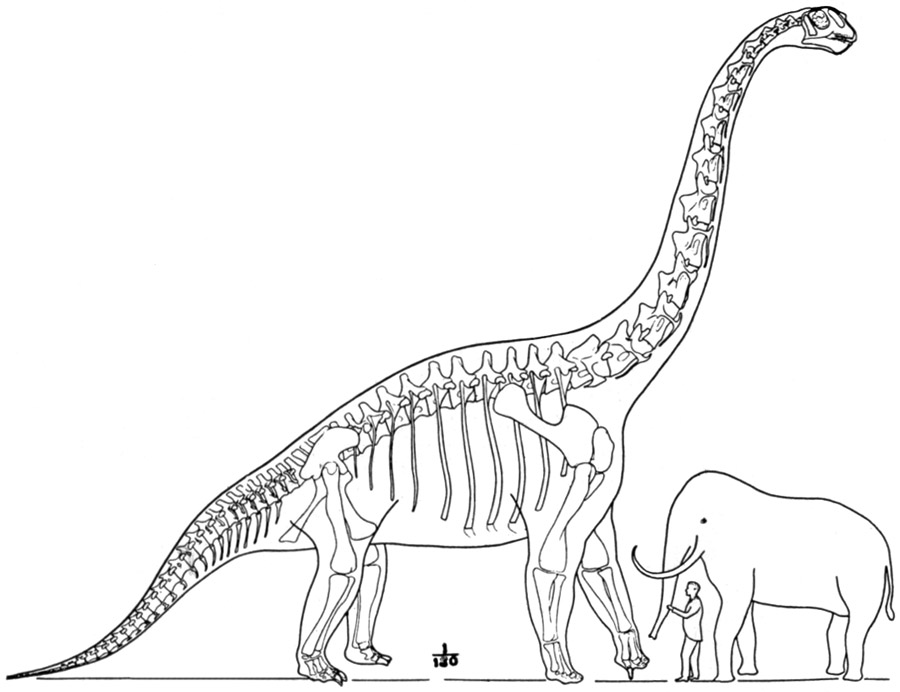
Paleoecological reconstruction of the Tendaguru environment in the Late Jurassic, showing Giraffatitan brancai foraging in araucaria forests at heights of 9 meters, with Kentrosaurus in the background.
Raúl Martín / via Museum für Naturkunde Berlin
Ecology and behavior
Habitat
Giraffatitan brancai inhabited the tropical coastal zone of East Africa during the Late Jurassic, in a region that today corresponds to southern Tanzania. The Tendaguru Formation preserves evidence of a transition environment between dense conifer forests dominated by Araucaria, with canopies reaching 30 to 40 meters high, and low tidal flats with low-growing vegetation of pteridophytes and cycads. The climate was seasonal, with marked dry and rainy seasons, which likely determined migration cycles of large sauropods in search of food resources. The high-canopy conifer flora was Giraffatitan's primary food resource, while sauropods with more equitable limbs like Janenschia probably occupied foraging niches at lower heights, reducing interspecific competition.
Feeding
Giraffatitan was a herbivore specialized in high-canopy foraging, with the neck raised at a steep angle to reach foliage of araucarias and other conifers at heights of 9 meters or more. The spatulate teeth, robust but without serrations, were used to strip foliage without chewing, swallowing whole plant material that was fermented in the enormous digestive tract. Daily consumption estimates, based on metabolic models, suggest the animal needed to ingest between 200 and 400 kg of plant material per day, implying nearly continuous foraging during daylight hours. The absence of chewing, compensated by slow gastrointestinal fermentation, is one of the keys to giant sauropod success: they could ingest plant biomass much faster than chewing herbivores.
Behavior and senses
Giraffatitan probably lived in social groups of variable size, from small family groups to larger seasonal aggregations. Evidence of collective trampling and fossil trackways in other correlated formations suggests sauropods moved in groups to feeding sites and water sources. Sexual dimorphism in Giraffatitan is not well documented, but size differences between adult specimens from Tendaguru suggest males could be significantly larger than females. Reproduction was oviparous, with nesting in shallow nests, and juveniles grew extraordinarily fast: histological analyses suggest Giraffatitan could reach adult size in 25 to 40 years, a growth rate far superior to modern large mammals.
Physiology and growth
Giraffatitan's physiology was highly derived relative to modern reptiles: evidence of extensive vertebral pneumaticity indicates a pulmonary air sac system similar to that of birds, with unidirectional air circulation and very high respiratory efficiency. Metabolism was probably intermediate between ectothermic reptiles and endothermic mammals: more active than a modern crocodile, but probably not as high as that of a bird or mammal of comparable size (if one existed). Bone histology shows rapid growth lines in long bones, consistent with fast growth and relatively high metabolism. Thermoregulation in a 38-tonne animal would be facilitated by thermal inertia: the enormous body volume buffers ambient temperature variations, making unnecessary a thermoregulatory system as precise as that of modern mammals.
Paleogeography
Continental configuration

Ron Blakey · CC BY 3.0 · Jurassic, ~90 Ma
During the Kimmeridgiano-Titoniano (~154–150 Ma), Giraffatitan brancai inhabited the fragmenting Pangea. North America and Europe were still close, and the North Atlantic was just beginning to open. Climate was warm and humid globally, with no polar ice caps.
Inventário de Ossos
The Giraffatitan brancai material at the Museum für Naturkunde in Berlin is based on multiple specimens collected during the Tendaguru expeditions (1909-1913). The composite specimen HMN SII, which forms the world's tallest mounted skeleton, combines elements from at least two adult individuals. Specimen HMN MB R.2181 preserves a nearly complete skull. The 80% completeness estimate reflects the total material available for the taxon, not a single specimen. Skulls are rarely preserved in sauropods and their occurrence in Giraffatitan is exceptionally valuable for morphological comparisons.

Found elements
Inferred elements
Scientific Literature
10 papers in chronological order — from the original description to recent research.
Übersicht über die Wirbeltierfauna der Tendaguru-Schichten, nebst einer kurzen Charakterisierung der neu aufgeführten Arten von Sauropoden
Janensch, W. · Archiv für Biontologie
First article by Werner Janensch describing the vertebrate fauna of the Tendaguru beds based on material collected during the German expeditions of 1909 to 1913 to Tanzania (then Deutsch-Ostafrika). Janensch describes the large brachiosaurid that would later be called Brachiosaurus brancai, subsequently renamed Giraffatitan brancai by Gregory S. Paul in 1988. The paper includes the first descriptions of the giant sauropod's skeletal elements, including the extremely long cervical vertebrae, disproportionately long forelimbs, and skull with prominent nasofrontal crest. Janensch recounts the collection conditions at Tendaguru, more than 60 kilometers from the coast, where more than 250 local workers transported blocks of fossiliferous rock under extreme heat. The paper is the starting point for all subsequent research on Giraffatitan and marks the beginning of systematic paleontology in East Africa.
Die Skelettrekonstruktion von Brachiosaurus brancai
Janensch, W. · Palaeontographica (Supplement VII)
Monumental publication by Werner Janensch presenting detailed skeletal reconstruction of Brachiosaurus brancai (now Giraffatitan brancai) based on the complete material from the Tendaguru expeditions. The work describes in detail the skull, cervical, dorsal, sacral and caudal vertebral column, pectoral and pelvic girdles, and limbs. Janensch includes detailed anatomical plates of the most important elements, which remain quality references to this day. The paper is the primary anatomical source for Giraffatitan and was the basis for all subsequent phylogenetic and biomechanical studies. Published in the Palaeontographica series as a seven-volume supplement, it represents decades of preparation and description work on Tendaguru material collected at the beginning of the 20th century. This monograph set the standard for anatomical description of giant sauropods and continues to be cited in virtually all work on brachiosaurids.
The brachiosaur giants of the Morrison and Tendaguru with a description of a new subgenus, Giraffatitan, and a comparison of the world's largest dinosaurs
Paul, G.S. · Hunteria
Gregory S. Paul performs a detailed comparative analysis of brachiosaurid sauropods from the Morrison Formation (North America) and the Tendaguru Formation (Tanzania), revealing anatomical differences sufficient to distinguish the African taxon as a separate subgenus, Giraffatitan. Paul documents differences in the skull, with the African version presenting a taller nasofrontal crest and different curvature of the supraorbital arch, and differences in cervical vertebrae proportions, longer and more gracile in Giraffatitan than in Brachiosaurus altithorax from North America. The paper also compares Giraffatitan with other candidates for the title of largest known dinosaur at the time, including Supersaurus and Ultrasauros. Paul proposes that the anatomical differences are sufficient for subgenus rank, but Taylor (2009) subsequently considered them sufficient for full genus. This paper marks the first formal separation between Brachiosaurus and Giraffatitan and is the seminal reference for all subsequent debates about the relationship between the two taxa.
A re-evaluation of Brachiosaurus altithorax Riggs 1903 (Dinosauria, Sauropoda) and its generic separation from Giraffatitan brancai (Janensch 1914)
Taylor, M.P. · Journal of Vertebrate Paleontology
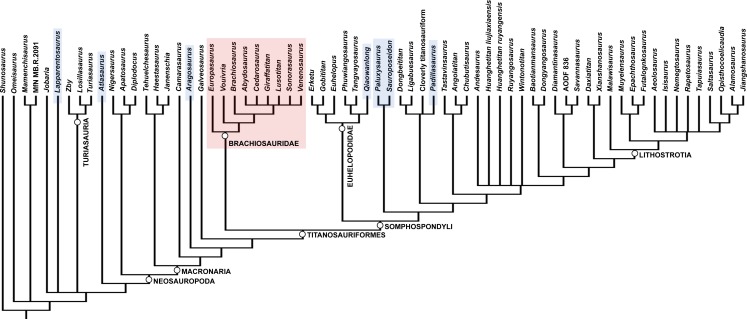
Michael Taylor performs a rigorous re-evaluation of Brachiosaurus altithorax and the African brachiosaurid (then Brachiosaurus brancai), confirming that the two taxa are sufficiently distinct to warrant full generic separation. Taylor identifies 26 diagnostic features differentiating the two taxa, including cranial morphology, cervical vertebrae proportions, pectoral girdle configuration, and details of cervical rib morphology. The author validates the genus Giraffatitan Paul 1988 as a full nomen validum, closing the debate initiated by Paul in 1988. The paper is now the standard reference for Giraffatitan brancai nomenclature and diagnosis and is extensively cited in all phylogenetic work on Brachiosauridae. Taylor also discusses the phylogenetic status of other possible brachiosaurids and provides the most complete emended diagnosis of Giraffatitan available in the literature.
New information on a juvenile sauropod specimen from the Tendaguru Formation and potential implications for sauropod diversity
Carballido, J.L., Marpmann, J.S., Schwarz-Wings, D., Pabst, B. · Palaeontology
Carballido and collaborators analyze a juvenile sauropod specimen from the Tendaguru Formation, revealing anatomical details suggesting greater sauropod diversity in the Tendaguru fauna than previously recognized. The study discusses growth patterns and ontogeny in brachiosaurids, comparing the juvenile specimen with adult individuals of Giraffatitan brancai to infer growth rates and proportional changes throughout development. The authors document that young Giraffatitan specimens show significantly different proportions from adults, with a relatively shorter neck and forelimbs less differentiated from hindlimbs, suggesting the diagnostic features of the genus became more pronounced with maturity. The work has implications for interpreting other Tendaguru specimens that may be juveniles of Giraffatitan rather than distinct species.
Tipsy punters: sauropod dinosaur pneumaticity, buoyancy and aquatic habits
Henderson, D.M. · Proceedings of the Royal Society B
Henderson computationally models body density and buoyancy in Giraffatitan and other sauropods, showing that extensive skeletal pneumaticity would have made the animals neutrally or positively buoyant in shallow water. The study has implications for old debates about semi-aquatic habits in giant sauropods: if Giraffatitan was positively buoyant, it could have used water bodies for partial support of its enormous body mass. The authors build volumetric three-dimensional models of Giraffatitan and calculate how extensive air sacs, evidenced by pneumaticities in the vertebrae, would alter the body's density distribution. The work concludes that Giraffatitan, unlike more massively built sauropods, would show a tendency to float with the neck inclined upward and the body nearly vertical in water, which the author calls 'tipsy punter', a posture that would make active swimming unlikely but crossing deep rivers and ponds feasible.

Novel reconstruction of the orientation of the pectoral girdle in sauropods
Schwarz, D., Frey, E., Meyer, C.A. · Anatomical Record
Schwarz, Frey and Meyer re-examine the morphology of the pectoral girdle in Giraffatitan and other sauropods, proposing a more lateral orientation of the scapula than traditionally reconstructed. The study has direct implications for forelimb range of motion and biomechanical efficiency during locomotion. The authors argue that the traditional scapula position, nearly vertical, underestimates the muscle mass needed to move the forelimb in Giraffatitan's quadrupedal posture. The new reconstruction, with the scapula at a more lateral angle of approximately 55-65 degrees from vertical, implies greater stride length and more efficient weight distribution among the four limbs. The work is important for understanding how a 38-tonne animal managed sustained locomotion and provides the basis for modern biomechanical models of locomotion in giant sauropods.

A new body mass estimation of Brachiosaurus brancai Janensch, 1914 mounted and exhibited at the Museum of Natural History (Berlin, Germany)
Gunga, H.C., Suthau, T., Bellmann, A., Friedrich, A., Schwarz-Wings, D., Stoinski, S., Trippel, T., Kirsch, K., Hellwich, O. · Fossil Record
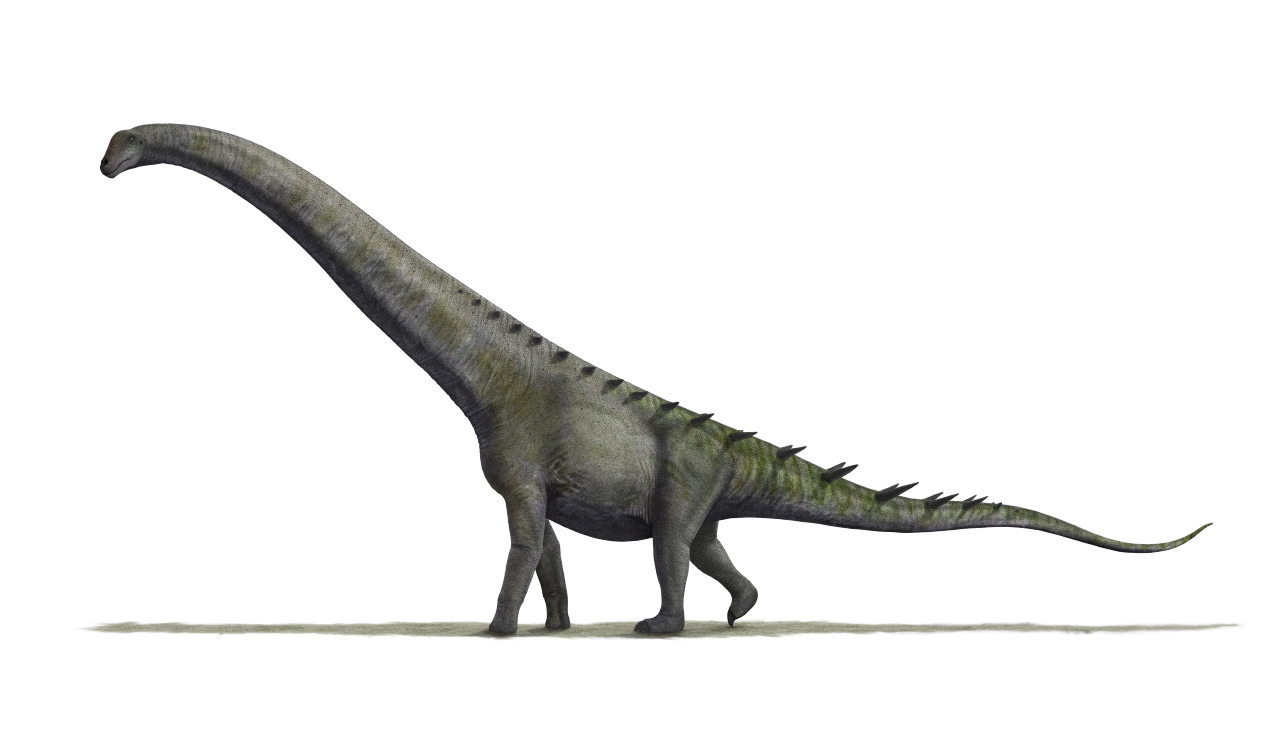
Gunga and collaborators perform laser scanning of the mounted Giraffatitan skeleton in the Museum für Naturkunde in Berlin, combined with three-dimensional volumetric modeling to obtain a new body mass estimate. The result, approximately 38 tonnes for the mounted specimen, is significantly lower than earlier estimates reaching 74 tonnes, based on less precise volume calculation methods. The work represents the most rigorous methodology available for body mass estimation in giant sauropods and established a new standard for subsequent research. The authors also calculate separate masses for neck, head, trunk, tail, and limbs, enabling more precise biomechanical analyses. The study concludes that laser scanning combined with 3D soft-tissue modeling is the most reliable method for mass estimates in extinct animals with well-preserved skeletons.


Vertebral pneumaticity, air sacs, and the physiology of sauropod dinosaurs
Wedel, M.J. · Paleobiology
Wedel demonstrates that extensive vertebral pneumaticity in sauropods like Giraffatitan is linked to a pulmonary air sac system similar to that of modern birds. The air chambers in Giraffatitan's cervical and dorsal vertebrae, visible in the large pleuroceles, are interpreted as extensions of pulmonary air sacs, analogously to what occurs in birds. This system would imply unidirectional air circulation through the lungs, with respiratory efficiency far superior to modern mammals, and would allow Giraffatitan a high basal metabolism compatible with endothermy. The work revolutionized understanding of sauropod physiology, discarding models of slow ectothermic reptilian metabolism. For Giraffatitan specifically, the air sacs would also have the secondary function of reducing the mass of the long neck, making the vertical position viable without excessive muscular effort.


Neck posture and feeding habits of two Jurassic sauropod dinosaurs
Stevens, K.A., Parrish, J.M. · Science
Stevens and Parrish computationally model the articulation of cervical vertebrae in Giraffatitan and Diplodocus, revealing fundamental differences in natural neck posture. For Giraffatitan, the model shows the neck was raised at a steep upward angle, allowing the animal to reach vegetation at heights up to 9 meters above ground, a high-canopy foraging strategy. For Diplodocus, the model indicates an almost horizontal neck, suggesting foraging at lower heights and possibly underwater. The paper generated intense debate in the paleontological community, with Paul and Christiansen (2000) and later Taylor et al. (2009) arguing neck mobility was greater than Stevens and Parrish suggested. Nevertheless, the work established Giraffatitan as a high-canopy browser, consistent with the animal's general morphology and its name ('giraffe titan'), and is fundamental for reconstructing Tendaguru paleoecology.


Espécimes famosos em museus

HMN SII (espécime composto)
Museum für Naturkunde Berlin, Berlim, Alemanha
The world's tallest mounted skeleton, at 13.27 meters. Composite specimen combining elements from at least two adult individuals collected during the Tendaguru expeditions of 1909-1913. The museum also preserves skull HMN MB R.2181, one of the rare preserved giant sauropod skulls, and extensive additional post-cranial material. The skeleton was originally mounted as Brachiosaurus brancai and has carried the Giraffatitan designation since 2009.
Molde composto FMNH P25107
Field Museum of Natural History, Chicago, Estados Unidos
High-fidelity cast of the Giraffatitan skeleton based on Berlin material, displayed at the Field Museum in Chicago. Allows North American visitors to see the impressive scale of the animal without traveling to Germany. The museum also holds original comparative material of Brachiosaurus altithorax from the Morrison Formation.
LACM molde
Natural History Museum of Los Angeles County, Los Angeles, Estados Unidos
Giraffatitan cast displayed at the Natural History Museum of Los Angeles County, used both for public exhibition and for comparisons with the museum's extensive Morrison Formation sauropod material. The mount allows direct visual comparison with Brachiosaurus altithorax.
RGM molde
Naturalis Biodiversity Center, Leiden, Países Baixos
Skeleton cast of Giraffatitan brancai displayed at the Naturalis Biodiversity Center in Leiden, integrated into the permanent evolution of dinosaurs exhibition. The Dutch museum has a tradition of research on African sauropods since the colonial expeditions of the early 20th century.
In cinema and popular culture
Giraffatitan brancai has a lasting presence in popular culture, mainly under the name Brachiosaurus, which was the accepted designation until 2009. The scene in Jurassic Park (1993) where Alan Grant first spots a brachiosaurus grazing in the island fields is considered one of the most iconic moments in science fiction film history, and shaped an entire generation's perception of what a giant sauropod was. John Williams' music accompanying the scene has become synonymous with paleontological wonder in Western culture. In Jurassic World (2015) and Jurassic World: Fallen Kingdom (2018), the same animal appears with updated representations incorporating research on neck posture. The emotionally charged scene in Fallen Kingdom, where a Brachiosaurus/Giraffatitan rears on its hindlimbs on the beach as the island explodes, was deliberately designed as a tribute to the 1993 scene and generated enormous emotional impact on viewers, becoming viral on social media. In educational media, Giraffatitan is invariably presented as the 'largest dinosaur in the Berlin Museum' and as a symbol of German paleontology and colonial science of the early 20th century. The history of the Tendaguru expeditions, with hundreds of African workers carrying bones across the savanna, has generated growing debate in recent decades about colonial aspects of historical paleontology and who has the right to fossils extracted during the colonial period. The Tanzanian government has formally requested Germany to restitute the Giraffatitan skeleton, a debate that remains open.

Classificação
Descoberta
Curiosidade
The mounted skeleton of Giraffatitan brancai at the Museum für Naturkunde in Berlin is not just the world's tallest: it is so tall that a special atrium had to be built to accommodate it, with more than 14 meters of ceiling height. The museum was literally redesigned around the dinosaur. For visitors, the experience of entering the atrium and seeing Giraffatitan's neck raised above their heads is frequently described as one of the most impressive in world paleontology. The animal lived 150 million years ago more than 60 kilometers from the Tanzanian coast and was transported by hundreds of workers on foot to the port, in a logistical operation comparable to building a pyramid.