
Kentrosaurus aethiopicus
Kentrosaurus aethiopicus
"Spiky lizard of Ethiopia (Africa)"
Sobre esta espécie
Kentrosaurus aethiopicus was an African stegosaurid from the Late Jurassic, discovered in the Tendaguru Formation of Tanzania. At roughly 4.5 meters long and up to 1,000 kg, it was smaller than its North American relative Stegosaurus but equally impressive. Its most distinctive feature was the combination of small bony plates on the neck and anterior back with long, sharp spines on the tail and hip region — a formidable defensive arsenal. Biomechanical studies have shown its tail could sweep through a 180-degree arc fast enough to cause serious injury to predators. Originally described by Edwin Hennig in 1915, it is known from hundreds of bones collected during the German expedition to East Africa between 1909 and 1912.
Geological formation & environment
The Tendaguru Formation, located in the Lindi region of southeastern Tanzania, is one of the most important Late Jurassic fossiliferous formations in the world. With Kimmeridgian to Tithonian age (~155-148 Ma), the formation is subdivided into six members intercalated between marine and continental sediments. The environment was subtropical-tropical coastal with seasonal climate, alternating vegetated terrestrial zones, tidal flats, and lagoons. The fauna is remarkably similar to the North American Morrison Formation, including giant sauropods (Giraffatitan), stegosaurids (Kentrosaurus), and theropods. The German expeditions of 1909-1912 collected over 225 tons of fossils, making the Museum für Naturkunde Berlin collection one of the richest in African Jurassic dinosaurs in the world.
Image gallery


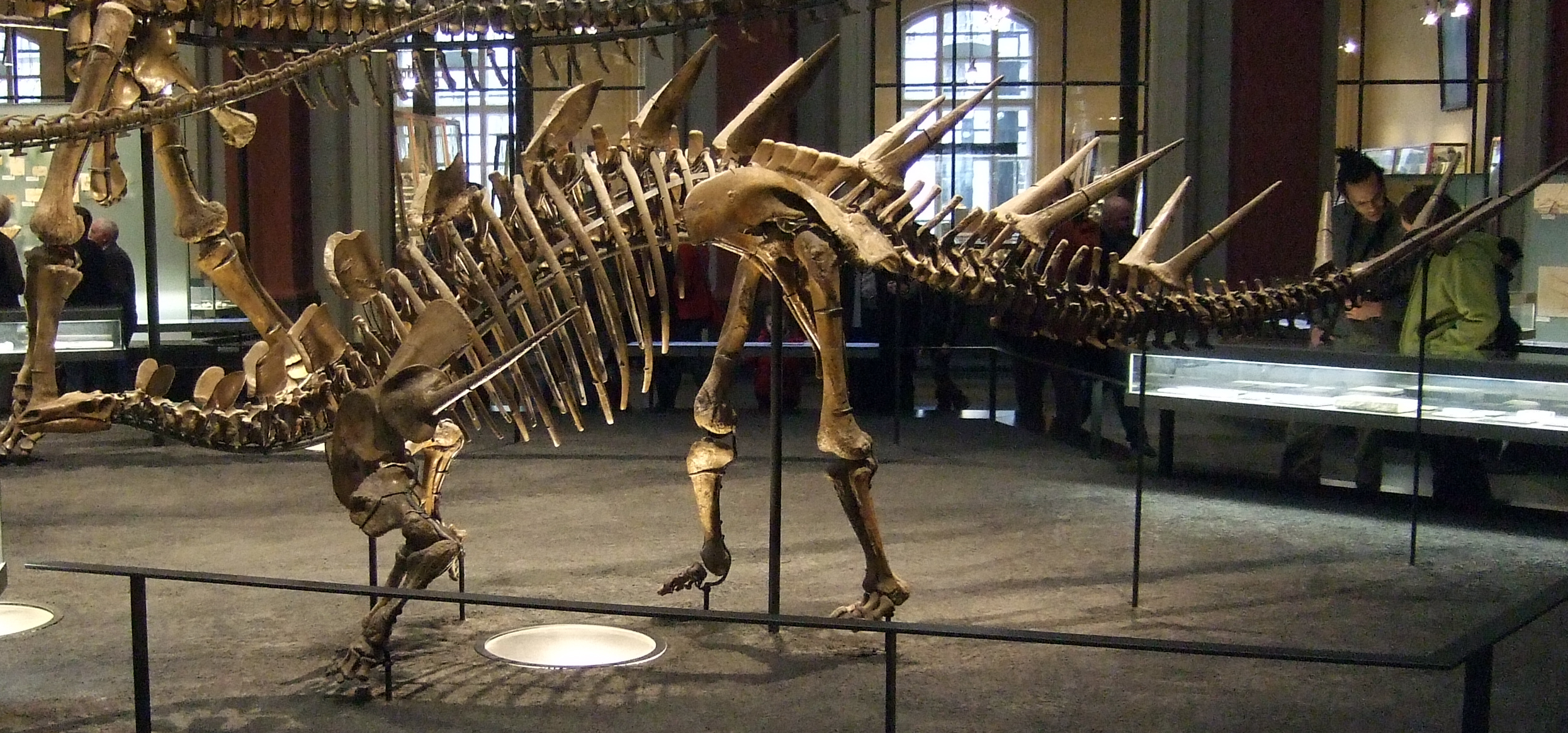


Modern scientific reconstruction of Kentrosaurus aethiopicus showing small plates on the neck and anterior back, and long spines on the tail and hip region.
Connor Ashbridge (Ddinodan) / Wikimedia Commons — CC BY-SA 4.0
Ecology and behavior
Habitat
Kentrosaurus inhabited the subtropical to tropical coastal plains of the Tendaguru Formation in the Late Jurassic (~152 Ma) of present-day Tanzania. The environment was characterized by alternating vegetated terrestrial zones, tidal flats, brackish lagoons, and coastal barrier systems. The climate had pronounced dry seasons, with vegetation dominated by diverse conifers that likely constituted part of the large herbivores' diet. Kentrosaurus coexisted with giant sauropods Giraffatitan and Dicraeosaurus, ornithopod Dysalotosaurus, and theropods Elaphrosaurus and Veterupristisaurus.
Feeding
An exclusive herbivore, Kentrosaurus grazed on low vegetation, capable of reaching up to ~1.7 m in normal quadrupedal posture and possibly up to ~3.3 m when rearing on hindlimbs. Its elongated, narrow skull with leaf-shaped teeth was suited for careful selection of tender conifer foliage, ferns, and cycads. The neck mobility demonstrated by Mallison (2010) indicates the animal could efficiently reach low-lying vegetation. There is no evidence of predation — dentition and cranial morphology are incompatible with animal protein consumption.
Behavior and senses
The sexual dimorphism study by Barden and Maidment (2011), based on 50 Tendaguru femora, suggests Kentrosaurus lived in groups with one sex predominating (2:1 ratio of robust morphotype, possibly females). Defensive behavior was highly developed: the tail functioned as an active high-speed weapon capable of impacting predators with enough force to cause serious injuries. Defensive posture involved lateral positioning relative to the predator, tail raising, and possibly using shoulder spines as secondary weapons. Evidence of theropod 'predation' on Tendaguru stegosaurids is suggested by bite marks on bones.
Physiology and growth
Bone histology revealed by Redelstorff et al. (2013) shows Kentrosaurus had a higher bone depositional rate than Stegosaurus and Scutellosaurus — suggesting rapid growth incompatible with ectothermic reptile metabolism. The highly vascularized fibro-lamellar bone is typical of endotherms or mesotherms. The sacral ganglion — an expansion of the spinal canal — was larger than the brain itself, leading to the historical 'second brain' misconception; in reality, this structure likely controlled tail reflexes and hindlimb coordination. Thermoregulation may have been aided by the dorsal plates, which could function as heat exchange surfaces.
Paleogeography
Continental configuration

Ron Blakey · CC BY 3.0 · Jurassic, ~90 Ma
During the Kimmeridgiano-Titoniano (~155–152 Ma), Kentrosaurus aethiopicus inhabited the fragmenting Pangea. North America and Europe were still close, and the North Atlantic was just beginning to open. Climate was warm and humid globally, with no polar ice caps.
Inventário de Ossos
Over 1,200 bones belonging to approximately 50 individuals were collected by the German Tendaguru Expedition (1909-1912). The lectotype (MB.R.4800.1-37), held at the Museum für Naturkunde Berlin, includes caudal vertebrae, dorsal vertebrae, sacrum, ilia, both femora, and an ulna. The composite mount in Berlin represents one of the best-documented stegosaurid specimens outside North America.

Found elements
Inferred elements
Scientific Literature
15 papers in chronological order — from the original description to recent research.
Kentrosaurus aethiopicus, der Stegosauride des Tendaguru
Hennig, E. · Sitzungsberichte der Gesellschaft Naturforschender Freunde zu Berlin
The founding paper for Kentrosaurus research. Edwin Hennig formally describes Kentrosaurus aethiopicus based on material from the Tendaguru Formation, German East Africa. The name derives from the Greek 'kentron' (sharp point) and 'sauros' (lizard), referring to the animal's characteristic spines. Hennig assigns the taxon to Stegosauridae based on the presence of dermal armor and caudal vertebrae with posterodorsally inclined neural spines. The work documents hundreds of bones from four field seasons between 1909 and 1912, establishing the anatomical basis refined in his 1925 monograph. This paper is the mandatory starting point for any research on the species.


Kentrurosaurus aethiopicus. Die Stegosaurier-Funde vom Tendaguru, Deutsch-Ostafrika
Hennig, E. · Palaeontographica, Supplement VII
Complete osteological monograph of Kentrosaurus aethiopicus based on all material from the German Tendaguru Expeditions. Hennig systematically describes each skeletal element in detail, with special attention to caudal vertebrae, dermal armor elements, and limbs. In this work, Hennig selects specimen MB.R.4800.1-37 as the lectotype — including a nearly complete series of caudal vertebrae, dorsal vertebrae, sacrum with five sacral vertebrae and both ilia, both femora, and an ulna. The monograph includes systematic comparisons with North American Stegosaurus and European stegosaurids, establishing the phylogenetic position of the African taxon. The mounted skeleton at the Museum für Naturkunde Berlin is based on this study.


Systematics and phylogeny of Stegosauria (Dinosauria: Ornithischia)
Maidment, S.C.R., Norman, D.B., Barrett, P.M. & Upchurch, P. · Journal of Systematic Palaeontology
The first cladistic analysis of Stegosauria based on direct observation of all relevant specimens. Maidment et al. construct a broad morphological matrix and analyze stegosaurid phylogenetic relationships systematically. For Kentrosaurus, the study confirms its position in Stegosauridae and evaluates variability in skeletal elements across different geological layers, concluding there is probably only one valid species in the Tendaguru Formation. The work re-evaluates previously synonymized taxa including Tuojiangosaurus, Loricatosaurus, and Paranthodon as sister groups to Stegosaurus. This paper is a fundamental reference for modern stegosaurid taxonomy.
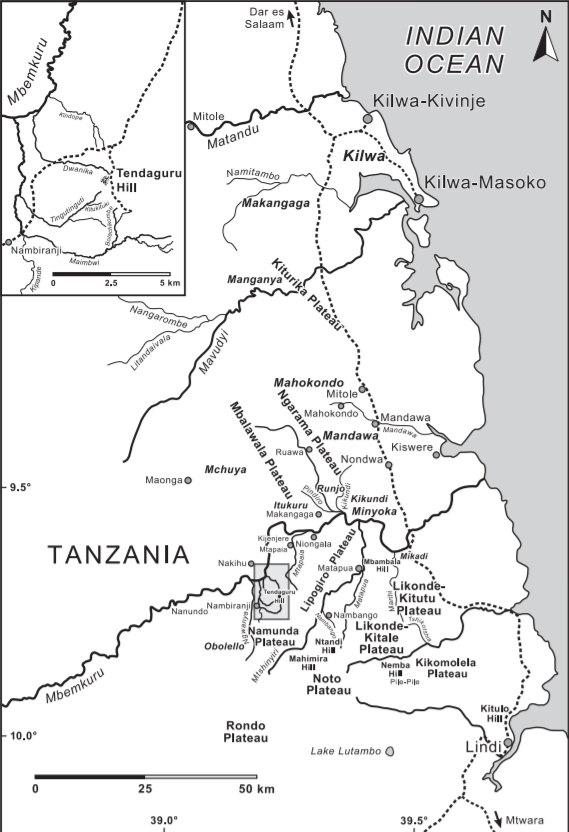
Stegosauria: a historical review of the body fossil record and phylogenetic relationships
Maidment, S.C.R. · Swiss Journal of Geosciences
Comprehensive review of the Stegosauria fossil record and phylogenetic relationships, updating the 2008 analysis with new taxa and continuous data. Maidment achieves significantly better phylogenetic resolution by including continuous characters (morphometric measurements) alongside traditional discrete characters. For Kentrosaurus, the study positions the African taxon within Dacenturinae, related to European Dacentrurus. The review includes historical synthesis of the stegosaurid fossil record from early 19th century discoveries through the Tendaguru collections. The paper was published in a special volume on Stegosauria in the Swiss Journal of Geosciences and is essential reading for any researcher of the family.
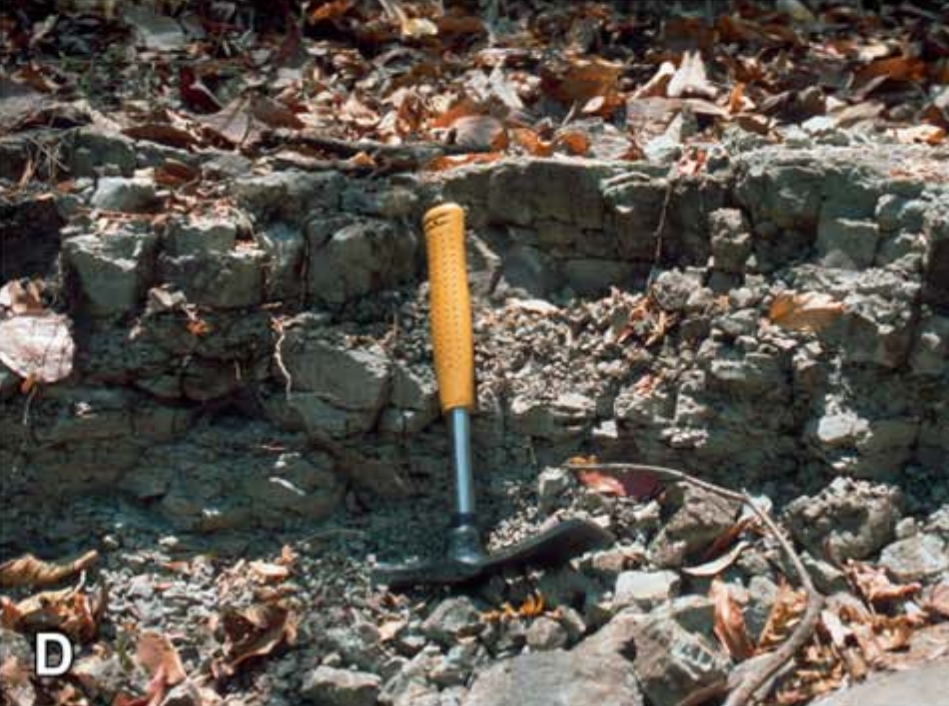

A new phylogeny of Stegosauria (Dinosauria, Ornithischia)
Raven, T.J. & Maidment, S.C.R. · Palaeontology
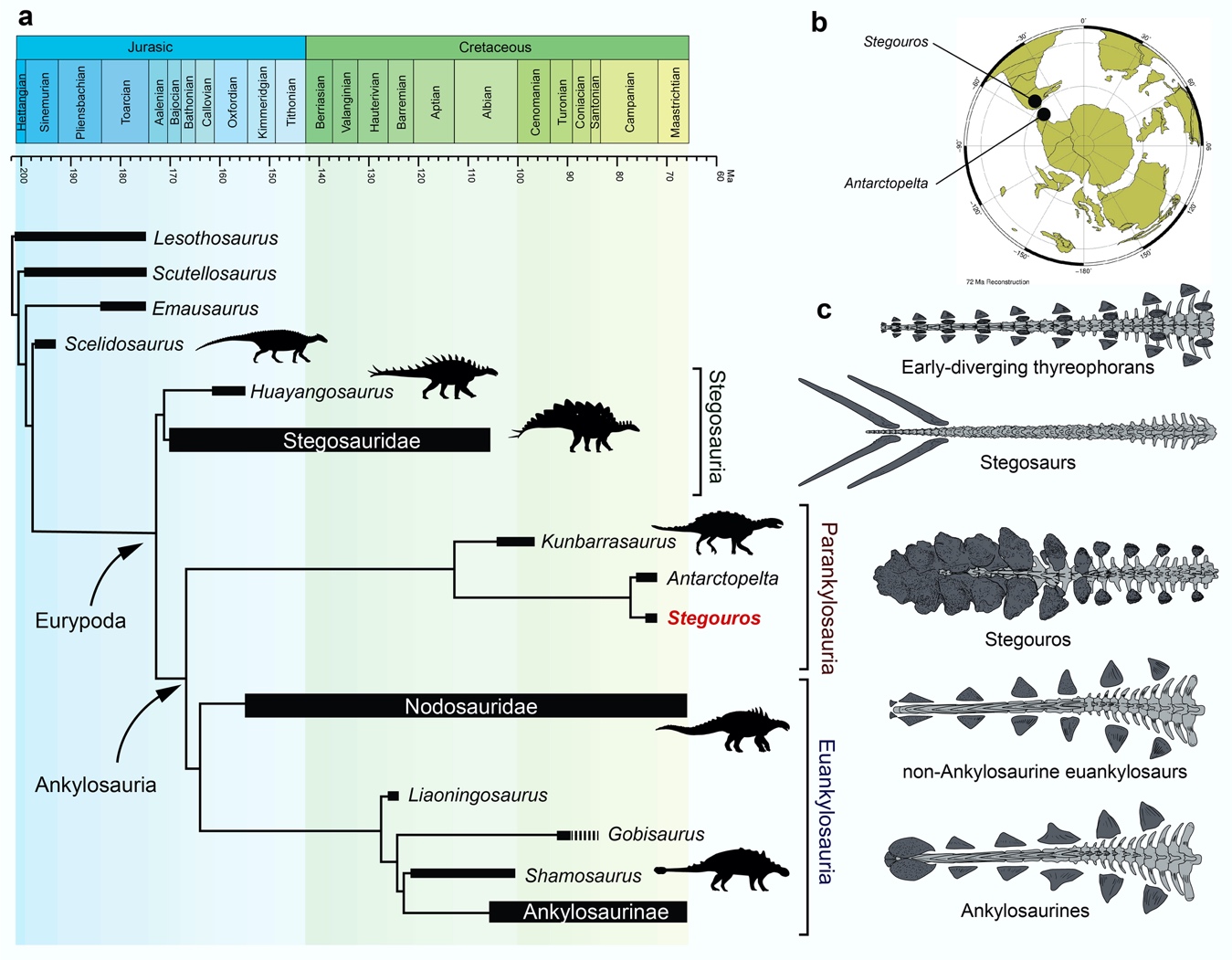
New phylogenetic analysis of Stegosauria incorporating specimens and taxa described since 2008, applying continuous data inclusion methods. Raven and Maidment produce the best-resolved tree yet obtained for the group, with a single most parsimonious tree. The result supports re-erection of genera Miragaia and Hesperosaurus, previously synonymized. For Kentrosaurus, the study confirms its position in Dacenturinae as a successive sister taxon, together with European Dacentrurus armatus. The analysis evaluates 45 taxa and over 100 morphological characters. This paper is currently the most modern and comprehensive phylogenetic reference for Stegosauria, including African Kentrosaurus.
CAD assessment of the posture and range of motion of Kentrosaurus aethiopicus Hennig 1915
Mallison, H. · Swiss Journal of Geosciences
Pioneering biomechanical study using high-resolution laser scanning of Kentrosaurus bones to computationally model habitual posture and range of motion. Mallison demonstrates that during normal walking, forelimbs were held erect — refuting earlier reconstructions showing exaggerated abduction. Strong humeral flexion and abduction occurred mainly in defensive posture. The study also analyzes neck mobility, revealing Kentrosaurus could reach low vegetation for ground-level browsing. Published in a special volume on Stegosauria in the Swiss Journal of Geosciences, the work is the methodological foundation for subsequent biomechanical studies on stegosaurids.
Defense capabilities of Kentrosaurus aethiopicus Hennig, 1915
Mallison, H. · Palaeontologia Electronica
Biomechanical study computationally modeling the defensive capabilities of Kentrosaurus's spiked tail using computer-aided engineering (CAE) with kinetic/dynamic models. Mallison uses both prescribed motion models — based on CAD range of motion analysis — and models with torque values calculated from detailed reconstructions of muscle cross-sections. Results are striking: tail spikes could achieve impact velocities exceeding 40 m/s. The tail covered an arc of ~180 degrees and the animal had sufficient range to direct blows against visible targets. The study suggests stegosaurids preferred active tail defense over flight. Published in Palaeontologia Electronica as open access, it is widely cited.
The real lectotype of Kentrosaurus aethiopicus Hennig, 1915
Mallison, H. · Neues Jahrbuch für Geologie und Paläontologie — Abhandlungen
Important nomenclatural work clarifying which specimen is the real lectotype of Kentrosaurus aethiopicus, resolving ambiguity created by Hennig's original descriptions. Mallison identifies the correct specimen as a partial individual from excavation 'St' at Kindope, Tendaguru, Tanzania (MB.R.4800.1-37). The anatomical composition of the lectotype is documented in detail: a nearly complete series of caudal vertebrae, dorsal vertebrae, sacrum with five sacral vertebrae and both ilia, both femora, and an ulna. The work also documents the current mount at the Museum für Naturkunde Berlin and clarifies which elements are original and which are reconstructed. Essential for precise taxonomic citations.
Evidence for sexual dimorphism in the stegosaurian dinosaur Kentrosaurus aethiopicus from the Upper Jurassic of Tanzania
Barden, H.E. & Maidment, S.C.R. · Journal of Vertebrate Paleontology
First geometric morphometric analysis of sexual dimorphism in a thyreophoran dinosaur. Barden and Maidment analyze 50 femora from Kentrosaurus representing the largest hindlimb dataset for any stegosaurid. The result is a statistically significant shape difference at the proximal femur end, independent of body size — proposed as sexual variation. The ratio of robust to gracile morphotype is 2:1, with the more abundant morphotype likely representing females. The work is the first to demonstrate evidence of sexual dimorphism in a non-North American stegosaurid and establishes methodology applicable to other dinosaur groups with large population samples.

Bone Histology of the Stegosaur Kentrosaurus aethiopicus (Ornithischia: Thyreophora) from the Upper Jurassic of Tanzania
Redelstorff, R., Hübner, T.R., Chinsamy, A. & Sander, P.M. · The Anatomical Record
Bone histology study examining six Kentrosaurus femora representing an ontogenetic series from subadult to adult, plus one scapula. Primary bone is mainly highly vascularized fibro-lamellar bone with some reticular organization of vascular canals — a pattern typical of rapid growth in endotherms. The most important result: the bone depositional rate in Kentrosaurus is higher than in Stegosaurus and Scutellosaurus, indicating that slow growth rates previously reported for these animals are not a phylogenetic characteristic of all Thyreophora. The study sheds new light on stegosaurid physiology, suggesting a higher metabolism than previously assumed for the group.


Palaeoecology and depositional environments of the Tendaguru Beds (Late Jurassic to Early Cretaceous, Tanzania)
Aberhan, M., Bussert, R., Heinrich, W.-D., Schrank, E., Schultka, S., Sames, B., Kriwet, J. & Kapilima, S. · Fossil Record
Palaeoecological and sedimentological synthesis of the Tendaguru Formation based on data from the German-Tanzanian Tendaguru Expedition 2000. Aberhan et al. reconstruct depositional environments from facies analysis: storm- and tide-influenced coastal barrier systems, oolitic sand bars, sabkha-like plains with brackish lakes. Climate was subtropical to tropical with pronounced dry seasons. The formation is subdivided into six members, with fauna described in detail: macroinvertebrates, microvertebrates, plant fossils, and microfossils. Kentrosaurus inhabited the terrestrial zone of the formation, likely near water bodies in vegetated coastal plains.


The Tendaguru Formation (Late Jurassic to Early Cretaceous, southern Tanzania): definition, palaeoenvironments, and sequence stratigraphy
Bussert, R., Heinrich, W.-D. & Aberhan, M. · Fossil Record
Fundamental stratigraphic work that raises the 'Tendaguru Beds' to formational rank and formally defines its six members (oldest to youngest: Lower Dinosaur Member, Nerinella Member, Middle Dinosaur Member, Indotrigonia africana Member, Upper Dinosaur Member, Rutitrigonia bornhardti-schwarzi Member). Facies analysis reveals four third-order sequences composed of transgressive and highstand systems tracts. The work establishes the precise stratigraphic context for all Tendaguru fossils, including Kentrosaurus. This reference is essential for any researcher wishing to understand where and when Kentrosaurus lived in stratigraphic terms.


Broad-scale patterns of Late Jurassic dinosaur paleogeography
Noto, C.R. & Grossmann, A. · PLOS ONE
Analysis of Late Jurassic dinosaur biogeography at global scale, spanning major fossiliferous formations including Tendaguru (Africa) and Morrison (North America). Noto and Grossmann document significant faunal overlap between African and North American stegosaurids, supporting the hypothesis of a land connection or dispersal route between the two continents during the Late Jurassic. For Kentrosaurus, the study demonstrates its place in the global stegosaurid fauna and suggests the separation between Tendaguru and Morrison faunas was incomplete in this period. Published in PLOS ONE as open access, the work is widely cited in paleobiogeography studies.
A reevaluation of the plate and spike arrangement of Stegosaurus
Czerkas, S.A. · Journal of the Academy of Natural Sciences of Philadelphia
Classic reevaluation of dermal armor arrangement in stegosaurid dinosaurs, with direct implications for Kentrosaurus reconstruction. Czerkas challenges earlier reconstructions and proposes anatomical criteria for determining the position and orientation of plates and spines based on bone sutures and morphology of the structure bases. The study contributes to resolving the debate about whether Kentrosaurus's shoulder spike was actually on the shoulder (as in Chinese relatives such as Huayangosaurus and Gigantspinosaurus) or on the hip. This paper initiated decades of debate on the dermal armor anatomy of African stegosaurids and influenced all subsequent reconstructions.

A reappraisal of the Tendaguru stegosaur remains: implications for Late Jurassic biogeography
Carrano, M.T., Woodward, H.N. & Foster, J.R. · Journal of Vertebrate Paleontology
Reappraisal of stegosaurid material from the Tendaguru Formation with discussion of biogeographic implications for Late Jurassic faunal exchange between Africa and other continents. The study confirms the unique status of Kentrosaurus aethiopicus as the only valid stegosaurid from Tendaguru and addresses the relationship between Tendaguru and North American Morrison Formation stegosaurids. The analysis compares morphological characters of both faunas and discusses evidence for a land connection during the Kimmeridgian-Tithonian. Important for understanding the biogeography of African Jurassic faunas in global context.


Espécimes famosos em museus
MB.R.4800.1-37 (Lectótipo)
Museum für Naturkunde, Berlim, Alemanha
Official lectotype of Kentrosaurus aethiopicus, designated by Hennig in 1925 and confirmed by Mallison in 2011. Collected at excavation 'St' at Kindope, Tendaguru, during the German expedition of 1909-1912. The composite mount at the Museum für Naturkunde Berlin incorporates approximately 350 specimens from about 50 different individuals, one of the best stegosaurid collections in the world.
Montagem Composta (Instituto de Geociências, Universidade de Tübingen)
Institut für Geowissenschaften, Universidade de Tübingen, Alemanha
Composite Kentrosaurus mount with approximately 50% original bones, housed at the Institute of Geosciences of the University of Tübingen. The specimen includes the brain endocast and sacral ganglion — rare preserved structures that reveal aspects of the animal's nervous system. Tübingen was the second major recipient of Tendaguru materials and maintains one of the most important collections of African Jurassic dinosaurs outside Berlin.
In cinema and popular culture
Kentrosaurus spent decades in the shadow of more famous stegosaurids like Stegosaurus, but its rise in pop culture accelerated over the last two decades. Greater visibility began with the game Jurassic Park: Operation Genesis (2003), which included it as a playable herbivore years before any animated series or film appearance. The big leap came with Jurassic World Evolution (2018), where Kentrosaurus gained a detailed three-dimensional model and interactive behavior, becoming a fan favorite among franchise enthusiasts who appreciated variety beyond Stegosaurus. The definitive consecration came with Jurassic World: Camp Cretaceous (2022), where Pierce, an orange Kentrosaurus created by the villainous Mantah Corp, became a recurring and emotionally engaging character in the fourth season of the Netflix series. Pierce was subjected to cruel experiments, forced to fight a T. rex, and eventually rescued by the human protagonists — a narrative that humanized the animal and distinguished it from more cartoonish franchise dinosaurs. The series correctly depicted the defensive tail and herbivore temperament of the animal, although the orange coloration is purely speculative. Today Kentrosaurus is also present in Jurassic World Evolution 2 (including the Pierce variant) and various other games and licensed products, establishing itself as a second-generation favorite stegosaurid in the Jurassic franchise.

Classificação

Descoberta
Curiosidade
The Kentrosaurus tail was a biological war machine: Mallison's (2011) study showed caudal spines could achieve impact velocities exceeding 40 meters per second — faster than a professional tennis ball. Sweeping through a 180-degree arc, a single tail blow could have been capable of piercing bone. The animal literally carried a high-speed spear at the end of its tail.