
Mamenchisaurus constructus
Mamenchisaurus constructus
"Horse-gate stream lizard"
Sobre esta espécie
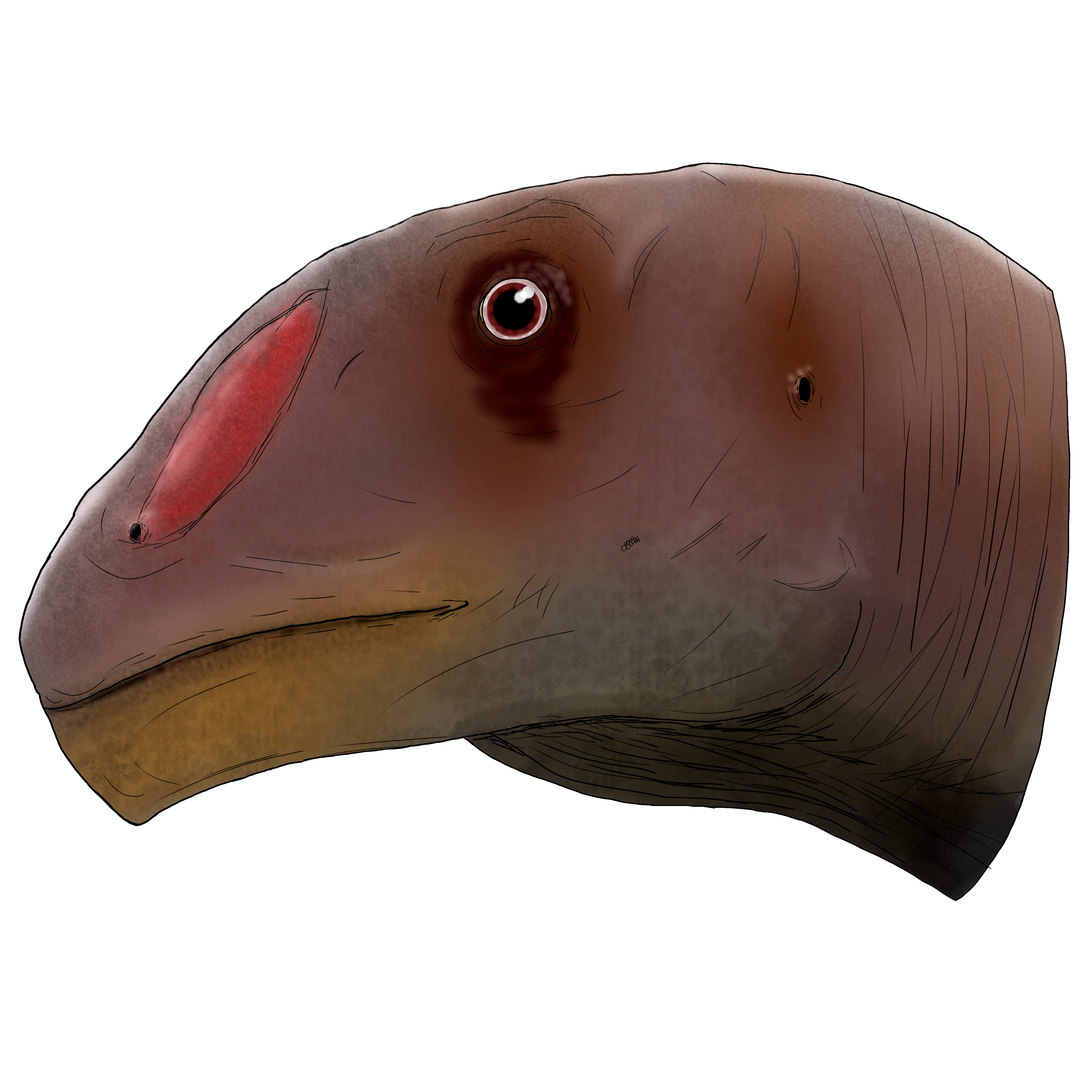
Mamenchisaurus constructus is the dinosaur that holds, proportionally, the longest neck of any known animal. Discovered in 1952 during highway construction in Sichuan Province, China, and described in 1954 by paleontologist C. C. Young, this Late Jurassic giant belonged to Mamenchisauridae, an exclusively Asian family of extraordinarily long-necked sauropods. With a total estimated length of 21 to 26 meters and a weight of up to 15 tonnes, it lived in humid subtropical forests bathed by rivers and shallow lakes. Its neck, which could reach more than 9 meters in length, was supported by highly pneumatized cervical vertebrae with a honeycomb-like internal structure that reduced weight without compromising strength.
Geological formation & environment
The Shangshaximiao Formation (also called the Upper Shaximiao Formation) is a sequence of Upper Jurassic sedimentary rocks deposited in the Sichuan Basin, southwestern China. It is composed mainly of sandstones, siltstones, and mudstones of fluvio-lacustrine origin, deposited in alluvial plains crossed by rivers and shallow lakes in a subtropical climate. The formation is world-famous for its dinosaur richness: it is known as the 'Mamenchisaurus Fauna', with multiple sauropods (Mamenchisaurus hochuanensis, Omeisaurus changshouensis), stegosaurs (Tuojiangosaurus, Chungkingosaurus), and the large theropod Yangchuanosaurus shangyouensis. Abundant fossilized wood indicates the presence of dense forests in the paleoenvironment.
Image gallery


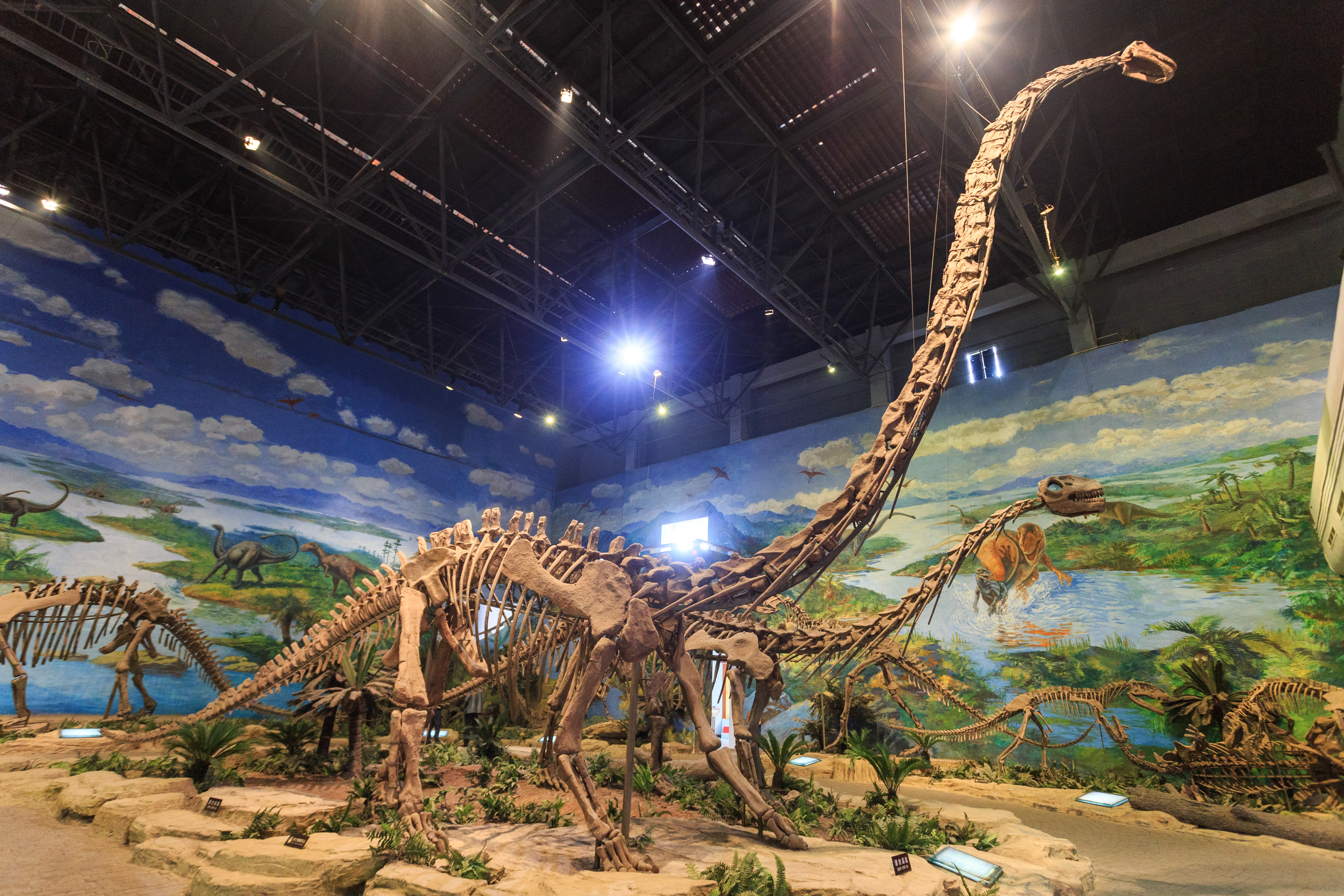


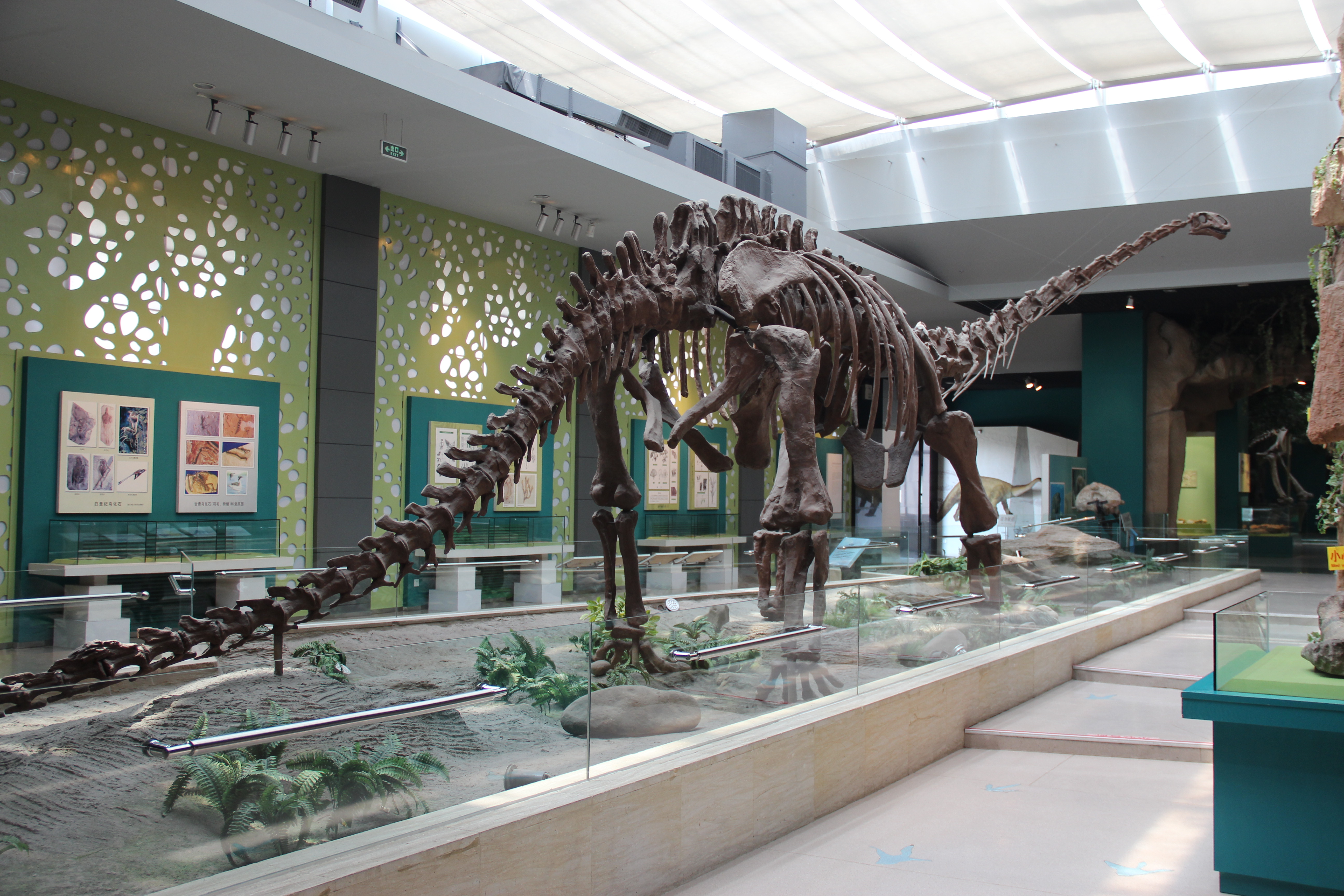


Skeletal mount of Mamenchisaurus hochuanensis at the Paleozoological Museum of China, Beijing. This mount of specimen CCG V 20401 is the most famous of the genus and reflects decades of research on the animal's anatomy.
Jonathan Chen (BleachedRice) — CC BY-SA 4.0
Ecology and behavior
Habitat
Mamenchisaurus constructus inhabited the alluvial plains and forested banks of rivers and shallow lakes in the Sichuan Basin during the Oxfordian, approximately 161–155 million years ago. The Shangshaximiao Formation preserves fluvio-lacustrine deposits with fossilized wood, indicating the presence of dense subtropical forests. The climate was warm and seasonal, with wet periods that filled the lakes and dry periods that concentrated fauna around water sources. The ecosystem was shared with the theropod Yangchuanosaurus (the main regional predator), the stegosaurs Tuojiangosaurus and Chungkingosaurus, and other sauropods such as Omeisaurus.
Feeding
Based on the biomechanical analysis of Christian et al. (2013) on M. youngi, the Mamenchisaurus neck was maintained in approximately horizontal posture, suggesting a wide lateral foraging arc strategy at ground level and medium heights. The spoon-shaped teeth were adapted for shearing succulent vegetation, including ferns, cycads, and lakeside growths, without extensive chewing. Food was swallowed whole and processed by gastric stones (gastroliths) in the stomach. The hyper-long neck allowed the animal to sweep large areas of vegetation without moving, minimizing the locomotion energy cost for a 13-tonne animal.
Behavior and senses
The social behavior of Mamenchisaurus is inferred by analogy with large modern herbivores and ichnological evidence (fossil trackways) from the Upper Jurassic of Asia. Fossiliferous deposits with multiple individuals of the genus suggest gregarious behavior, at least around water sources. The large body size provided protection against predators: 13-tonne adults were probably beyond the reach of Yangchuanosaurus, which weighed between 1 and 3 tonnes. Hatchlings and juveniles were vulnerable and likely clustered in the center of herds. There is no evidence of specific nesting behavior, but by analogy with other sauropods, Mamenchisaurus probably deposited eggs in simple nests and did not provide prolonged parental care.
Physiology and growth
Bone histology of mamenchisaurids (Griebeler et al. 2013) documents highly vascularized fibrolamellar bone tissue, indicative of endothermic metabolism and rapid growth in juvenile phases. The extreme vertebral pneumatization — vertebrae with 69–77% of volume as air in M. sinocanadorum (Moore et al. 2023) — is functionally homologous to the bird air sac system, implying a high-efficiency unidirectional airflow respiratory system. This avian-like respiratory system possibly contributed to thermoregulation and high-performance metabolism. It is estimated that M. constructus, at ~13,000 kg, ingested hundreds of kilograms of vegetation per day. The heart must have been exceptionally powerful to pump blood to the head even when the neck was maintained horizontally.
Paleogeography
Continental configuration

Ron Blakey · CC BY 3.0 · Jurassic, ~90 Ma
During the Oxfordiano (~161–155 Ma), Mamenchisaurus constructus inhabited the fragmenting Pangea. North America and Europe were still close, and the North Atlantic was just beginning to open. Climate was warm and humid globally, with no polar ice caps.
Inventário de Ossos

The holotype IVPP V. 790 is fragmentary: it preserves five dorsal vertebrae, 30 caudal vertebrae, 14 incomplete cervical vertebrae, rib fragments, neural spines, and hindlimb bones (partial femur, tibia, fibula, astragalus, metatarsals). The skull, forelimbs, and pelvic girdle are absent. Referred specimens of M. hochuanensis and M. youngi provide complementary anatomical information about the genus.
Found elements
Inferred elements
Scientific Literature
15 papers in chronological order — from the original description to recent research.
On a new sauropod from Yiping, Lufeng, Yunnan
Young, C.C. · Acta Palaeontologica Sinica
The founding paper establishing the genus Mamenchisaurus and the type species M. constructus. C. C. Young (Yang Zhongjian) describes holotype IVPP V. 790, collected by road construction workers in Sichuan in 1952. The fragmentary material includes cervical, dorsal and caudal vertebrae, rib fragments, and hindlimb bones. Young notes the extreme elongation of the cervical vertebrae, a feature distinguishing the genus from all Asian sauropods then known. He compares the material with Diplodocidae based on bifurcated chevrons but acknowledges uncertain taxonomic placement. The genus name results from a transcription error: the discovery site is Mǎmíngxī ford, but Young recorded it as Mǎménxī, generating the name Mamenchisaurus. This paper is the mandatory starting point for any study of the genus and of the entire family Mamenchisauridae, formally erected in 1972.
Mamenchisaurus hochuanensis sp. nov.
Young, C.C. & Zhao, X. · Institute of Vertebrate Paleontology and Paleoanthropology Monographs, Series A
Monograph describing M. hochuanensis, a far more complete species than the M. constructus holotype. Specimen CCG V 20401 from Hechuan preserves 19 nearly intact elongated cervical vertebrae, a nearly complete vertebral column, limbs, and pelvic elements, allowing for the first time a comprehensive anatomical description of the genus. Young & Zhao estimate total length at 22 meters, with the neck representing approximately 10 meters, and formally erect the family Mamenchisauridae. The work documents the diagnostic characters of the group: extremely long and pneumatic cervical vertebrae, bifurcated posterior neural spines, and a phylogenetic position distinct from western sauropods. Casts of the specimen are now displayed at the Field Museum in Chicago. This work transformed Mamenchisaurus into the best-known Asian sauropod and established the anatomical basis for all subsequent phylogenetic comparisons.
A new species of sauropod from Zigong, Sichuan: Mamenchisaurus youngi
Pi, L., Ou, Y. & Ye, Y. · Geoscience (Contributions to the 30th International Geological Congress)
Paper describing M. youngi, the only Mamenchisaurus species with a known skull, from Zigong, Sichuan. The discovery of the skull was revolutionary for understanding the genus: it showed that Mamenchisaurus had a small, light head relative to its body, with retracted nostrils and spoon-shaped teeth adapted for consuming succulent vegetation. The articulated postcranial skeleton allowed total length to be estimated at approximately 16 meters for this specimen. The complete monograph, published separately (1996, Sichuan Science and Technology Press), became the standard anatomical reference for the genus. Cervical vertebra pneumatization was documented in detail, demonstrating how the animal supported its disproportionate neck: the bones were internally hollow like honeycombs, reducing mass without sacrificing structural strength.
A large mamenchisaurid from the Junggar Basin, Xinjiang, People's Republic of China
Russell, D.A. & Zheng, Z. · Canadian Journal of Earth Sciences
Russell & Zheng describe M. sinocanadorum, collected in the Junggar Basin (Xinjiang) during a Sino-Canadian expedition. The specimen includes cranial fragments and partial cervical vertebrae whose internal structure Russell & Zheng compare to a honeycomb, with longitudinal pneumatic tubes 13–15 mm in diameter. Based on vertebra size, the authors estimate the animal must have been exceptionally large. The species remained relatively obscure until 2023, when Moore et al. reviewed the specimen with CT scanning and determined its neck measured approximately 15 meters, the longest of any known animal. Russell & Zheng's work established the basis for understanding the wider geographic distribution of mamenchisaurids beyond Sichuan and documented for the first time the camellate pneumatization of cervical vertebrae in detail.

The phylogenetic relationships of sauropod dinosaurs
Upchurch, P. · Zoological Journal of the Linnean Society
Upchurch conducts the most comprehensive phylogenetic analysis of Sauropoda published to that date, with 219 characters and 28 taxa, and formally positions Mamenchisauridae as a monophyletic family of basal eusauropods clearly separated from Neosauropoda. The work documents synapomorphies of the group: cervical vertebrae with exceptionally high length-to-height ratios, deep cervical pleurocoels, and bifurcated posterior neural spines. The analysis corroborates the hypothesis that mamenchisaurids formed an endemic sauropod fauna in East Asia, isolated from the western Laurasian fauna during the Late Jurassic — possibly by marine or continental barriers. This work is now a classic reference for sauropod systematics and influenced all subsequent phylogenetic analyses of the group.
A new sauropod dinosaur from the Late Jurassic of China and the diversity, distribution, and relationships of mamenchisaurids
Xing, L. et al. · Journal of Vertebrate Paleontology
Xing et al. describe Qijianglong guokr, a new mamenchisaurid from the Upper Jurassic of Chongqing, with a nearly complete skull and articulated column. The phylogenetic analysis includes Mamenchisaurus constructus and positions Qijianglong as a plesiomorphic mamenchisaurid. The work documents that mamenchisaurids formed an endemic sauropod fauna in East Asia during the Late Jurassic, clearly distinct from contemporaneous faunas in Europe, North America, and South America. This biogeography may reflect the isolation of East Asia by marine barriers in the late Jurassic. The paper provides the most detailed phylogenetic analysis of the clade to that date, with discussion of the characters uniting and separating the different mamenchisaurid genera, and becomes the reference for any subsequent study of Mamenchisaurus constructus and its relatives.
Biomechanical Reconstructions and Selective Advantages of Neck Poses and Feeding Strategies of Sauropods with the Example of Mamenchisaurus youngi
Christian, A., Peng, G., Sekiya, T., Ye, Y., Wulf, M.G. & Steuer, T. · PLOS ONE
Christian et al. apply biomechanical modeling to the best-documented species of the genus, M. youngi, to determine the natural neck posture and feeding strategy. Using finite element analysis to calculate stress in intervertebral cartilages and measurements of zygapophyseal joint facets (the articulations between vertebrae), the authors determine that the Mamenchisaurus neck in the osteologically neutral posture was nearly horizontal. The maximum vertical range of motion is limited by the joints: the animal could not raise its neck at a giraffe-like angle. This implies that the feeding strategy was a wide horizontal arc, sweeping vegetation close to the ground and at mid-heights without moving much. The hyper-elongation was not an adaptation for reaching tall treetops, but for maximizing the foraging area without spending energy on locomotion. This is the most complete biomechanical study ever published specifically on Mamenchisaurus.

Why sauropods had long necks; and why giraffes have short necks
Taylor, M.P. & Wedel, M.J. · PeerJ
Taylor & Wedel systematically review all anatomical and physiological factors that allowed sauropods to evolve necks up to six times longer than the world record giraffe. Mamenchisaurus is repeatedly cited as an example of extreme cervical elongation. The authors identify six necessary and sufficient prerequisites for the hyper-long neck: (1) large quadrupedal body as a stable platform; (2) small head without extensive chewing; (3) numerous individually long cervical vertebrae; (4) a highly efficient air-sac respiratory system; (5) cervical architecture with extensive pneumatization; (6) selective pressure to increase the foraging envelope. The combination of all these factors is unique to sauropods: no other group of terrestrial vertebrates assembled all these conditions. The work explains why Mamenchisaurus could go far beyond the limits of any other terrestrial animal and is now mandatory reading on sauropod neck biology.

Aging, Maturation and Growth of Sauropodomorph Dinosaurs as Deduced from Growth Curves Using Long Bone Histological Data
Griebeler, E.M., Klein, N. & Sander, P.M. · PLOS ONE
Griebeler et al. build growth curves from long bone histology for seven sauropodomorph individuals, including specifically a large indeterminate mamenchisaurid (humerus SGP 2006/9, with 16 growth rings) representing one of the largest known individuals of the group. Lines of arrested growth (LAGs) allow estimation of age at death, age at sexual maturity, and maximum growth rates. Results show sauropodomorphs reached maximum size in timeframes comparable to scaled-up large modern megaherbivores. The mamenchisaurid analyzed shows 16 growth rings — indicating a long-lived individual — and highly vascularized fibrolamellar bone tissue, consistent with endothermic (warm-blooded) metabolism and rapid growth in juvenile phases. This is the histological work most directly relevant for understanding the growth and physiology of Mamenchisaurus.


A new specimen of Mamenchisaurus hochuanensis from the Upper Jurassic Shangshaximiao Formation of Zigong, Sichuan, China
Moore, A.J., Hemming, A. & Bhullar, B.A. · PeerJ
Moore et al. describe a new M. hochuanensis specimen (ZDM0126) from Zigong, Sichuan, discovered in 1995, which preserves a skull, pectoral girdle, and forelimbs absent in the holotype CCG V 20401. For the first time, the complete anatomy of M. hochuanensis can be documented. Cladistic analysis using all known skeletal elements recovers Mamenchisaurus as a paraphyletic grade of basal mamenchisaurids — a result with important implications for the genus taxonomy: the different 'species' of Mamenchisaurus may not form a natural group. The skull preserved in ZDM0126 exhibits important diagnostic features and confirms the robust braincase morphology with retracted nostrils. This work represents the most complete anatomical analysis of the best-documented species in the genus and is the modern standard reference for M. hochuanensis.

Re-assessment of the Late Jurassic eusauropod Mamenchisaurus sinocanadorum Russell and Zheng, 1993, and the evolution of exceptionally long necks in mamenchisaurids
Moore, A.J., Barrett, P.M., Upchurch, P., Liao, C.C., Ye, Y., Hao, B. & Xu, X. · Journal of Systematic Palaeontology
Moore et al. review M. sinocanadorum using CT scanning and determine that cervical vertebrae had 69–77% of their volume composed of air — pneumatization comparable to the largest known sauropods. Updated scaling analysis indicates the neck measured at least 14 meters, possibly 15.1 meters — the longest of any known animal confidently inferred. Phylogenetic analysis places M. sinocanadorum among derived mamenchisaurids. The authors discuss how the evolution of the hyper-long neck in mamenchisaurids involved three combined mechanisms: increased number of cervical vertebrae, individual elongation of each vertebra, and progressive pneumatization to reduce mass. M. constructus, with an estimated 9-meter neck, represents an intermediate level in this evolutionary gradation. The work definitively establishes that mamenchisaurids are the land animals with the longest neck in the history of life on Earth.


A new mamenchisaurid sauropod dinosaur from the Upper Jurassic of Southwest China reveals new evolutionary evidence from East Asian eusauropods
Dai, H., Hu, X.F., Tan, C., Ren, X.X., Ma, Q.Y., Wei, G.B. & You, H.L. · Scientific Reports
Dai et al. describe Mamenchisaurus sanjiangensis, a new mamenchisaurid from the early Oxfordian of Chongqing, chronologically close to the M. constructus horizon. The specimen shows surprising morphological convergences with neosauropods — an unrelated group of more advanced sauropods — including neck and chest features that evolved independently in both groups. The authors interpret this parallelism as evidence that mamenchisaurids developed specific ecological strategies to maintain their dominance in East Asia, possibly in competition with immigrant neosauropods. The phylogenetic analysis is the most detailed ever conducted for the group in the state of the art, placing M. sanjiangensis as a derived mamenchisaurid and providing the most current evolutionary context for interpreting the position of M. constructus within the family.


Vertebral pneumaticity, air sacs, and the physiology of sauropod dinosaurs
Wedel, M.J. · Paleobiology
Wedel conducts the first comprehensive systematic review of vertebral pneumatization in sauropods, including specific analysis of Mamenchisaurus. Pneumatization — air cavities within bones — is documented as homologous to the air sacs of modern birds, implying a highly efficient unidirectional airflow respiratory system similar to birds. For Mamenchisaurus, the cervical pneumatization approaches the maximum known for any animal: the vertebrae were composed mostly of air. Wedel demonstrates that without this pneumatization system, Mamenchisaurus's neck would be biologically impossible: it would be too heavy to be supported by the available cervical musculature. The air sac system also contributed to thermoregulation and the high-performance metabolism necessary for the rapid growth of these giants.

Re-examination of Chuanjiesaurus anaensis (Dinosauria: Sauropoda) from the Middle Jurassic Chuanjie Formation, Lufeng County, Yunnan Province, Southwest China
Sekiya, T. · Memoir of the Fukui Prefectural Dinosaur Museum
Sekiya conducts systematic re-examination of Chuanjiesaurus anaensis, a Middle Jurassic mamenchisaurid from Yunnan, and presents phylogenetic analysis positioning it as a basal mamenchisaurid. The central importance of this work for M. constructus is that it includes the type species in the phylogenetic analysis and scores its characters independently, which is rare given the fragmentary nature of holotype IVPP V. 790. The results clarify the early evolutionary history of the family and its divergence from other eusauropod lineages. The analysis also documents that mamenchisaurids have their roots in the Middle Jurassic, with divergences prior to the later period represented by M. constructus (Oxfordian). This is one of the few works that treats M. constructus as the object of formal phylogenetic analysis rather than merely referencing it.

A new mamenchisaurid from the Upper Jurassic Suining Formation of the Sichuan Basin in China and its implication on sauropod gigantism
Wei, X., Tan, Y., Jiang, S., Ding, J., Li, L., Wang, X., Liu, Y., Wei, G., Li, D., Liu, Y., Peng, G., Zhang, S. & Lao, C. · Scientific Reports
Wei et al. describe Tongnanlong zhimingi, a new giant mamenchisaurid from the Upper Jurassic of the Sichuan Basin, with an estimated length of 25–26 meters — among the largest known mamenchisaurids. Phylogenetic analysis places the new taxon closer to Mamenchisaurus than to Omeisaurus, corroborating the monophyly of a clade of derived mamenchisaurids that includes the genus Mamenchisaurus. The discovery demonstrates that extreme gigantism evolved multiple times within Mamenchisauridae and that the Sichuan Basin — the same environment that produced M. constructus — was a center of sauropod diversity and gigantism during the Late Jurassic. The work contributes to understanding the evolutionary mechanisms of gigantism in sauropods and provides important comparative data for the type species M. constructus.


Espécimes famosos em museus
IVPP V. 790 (holótipo de M. constructus)
Instituto de Paleontologia de Vertebrados e Paleoantropologia (IVPP), Beijing, China
Holotype of the type species M. constructus. Fragmentary material including dorsal and caudal vertebrae, partial cervical vertebrae, rib fragments, and hindlimb bones. The absence of the skull and forelimbs makes this the least informative specimen of the genus, but its nomenclatural value is irreplaceable.
CCG V 20401 (holótipo de M. hochuanensis)
Museu de Dinossauros de Zigong, Sichuan, China (moldes no Field Museum, Chicago, EUA)
Most important specimen of the genus. Preserves 19 nearly complete cervical vertebrae, 12 dorsal, 4 sacral, and 35 caudal vertebrae, plus limb elements. Anatomical reference basis for all studies of the genus. Casts displayed at the Field Museum in Chicago and various Chinese museums.
ZDM0126 (M. hochuanensis, espécime com crânio)
Museu de Dinossauros de Zigong, Sichuan, China
Specimen accidentally discovered during construction in Zigong in 1995. Preserves complete skull, pectoral girdle, and forelimbs absent in the holotype. Described by Moore et al. (2020), it is the most complete specimen of the genus and the only M. hochuanensis with a skull preserved in situ.
In cinema and popular culture
Mamenchisaurus arrived in cinema quietly but impactfully: in The Lost World: Jurassic Park (1997), Steven Spielberg used the genus as a piece of visual spectacle, with two hyper-long-necked individuals mixed into the herbivore herd in the third act. The film's marketing was even bolder: a 21-meter replica of the animal was displayed in Los Angeles during the release. On television, the BBC immortalized the genus in Walking with Dinosaurs (1999), the most-watched paleontology documentary in history. The growing scientific accuracy in productions over the decades is notable: in Dinosaur Revolution (2011), the animal's behavior was already more nuanced. In Jurassic World Dominion (2022), M. sinocanadorum appears with more accurate proportions, reflecting recent research. The fact that 2023 simultaneously brought the scientific confirmation of the longest neck in history and a Hollywood blockbuster appearance reveals how the boundary between science and pop culture, in the case of Mamenchisaurus, is particularly thin.

Classificação

Descoberta
Curiosidade
The name Mamenchisaurus was born from a mistake: paleontologist C. C. Young confused two Chinese characters when transcribing the discovery site name. The place is called Mǎmíngxī (马鸣溪, 'horse-neighing brook'), but Young wrote it as Mǎménxī (马门溪, 'horse-gate brook'), generating the name that stuck forever. The 'horse-gate brook lizard' that dominated paleontology books for decades owed its name to a calligraphy mix-up.