
Protoceratops
Protoceratops andrewsi
"First horned face (of Andrews)"
Sobre esta espécie
Protoceratops andrewsi was a small quadrupedal ceratopsian that lived in the deserts of Central Asia during the Campanian, between 75 and 71 million years ago. About 1.8 meters long and 180 kg, it had a powerful horned beak, a prominent parieto-squamosal frill, and lacked true horns unlike its later relatives. Extraordinarily abundant in the Djadochta Formation, it is known from dozens of specimens at all growth stages from hatchlings to adults, making it one of the most studied dinosaurs in terms of ontogeny. Its fame extends beyond science thanks to the famous Fighting Dinosaurs fossil, in which it appears locked in combat with Velociraptor mongoliensis.
Geological formation & environment
The Djadochta Formation (also spelled Djadokhta) is a Campanian (~75-71 Ma) geological unit deposited in an aeolian dune desert environment in present-day Mongolia and northern China. It is characterized by reddish fine to medium-grained sandstones with cross-stratification typical of dunes, interbedded with interdune mudstones from ephemeral lakes and ponds. The climate was hot and semi-arid, with seasonal precipitation insufficient to sustain dense vegetation. The formation is exceptionally rich in articulated and complete fossils, as rapid burial by sand avalanches was frequent. In addition to Protoceratops andrewsi, the fauna includes Velociraptor mongoliensis, Oviraptor philoceratops, Pinacosaurus grangeri, eggs of multiple taxa, and a diverse fauna of lizards and Mesozoic mammals.
Image gallery
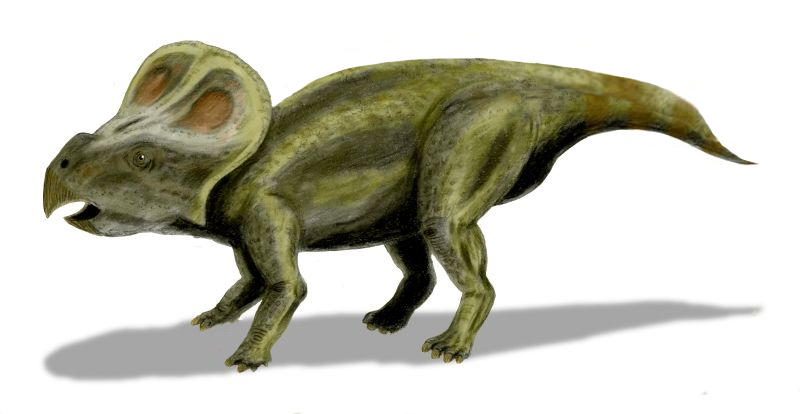


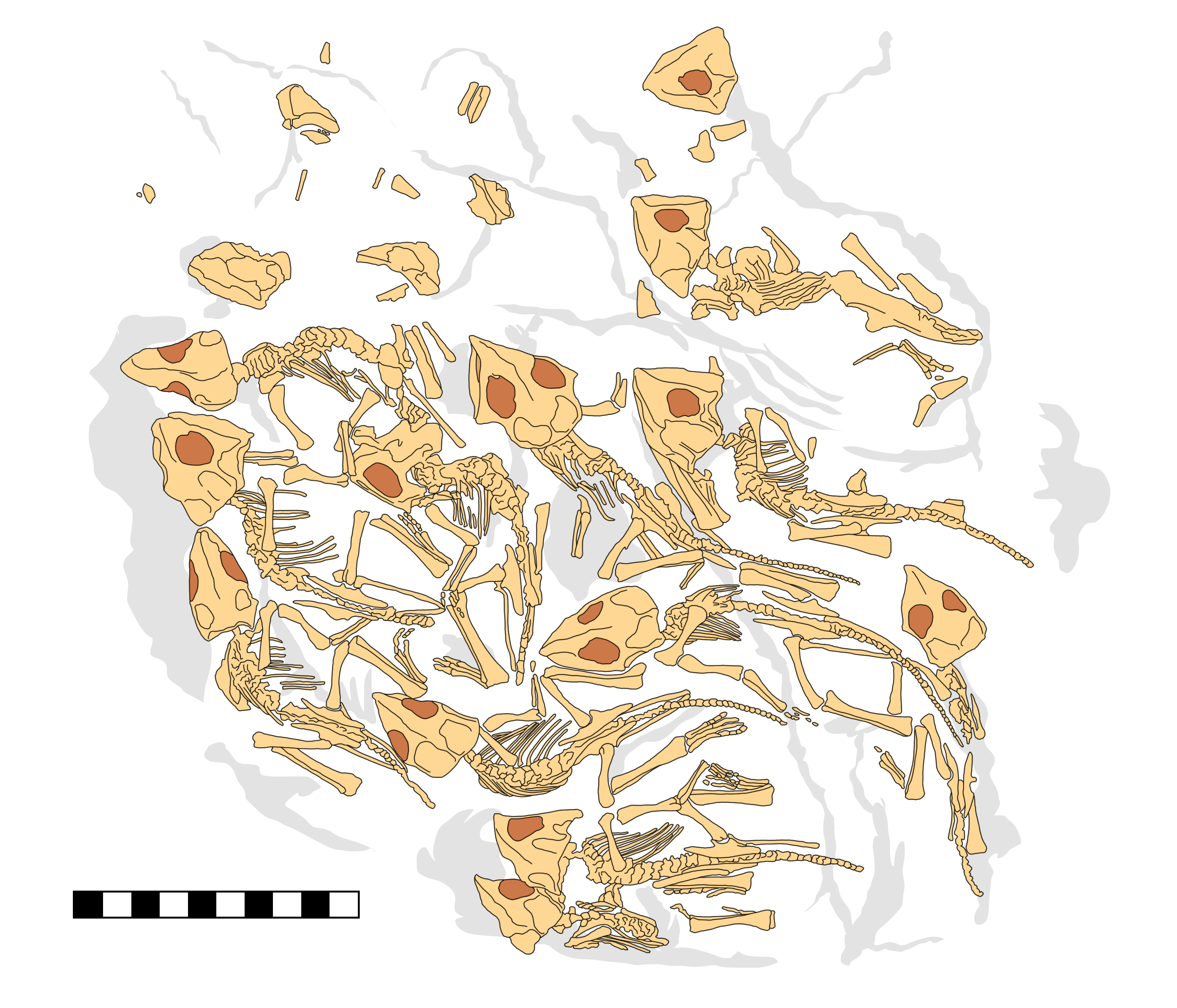

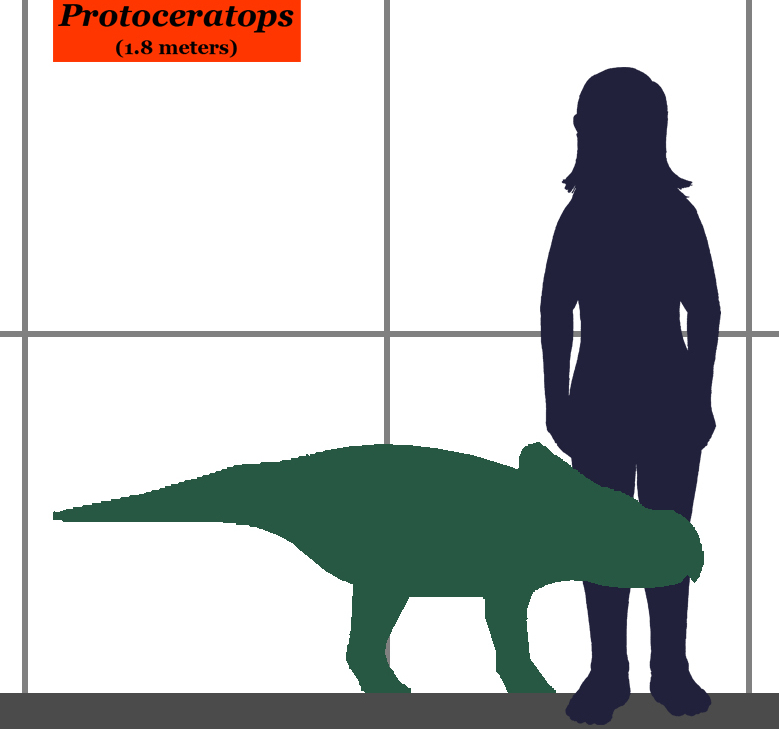


Reconstruction of Protoceratops andrewsi by Nobu Tamura, one of the world's most renowned palaeoartists. The illustration shows the animal in quadrupedal posture with its characteristic parieto-squamosal frill.
Nobu Tamura — CC BY-SA 3.0
Ecology and behavior
Habitat
Protoceratops andrewsi inhabited the semi-arid deserts of Central Asia during the Campanian, between 75 and 71 million years ago. The Djadochta Formation, its primary preserved environment, was an aeolian dune desert with moist interdune areas and occasional ephemeral water sheets. The climate was hot and dry, with strong seasonal winds forming large sand dunes. Vegetation was sparse, composed mainly of xerophytic shrubs, primitive flowering plants, and possibly dwarf conifers. The associated fauna included Velociraptor mongoliensis, oviraptorids, ankylosaurids, lizards, and multituberculate mammals.
Feeding
Protoceratops andrewsi was a low-browsing herbivore specialized in ground-level vegetation. Its sharp horned beak functioned like an efficient scissors for cutting leaves, thin branches, and possibly fruits of xerophytic plants. Posterior teeth formed compact dental batteries capable of grinding hard and fibrous plant material such as roots and stems. Jaw musculature was particularly robust for an animal of its size, generating relatively high bite forces. Adults were obligate quadrupeds, limiting vertical reach to low vegetation browsing, while juveniles could rear up on hindlimbs to access higher levels.
Behavior and senses
The fossil record of Protoceratops andrewsi points to developed social behavior. The abundance of specimens at different age stages frequently preserved in groups suggests gregarious behavior. Nest MPC-D 100/530 with fifteen post-hatching hatchlings implies nest fidelity and parental care in early developmental stages. The parieto-squamosal frill, which grows disproportionately during ontogeny (Hone et al. 2016) and shows high morphological variance consistent with selection (Knapp et al. 2021), suggests use in intraspecific social signaling, probably species recognition, hierarchical dominance, or mate choice. The predatory relationship with Velociraptor is well documented both by the Fighting Dinosaurs fossil and by bite mark evidence (Hone et al. 2010).
Physiology and growth
Bone histology of Protoceratops andrewsi (Fostowicz-Frelik & Slowiak 2018) reveals mesothermic physiology, with rapid juvenile growth and progressive deceleration at maturity. Fibrolamellar tissue with abundant vascularization in juveniles is characteristic of relatively elevated metabolism, while adult lamellar bone indicates stabilization. The incubation period calculated by Erickson et al. (2017) of at least 83 days is reptilian-grade, slower than comparably sized birds, suggesting that elevated body temperature was not maintained during embryogenesis or that eggs were incubated by substrate temperature (like turtles). Confirmation of soft-shelled eggs by Norell et al. (2020) indicates they were buried in dune sand for passive incubation, similar to modern crocodilians.
Paleogeography
Continental configuration

Ron Blakey · CC BY 3.0 · Cretáceous, ~90 Ma
During the Campaniano (~75–71 Ma), Protoceratops andrewsi inhabited Laramidia, the western half of present-day North America, separated from the east by the Western Interior Seaway, a shallow sea dividing the continent. The continents were in very different positions: India was drifting toward Asia, Antarctica was still connected to Australia, and South America was an isolated island.
Inventário de Ossos
Based on hundreds of specimens collected since 1922 from the Djadochta and Barun Goyot Formations, including complete articulated individuals across all ontogenetic stages from embryos in ovo to fully grown adults. One of the most completely documented non-avian dinosaurs in the fossil record.
Found elements
Inferred elements
Scientific Literature
15 papers in chronological order — from the original description to recent research.
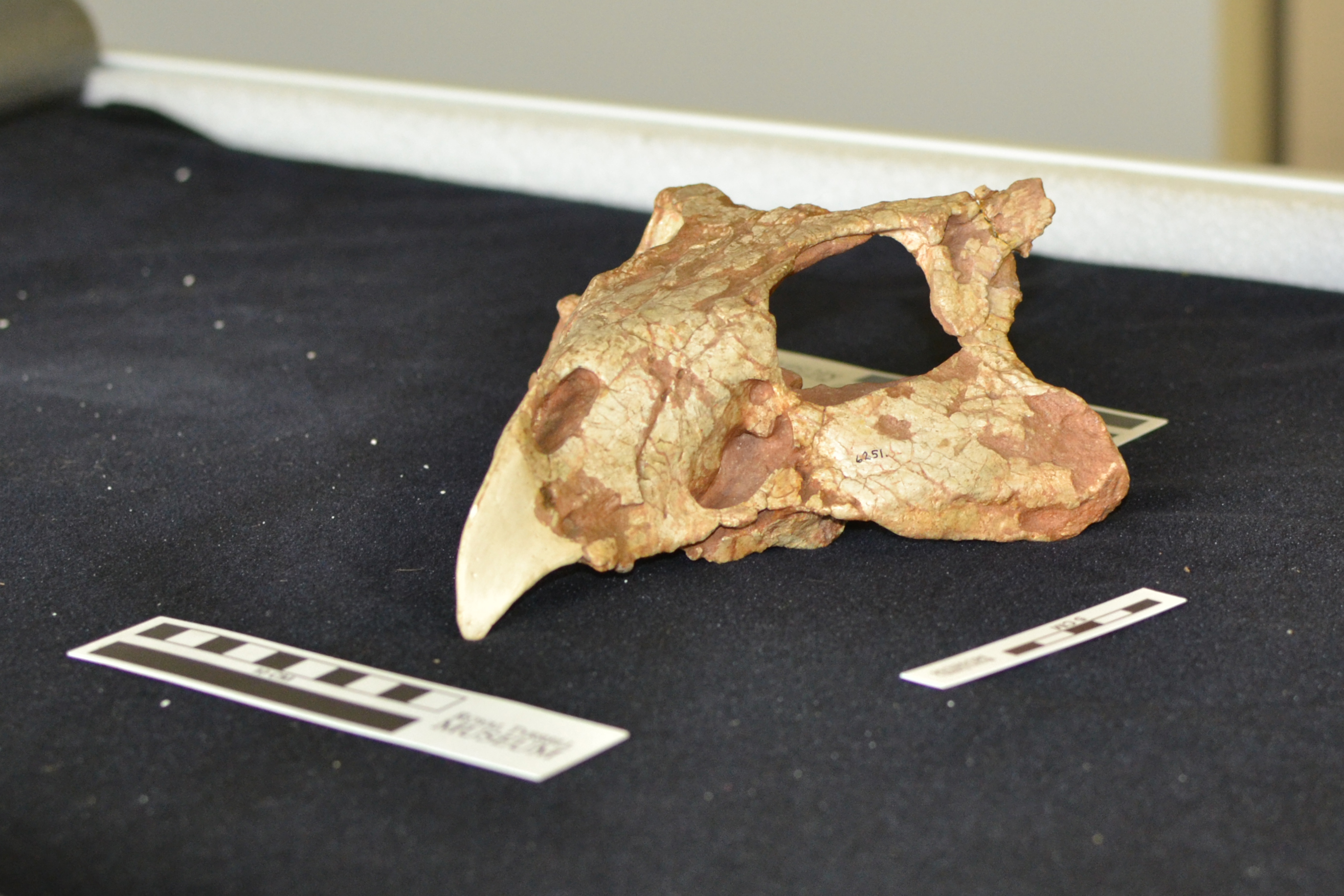
Protoceratops andrewsi, a pre-ceratopsian dinosaur from Mongolia
Granger, W. & Gregory, W.K. · American Museum Novitates
The founding paper of the species, published by paleontologists Walter Granger and William King Gregory following the AMNH 3rd Central Asiatic Expedition to the Flaming Cliffs (Bayan Dzak). The holotype AMNH 6466, collected on September 2, 1922 by photographer J.B. Shackelford, is a nearly complete skull. Granger and Gregory characterize a primitive ceratopsian with horned beak, developed parieto-squamosal frill, and absence of true orbital and nasal horns, distinguishing it from derived ceratopsids known from North America. The name honors Roy Chapman Andrews, leader of the AMNH Asian expeditions. This work establishes Protoceratopsidae as a distinct family within Ceratopsia and opens the debate on the Asian origin of horned ceratopsians.
The structure and relationships of Protoceratops
Brown, B. & Schlaikjer, E.M. · Annals of the New York Academy of Sciences
Classic osteological monograph by Barnum Brown and Erich Schlaikjer describing P. andrewsi anatomy from multiple AMNH specimens across ontogenetic stages. The authors document dramatic shape changes during growth: the parietal frill starts small and nearly round in juveniles and becomes large and fan-shaped in adults; nasal bones progressively elongate; eye sockets decrease in relative size with age. Brown and Schlaikjer also report a specimen (AMNH 6418) with a hardened layer over the skull interpreted as possible skin impression. This work establishes the first formal growth series for a ceratopsian and remains the primary anatomical reference for the species for decades.

A nest of Protoceratops andrewsi (Dinosauria, Ornithischia)
Fastovsky, D.E. et al. · Journal of Paleontology
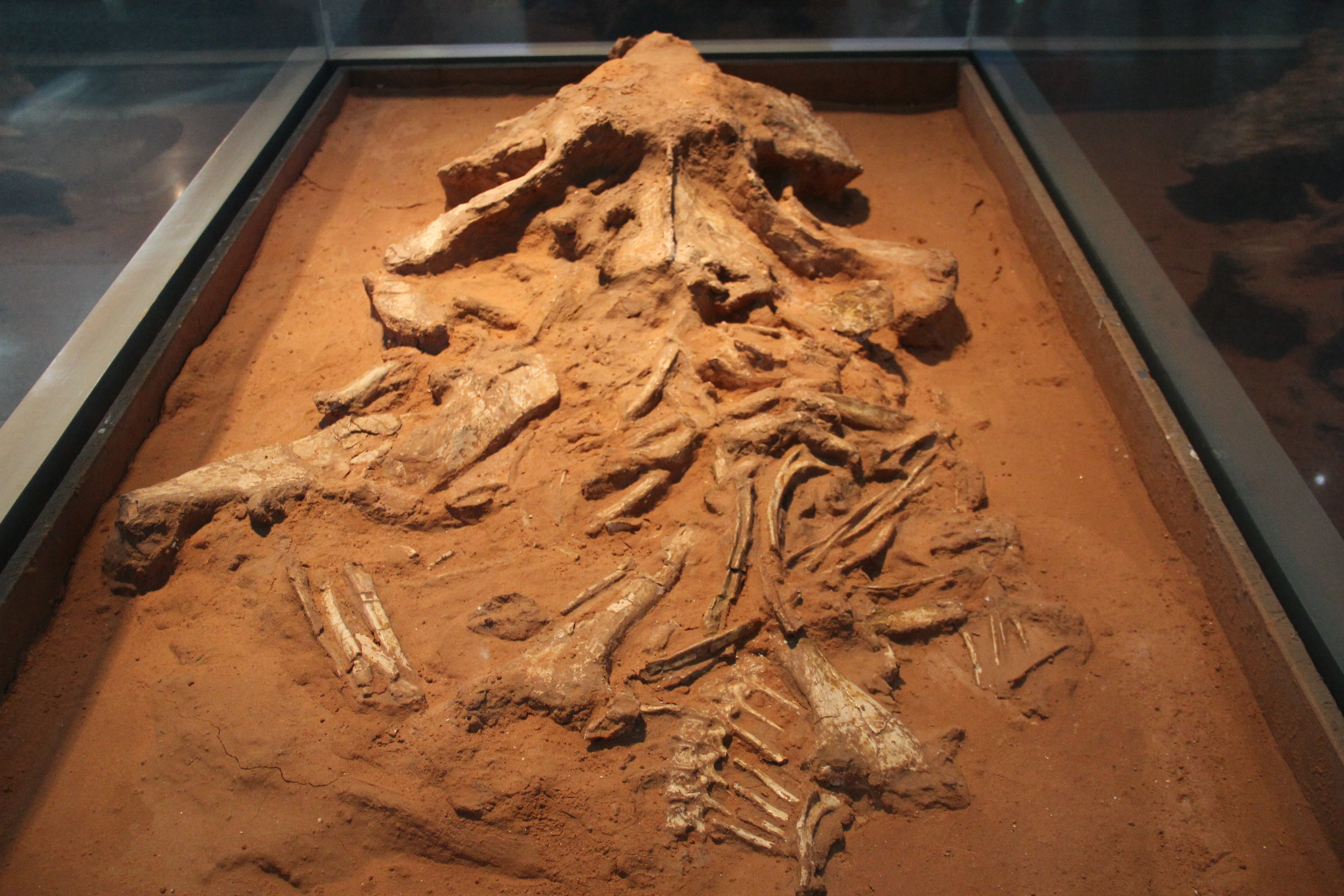
Fastovsky and colleagues describe an extraordinary nest: a circular depression containing fifteen juvenile Protoceratops andrewsi all of similar size and developmental stage, indicating they belong to the same clutch. The nest was collected from the Djadochta Formation at Tugriken Shireh, Mongolia. The hatchlings are not neonates: they have functional dentition and well-ossified bones, suggesting they remained in the nest for weeks or months after hatching. This implies parental care at least during early post-natal development. The work provides the first direct evidence of basal social behavior in ceratopsians. Data on hatchling size and nest geometry suggest the parent was 1.5 to 2 meters long. This is the first formally confirmed Protoceratops nest and places this Asian genus alongside hadrosaurs and oviraptorids as examples of dinosaurian parental care.

A ceratopsian dinosaur from the Lower Cretaceous of western North America, and the biogeography of Neoceratopsia
Farke, A.A. et al. · PLOS ONE
Farke and colleagues describe a new ceratopsian from the Cloverly Formation (Montana, USA) and insert it into a comprehensive phylogenetic analysis of Neoceratopsia. The result is one of the reference phylogenies for the group, positioning Protoceratops andrewsi as a basal coronosaur near the base of the large-horned ceratopsians. The biogeographic analysis traces multiple dispersal events between Asia and North America, placing the protoceratopsid lineage as ancestral to derived North American forms. The work includes one of the most complete open-access phylogenies of Ceratopsia, with node diagnoses and synapomorphy lists. For Protoceratops andrewsi specifically, it confirms its position in clade Coronosauria, defined as the smallest clade containing Protoceratops andrewsi and Triceratops horridus.


Males resemble females: re-evaluating sexual dimorphism in Protoceratops andrewsi (Neoceratopsia, Protoceratopsidae)
Maiorino, L. et al. · PLOS ONE
Maiorino and colleagues apply two-dimensional geometric morphometrics to 29 Protoceratops andrewsi skulls, systematically testing the sexual dimorphism hypothesis that had been suggested by earlier studies based on differences in frill and skull size. Principal component analyses and non-parametric MANOVAs do not recover clear separation between hypothetical males and females in cranial morphospace, in either lateral or dorsal view. The only character with a potentially dimorphic signal is nasal horn height, but even this result is statistically weak. The central conclusion is that male and female P. andrewsi have similar cranial morphologies, which has deep implications for interpreting the frill as a sexually selected signal.

Positive allometry for exaggerated structures in the ceratopsian dinosaur Protoceratops andrewsi supports socio-sexual signaling
Hone, D.W.E., Wood, D. & Knell, R.J. · Palaeontologia Electronica
Hone, Wood, and Knell analyze 37 Protoceratops andrewsi specimens spanning four distinct size classes and demonstrate that the parieto-squamosal frill shows positive allometry during ontogeny: it grows disproportionately larger relative to body size as the animal ages. Jugals also show a relative increase trend. By contrast, other cranial structures do not show this exaggerated allometry. The pattern is consistent with the socio-sexual selection hypothesis: ornaments subject to competitive selection among conspecifics grow faster than the rest of the body. This was the first formal multi-specimen allometric analysis of P. andrewsi and the first direct evidence of selection on the frill in a non-ceratopsid taxon.
Dinosaur incubation periods directly determined from growth-line counts in embryonic teeth show reptilian-grade development
Erickson, G.M. et al. · Proceedings of the National Academy of Sciences
Erickson and colleagues use an innovative technique to directly determine dinosaur incubation periods: counting Von Ebner growth lines (incremental daily growth lines formed during tooth mineralization) in embryonic teeth of Protoceratops andrewsi and Hypacrosaurus stebingeri. For P. andrewsi, the mean embryonic tooth replacement period was 30.68 days, and the calculated minimum incubation period was 83.16 days, two to three times slower than bird eggs of comparable size. This reptilian-grade incubation rate is remarkable because it contrasts with the high-level endothermic metabolism inferred for dinosaurs. The authors propose that long incubation periods may have contributed to extinction vulnerability at the end of the Cretaceous.
Bone histology of Protoceratops andrewsi from the Late Cretaceous of Mongolia and its biological implications
Fostowicz-Frelik, L. & Slowiak, J. · Acta Palaeontologica Polonica
Fostowicz-Frelik and Slowiak present the first comprehensive bone histology study of Protoceratops andrewsi, analyzing sections of long bones, parietal frill, and ribs from specimens at different ontogenetic stages of the Djadochta Formation. Bone microstructure reveals fibrolamellar bone with Sharpey fibers and longitudinal vascular canals in juveniles, indicating rapid growth. Adults show extensive remodeling and parallel lamellar bone deposition characteristic of slower growth. Growth rings allow age estimation and identification of growth tempo changes. Results are consistent with mesothermic physiology, intermediate between ectothermic reptiles and endothermic birds.
Appendicular skeleton of Protoceratops andrewsi (Dinosauria, Ornithischia): comparative morphology, ontogenetic changes, and the implications for non-ceratopsid ceratopsian locomotion
Slowiak, J., Tereshchenko, V.S. & Fostowicz-Frelik, L. · PeerJ
Slowiak, Tereshchenko, and Fostowicz-Frelik describe the appendicular skeleton (limbs) of Protoceratops andrewsi based on a new nearly complete and articulated subadult. Despite decades of study, the post-cranial anatomy of P. andrewsi had never been described in detail: this paper fills this gap with a bone-by-bone description of all fore and hindlimb elements, compared to other ceratopsians. Ontogenetic analysis reveals that juveniles have limb proportions compatible with facultative bipedal locomotion, while adults are obligate quadrupeds. Analysis of forelimb morphology and range of motion confirms semi-erect posture, not sprawling.

Three-dimensional geometric morphometric analysis of the skull of Protoceratops andrewsi supports a socio-sexual signalling role for the ceratopsian frill
Knapp, A., Knell, R.J. & Hone, D.W.E. · Proceedings of the Royal Society B
Knapp, Knell, and Hone bring Protoceratops frill study to a new methodological level: 3D landmark-based geometric morphometrics using digitized skull surfaces. They test three predictions of the socio-sexual signaling hypothesis: (1) low morphological integration of the frill with the rest of the skull; (2) significantly higher ontogenetic shape change rate in the frill than other cranial modules; (3) higher morphological variance in the frill. All three predictions are supported by the data, providing strong evidence that the frill was under selection distinct from the rest of the skull. Notably, sexual dimorphism in cranial shape is not detected, suggesting signaling may have been for mutual mate choice or hierarchical social signals, not just male-to-female.

The first dinosaur egg was soft
Norell, M.A. et al. · Nature
Norell and colleagues (including Jasmina Wiemann and Matteo Fabbri from Yale) apply in situ Raman spectroscopy and petrographic microscopy to embryo-bearing eggs of Protoceratops andrewsi and Mussaurus patagonicus. Results reveal chemically preserved proteinaceous eggshell membrane residues typical of soft-shelled eggs. This is the first evidence that ceratopsians laid soft-shelled eggs, explaining why ceratopsian nests were so rare in the fossil record: soft shells decompose easily. The discovery has deep evolutionary implications: hard calcified eggs were not ancestral in dinosaurs but derived, having evolved independently at least three times.

New evidence for a trophic relationship between the dinosaurs Velociraptor and Protoceratops
Hone, D.W.E. et al. · Palaeogeography, Palaeoclimatology, Palaeoecology
Hone and colleagues report a set of Protoceratops bones from the Bayan Mandahu Formation (Inner Mongolia, China) with dromaeosaurid tooth marks, accompanied by shed teeth likely belonging to Velociraptor. At least eight bone fragments show unambiguous feeding marks: surface grooves, deeper punctures, and one fragment with marks on both sides. This material is independent of the famous Fighting Dinosaurs specimen (MPC-D 100/512) and was preserved in the same Formation but at a different locality. The marks are interpreted as late-stage carcass consumption, whether through predation followed by prolonged feeding or scavenging. The work geographically expands the evidence of the Velociraptor-Protoceratops predatory relationship.

On polymorphism of Protoceratops andrewsi Granger et Gregory, 1923 (Protoceratopidae, Neoceratopsia)
Tereshchenko, V.S. · Paleontological Journal
Tereshchenko examines cervical vertebrae from multiple Protoceratops andrewsi specimens and identifies at least four distinct morphotypes based on shape differences: vertebral body proportions, neural arch pedicle inclination, diapophysis orientation, and long axis inclination. The available sample contains representatives of four morphotypes, whose origin (sexual, ontogenetic, or individual variation) is still debated. The work contributes to understanding intraspecific variation in P. andrewsi and raises questions about the genus taxonomy: are some morphotypes individual variants or representatives of distinct taxa?


Djadokhta Formation correlative strata in Chinese Inner Mongolia: an overview of the stratigraphy, sedimentary geology, and paleontology and comparisons with the type locality in the pre-Altai Gobi
Jerzykiewicz, T. et al. · Canadian Journal of Earth Sciences
Jerzykiewicz and colleagues conduct comprehensive sedimentological and stratigraphic analysis of the Djadochta Formation and its correlatives in Inner Mongolia (China), comparing them with the type locality at Bayan Dzak. Five lithological facies are described: aeolian dune deposits with cross-stratified sandstones (E-1), aeolian dunes modified by calcitic cementation (E-2), sand avalanche deposits (S), basin-margin conglomerates (C), and interdune mudstones from ephemeral lakes and ponds (M). The paleoenvironment is a warm semi-arid desert with large sand dunes, strong wind conditions, and episodic water availability. Protoceratops andrewsi is the most abundant macrovertebrate in both localities, and the authors discuss how its abundance in such an arid environment implies sufficient shrub vegetation to sustain populations.


Axial skeleton of subadult Protoceratops andrewsi from Djadokhta Formation (Upper Cretaceous, Mongolia)
Slowiak, J. & Fostowicz-Frelik, L. · Paleontological Journal
Slowiak and Fostowicz-Frelik describe the axial skeleton of a subadult Protoceratops andrewsi from the Djadokhta Formation, complementing the 2019 appendicular skeleton work. The study provides detailed description of cervical, dorsal, sacral, and caudal vertebrae, filling a significant gap in knowledge of the post-cranial anatomy of this species. Cervical vertebrae show diagnostic characters distinct from other basal ceratopsians, including specific centrum proportions and transverse process orientation. Subadult material allows ontogenetic comparisons revealing how the vertebral column changes shape during growth.


Espécimes famosos em museus
AMNH 6466 (Holótipo)
American Museum of Natural History, Nova York, EUA
Holotype of the species, collected on September 2, 1922 at the Flaming Cliffs (Bayan Dzak) during the AMNH 3rd Central Asiatic Expedition. Nearly complete adult skull that served as the basis for Granger and Gregory's original 1923 description and Brown and Schlaikjer's 1940 analyses.
MPC-D 100/512 e MPC-D 100/25 (Dinossauros em Combate)
Instituto de Paleontologia e Geologia, Ulaan Baatar, Mongólia
The most famous specimen involving Protoceratops andrewsi in the world: two individuals — a Protoceratops and a Velociraptor mongoliensis — buried alive in a combat posture in the Djadochta Formation of Tugriken Shireh in 1971. The Protoceratops (MPC-D 100/512) keeps its jaws clamped on the Velociraptor's (MPC-D 100/25) forearm, while the latter's sickle claw remains positioned near the ceratopsian's throat. Considered one of the most extraordinary fossils ever discovered.

MPC-D 100/530 (Ninho com 15 Filhotes)
Instituto de Paleontologia e Geologia, Ulaan Baatar, Mongólia
Exceptional nest containing fifteen post-hatching stage juvenile Protoceratops andrewsi, all of similar size, in a circular depression 2.3 feet in diameter. Formally described by Fastovsky et al. (2011), this specimen is the definitive evidence of parental care and social behavior in Protoceratops and the first formally confirmed ceratopsian nest.
In cinema and popular culture
Protoceratops andrewsi is one of the most underutilized dinosaurs in popular culture given its scientific relevance and role as Velociraptor's favored prey. While larger ceratopsian relatives like Triceratops and Styracosaurus dominate the ceratopsian imagination, Protoceratops rarely receives a starring role. However, its association with the famous Fighting Dinosaurs fossil ensures indirect presence in countless works: any scene of Velociraptor hunting Asian Cretaceous herbivores inevitably evokes this species. BBC's Walking with Dinosaurs (1999) and Discovery's Dinosaur Planet (2003) included Protoceratops as a central element in the Cretaceous Mongolian fauna. Apple TV+'s Prehistoric Planet series (2022-2023), with its photorealistic visual effects and rigorous scientific consulting, offered the most accurate and detailed portrait of the species to date, including nesting behavior with soft-shelled eggs and parental care. In popular science literature, Protoceratops frequently figures as an example of a social dinosaur with display structures, helping demystify the idea of dinosaurs as solitary animals without complex social lives.

Classificação

Descoberta
Curiosidade
The Fighting Dinosaurs fossil (MPC-D 100/512), discovered in 1971 in the Gobi Desert, captures the exact moment of death of a Protoceratops andrewsi and a Velociraptor mongoliensis: the Protoceratops' jaws are still clamped around the Velociraptor's forearm, while the latter's sickle claw remains near the ceratopsian's throat. Both were buried alive by a sand dune avalanche during the fight, preserving forever a moment from 75 million years ago.