
Pycnonemosaurus nevesi
Pycnonemosaurus nevesi
"Neves's dense forest lizard"
Sobre esta espécie
Pycnonemosaurus nevesi was the largest known abelisaurid dinosaur, estimated at 8.9 meters in length and approximately 3.6 metric tons. It lived during the Late Cretaceous, roughly 70 to 75 million years ago, in what is now Mato Grosso State, Brazil. Described by Kellner and Campos in 2002, it was the first confirmed abelisaurid from the Bauru Group. It belongs to the Furileusauria lineage of South American abelisaurids, the same group that includes Carnotaurus and Aucasaurus. Its fragmentary fossils reveal a large predator that likely preyed on titanosaur sauropods sharing its environment.
Geological formation & environment
Pycnonemosaurus nevesi was found in the Cachoeira do Bom Jardim Formation, a volcano-sedimentary-chemical unit deposited in the Upper Cretaceous, between the Santonian and Maastrichtian, in the Cambambe Basin (Chapada dos Guimarães, Mato Grosso). The formation is composed of polymictic conglomerates and sandstones, originating from basic igneous rocks cemented mainly by carbonate. The paleoenvironment was semi-arid, representing intermediate alluvial fan deposits. In addition to Pycnonemosaurus, the formation records chelonians, crocodiloforms, and titanosaurs, comprising a Western Gondwana ecosystem of the latest Cretaceous.
Image gallery


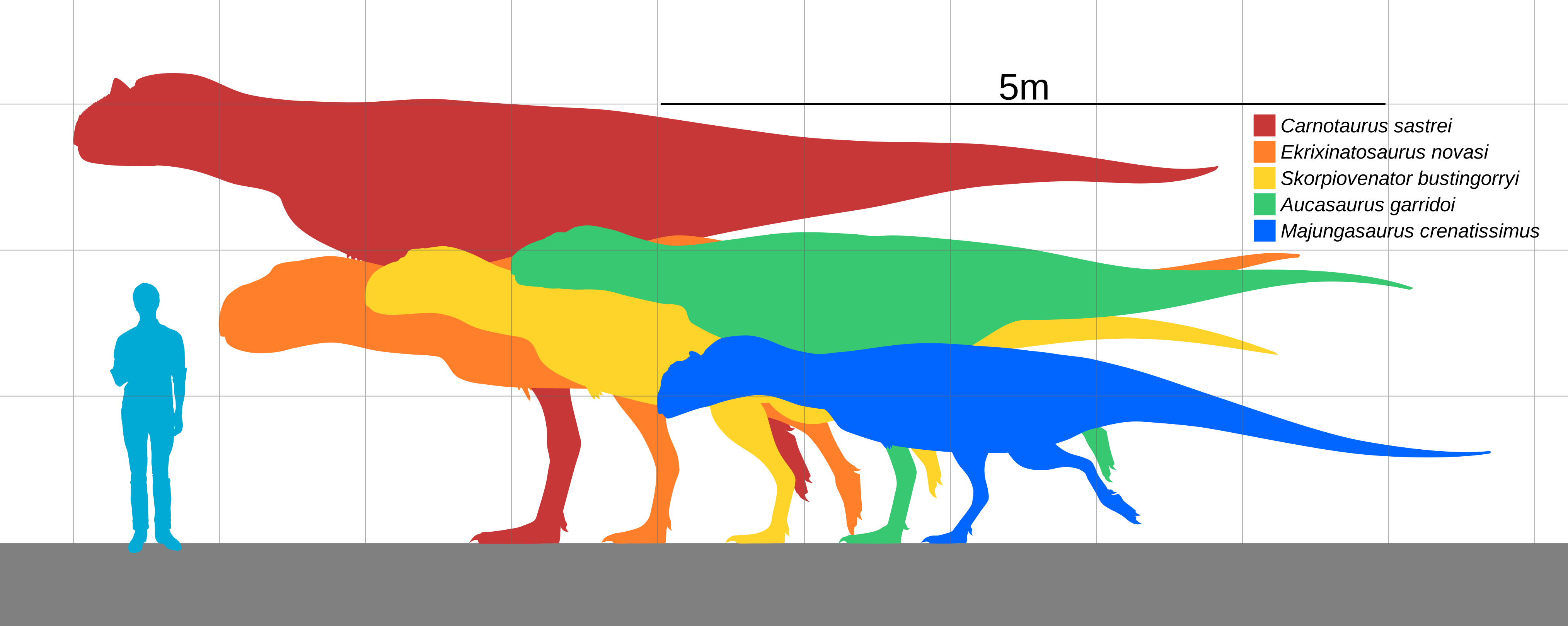
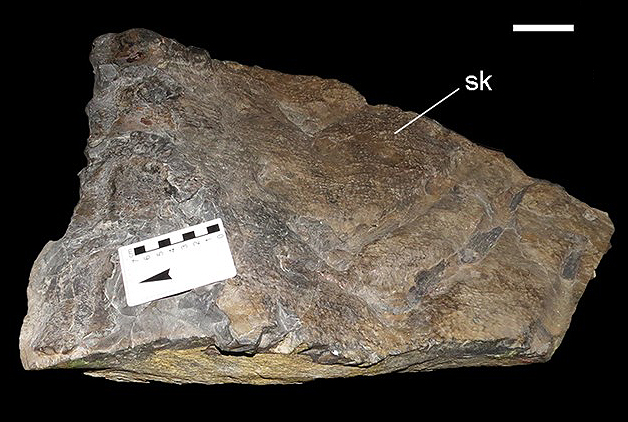

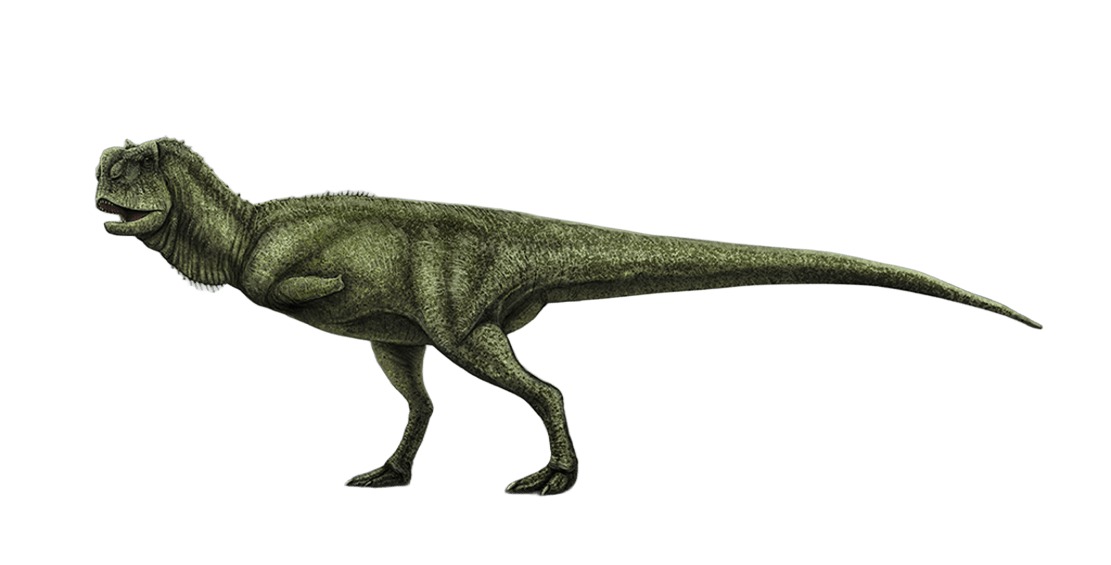
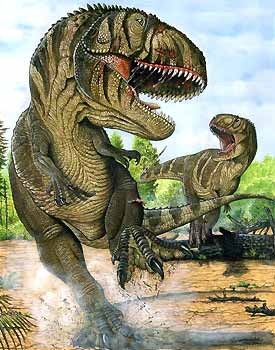
Skeletal reconstruction of Pycnonemosaurus nevesi by Gunnar Bivens (2018). The known bones (caudal vertebrae, pubis, tibia, fibula) are shown with hypothetical elements based on Carnotaurus.
Gunnar Bivens, CC BY-SA 4.0
Ecology and behavior
Habitat
Pycnonemosaurus nevesi inhabited the Cachoeira do Bom Jardim Formation in what is now Mato Grosso, Brazil, during the Campanian to Maastrichtian of the Late Cretaceous (~75-70 Ma). The environment was semi-arid, representing intermediate alluvial fan deposits in a semi-arid climate. The red conglomeratic sandstones where the fossil was found indicate energetic fluvial transport in seasonally flooded arid plains. Contemporary fauna included titanosaur sauropods and crocodilians, as well as chelonians and other reptiles. The ecosystem was part of Western Gondwana, with faunal connections to Argentina, Africa, and India via continental drift.
Feeding
As the largest predator in the Late Cretaceous Mato Grosso ecosystem, Pycnonemosaurus nevesi likely hunted titanosaur sauropods found at the same locality, which explains its large body size. Similar to its close relatives Carnotaurus and Aucasaurus, it had small but sharp teeth adapted to grip struggling prey. Biomechanical studies of related abelisaurids suggest high-speed frontal bites with moderate force. The robust, muscular tail, inferred from the known caudal transverse processes, provided explosive locomotor power for short-distance ambushes.
Behavior and senses
Based on phylogenetic analogy with other abelisaurids, Pycnonemosaurus was likely a solitary, territorial predator. Studies of close relatives such as Skorpiovenator documented an exceptional neurovascular system in cranial bones, possibly used for thermoregulation or intraspecific communication. Derived abelisaurids such as Carnotaurus exhibit robust cranial morphology that may have been used in display behaviors or intraspecific combat. The unique pubic features of Pycnonemosaurus, with a small rounded foot and bowed anterior end, may reflect specific postural adaptations of this species.
Physiology and growth
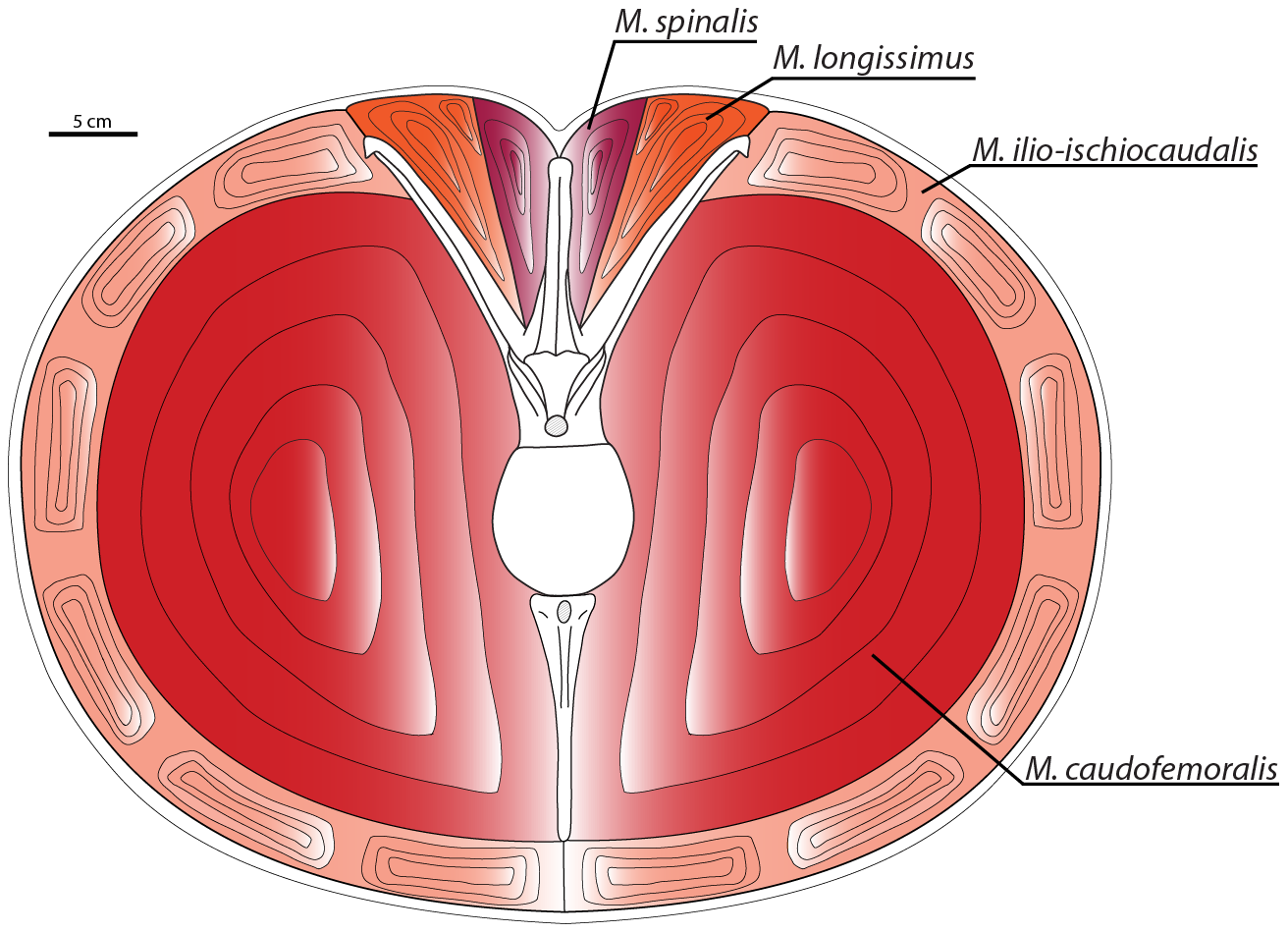
As a large theropod (8.9 meters, 3.6 metric tons), Pycnonemosaurus exhibited the general physiological pattern of derived abelisaurids: robust hindlimbs for explosive propulsion, muscular tail with a large M. caudofemoralis (inferred by analogy with Carnotaurus), completely vestigial forelimbs, and scaly skin without feathers (based on Carnotaurus evidence). Bone histology of related abelisaurids indicates relatively rapid growth, partial endothermy, and determinate growth at maturity. The fragmentary fossil record of Pycnonemosaurus, possibly from a subadult, suggests adults could have been even larger.
Paleogeography
Continental configuration

Ron Blakey · CC BY 3.0 · Cretáceous, ~90 Ma
During the Campaniano-Maastrichtiano (~75–70 Ma), Pycnonemosaurus nevesi inhabited Laramidia, the western half of present-day North America, separated from the east by the Western Interior Seaway, a shallow sea dividing the continent. The continents were in very different positions: India was drifting toward Asia, Antarctica was still connected to Australia, and South America was an isolated island.
Inventário de Ossos
Holotype DGM 859-R consists of five incomplete teeth, parts of seven caudal vertebrae, the distal right pubis, right tibia, and right distal fibula articulation. The specimen likely belonged to a subadult individual. Delcourt's 2017 revision added three caudal transverse processes and new material to the species knowledge.
Found elements
Inferred elements
Scientific Literature
15 papers in chronological order — from the original description to recent research.
On a theropod dinosaur (Abelisauria) from the continental Cretaceous of Brazil
Kellner, A.W.A. & Campos, D.A. · Arquivos do Museu Nacional
Founding paper establishing Pycnonemosaurus nevesi as the first formally described abelisaurid from the Bauru Group in Upper Cretaceous Brazil. Kellner and Campos describe holotype DGM 859-R, collected at Fazenda Roncador locality in Mato Grosso, comprising teeth, caudal vertebrae, pubis, tibia, and fibula. The authors identify diagnostic features distinguishing this specimen from other known abelisaurids: the pubis with a small rounded foot and ventrally bowed anterior distal end, and hook-shaped caudal transverse processes. The species name honors Brazilian paleontologist Iedo Batista Neves. The paper first placed Brazil as abelisaurid territory, expanding the known distribution of this Gondwanan group.
Revised morphology of Pycnonemosaurus nevesi Kellner & Campos, 2002 (Theropoda: Abelisauridae) and its phylogenetic relationships
Delcourt, R. · Zootaxa
Complete morphological revision of Pycnonemosaurus nevesi by Rafael Delcourt, presenting new material including three additional caudal transverse processes. The phylogenetic analysis demonstrates a strong relationship between Pycnonemosaurus and the most derived abelisaurids, such as Carnotaurus and Aucasaurus, within the clade Furileusauria. The work also discusses the taxonomic validity of the genus, which had been questioned by Carrano and Sampson (2008). Delcourt concludes Pycnonemosaurus is a valid genus with clear autapomorphies, repositioning its phylogeny within South American Brachyrostra.


Allometry and body length of abelisauroid theropods: Pycnonemosaurus nevesi is the new king
Grillo, O.N. & Delcourt, R. · Cretaceous Research
Fundamental allometric study reevaluating body size of abelisauroids using bivariate equations applied to 40 measurements of skulls, vertebrae, and appendicular elements. The authors conclude Pycnonemosaurus nevesi measured 8.9 ± 0.3 meters, surpassing Carnotaurus (7.8 ± 0.3 m) and making it the largest formally described abelisaurid. The study also demonstrates prior estimates underestimated the animal by up to 30%. The analysis uses reference specimens including Carnotaurus, Majungasaurus, Aucasaurus, and Rugops, establishing a new methodological standard for size estimates in theropods with partial preservation.

Ceratosaur palaeobiology: new insights on evolution and ecology of the southern rulers
Delcourt, R. · Scientific Reports
Comprehensive review of ceratosaur paleobiology by Delcourt, examining evolution and ecology of the Southern Hemisphere rulers. The study establishes the new clade Etrigansauria, containing Abelisauridae and Ceratosauridae, and documents evidence of cranial soft tissues in abelisaurids suggesting low-displacement butting behavior. The work demonstrates that derived ceratosaurs inhabited semi-arid environments and functioned as ecological analogs to northern tyrannosaurs. Pycnonemosaurus is discussed as a representative of a clade of Late Cretaceous South American abelisaurids that achieved exceptional body sizes.

A Middle Jurassic abelisaurid from Patagonia and the early diversification of theropod dinosaurs
Pol, D. & Rauhut, O.W.M. · Proceedings of the Royal Society B: Biological Sciences
High-impact study describing Eoabelisaurus mefi from Middle Jurassic Patagonia, extending the known abelisaurid record by over 40 million years. The nearly complete skeleton reveals the earliest evolutionary stages of abelisaurid distinctive features, such as forelimb modification. The phylogenetic analysis includes Pycnonemosaurus as a derived member of South American Brachyrostra. The study suggests a central Gondwanan desert may have restricted certain vertebrate groups to southern continents, explaining abelisaurid endemism in Gondwana.

Dinosaur Speed Demon: The Caudal Musculature of Carnotaurus sastrei and Implications for the Evolution of South American Abelisaurids
Persons IV, W.S. & Currie, P.J. · PLOS ONE
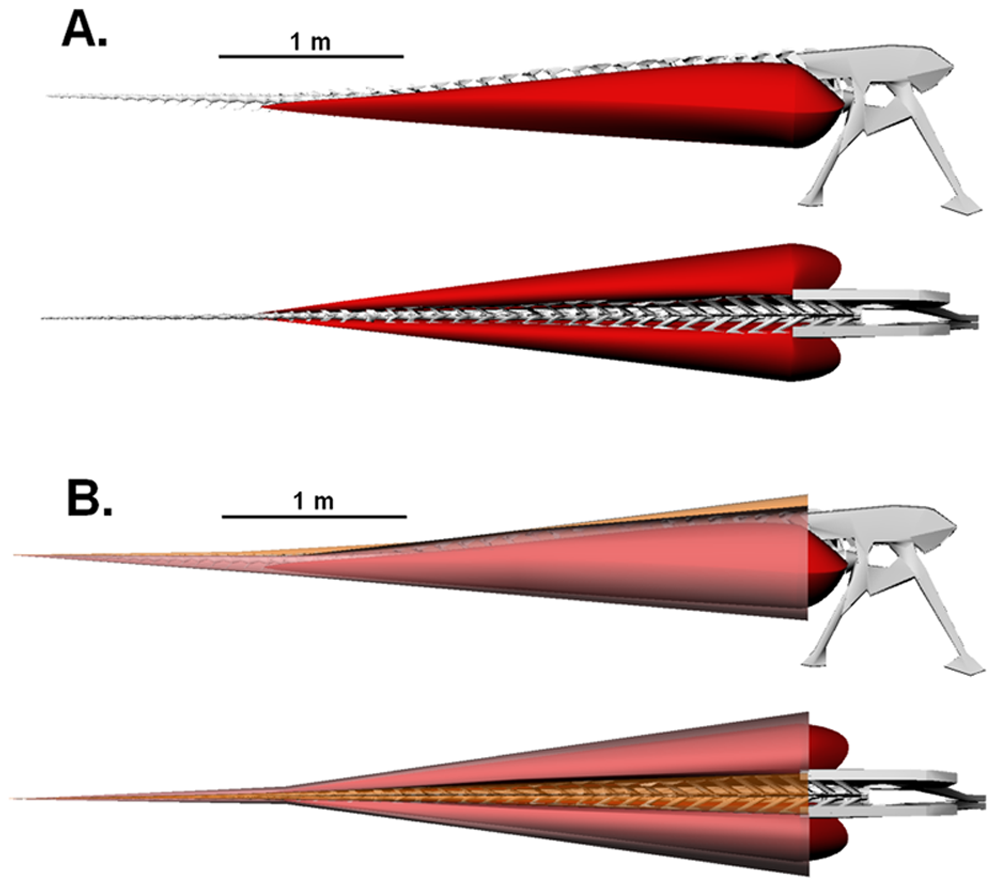
Analysis of the caudal musculature of Carnotaurus sastrei, the closest known relative of Pycnonemosaurus within Furileusauria, revealing an exceptionally large caudofemoralis muscle that provided explosive running capability. Digital muscle models indicate that, relative to body size, Carnotaurus had the largest M. caudofemoralis of any studied theropod. These findings have implications for the locomotor evolution of South American abelisaurids such as Pycnonemosaurus, which likely shared similar adaptations for hunting large titanosaur prey.
Jaw biomechanics and the evolution of biting performance in theropod dinosaurs
Sakamoto, M. · Proceedings of the Royal Society B: Biological Sciences
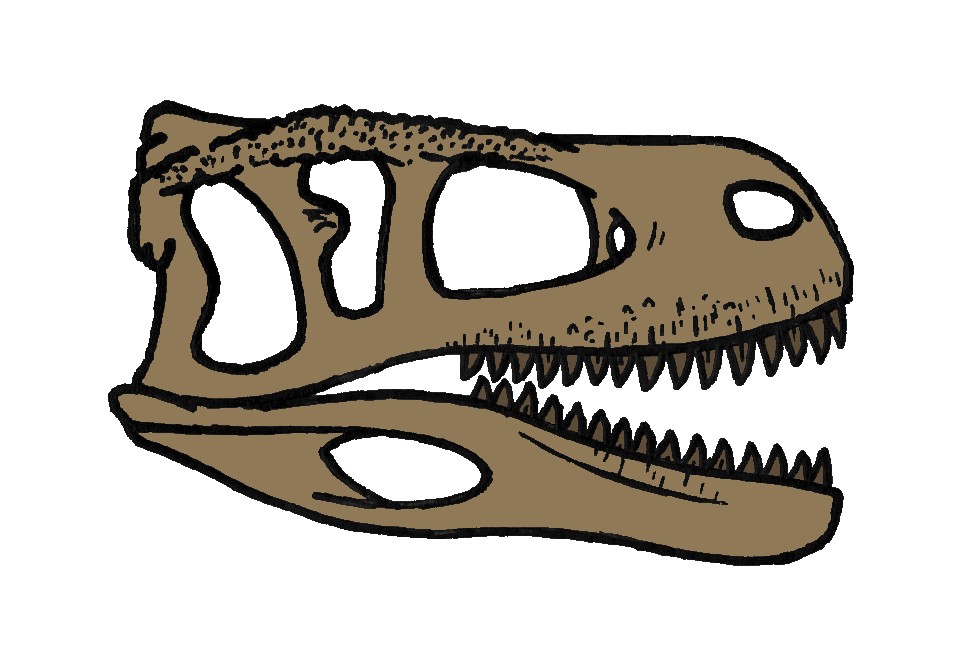
Pioneering study applying a 'biomechanical profiling' method to 41 theropod taxa, calculating mechanical advantage at each biting position along the tooth row. The analysis reveals that abelisaurids such as Carnotaurus, the closest known relative of Pycnonemosaurus, occupy unique functional space associated with high-speed frontal bites. The work demonstrates strong phylogenetic signal in theropod bite performance evolution, concluding that major functional shifts occurred at major clade origins. These data are relevant for inferring Pycnonemosaurus's predation strategy, which shared with other furileusaurs a reduced skull and small teeth.

The last dinosaurs of Brazil: The Bauru Group and its implications for the end-Cretaceous mass extinction
Brusatte, S.L., Candeiro, C.R.A. & Simbras, F.M. · Anais da Academia Brasileira de Ciências
Comprehensive review of Bauru Group dinosaurs, a set of Cretaceous rocks in Brazil covering approximately 370,000 km². The study demonstrates a diverse dinosaur fauna, including titanosaur herbivores and abelisaurid carnivores such as Pycnonemosaurus, that survived until the end of the Cretaceous (Maastrichtian). The authors argue these Southern Hemisphere dinosaurs were still diversifying when the asteroid impact caused mass extinction, analogously to Northern Hemisphere faunas. The paper presents Pycnonemosaurus estimated at 8.9 meters as one of the largest predators of Late Cretaceous Brazil.
First definitive record of Abelisauridae (Theropoda: Ceratosauria) from the Cretaceous Bahariya Formation, Bahariya Oasis, Western Desert of Egypt
Salem, B.S., Lamanna, M.C., O'Connor, P.M., El-Qot, G.M., Shaker, F., Thabet, W.A., El-Sayed, S. & Sallam, H.M. · Royal Society Open Science
Study documenting specimen MUVP 477, a partial cervical vertebra of a medium-sized abelisaurid from Cenomanian rocks in Egypt. Represents the earliest confirmed abelisaurid record in northeastern Africa. The phylogenetic analysis, which includes Pycnonemosaurus nevesi among reference taxa, positions the Egyptian specimen in polytomy with all included abelisaurids or as a basal member of the South American clade. The work confirms that abelisaurids dominated Africa, India, and South America during the Cretaceous.

An exceptional neurovascular system in abelisaurid theropod skull: New evidence from Skorpiovenator bustingorryi
Cerroni, M.A., Canale, J.I., Novas, F.E. & Paulina-Carabajal, A. · Journal of Anatomy
CT-scan-based study documenting an exceptional neurovascular system in the skull of abelisaurid Skorpiovenator bustingorryi, a derived relative close to Pycnonemosaurus. A row of large foramina on the dorsal surface of nasal bones connects internally through canals that likely housed blood vessels and nerves. The authors propose three functional hypotheses: thermoregulation through vascular heat exchange, vascularization of display structures for intraspecific communication, or sensory organ support. The work reveals unexpected cranial complexity in abelisaurids.
New theropod dinosaur from the Late Cretaceous of Brazil improves abelisaurid diversity
Iori, F.V., Araújo-Júnior, H.I., Tavares, S.A.S., Marinho, T.S. & Martinelli, A.G. · Journal of South American Earth Sciences
Description of Kurupi itaata, a new abelisaurid from the Marília Formation (Bauru Group, Upper Cretaceous) of the municipality of Monte Alto, São Paulo. Holotype MPMA 27-0001/02 consists of three caudal vertebrae and partial pelvic girdle, representing the first named tetrapod from the Marília Formation and the second named abelisaurid from the Bauru Group after Pycnonemosaurus nevesi. The work includes phylogenetic analysis positioning both Brazilian species as derived brachyrostran abelisaurids and discusses the growing diversity of Cretaceous predators in Brazil.

The phylogeny of Ceratosauria (Dinosauria: Theropoda)
Carrano, M.T. & Sampson, S.D. · Journal of Systematic Palaeontology
Comprehensive phylogenetic analysis of Ceratosauria by Carrano and Sampson, published in the Journal of Systematic Palaeontology. The work presents dense taxon and character sampling across all Ceratosauria, including noasaurids and abelisaurids. This publication classified Pycnonemosaurus as a nomen dubium (dubious name) due to the scarcity and fragmentation of fossil material. This classification was subsequently rejected by Delcourt (2017), who demonstrated valid autapomorphies in the holotype. Carrano and Sampson's analysis remains an essential reference for ceratosaur systematics.


First titanosaur dinosaur nesting site from the Late Cretaceous of Brazil
Fiorelli, L.E., Martinelli, A.G., da Silva, J.I., Hechenleitner, E.M., Soares, M.V.T., Silva Junior, J.C.G., da Silva, J.C., Borges, E.M.R., Ribeiro, L.C.B., Marconato, A., Basilici, G. & Marinho, T.S. · Scientific Reports
Documentation of the first titanosaur nesting site of the Late Cretaceous of Brazil, at the Serra da Galga Formation, Minas Gerais. The site includes multiple egg clutches with preserved shell fragments, indicating burial nesting strategy in an arid paleosoil environment. The study documents the semi-arid, warm paleoenvironment that characterized the Bauru Group at the end of the Cretaceous, the environment in which Pycnonemosaurus lived as apex predator. The titanosaurs documented at this site are representative of the prey that Pycnonemosaurus potentially hunted.
A new abelisaurid dinosaur from the end Cretaceous of Patagonia and evolutionary rates among the Ceratosauria
Pol, D., Baiano, M.A., Cerny, D., Novas, F.E., Cerda, I.A. & Pittman, M. · Cladistics
Description of Koleken inakayali, a new furileusaurian abelisaurid from the La Colonia Formation (Maastrichtian, Upper Cretaceous) of Patagonia. The most complete phylogenetic analysis of Furileusauria to date includes Pycnonemosaurus nevesi among Campanian-Maastrichtian brachyrostrans from South America, alongside Aucasaurus, Niebla, and Carnotaurus. The study also examines evolutionary rates among ceratosaurs, revealing that abelisaurids exhibited high cranial evolutionary rates during the Cretaceous. Pycnonemosaurus and Koleken are identified as part of the same diverse furileusaurian fauna of the latest Cretaceous.

Quilmesaurus curriei Coria, 2001 (Dinosauria, Theropoda): su validez taxonómica y relaciones filogenéticas
Juárez Valieri, R.D., Fiorelli, L.A. & Cruz, L.E. · Revista del Museo Municipal de Ciencias Naturales Lorenzo Scaglia
Taxonomic reevaluation of Quilmesaurus curriei, an Argentine Maastrichtian abelisaurid found in the Allen Formation. The study compares Quilmesaurus material with other South American abelisaurids, including Pycnonemosaurus nevesi, and analyzes the phylogenetic relationships of carnotaurins. The comparison of distal femora of Quilmesaurus and Carnotaurus, a key image of the paper, demonstrates how morphological variations of hindlimb extremities are used to distinguish taxa within abelisaurids. The work contributes to understanding kinship relationships among large Late Cretaceous South American predators.


Espécimes famosos em museus
DGM 859-R (Holótipo)
Museu de Ciências da Terra (MCTer), Rio de Janeiro, Brasil
The only known original specimen of the species, collected at the Jangada Roncador locality, Mato Grosso. Consists of five incomplete teeth, parts of seven caudal vertebrae, distal right pubis, right tibia, and right distal fibula. Likely belonged to a subadult individual.
Réplica Osteológica MHNMT
Museu de História Natural de Mato Grosso (MHNMT), Cuiabá, Brasil
Scientific replica 9 meters long and 4 meters tall, built by paleoartist Carlos Scarpini after two months of study of the species' phylogenetic groups. The replica was restored and is now displayed in the outdoor area of the museum. Represents the largest dinosaur to scale in Brazil.
In cinema and popular culture
Pycnonemosaurus nevesi has not gained a direct starring role in cinema, but its presence in popular culture occurs in an indirect yet significant way: its DNA was canonically included among the genetic components of the Indominus rex, the central antagonist of Jurassic World (2015). The narrative justification was that abelisaurid genes conferred a kind of biological armor to the hybrid. This genetic cameo placed the Brazilian dinosaur in the world's largest science fiction franchise, albeit invisibly. At the national level, Pycnonemosaurus is the subject of great interest in Brazilian educational and scientific productions that celebrate it as a symbol of Mato Grosso paleontology. The Natural History Museum of Mato Grosso has a full-scale 9-meter replica, considered the largest scale dinosaur replica in Brazil, which has become a tourist and educational attraction. The growing popularization of Brazilian paleontology on social media has amplified the visibility of Pycnonemosaurus as a source of national scientific pride.

Classificação
Descoberta
Curiosidade
Pycnonemosaurus nevesi is the largest known abelisaurid in history, at 8.9 meters long, surpassing even Carnotaurus. It is named in honor of Brazilian paleontologist Iedo Batista Neves, and its name means 'dense forest lizard', an allusion to Mato Grosso, the state where it was found.