Rugops primus
Rugops primus
"First wrinkle face"
Sobre esta espécie
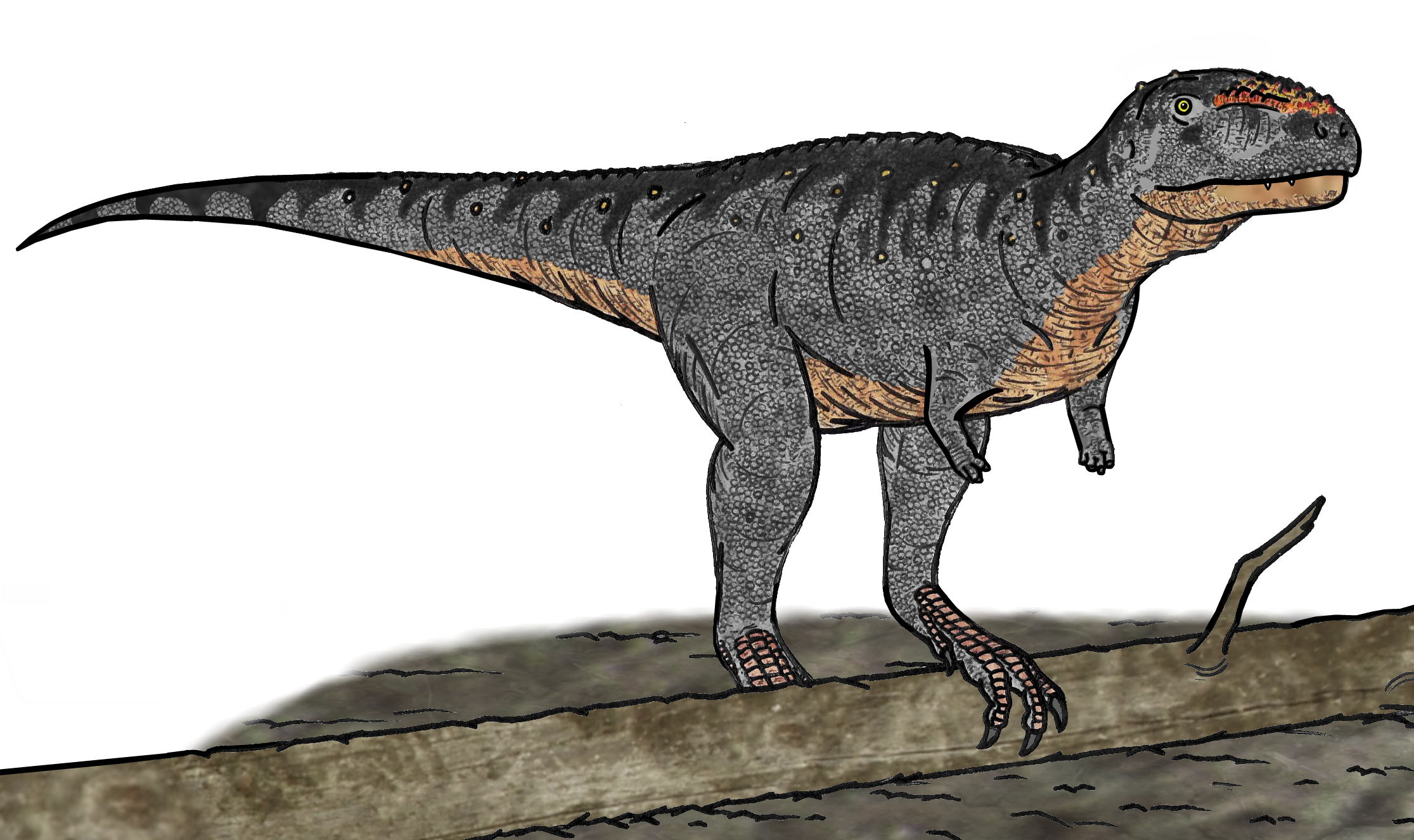
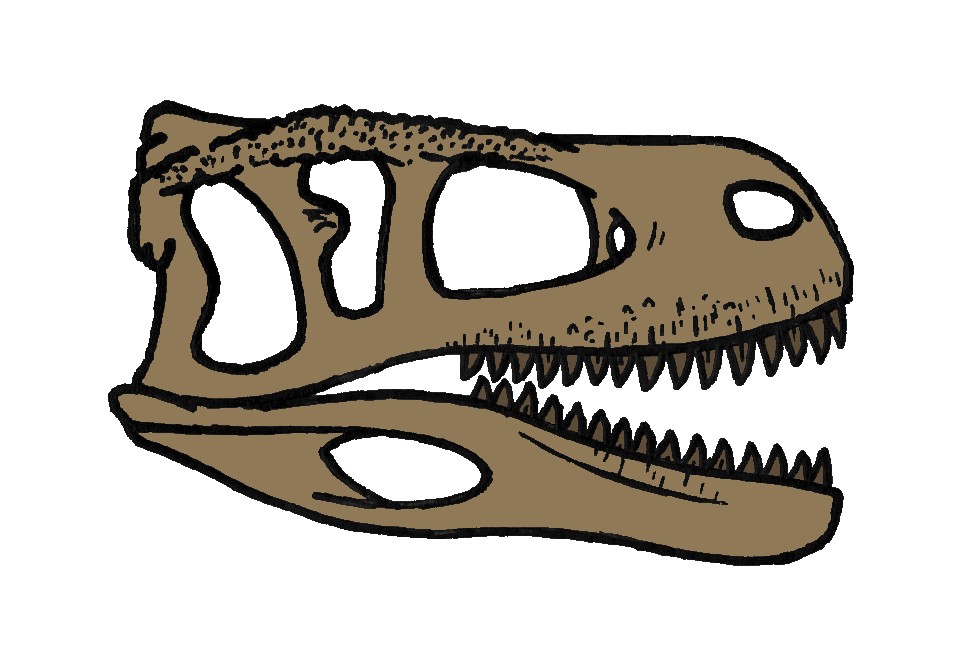
Rugops primus is a basal abelisaurid from the Late Cretaceous, discovered in the Echkar Formation of Niger, at the heart of the Sahara Desert. It lived approximately 95 million years ago, during a period when Gondwana was still fragmenting. Its partial skull, roughly 31 centimeters long, features a surface covered with vascular foramina and depressions on the nasal bones — unique structures that likely supported crests, cornified scales, or dermal ornaments in life. Its relatively small teeth led some researchers to propose scavenging behavior, though this hypothesis remains debated. As one of the first well-documented African abelisaurids, Rugops provided key evidence for faunal connections between Gondwanan landmasses during the mid-Cretaceous.
Geological formation & environment
The Echkar Formation, part of the Tegama Group in the Iullemmeden Basin of Niger, dates to the Late Cenomanian, between 99 and 93 million years ago. Composed of fluvial and lacustrine sandstones and claystones, it preserved an exceptionally diverse Cretaceous African fauna. Besides Rugops primus, the formation produced Carcharodontosaurus iguidensis, Spinosaurus sp., rebbachisaurid and titanosaur sauropods, notosuchian crocodilians such as Kaprosuchus saharicus and Laganosuchus thaumastos, and fish like Onchopristis numida. This Cenomanian Saharan ecosystem represented a significantly wetter river and delta environment than today, with dense riparian vegetation during one of the warmest periods of the Cretaceous.
Image gallery


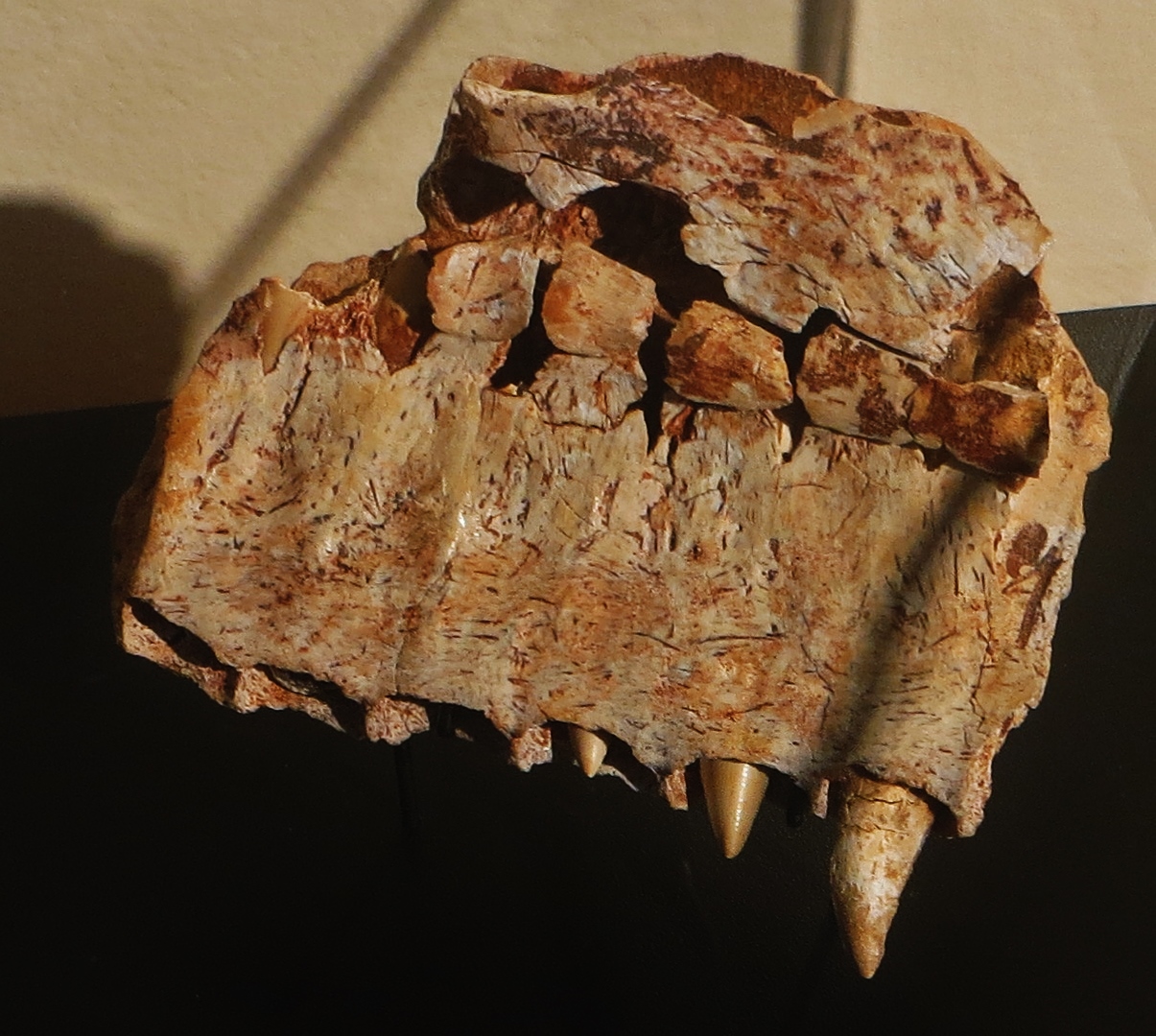


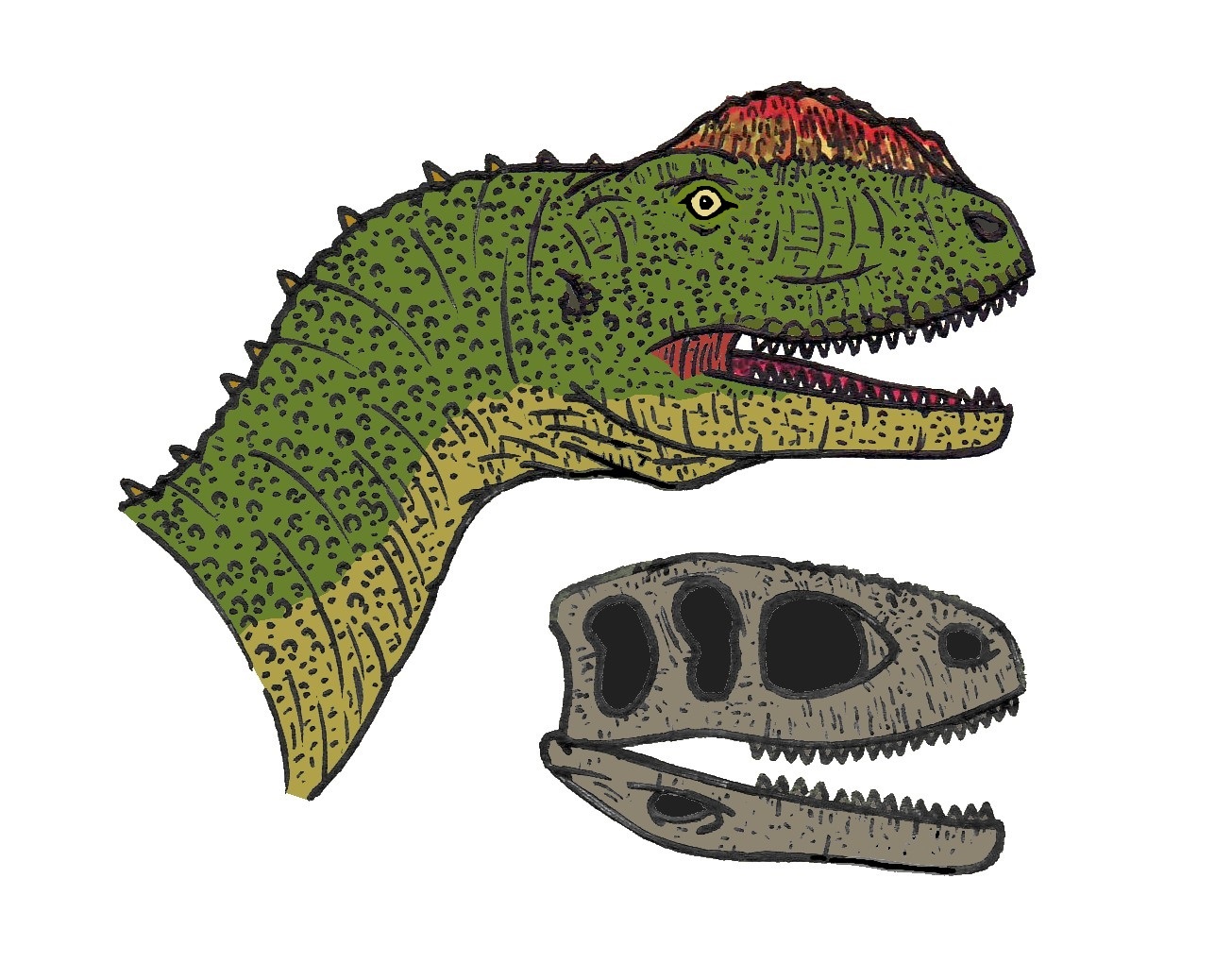

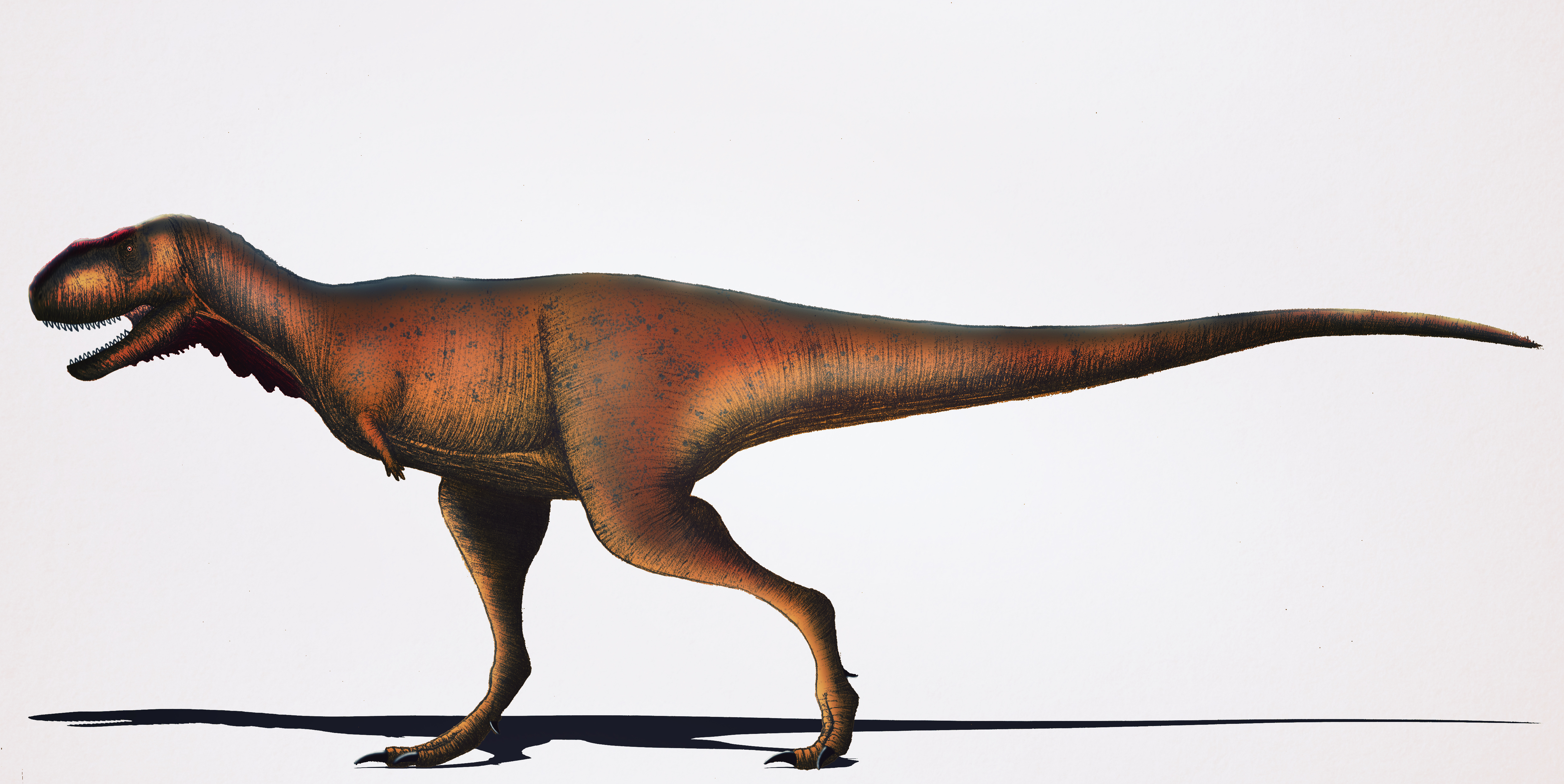


Partial skull of Rugops primus (specimen MNN IGU1, holotype), photographed on white background. The vascular foramina on the dorsal surface of the nasal bones are visible, diagnostic autapomorphies of the species.
Mariomassone — CC BY-SA 3.0
Ecology and behavior
Habitat
Rugops primus inhabited the floodplains and lacustrine environments of the Echkar Formation in present-day Niger during the Cenomanian, approximately 95 million years ago. This paleoenvironment was radically different from the present-day desert: the Sahara was then crossed by rivers and lakes, with dense riparian vegetation. The ecosystem was exceptionally rich in fauna, with giants such as Carcharodontosaurus iguidensis (12 m) and Spinosaurus (14 m), rebbachisaurid and titanosaur sauropods, plus primitive fish like Onchopristis and notosuchian crocodiles like Kaprosuchus.
Feeding
The diet of Rugops primus remains debated. Sereno et al. (2004) proposed scavenging behavior based on the relatively small teeth and thin-walled, low skull, ill-suited for capturing large live prey. However, Delcourt (2018) and other researchers argued that many abelisaurids were active predators, and that Rugops may have hunted smaller prey such as small dinosaurs, juvenile crocodiles, and fish. Coexistence with much larger predators in the same ecosystem favors the hypothesis that Rugops occupied a secondary niche, exploiting carcasses and smaller prey.
Behavior and senses
Little is known about Rugops primus behavior, given the fossil record consists of a single partial skull. The seven depressions on the nasal bones and the papillate texture of the rostrum, interpreted as attachment sites for dermal ornaments, suggest Rugops may have displayed intraspecific signaling structures comparable to the crests and cornified shields of modern crocodilians. Delcourt (2018) proposed that abelisaurids in general engaged in ritualized low-displacement headbutting combat. If this hypothesis applies to Rugops, the nasal crests could have served both signaling and cushioning functions in confrontations.
Physiology and growth
As a medium-sized theropod, Rugops primus likely had an elevated metabolism compared to cold-blooded reptiles, consistent with bone histology evidence from abelisaurids such as Aucasaurus (Baiano and Cerda, 2022), which show relatively rapid growth with seasonal lines of arrested growth (LAGs). The forelimbs were certainly very reduced, as in all abelisaurids. The revised size of 4.4 to 5.3 meters (Grillo and Delcourt, 2017) and mass of approximately 410 kg suggest an agile animal by group standards, capable of rapid pursuit movements.
Paleogeography
Continental configuration

Ron Blakey · CC BY 3.0 · Cretáceous, ~90 Ma
During the Cenomaniano (~99–93 Ma), Rugops primus inhabited Laramidia, the western half of present-day North America, separated from the east by the Western Interior Seaway, a shallow sea dividing the continent. The continents were in very different positions: India was drifting toward Asia, Antarctica was still connected to Australia, and South America was an isolated island.
Inventário de Ossos
Known only from the holotype specimen MNN IGU1, a partial skull probably from a subadult individual, housed at the Musée National du Niger. Portions of the palate and cranial roof are missing. The entire postcranial skeleton remains unknown.
Found elements
Inferred elements
Scientific Literature
15 papers in chronological order — from the original description to recent research.
New dinosaurs link southern landmasses in the Mid-Cretaceous
Sereno, P.C., Wilson, J.A., Conrad, J.L. · Proceedings of the Royal Society B: Biological Sciences
This is the founding paper of Rugops primus. Sereno, Wilson, and Conrad describe holotype specimen MNN IGU1, a partial skull from Niger's Echkar Formation dated to approximately 95 Ma. The paper presents the new genus and species' diagnostic autapomorphies: seven small pits on the nasal bones, an extra fenestra in the cranial roof between the prefrontal, frontal, postorbital, and lacrimal, and a papillate texture on the anterior rostrum. The authors interpret these structures as attachment sites for dermal ornaments. The U-shaped skull and relatively small teeth support a proposed scavenging behavior. The paper places Rugops in a phylogenetic analysis as a basal abelisaurid and argues its Cenomanian African presence documents continued faunal exchange between Gondwanan fragments through the end of the Early Cretaceous.
The Phylogeny of Ceratosauria (Dinosauria: Theropoda)
Carrano, M.T., Sampson, S.D. · Journal of Systematic Palaeontology
This paper presents the most comprehensive phylogenetic analysis of Ceratosauria to that point, incorporating data from 56 taxa and over 200 morphological characters. Carrano and Sampson construct a matrix that positions Rugops primus as a basal abelisaurid, in a polytomy with other basal taxa such as Xenotarsosaurus, Ilokelesia, and Genusaurus. The work formally diagnoses Abelisauridae based on verifiable cranial and postcranial synapomorphies and discusses in detail the comparative anatomy of African and South American abelisaurids. The resulting phylogeny became the standard reference for all subsequent studies on Rugops' position within Ceratosauria.


Ceratosaur palaeobiology: new insights on evolution and ecology of the southern rulers
Delcourt, R. · Scientific Reports
Delcourt provides a comprehensive review of Ceratosauria palaeobiology, examining evidence for soft tissues, behavior, and ecological strategies. For Rugops primus, the paper analyzes in detail the seven nasal pits and the papillate cranial texture, comparing them with living crocodilians and other scaled reptiles. The hypothesis advanced is that these structures correlate with overlying cornified scales, as observed in crocodiles, partially discounting the exclusive scavenger hypothesis. The work proposes that abelisaurids may have exhibited intraspecific combat via low-displacement headbutting, and discusses implications for Rugops' ecology in the Cenomanian African paleoecosystem.
A Middle Jurassic abelisaurid from Patagonia and the early diversification of theropod dinosaurs
Pol, D., Rauhut, O.W.M. · Proceedings of the Royal Society B: Biological Sciences
The discovery of Eoabelisaurus mefi in Argentina extended the Abelisauridae fossil record into the Middle Jurassic, recalibrating the entire understanding of the group's diversification. The paper includes a phylogenetic analysis that repositions several abelisaurids and provides fundamental evolutionary context for understanding Rugops primus as a representative of a distinct African branch. The work demonstrates that Abelisauridae had already diversified into multiple lineages before the Cenomanian period in which Rugops lived, implying a more complex biogeographic history than previously assumed, involving both dispersal and vicariance along Gondwana fragmentation.

A new species of Carcharodontosaurus (Dinosauria: Theropoda) from the Cenomanian of Niger and a revision of the genus
Brusatte, S.L., Sereno, P.C. · Journal of Vertebrate Paleontology
Brusatte and Sereno describe Carcharodontosaurus iguidensis from the same Echkar Formation where Rugops primus was found, making this paper essential for understanding Rugops' paleoecological context. The article documents the Cenomanian Nigerian paleoenvironment as a fluvial-lacustrine system inhabited by multiple large predators, including Carcharodontosaurus and Spinosaurus alongside Rugops itself. The coexistence of three large theropods in the same environment led to discussions of niche partitioning, and Rugops' position as a smaller predator or scavenger gains relevance in this ecological context. The paper contextualizes the Cenomanian African theropod fauna within global Cretaceous biogeography.

First definitive record of Abelisauridae (Theropoda: Ceratosauria) from the Cretaceous Bahariya Formation, Bahariya Oasis, Western Desert of Egypt
Salem, B.S., Lamanna, M.C., O'Connor, P.M., El-Qot, G.M., Shaker, F., Thabet, W.A., El-Sayed, S., Sallam, H.M. · Royal Society Open Science
Salem et al. describe MUVP 477, a cervical vertebra of an abelisaurid from the Egyptian Cenomanian, providing the first definitive record of the group from the Bahariya Formation. The paper is important for Rugops' context because it demonstrates that North African abelisaurids had a broader distribution than the Echkar Formation of Niger alone suggests. The phylogenetic analysis includes 41 ceratosaur taxa and positions the new specimen relative to Rugops and other basal African abelisaurids. The work documents the wide geographic distribution of Abelisauridae in North Africa during the mid-Cretaceous, contributing to the understanding of Rugops' biogeography.
Record of Abelisauridae from the Cenomanian of Morocco
Mahler, L. · Journal of Vertebrate Paleontology
Mahler describes abelisaurid material from the Cenomanian of Morocco, making this the second North African record of the group after the Nigerien Rugops. The paper analyzes an isolated maxilla (UCPC 10) showing features compatible with Abelisauridae, possibly belonging to a genus close to Rugops. The longitudinal distribution of North African abelisaurids documented by Mahler, from Morocco to Niger in the Cenomanian, suggests the group was abundant and diversified in North Africa during this period. The work is fundamental for interpreting Rugops not as an isolated occurrence, but as part of a broader African abelisaurid fauna in the mid-Cretaceous.
Allometry and body length of abelisauroid theropods: Pycnonemosaurus nevesi is the new king
Grillo, O.N., Delcourt, R. · Cretaceous Research
Grillo and Delcourt revise body size estimates for abelisauroids using allometry based on specific bone elements. The paper recalibrates Rugops primus' size to 4.4 to 5.3 meters in length, significantly smaller than the previous estimates of 6 meters. This revision has important ecological implications, repositioning Rugops as a medium-small predator in the Cenomanian African ecosystem, where it coexisted with giants such as Carcharodontosaurus (12 m) and Spinosaurus (14 m). The work demonstrates that Rugops occupied a distinct ecological niche, possibly specialized in smaller prey or scavenging carcasses left by the megapredators.

Morphology of the maxilla informs about the type of predation strategy in the evolution of Abelisauridae (Dinosauria: Theropoda)
Pereyra, E.E.S., Vrdoljak, J., Ezcurra, M.D., González-Dionis, J., Paschetta, C., Méndez, A.H. · Scientific Reports
Pereyra et al. analyze maxilla morphology in 17 Abelisauridae taxa using 2D geometric morphometrics and phylogenetic comparative methods. The study reveals that active hunter specialization emerged during the Early Cretaceous, but Rugops primus, with its peculiar maxilla shape and relatively small teeth, is positioned as a morphological outlier within the group. The analysis suggests Rugops may have adopted a different feeding strategy than more derived abelisaurids, with implications for the scavenger hypothesis proposed by Sereno et al. (2004). The work provides a quantitative framework for assessing Rugops' cranial adaptations relative to the abelisaurid ensemble.
Macroevolutionary trends in Ceratosauria body size
Pereyra, E.E.S., Ezcurra, M.D., Paschetta, C., Méndez, A.H. · BMC Ecology and Evolution
This paper examines macroevolutionary trends in Ceratosauria body size across the Mesozoic using probabilistic evolutionary models. Rugops primus, with revised estimates of 4.4 to 5.3 meters, is included in the dataset as a representative of an African branch of medium-sized abelisaurids. The work reveals that ceratosaurians followed distinct body size trajectories on different continents: South American forms tended toward gigantism, while African ones like Rugops maintained more modest sizes. Results suggest regional ecological factors, such as coexistence with other large predators in the Cenomanian African ecosystem, may have constrained body size increases in African abelisaurids.

Osteology of the axial skeleton of Aucasaurus garridoi: phylogenetic and paleobiological inferences
Baiano, M.A., Coria, R., Chiappe, L.M., Zurriaguz, V., Coria, L. · PeerJ
Baiano et al. present a detailed osteological description of the axial skeleton of Aucasaurus garridoi, including CT scanning that reveals vertebral pneumaticity. The work includes a phylogenetic analysis of Abelisauridae where Rugops primus is recovered as a basal taxon outside the Brachyrostra clade. Comparison of Aucasaurus' axial skeleton with other abelisaurids provides indirect data on what the unknown postcranium of Rugops might have looked like. The paper documents that basal abelisaurids like Rugops likely had distinct body proportions from more derived group members, with implications for reconstructions of the species' locomotion and biomechanics.


Bone histology and growth pattern of the abelisaurid theropod Aucasaurus garridoi
Baiano, M.A., Cerda, I.A. · Historical Biology
Baiano and Cerda analyze bone thin-sections of Aucasaurus garridoi to reconstruct its growth pattern and life history strategy. The paper documents lines of arrested growth (LAGs) suggesting growth seasonality, and estimates growth rates comparable to other medium-sized theropods. Although Rugops primus is not the focus, Aucasaurus histology data provide the best available analogy for inferring the growth biology of basal African abelisaurids, given that Rugops' postcranium is completely unknown. The study positions abelisaurids as groups with growth strategies intermediate between basal theropods and more advanced coelurosaurs.

Building a predator: macroevolutionary patterns in the skull of abelisaurid dinosaurs
Pereyra, E.E.S., Ezcurra, M.D., Paschetta, C., Méndez, A.H. · Proceedings of the Royal Society B: Biological Sciences
Pereyra et al. investigate cranial evolution in Abelisauridae using 2D geometric morphometrics on cranial landmarks from multiple taxa. The study reveals that the abelisaurid skull exhibits high disparity in specific regions and that the neurocranium was the primary region responsible for proportional cranial height increase throughout the group's evolutionary history. For Rugops primus, whose basal position reflects a plesiomorphic state of the abelisaurid skull, the work provides context for understanding how the unique rugose skull features represent both autapomorphies and ancestral conditions of the group. The paper is an essential modern reference for understanding Rugops' cranial morphology in evolutionary perspective.

.jpg)
The evolution of dinosaurs
Sereno, P.C. · Science
This review paper by Sereno, published five years before the formal description of Rugops, establishes the phylogenetic framework in which Abelisauridae is nested within Theropoda. The work traces the evolutionary radiation of theropods from the Triassic to the Cretaceous, documenting how abelisaurids diversified in Gondwana while coelurosaurs dominated Laurasia. The context established by this paper is fundamental for understanding why Rugops primus, discovered only a year later by the same author, represented a key piece in the understanding of Mesozoic biogeography. Sereno would be the same researcher to formally describe Rugops in 2004.
A new close relative of Carnotaurus sastrei Bonaparte 1985 (Theropoda: Abelisauridae) from the Late Cretaceous of Patagonia
Coria, R.A., Chiappe, L.M., Dingus, L. · Journal of Vertebrate Paleontology
Coria, Chiappe, and Dingus describe Aucasaurus garridoi, a brachyrostran abelisaurid from Patagonia, based on a nearly complete skeleton. The paper provides detailed anatomical data on a well-preserved Abelisauridae member that serves as a fundamental reference point for interpreting Rugops primus' fragmentary material. Comparison between Aucasaurus, a derived abelisaurid with a tall skull and extremely reduced forelimbs, and Rugops, a basal taxon with distinct skull morphology, illuminates anatomical diversity within the family. The work also documents the South American Campanian fauna as a contrast with Rugops' Cenomanian African ecosystem.


Espécimes famosos em museus
MNN IGU1 (Holótipo)
Musée National du Niger, Niamey
The only known specimen of Rugops primus. Consists of a partial skull, probably from a subadult individual, missing portions of the palate and cranial roof. The dorsal surface with vascular foramina on the nasal bones is the species' diagnostic autapomorphy.
UCPC 10 (possível Rugops)
Università degli Studi di Palermo / Palazzo Dugnani, Milão (exposição temporária)
Jaw piece attributed to a possible North African abelisaurid, possibly Rugops. Described by Mahler (2005) from Cenomanian material from Morocco. Represents one of the few additional fragments that may belong to the abelisaurid fauna contemporary to Rugops.
In cinema and popular culture
Rugops primus is one of the least famous abelisaurids in popular culture, a direct reflection of the scarce available fossil material: a single partial skull. However, its peculiar appearance with a skull full of foramina and possibly ornamented morphology captured the imagination of artists and producers. On television, the documentary Monsters Resurrected (Discovery, 2009) was the first production to place Rugops at the center of an episode, exploring the scavenging hypothesis proposed by Sereno. Planet Dinosaur (BBC, 2011) used it as a supporting character in the complex Cenomanian African ecosystem, alongside Spinosaurus and Carcharodontosaurus. At National Geographic, the actual Rugops skull was publicly displayed during the Spinosaurus exhibition in 2014, making it vaguely recognizable to the general public. In Japanese animations like Dinosaur King, it appears as a stylized character for young audiences. Paleoart representations evolved significantly: the first simple 2007 restorations gave way to modern versions with keratinous crests, speculative dewlaps, and spiny hide, reflecting decades of scientific revision.

Classificação

Descoberta
Curiosidade
The name 'Rugops' literally means 'wrinkle face' in Latin and Greek, a direct reference to the seven vascular foramina on the skull's nasal bones. These foramina were so peculiar that Paul Sereno, when describing the fossil in 2004, suggested the animal likely carried crests or dermal ornaments on its head, making Rugops one of the few dinosaurs whose colorful and ornamented appearance was directly inferred from skull foramina, well before modern discoveries about paleoart.