
Saltasaurus
Saltasaurus loricatus
"Lizard from Salta, protected by armored plates"
Sobre esta espécie
Saltasaurus loricatus is an Upper Cretaceous titanosaur from Argentina and one of the most important sauropods in South American paleontology. Described by Bonaparte and Powell in 1980 from fossils of the Lecho Formation in Salta Province, it was the first sauropod confirmed with dermal armor: oval-plate osteoderms and rounded ossicles covering the back. With a relatively short neck and robust limbs, it inhabited fluvial-lacustrine plains. Mass nesting evidence at Auca Mahuevo, from closely related saltasaurines, suggests gregarious reproductive behavior for the group.
Geological formation & environment
The Lecho Formation is part of the Balbuena Subgroup of the Salta Group, deposited during the Early Maastrichtian (~70-68 Ma) in northwestern Argentina. It consists of fine-grained bioturbated sandstones deposited in a fluvial-lacustrine coastal plain environment. The formation's fauna is currently restricted to dinosaurs and includes Saltasaurus loricatus (herbivorous titanosaur), Noasaurus leali (carnivorous noasaurid), and at least one large abelisaurid theropod represented by isolated teeth. Multiple enantiornithine bird species were found: Enantiornis leali, Lectavis bretincola, Soroavisaurus australis, and several Martinavis species, making the Lecho Formation one of Argentina's richest Cretaceous bird records.
Image gallery


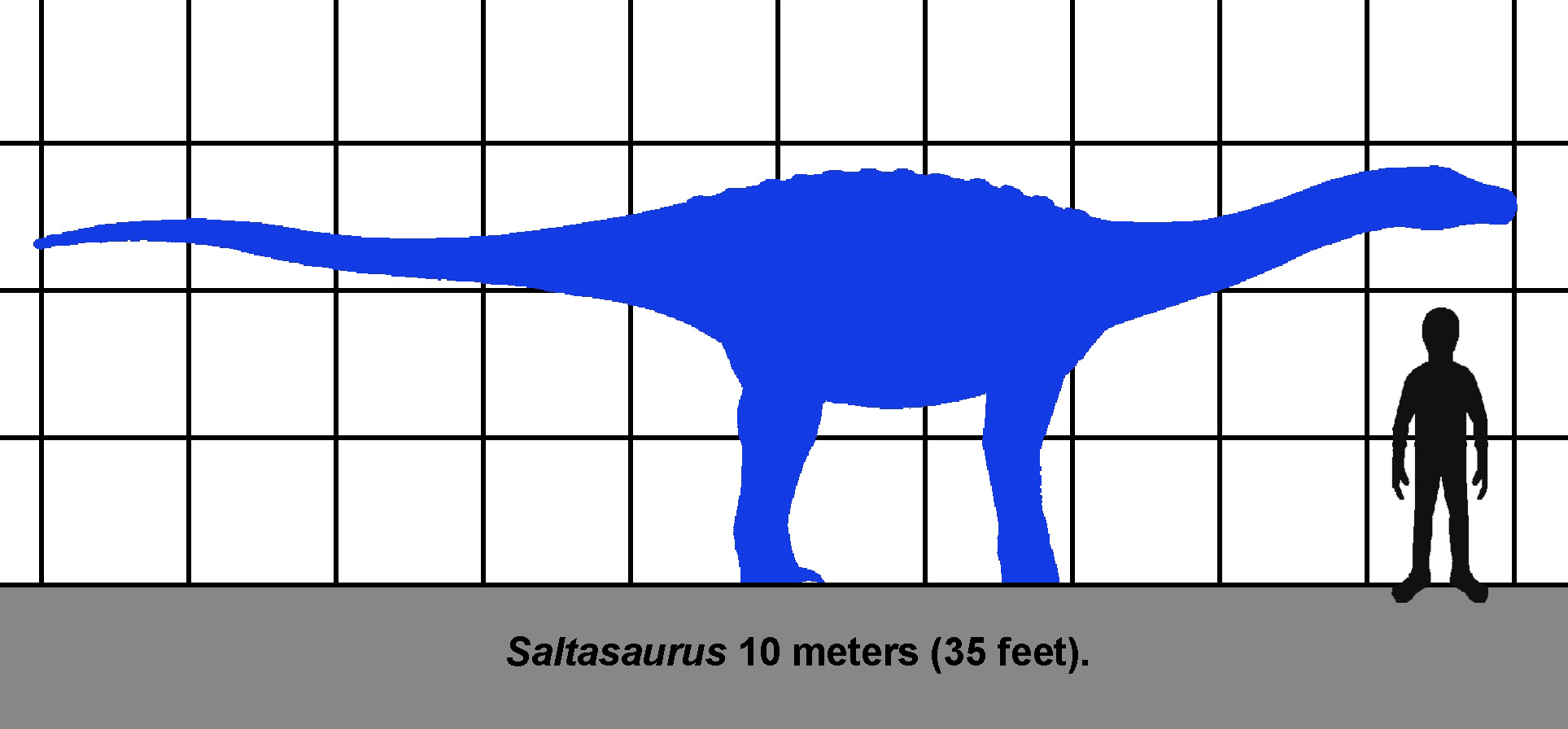


Modern scientific reconstruction of Saltasaurus loricatus by TotalDino (2025, CC BY 4.0). The compact build, relatively short neck, and robust limbs are faithfully depicted based on the latest osteological descriptions.
TotalDino, CC BY 4.0
Ecology and behavior
Habitat
Saltasaurus loricatus inhabited coastal fluvial-lacustrine plains of northwestern Argentina during the Maastrichtian (~70-66 Ma), a region corresponding today to Salta Province. The Lecho Formation represents an alluvial plain depositional environment in tropical to subtropical conditions, near the Tropic of Capricorn. The ecosystem included angiosperm forests (flowering plants, in full radiation during the Cretaceous) and open areas with dense vegetation. Coexistence with enantiornithine birds (Enantiornis, Lectavis, Soroavisaurus) and the small theropod Noasaurus indicates a biodiverse environment.
Feeding
Obligate herbivore with cylindrical teeth with spatulate tips, adapted for cutting and stripping vegetation without chewing. Like other sauropods, it swallowed food whole or in large fragments, relying on gastric stones (gastroliths) and microbial fermentation for digestion. Its relatively short neck, compared to diplodocids and brachiosaurids, suggests it browsed on medium-height vegetation, possibly shrubs, cycads, and low-canopy angiosperms characteristic of the Argentine Maastrichtian.
Behavior and senses
Mass nesting evidence at Auca Mahuevo (closely related saltasaurines) suggests gregarious reproductive behavior: hundreds of females deposited eggs in collective nests averaging ~25 eggs each, and the site was reused by multiple generations (nesting site philopatry). Hatchlings emerged with scales but no bony armor (developed post-hatching). Herd behavior is inferred for adults based on the abundance of individuals at a single locality. Adults with dermal armor were probably protected from abelisaurid predators.
Physiology and growth
Saltasaurus possessed the highly developed vertebral pneumaticity system of derived titanosaurs: extensive air chambers in both neural arches and vertebral bodies, connected to an avian-type air sac system. This system reduced bone density and consequently body mass, compensating for large body size growth. Osteoderms may have functioned as calcium reservoirs mobilizable during oviposition (Vidal et al. 2017 hypothesis). Metabolism was probably moderately endothermic, with rapid growth during the juvenile phase decelerating in adulthood, a pattern documented in other titanosaurs through bone histology.
Paleogeography
Continental configuration

Ron Blakey · CC BY 3.0 · Cretáceous, ~90 Ma
During the Maastrichtiano (~70–66 Ma), Saltasaurus loricatus inhabited Laramidia, the western half of present-day North America, separated from the east by the Western Interior Seaway, a shallow sea dividing the continent. The continents were in very different positions: India was drifting toward Asia, Antarctica was still connected to Australia, and South America was an isolated island.
Inventário de Ossos
Based on the holotype PVL 4017-92 (sacrum with two fused ilia) and over 200 additional fossils catalogued under number PVL 4017, representing at least five individuals (two adults and three juveniles/subadults). The collection includes posterior cranial elements, teeth, cervical, dorsal, sacral and caudal vertebrae, parts of the pectoral and pelvic girdles, limb bones, and armor pieces.
Found elements
Inferred elements
Scientific Literature
15 papers in chronological order — from the original description to recent research.
A continental assemblage of tetrapods from the Upper Cretaceous beds of El Brete, northwestern Argentina (Sauropoda-Coelurosauria-Carnosauria-Aves)
Bonaparte, J.F. e Powell, J.E. · Mémoires de la Société Géologique de France
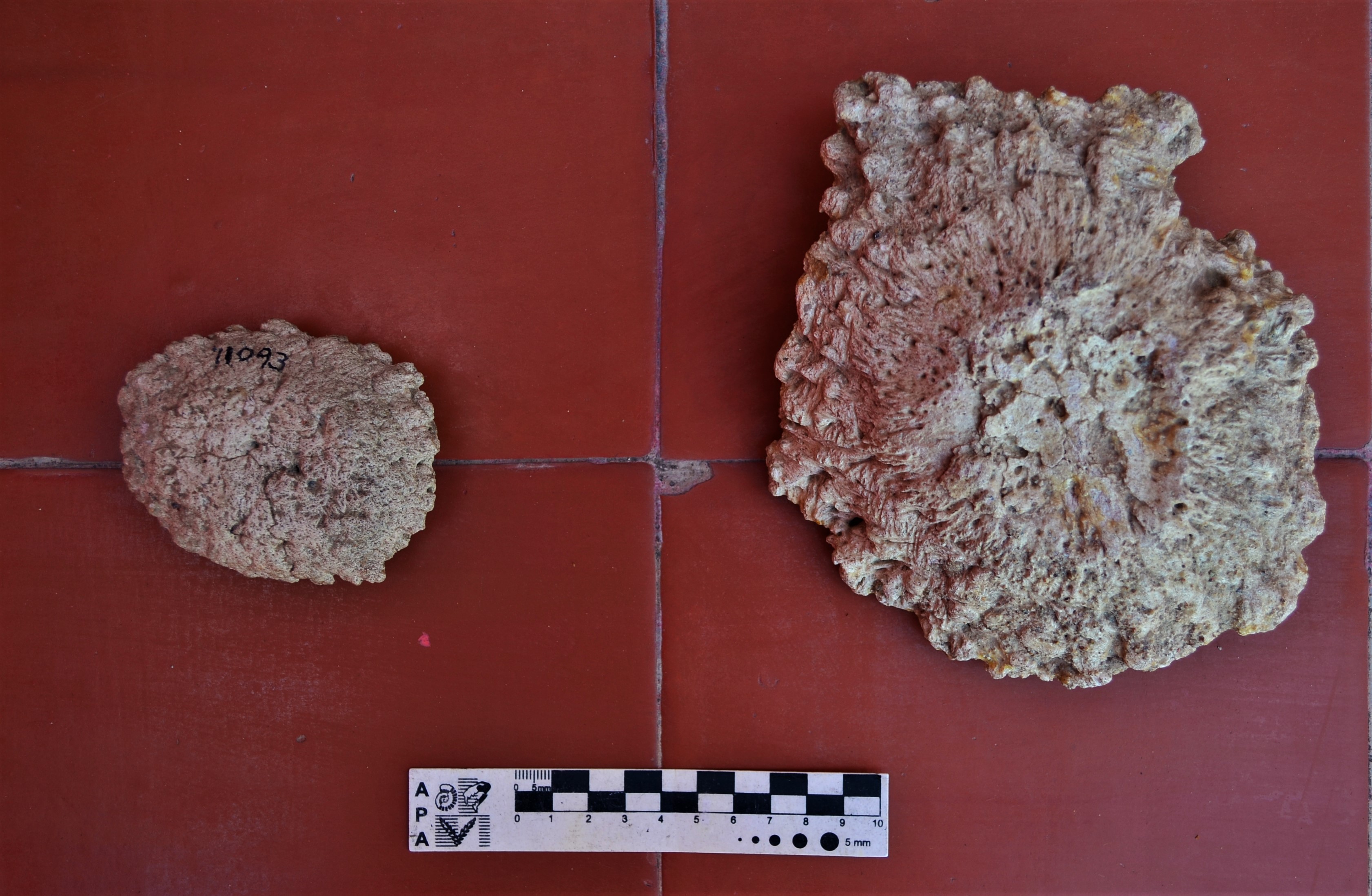
Founding paper: Bonaparte and Powell describe Saltasaurus loricatus and Noasaurus leali from material collected between 1975 and 1977 at Estancia El Brete, Salta Province. The work establishes the holotype PVL 4017-92 and documents, for the first time in paleontological history, the unambiguous presence of osteoderms in a sauropod. The authors describe two types of dermal elements: larger oval plates with a conical surface and smaller sub-spherical ossicles forming a continuous mosaic. The generic name derives from Salta Province; the specific epithet, from the Latin lorica, designates plate covering. The paper also describes the faunal assemblage of the Lecho Formation, including enantiornithine birds and abelisaurid theropod teeth.
Osteology of Saltasaurus loricatus (Sauropoda-Titanosauridae) from the Late Cretaceous of Argentina
Powell, J.E. · Aspects of Sauropod Paleobiology — GAIA
Fundamental monograph written by Jaime Powell, available through the Smithsonian Institution. The work presents the systematic and detailed description of all known osteology of Saltasaurus loricatus, based on the extensive PVL 4017 fossil collection. Powell describes the skull, vertebrae (cervical, dorsal, sacral, and caudal), ribs, pectoral and pelvic girdles, fore and hind limbs, and the impressive osteoderm assemblage. The work includes comparisons with other South American titanosaurs and discusses the animal's phylogenetic position within titanosaurids. This monograph remains the primary anatomical reference for any study of Saltasaurus.

Hallazgo de dinosaurios y aves cretácicas en la Formación Lecho, El Brete (Salta), Argentina
Bonaparte, J.F., Vince, M. e Leal, J.C. · Acta Geológica Lilloana
First scientific report of the El Brete fossils, published three years before the formal description. Bonaparte, Vince, and Leal document the discovery of Cretaceous dinosaurs and birds in the Lecho Formation, identifying the site's exceptional potential. The material included large sauropod bones, theropod elements, and remains of primitive birds. This preliminary notice alerted the international paleontological community to the richness of northwestern Argentina and paved the way for the 1980 monograph. The site (Estancia El Brete, Candelaria Department, southern Salta Province) would become one of the most important titanosaur localities in South America.

Dermal armor histology of Saltasaurus loricatus, an Upper Cretaceous sauropod dinosaur from Northwest Argentina
Cerda, I.A. e Powell, J.E. · Acta Palaeontologica Polonica
Detailed histological study of Saltasaurus loricatus osteoderms published in Acta Palaeontologica Polonica. Cerda and Powell analyze the bone tissue microstructure of the oval dermal plates and smaller ossicles under microscopy. The large plates are composed almost entirely of remodeled cancellous bone with remains of primary bone of coarse collagenous fibers; ossicles lack secondary remodeling and their matrix is formed by three orthogonal systems of collagenous fiber bundles. The paper concludes these osteoderms originated by direct mineralization of the dermis (metaplasia), the same process observed in armored reptiles. This mechanism differs from bone plate development via periosteal membrane. The paper is the definitive reference on the origin and histology of Saltasaurus's unique armor.

New contributions to the presacral osteology of Saltasaurus loricatus (Sauropoda, Titanosauria) from the Upper Cretaceous of northern Argentina
Zurriaguz, V.L. e Powell, J.E. · Cretaceous Research
Anatomical contribution published in Cretaceous Research that significantly expands knowledge of Saltasaurus presacral vertebral osteology. Zurriaguz and Powell describe in detail the neural laminae, fossae, and pneumatic foramina of the neural arches of cervical and dorsal vertebrae, systematically comparing with Neuquensaurus australis and Rocasaurus muniozi, closely related South American taxa. The paper documents extensive vertebral pneumaticity in anterior dorsal vertebrae with well-developed air chambers, which has implications for neck posture reconstruction and body mass estimation. The study uses the PVL 4017 collection from the Instituto Miguel Lillo (Tucumán).

Sauropod dinosaur embryos from the Late Cretaceous of Patagonia
Chiappe, L.M., Coria, R.A., Dingus, L., Jackson, F., Chinsamy, A. e Fox, M. · Nature
Seminal paper published in Nature describing the first known embryos of non-avian sauropod dinosaurs, from the Auca Mahuevo site, Patagonia. Specimens include large fragments of fossilized skin impressions, the first ever reported for non-avian dinosaur embryos, and the first sauropod embryo record from the Southern Hemisphere. The eggs, 11-12 cm in diameter, were distributed over an area exceeding 1 km². Skin impressions show mosaic scales but no bony armor, indicating osteoderms developed after hatching. The work provides behavioral evidence of group nesting and is fundamental to understanding the reproductive biology of saltasaurine titanosaurs, including the Saltasaurus group.
Titanosaurs and the origin of 'wide-gauge' trackways: A biomechanical and systematic perspective on sauropod locomotion
Wilson, J.A. e Carrano, M.T. · Paleobiology
Pioneering study in Paleobiology correlating titanosaur skeletal morphology (including Saltasaurus) with the 'wide-gauge' trackway pattern observed in ichnofossils. Wilson and Carrano demonstrate that titanosaur femora have proximal medial deflection and eccentric distal condyle cross-sections, features that force the limb to deviate laterally, resulting in a wider stride. This wide-gauge trackway pattern is synapomorphic of Titanosauria and distinguishes these animals from other sauropods. The paper uses Saltasaurus as one of the central taxa and provides biomechanical estimates for titanosaur posture and locomotion speed.

A complete skull of an Early Cretaceous sauropod and the evolution of advanced titanosaurians
Zaher, H., Pol, D., Carvalho, A.B., Nascimento, P.M., Riccomini, C., Larson, P., Juarez-Valieri, R., Pires-Domingues, R., da Silva, N.J. e Campos, D.A. · PLOS ONE
PLOS ONE paper describing the complete skull of Tapuiasaurus macedoi, an Early Cretaceous titanosaur from Brazil, and presenting a phylogenetic analysis of Titanosauria that includes Saltasaurus. The resulting cladogram positions Tapuiasaurus as the outgroup closest to derived titanosaurs (Lithostrotia), with Saltasaurus recovered within Saltasaurinae. The paper is relevant to Saltasaurus because the rigorous phylogenetic analysis using cranial morphology reinforces the genus's placement within derived saltasaurids and demonstrates the degree of cranial morphological conservatism in titanosaurs. The resulting cladogram is based on 349 characters and includes 36 sauropod taxa.

Two Late Cretaceous sauropods reveal titanosaurian dispersal across South America
Hechenleitner, E.M., Leuzinger, L., Martinelli, A.G., Rocher, S., Fiorelli, L.E., Taborda, J.R.A. e Salgado, L. · Communications Biology
Study in Communications Biology (Nature) describing two new Argentinian titanosaurs: Punatitan coughlini and Bravasaurus arrierosorum. The phylogenetic analysis includes Saltasaurus loricatus and documents the dispersal of saltasaurines across South America in the Late Cretaceous, with Saltasaurus positioned in the Lecho Formation (NW Argentina) as part of a geographically intermediate fauna between Patagonian and northern South American titanosaurs. The paper recovers Saltasaurus in a clade with Rocasaurus and Neuquensaurus within Saltasaurinae and provides temporal calibration estimates for the group's divergence.

The internal anatomy of titanosaur osteoderms from the Upper Cretaceous of Spain is compatible with a role in oogenesis
Vidal, D., Ortega, F., Gascó, F., Serrano-Martínez, A. e Sanz, J.L. · Scientific Reports
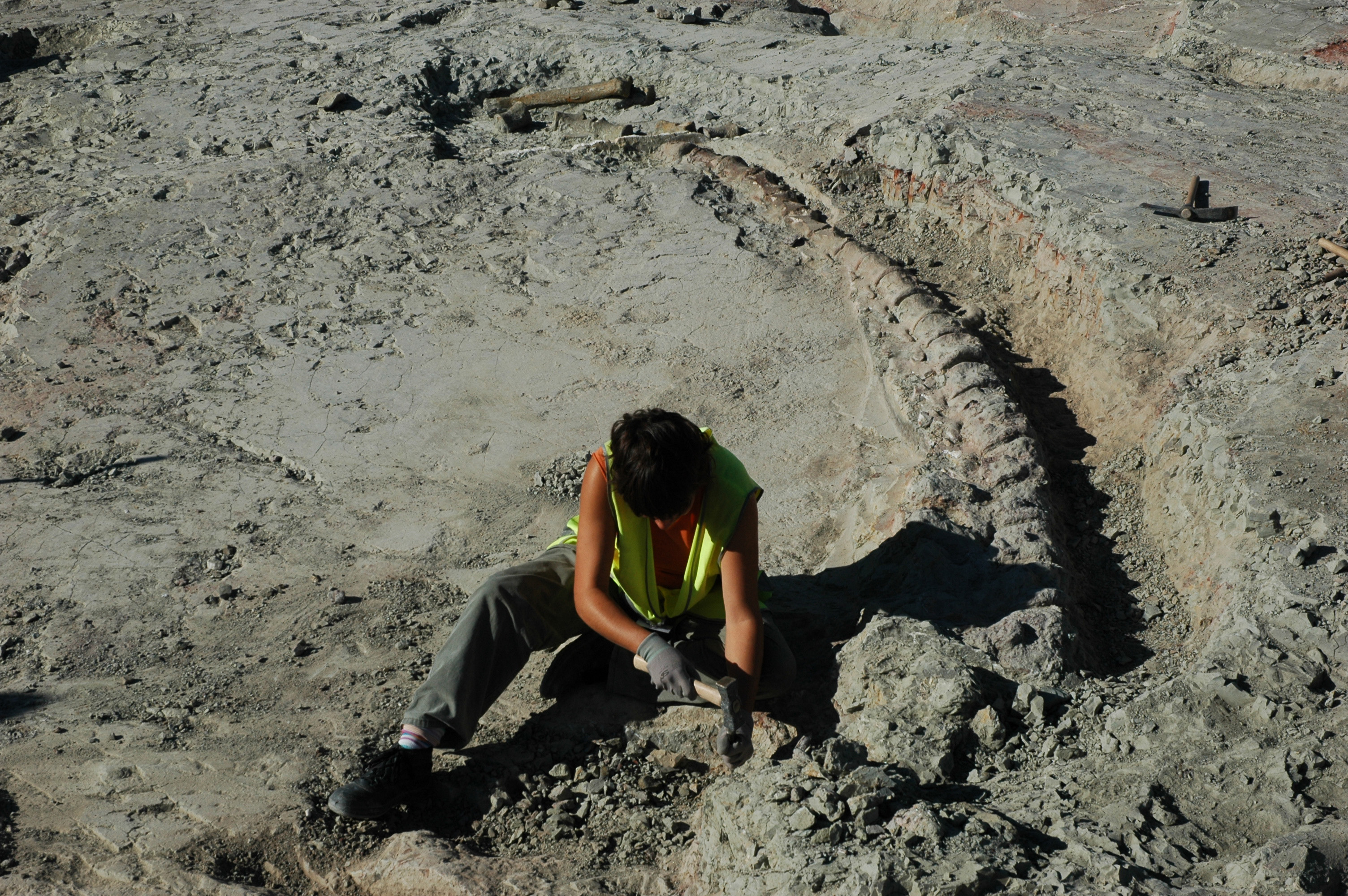
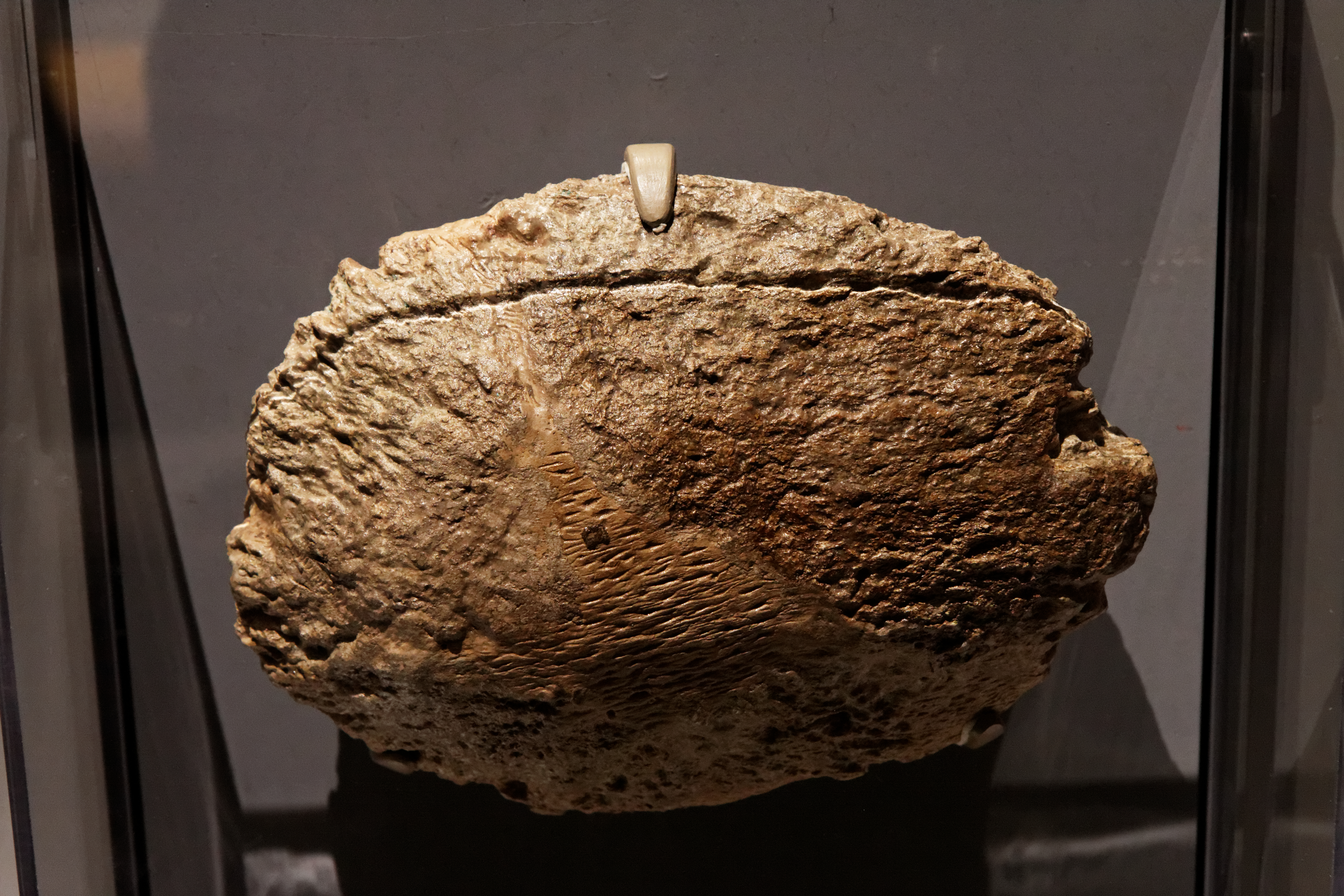
Study in Scientific Reports (Nature) using computed tomography to analyze the internal anatomy of titanosaur osteoderms from Lo Hueco site (Upper Cretaceous, Spain). Authors identify internal neurovascular channel networks compatible with the hypothesis of calcium mobilization during oviposition. Although Saltasaurus osteoderms are morphologically distinct (lacking the large internal cavities of Iberian specimens), the paper is directly relevant because the calcium reservoir function may have been ancestral to all titanosaurs with osteoderms, including Saltasaurus. The study uses 3D CT scanning and is the modern reference on the physiological function of titanosaur osteoderms.

An evolutionary cascade model for sauropod dinosaur gigantism: overview, update and tests
Sander, P.M. · PLOS ONE
PLOS ONE paper proposing an evolutionary cascade model (ECM) to explain sauropod gigantism, the group to which Saltasaurus belongs. The model describes five interconnected cascades: (1) reproductive (many small eggs with rapid population recovery); (2) feeding (lack of mastication allowed rapid food intake); (3) skull and neck (small head enabled long neck); (4) respiratory (avian-style lungs with air sacs); (5) metabolic (elevated basal rate). Saltasaurus loricatus is explicitly cited in the phylogenetic definition of Sauropoda within the model. The work integrates bone histology, metabolism, and phylogeny data to build the most comprehensive model yet published on sauropod gigantism.


A Spanish saltasauroid titanosaur reveals Europe as a melting pot of endemic and immigrant sauropods in the Late Cretaceous
Mocho, P., Royo-Torres, R., Malafaia, E., Escaso, F. e Ortega, F. · Communications Biology
2024 paper in Communications Biology (Nature) describing Qunkasaura pintiquiniestra, a new Spanish saltasauroid titanosaur. The phylogenetic analysis explicitly defines the clade Lohuecosauria as 'Saltasaurus loricatus, Lohuecotitan pandafilandi, their most recent common ancestor and all its descendants', positioning Saltasaurus as the reference taxon of a clade with European members. The paper demonstrates that during the Late Cretaceous there was bidirectional dispersal of saltasaurids between South America and Europe. The cladogram includes Saltasaurus within Saltasaurinae and provides the most current phylogenetic analysis of the group.


Sauropod necks: are they really for heat loss?
Henderson, D.M. · PLOS ONE
Biomechanics and physiology study in PLOS ONE using 3D digital models of 16 different sauropods, including Saltasaurus loricatus, to test the hypothesis that long sauropod necks functioned as heat radiators. Henderson measures the scaling relationship between estimated metabolism and body, neck, and tail surface areas for each taxon. The paper provides body mass estimates for Saltasaurus (6.87 tonnes by Henderson, among existing estimates) and concludes that necks were not large enough as radiators in warm climates. The Saltasaurus analysis is relevant because the genus's relatively short neck is inconsistent with the thermoregulation hypothesis.

The Late Cretaceous nesting site of Auca Mahuevo (Patagonia, Argentina): eggs, nests, and embryos of titanosaurian sauropods
Chiappe, L.M. e Coria, R.A. · Palaeovertebrata
Synthesis paper on the exceptional Auca Mahuevo nesting site, Neuquén, Argentina, the largest sauropod nesting site ever discovered. Chiappe and Coria describe hundreds of nests distributed over an area exceeding 1 km², with dozens of eggs per nest (average ~25) and multiple overlapping egg layers, indicating repeated return to the site by several generations. Embryos show scaly skin impressions without armor, confirming that osteoderms of saltasaurine titanosaurs like Saltasaurus developed after hatching. The paper proposes mass nesting behavior (nesting site philopatry) analogous to that observed in modern sea turtles.


Evolution of titanosaurid sauropods. II: The cranial evidence
Salgado, L. e Calvo, J.O. · Ameghiniana
Reference paper in Ameghiniana presenting a phylogenetic analysis of South American titanosaurids based on cranial evidence, including Saltasaurus. Salgado and Calvo revise the taxonomy of the group and discuss relationships between Saltasaurus, Neuquensaurus, and other South American titanosaurs. The paper is fundamental because it defined diagnostic cranial characters distinguishing lineages within saltasaurids and established the basis for later taxonomic revisions separating Neuquensaurus australis and Saltasaurus robustus as a distinct genus (Neuquensaurus). This work and subsequent revisions establish S. loricatus as the only valid species of Saltasaurus.


Espécimes famosos em museus
PVL 4017 (holótipo e parátipos)
Instituto Miguel Lillo (PVL), Universidad Nacional de Tucumán, Tucumã
Main Saltasaurus loricatus collection, with over 200 catalogued fossils representing at least five individuals. Includes the holotype PVL 4017-92 (sacrum with two ilia), plus vertebrae, limb bones, cranial elements, and the diagnostic osteoderms that made the genus famous.
Ovos e embriões de Auca Mahuevo
Museo Carmen Funes, Plaza Huincul, Neuquén (e coleções do CONICET)
Although technically attributed to unnamed saltasaurine titanosaurs, these eggs and embryos are closely related to the Saltasaurus group and provide unique information on the species' reproductive biology. Embryos preserve scaly skin impressions and incipient armor elements, documenting the ontogenetic development of osteoderms.
In cinema and popular culture
Saltasaurus loricatus never achieved the fame of Velociraptor or Triceratops in cinema, but occupied a relevant space in scientific documentaries. Its most notable appearance is as the central character of the 'Alpha's Egg' episode in the Dinosaur Planet miniseries (Discovery Channel, 2003), where a female named Alpha stars in a survival narrative set in Cretaceous Patagonia. The series, consulted by paleontologist Scott Sampson, adequately represented the animal's dermal armor and gregarious behavior. In 2022, the Prehistoric Planet series (Apple TV+, narrated by David Attenborough) brought South American saltasaurines in high-quality photorealism, with the collective nesting behavior from Auca Mahuevo as a highlight. The dermal armor, mass nesting, and compact build make Saltasaurus a promising candidate for future productions wanting to portray South American Cretaceous giants with scientific accuracy.

Classificação
Descoberta
Curiosidade
Saltasaurus was the first sauropod in history with confirmed bony armor. Before its discovery in 1975, paleontologists believed sauropods were completely without dermal plates. Saltasaurus's osteoderms showed that at least some of these giants had a built-in 'bulletproof vest' embedded in their skin.