
Scelidosaurus
Scelidosaurus harrisonii
"Limb lizard"
Sobre esta espécie
Scelidosaurus harrisonii is one of the oldest and most complete armored dinosaurs known to science. It lived during the Early Jurassic, approximately 196 to 183 million years ago, along the shores of what is now southwestern England. Roughly 4 meters long and 270 kg, it was a quadrupedal herbivore covered by horizontal rows of oval osteoderms along its neck, back, and tail. Its skull bore horny scutes, occipital horns, and unique bony structures found in no other dinosaur. Originally described by Richard Owen in 1861, Scelidosaurus holds a key position in the evolution of thyreophoran dinosaurs, ancestral to the ankylosaurs.
Geological formation & environment
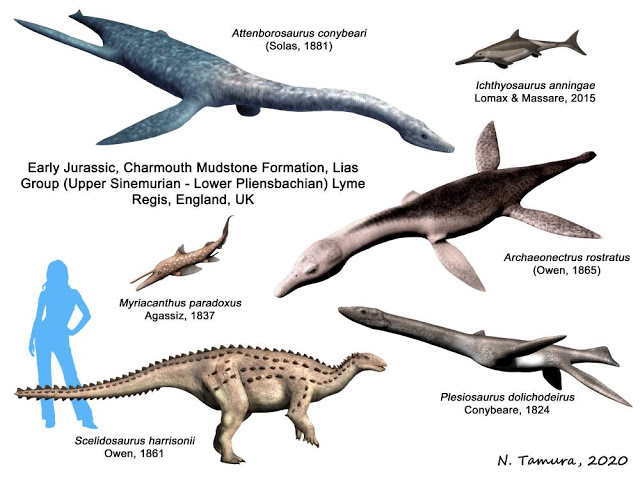
The Charmouth Mudstone Formation is an Early Jurassic (Sinemurian-Pliensbachian, ~198-183 Ma) geological unit outcropping in Dorset, southwestern England, part of the UNESCO World Heritage Jurassic Coast. The formation comprises four members of marine shales and marls rich in ammonites, marine reptiles — plesiosaurs and ichthyosaurs — and, rarely, terrestrial dinosaurs such as Scelidosaurus. The depositional environment was shallow to moderately deep marine platform, with episodic inputs of continental material. Over 40 insect species are preserved in concretions, along with plant remains of bennettites, cycads, and conifers.
Image gallery

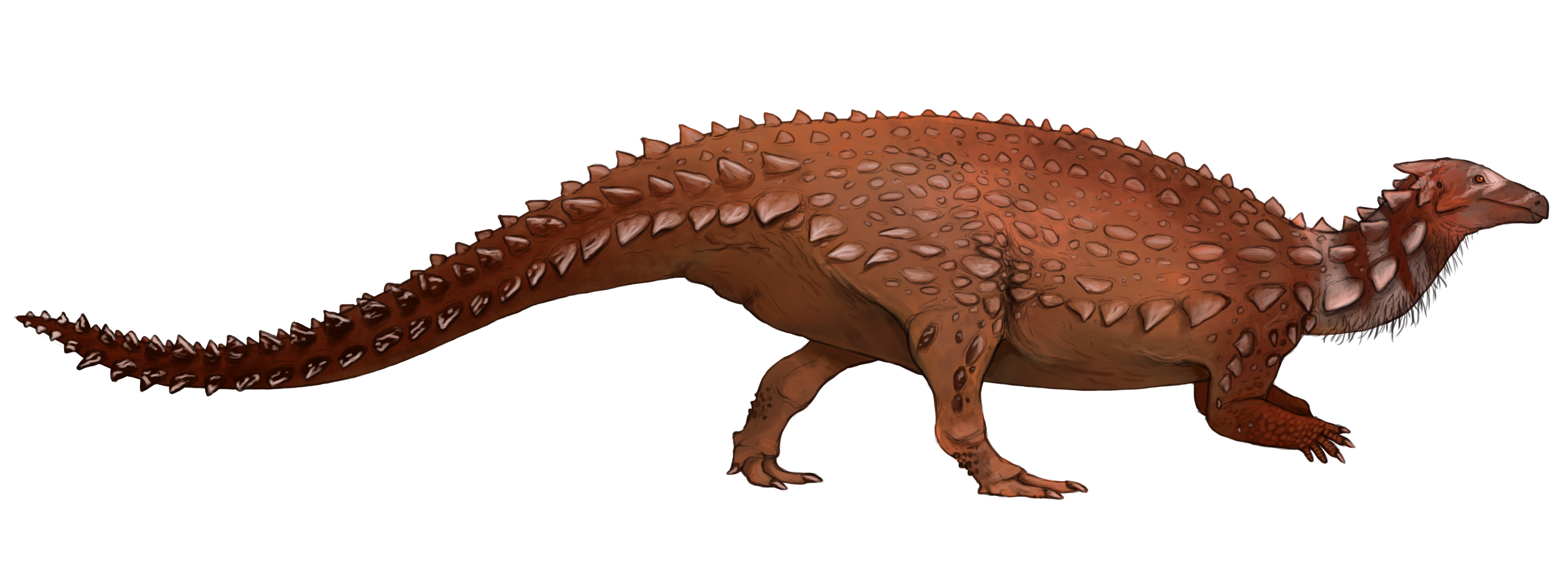







Modern scientific restoration of Scelidosaurus harrisonii (TotalDino, 2025), based on data from Norman's (2020-2021) complete redescription. The animal is shown with rows of osteoderms along the back and tail.
TotalDino / CC BY 4.0
Ecology and behavior
Habitat
Scelidosaurus inhabited terrestrial coastal margins of Early Jurassic Europe, when the continent formed an archipelago of low islands bathed by warm, shallow seas. The Charmouth Mudstone Formation records a coastal marine depositional environment, with sediments rich in organic material, ammonites, and marine reptiles. Scelidosaurus's presence in these layers suggests the animal lived on adjacent terrestrial margins, with dense vegetation of ferns, cycads, bennettites, and primitive conifers — the dominant flora of the Early Jurassic before angiosperm radiation.
Feeding
Scelidosaurus was a herbivore specialized in low-growing vegetation. Its small leaf-shaped teeth and orthal jaw mechanics — with quadrate articulation permitting only vertical movement — suggest a cropping-and-crushing system for processing fern leaves, cycad fronds, and other ground-level plants. Barrett (2001) identified tooth wear patterns consistent with a puncture-crush system. The large abdominal cavity, evidenced by skeletal proportions, indicates a voluminous gut for fermentation of fiber-rich vegetation.
Behavior and senses
Behavioral evidence for Scelidosaurus is limited, but limb proportions and Norman's (2020) musculoskeletal analysis suggest it was a facultative quadruped: capable of moving on all fours most of the time, but with the ability to rise into bipedal posture to reach higher vegetation or in alert situations. Fossil trackways attributed to Early Jurassic European thyreophorans indicate these animals could move in both quadrupedal and bipedal gaits. There is no evidence of gregarious or territorial behavior in this species.
Physiology and growth
Histological studies of comparable basal thyreophorans suggest that Scelidosaurus grew relatively slowly, with lamellar-zonal bone tissue and poor vascularization — a pattern associated with slower metabolism than other ornithischians. The metabolic cost of producing and maintaining osteoderms may have contributed to this more conservative growth rate. The covering of horny scutes and dense bony armor functioned primarily as passive defense against Early Jurassic predators such as crocodyliforms and basal theropods that coexisted in the same region.
Paleogeography
Continental configuration

Ron Blakey · CC BY 3.0 · Jurassic, ~90 Ma
During the Sinemuriano-Pliensbachiano (~196–183 Ma), Scelidosaurus harrisonii inhabited the fragmenting Pangea. North America and Europe were still close, and the North Atlantic was just beginning to open. Climate was warm and humid globally, with no polar ice caps.
Inventário de Ossos
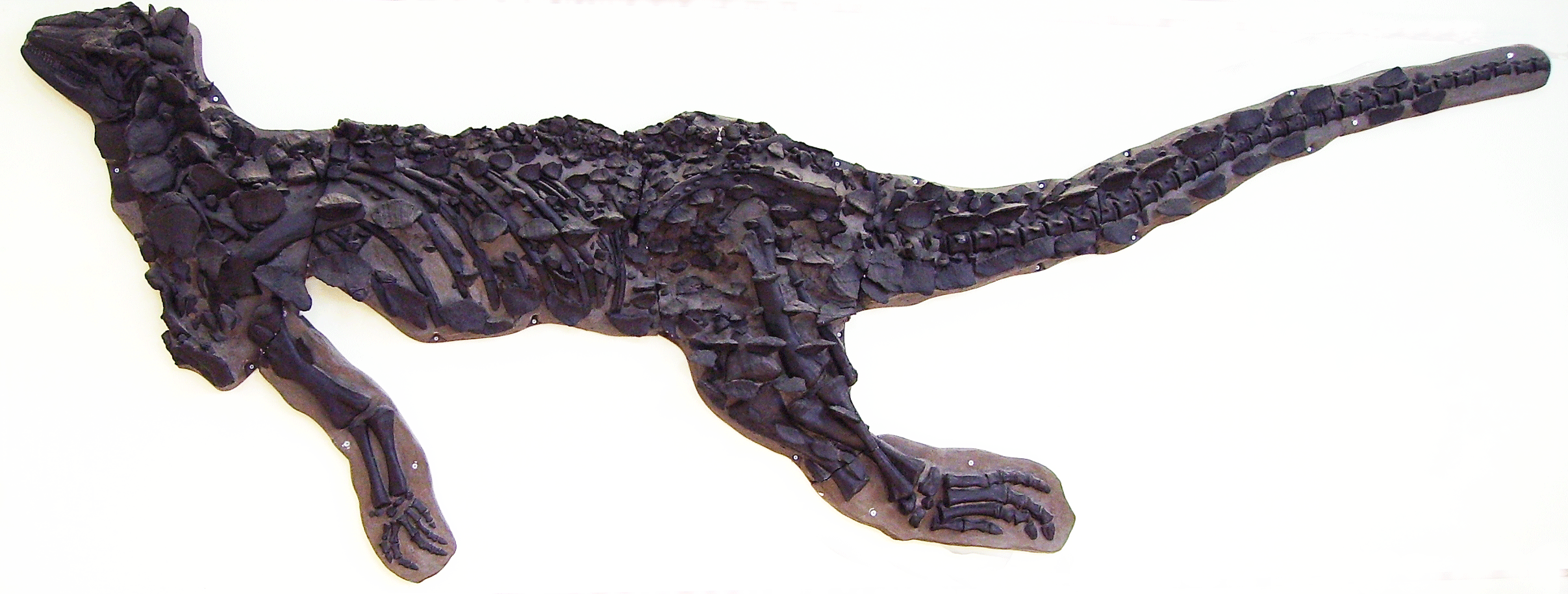
The lectotype NHMUK PV R 1111 includes skull and largely articulated postcranial skeleton. Specimen BRSMG LEGL 0004 (David Sole, 2000), at 3.1 meters, is considered the most complete non-avian dinosaur ever found in the British Isles. Juvenile specimens with skin impressions have also been recovered.
Found elements
Inferred elements
Scientific Literature
15 papers in chronological order — from the original description to recent research.
A monograph of a fossil dinosaur (Scelidosaurus harrisonii, Owen) of the Lower Lias, part I
Owen, R. · Monographs on the British Fossil Reptilia from the Oolitic Formations, Palaeontographical Society
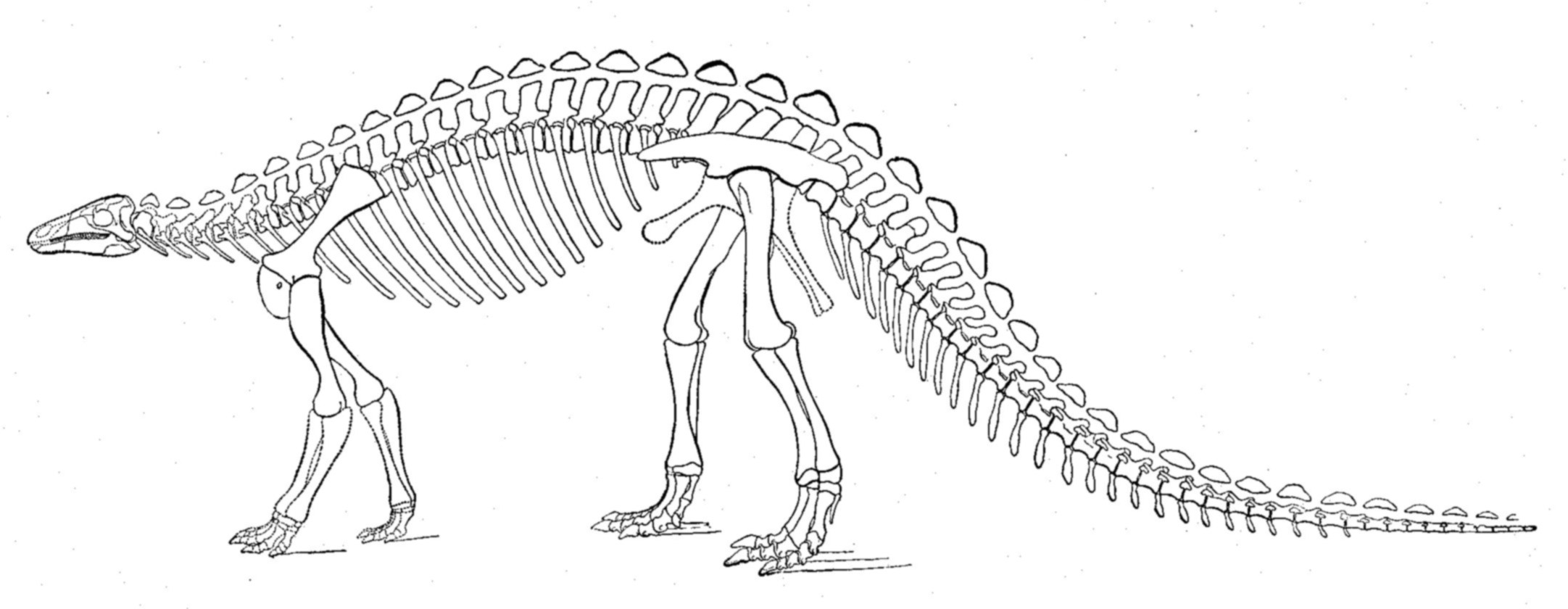
Founding paper of Scelidosaurus harrisonii's scientific history. Richard Owen describes the first specimens collected by James Harrison from the Lower Lias cliffs of Charmouth, Dorset. Owen immediately recognizes a large ornithischian dinosaur covered by rows of bony shields. The work includes the first systematic description of the postcranial skeleton: vertebrae, ribs, limbs, and especially the osteoderms — structures never before seen in any European dinosaur. Owen compares the animal to modern armored reptiles such as turtles and crocodiles. This paper establishes the nomenclatural and anatomical foundations that all subsequent descriptions would follow for over 150 years.
A monograph of a fossil dinosaur (Scelidosaurus harrisonii, Owen) of the Lower Lias, part II
Owen, R. · Monographs on the British Fossil Reptilia from the Oolitic Formations, Palaeontographical Society
Second installment of Owen's Scelidosaurus monograph, published two years after the initial description. Owen focuses on cranial anatomy, detailing skull bones and the mandible. Comparisons with other dinosaurs known at the time — mainly Megalosaurus and Iguanodon — reveal Owen's limited but pioneering understanding of dinosaurian diversity. The work also deepens the description of the dermal armor apparatus, identifying distinct osteoderm morphologies along the body. This two-volume monograph remained the primary anatomical reference for the species for over a century, until Norman's work from 2020 onward.
Relationships and evolution of the ornithischian dinosaurs
Thulborn, R.A. · Sauria
Fundamental work reviewing phylogenetic relationships of ornithischian dinosaurs, including detailed analysis of Scelidosaurus placement within Thyreophora. Thulborn examines anatomical characters shared between Scelidosaurus and both major armored dinosaur groups: ankylosaurs and stegosaurs. The study identifies Scelidosaurus as a basal member of the thyreophoran lineage, prior to the divergence between Ankylosauria and Stegosauria. This analysis established the interpretive paradigm guiding decades of subsequent research, recognizing the English animal as a key ancestral form for understanding how armor evolved in ornithischian dinosaurs.


Phylogenetic analysis of the Ankylosauria
Carpenter, K. · The Armored Dinosaurs, Indiana University Press
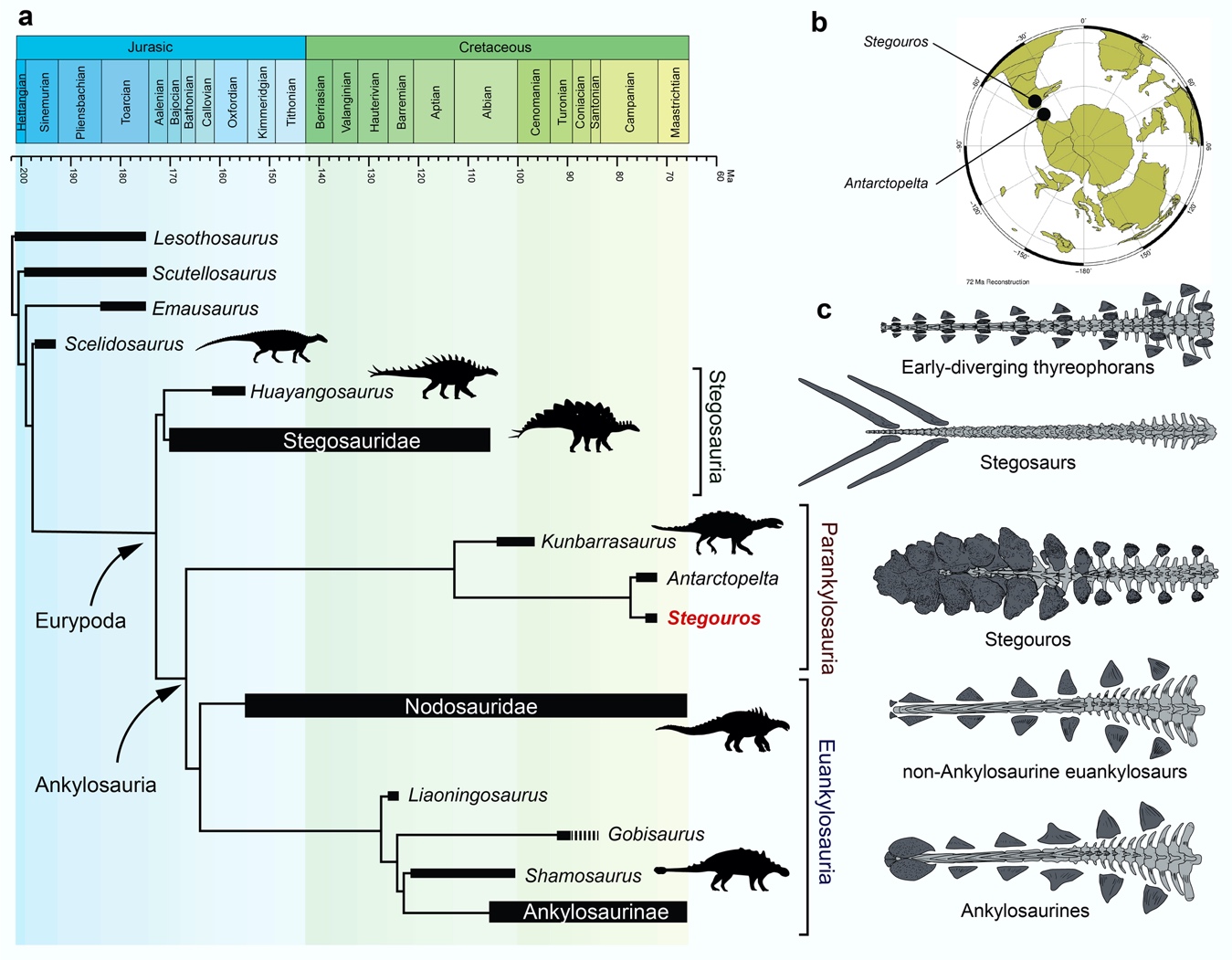
Comprehensive cladistic analysis of armored dinosaurs placing Scelidosaurus as an outgroup to Eurypoda — the clade uniting Stegosauria and Ankylosauria. Carpenter uses 85 characters scored across 22 taxa, establishing the first rigorous phylogenetic framework for understanding armored dinosaur interrelationships. The work demonstrates that Scelidosaurus is more derived than forms such as Scutellosaurus and Emausaurus, but less derived than true stegosaurs and ankylosaurs. This interpretation placed the English animal in the role of crucial evolutionary link between early scutellated thyreophorans and the large armored dinosaurs of the Middle and Late Jurassic.

Basal Thyreophora
Norman, D.B., Witmer, L.M. & Weishampel, D.B. · The Dinosauria, 2nd Edition, University of California Press
Reference chapter on basal thyreophoran dinosaurs in the second edition of the most important encyclopedia of dinosaur paleontology. Norman, Witmer, and Weishampel synthesize all available knowledge on Scelidosaurus harrisonii: comparative anatomy, phylogeny, paleobiology, and biogeography. The review concludes that Scelidosaurus was the most derived basal thyreophoran known at the time — closer to Eurypoda than any form prior to that clade. The chapter documents the incomplete distribution of anatomical knowledge then available: much of the skull had not yet been properly described, and only axial osteoderms had been analyzed in detail. This work serves as a dividing line between historical interpretations and the modern studies that would follow from 2020 onward.
A new specimen of the thyreophoran dinosaur cf. Scelidosaurus with soft tissue preservation from the Sinemurian (Lower Jurassic) of Charmouth, Dorset, UK
Martill, D.M., Batten, D.J. & Lomax, D.R. · Proceedings of the Geologists' Association
Description of a new Scelidosaurus specimen from Charmouth preserving exceptional soft tissue including skin impressions — the first direct evidence of integumentary structures in this taxon. The specimen reveals a mosaic of small polygonal scales interspersed with larger tubercles overlying the osteoderms. The discovery demonstrates that Scelidosaurus was not simply an animal with bony plates embedded in the skin, but possessed a complex and textured cutaneous surface, similar to that of modern crocodilians. This evidence is fundamental for understanding tegument evolution in basal thyreophorans and has direct implications for artistic reconstructions of the species.
Scelidosaurus harrisonii from the Early Jurassic of Dorset, England: cranial anatomy
Norman, D.B. · Zoological Journal of the Linnean Society
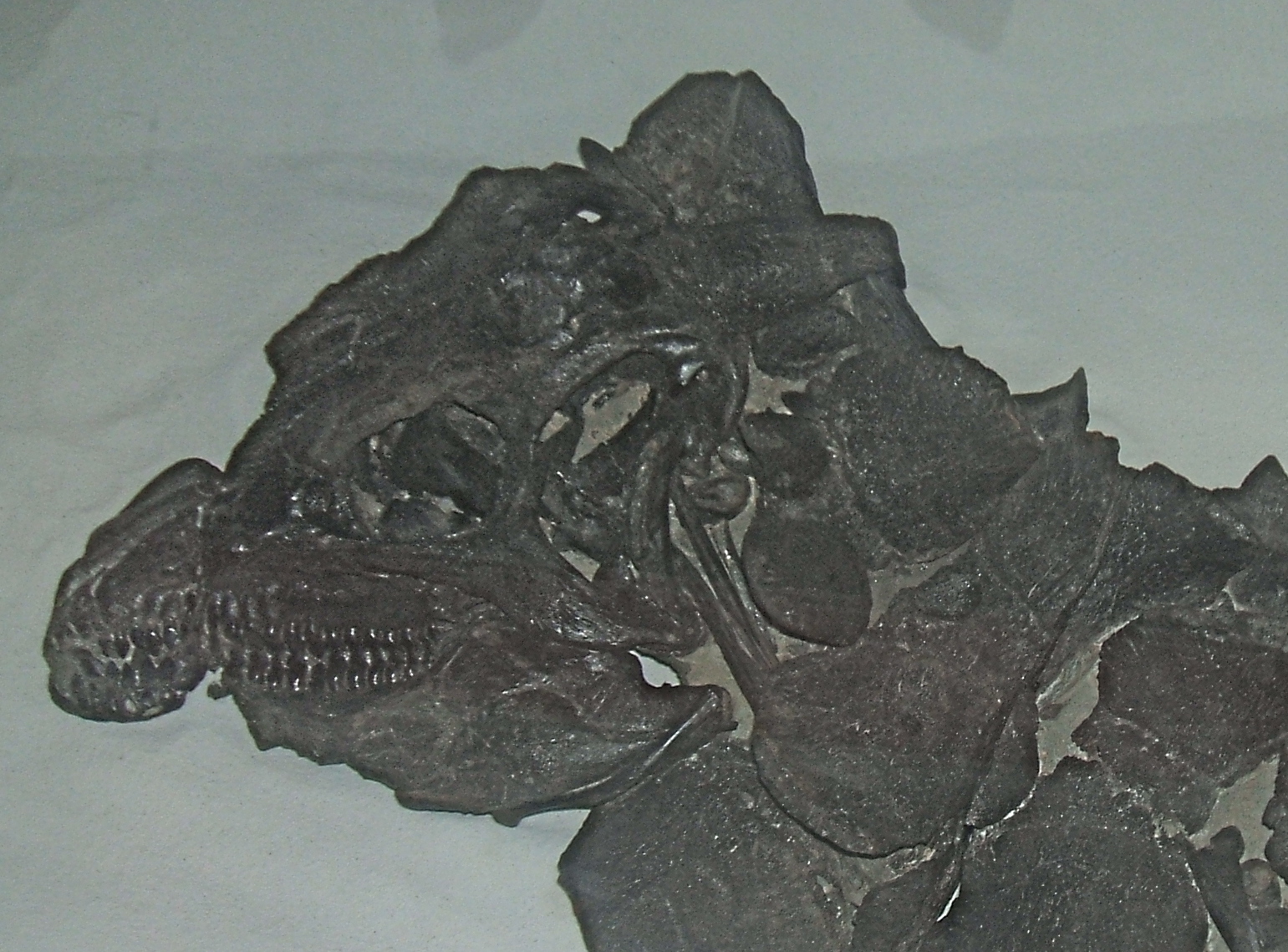
Comprehensive redescription of the cranial anatomy of Scelidosaurus harrisonii based on the lectotype NHMUK PV R 1111 and referred specimens. Norman reveals that the Scelidosaurus skull was covered by hardened horny scutes — similar to those found on living turtles — and bore horns on the posterior margin and multiple cranial bones previously unrecognized in any other dinosaur. Jaw mechanics are reconstructed as orthal motion with wishboning of the lower jaw during chewing. The role of quadrate joints and flexibility at the dentary symphysis allowed long-axis mandibular torsion during the chewing cycle — a sophisticated mechanism for vegetation processing. The work uses modern tomography and acid preparation techniques to reveal structural details impossible to visualize by traditional methods.
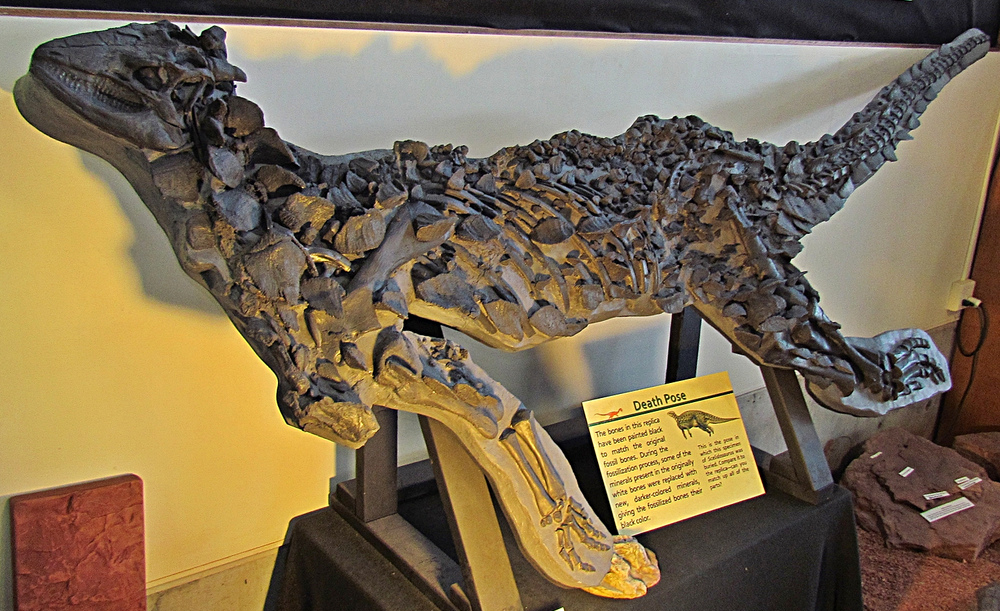

Scelidosaurus harrisonii from the Early Jurassic of Dorset, England: postcranial skeleton
Norman, D.B. · Zoological Journal of the Linnean Society
Detailed description of the postcranial skeleton of Scelidosaurus harrisonii, including vertebral column, limb bones, and pectoral and pelvic girdles. The axial skeleton comprises eight cervical, 16 dorsal, four sacral and more than 40 caudal vertebrae. Limb proportions and pectoral and pelvic musculature reconstructions suggest Scelidosaurus was a facultative quadruped of 'average' locomotor ability retaining anatomical features indicative of bipedal-cursorial ancestry. Hindlimb motion was oblique-to-parasagittal to accommodate the girth of the abdomen. The work provides the first rigorous biomechanical estimates on locomotion mode in this species, with implications for understanding the biped-to-quadruped transition in thyreophoran evolution.
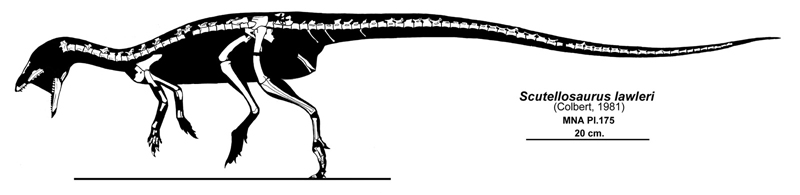

Scelidosaurus harrisonii from the Early Jurassic of Dorset, England: the dermal skeleton
Norman, D.B. · Zoological Journal of the Linnean Society
Comprehensive description of the dermal skeleton of Scelidosaurus harrisonii, documenting the morphological variation, distribution, and growth of osteoderms across the body. Multiple distinct osteoderm morphotypes are identified: keeled oval scutes, conical spines, and flat polygonal ossicles, all arranged in specific positional series. The work demonstrates that the Scelidosaurus armor pattern is far more complex than previously recognized. Acetic acid preparation techniques reveal histological details of osteoderms that illuminate both individual growth processes and phylogenetic relationships with derived ankylosaur osteoderms. This is the most comprehensive study ever conducted on the armor of any basal thyreophoran.


Scelidosaurus harrisonii (Dinosauria: Ornithischia) from the Early Jurassic of Dorset, England: biology and phylogenetic relationships
Norman, D.B. · Zoological Journal of the Linnean Society
Synthesis of the biology and phylogenetic relationships of Scelidosaurus harrisonii based on the complete four-part redescription of the taxon. The most impactful phylogenetic result is the repositioning of Scelidosaurus as a stem ankylosaur, rather than a generalized basal thyreophoran prior to the Stegosauria-Ankylosauria bifurcation, as decades of consensus indicated. Norman revises a widely used phylogenetic dataset, identifying miscoded characters and adding new characters derived from the redescription. Paleobiological reconstructions address: locomotion (facultative quadruped), feeding mechanics (vegetation processing by cropping and crushing), sensory capabilities, and general paleoecology in the Early Jurassic English coastal environment.


First dinosaur remains from Ireland
Simms, M.J., Dexter, T. & Doyle, P. · Proceedings of the Geologists' Association
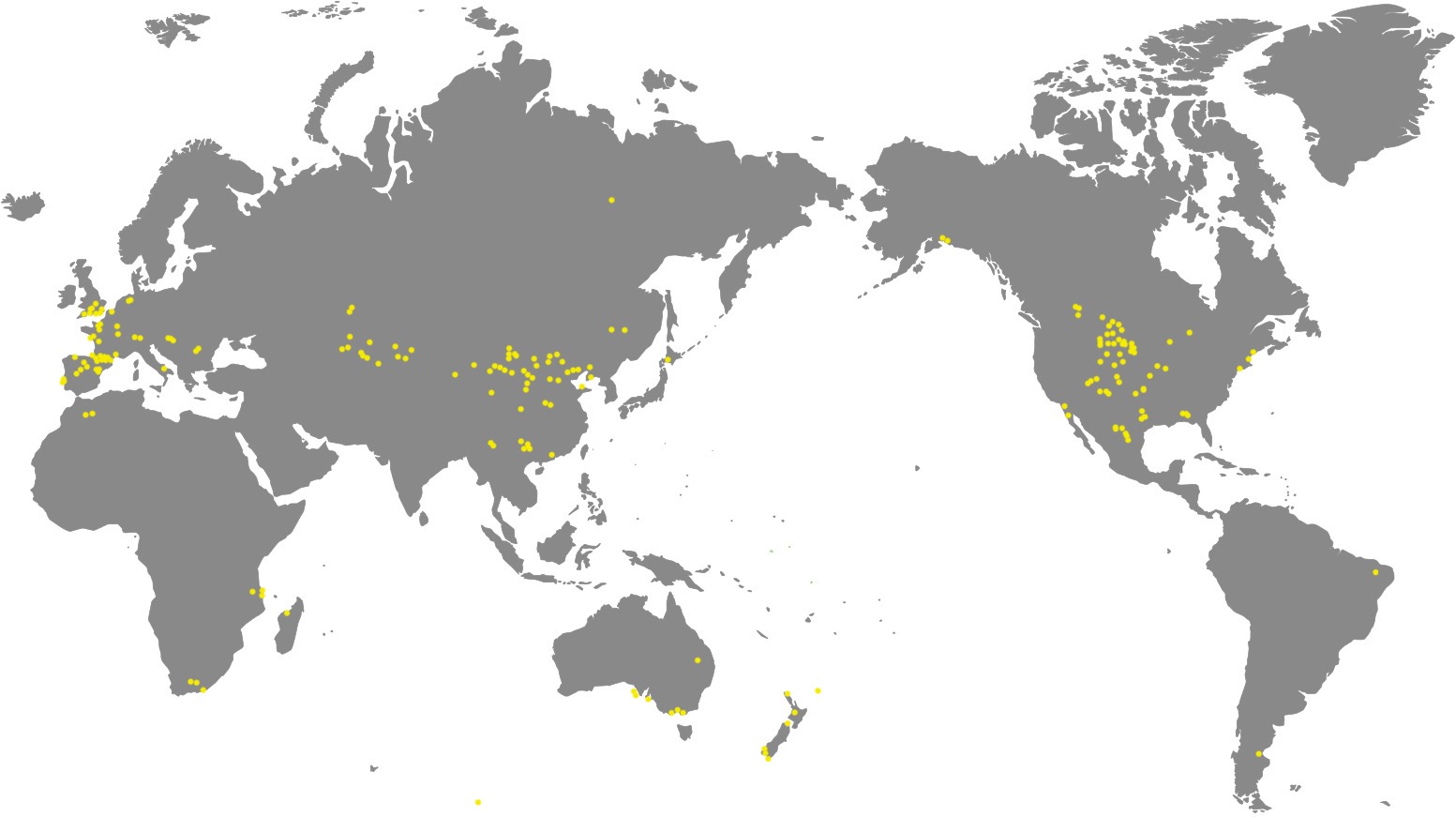
Report of two fragmentary dinosaur bones from Lower Jurassic strata of County Antrim, Northern Ireland, representing the first dinosaur remains ever recorded from Ireland. One specimen, a proximal femur fragment (BELUM K3998), is tentatively referred to Scelidosaurus harrisonii based on histological and morphological characteristics. Dating of the strata suggests Hettangian age (201-199 Ma), potentially predating the Charmouth specimens. The discovery extends the known distribution of the taxon westward and documents the dispersal of basal thyreophorans across the Early Jurassic European archipelago. The fossils were collected near Gobbins between 1980 and 2000 by schoolteacher Roger Byrne and donated to Ulster Museum.
A new early branching armored dinosaur from the Lower Jurassic of southwestern China
Yao, X., Barrett, P.M., Yang, L., Xu, X. & Bi, S. · eLife
Description of Yuxisaurus kopchicki, a new thyreophoran dinosaur from the Lower Jurassic Fengjiahe Formation of Yunnan Province, China. Yuxisaurus is the first valid thyreophoran described from the Early Jurassic of Asia and confirms the rapid dispersal and diversification of the group after its first appearance in the Hettangian. Phylogenetic analysis places Yuxisaurus as the sister taxon of Emausaurus or of the clade Scelidosaurus + Eurypoda, with Scelidosaurus maintaining a central role in discussions of basal thyreophoran relationships. The discovery demonstrates that by approximately 192 Ma, thyreophorans had already colonized extensive regions of Pangaea, from Europe to eastern Asia.

A new phylogeny of Stegosauria (Dinosauria, Ornithischia)
Raven, T.J. & Maidment, S.C.R. · Palaeontology
Revised phylogenetic analysis of Stegosauria using an expanded character matrix, with Scelidosaurus harrisonii serving as an essential outgroup taxon. The study recovers Scelidosaurus outside Eurypoda, confirming its status as a basal thyreophoran and providing new data on the early evolution of armored dinosaurs. Scelidosaurus's position as outgroup is crucial for polarizing characters and determining which states are plesiomorphic versus derived in stegosaurs. The work significantly increases stegosaur phylogenetic resolution compared to previous analyses and reassesses the placement of several previously unstable forms, with Scelidosaurus offering a reliable comparative anchor.


Long Bone Histology and Growth Patterns in Ankylosaurs: Implications for Life History and Evolution
Stein, M., Hayashi, S. & Sander, P.M. · PLOS ONE
Osteohistological analysis of ankylosaur long bones revealing slow growth rates characterized by lamellar-zonal bone tissue with poor vascularization. Comparisons with Scelidosaurus-grade basal thyreophorans indicate that slow growth was ancestral for the thyreophoran lineage, with implications for metabolic rates and life history evolution. The study demonstrates that thyreophorans had lower growth rates than other ornithischian dinosaurs, possibly due to the metabolic cost of osteoderm production. The comparative analysis establishes a historically conserved growth pattern throughout the evolution of armored dinosaurs, from basal forms like Scelidosaurus to derived Cretaceous ankylosaurs.


Tooth wear and possible jaw action of Scelidosaurus harrisonii Owen and a review of feeding mechanisms in other thyreophoran dinosaurs
Barrett, P.M. · The Armored Dinosaurs, Indiana University Press
Analysis of tooth wear patterns in Scelidosaurus harrisonii and other thyreophoran dinosaurs to reconstruct feeding mechanisms and jaw actions. Barrett identifies evidence for a puncture-crush system of tooth-on-tooth action in Scelidosaurus and compares feeding strategies across basal and derived thyreophorans. The study demonstrates that Scelidosaurus had small leaf-shaped teeth suitable for cropping vegetation, and that jaw mechanics permitted only vertical movement, limited by the short jaw joint. The analysis is fundamental for understanding the animal's diet and lifestyle, suggesting it fed on ferns, cycads, and other low-growing plants available on the coastal margins of Early Jurassic Europe.

Espécimes famosos em museus
NHMUK PV R 1111 (Lectótipo)
Natural History Museum, Londres, Reino Unido
The official lectotype of Scelidosaurus harrisonii, designated in 1994 by the ICZN. Includes skull, mandible, and most of the articulated postcranial skeleton. It was extracted from the rock matrix using an acid-immersion technique, revealing anatomical details that remained unknown for over a century.
BRSMG LEGL 0004 (Espécime David Sole)
Bristol City Museum and Art Gallery, Bristol, Reino Unido
At 3.1 meters long and approximately 85% of the skeleton preserved, this specimen is considered the most complete non-avian dinosaur ever found in the British Isles. It includes an almost complete skull, postcranial skeleton, and dermal armor elements in articulated position. It is the primary specimen in Norman's (2020) redescriptions.
BRSMG CE12785
Bristol City Museum and Art Gallery, Bristol, Reino Unido
Specimen collected in 1985 preserving a complete skull and skin impressions, providing unique evidence on Scelidosaurus integument. The impressions reveal a mosaic of smaller polygonal scales interspersed with larger tubercles overlying the osteoderms.
In cinema and popular culture
Scelidosaurus harrisonii has never appeared in the main Jurassic Park or Jurassic World film franchise, remaining on the margins of major dinosaur cinema productions. Its presence in pop culture has been primarily through games: Jurassic Park III: Park Builder (2001), Jurassic World: The Game (2015), and Jurassic World: Alive (2024) included the species as a playable creature, keeping it alive in the imagination of virtual paleontology enthusiasts. The niche game Prehistoric Kingdom (2022) is the production that best honored the animal's complexity, incorporating data from Norman's redescriptions and depicting its facultative bipedal posture. In educational series like Dino Dana, Scelidosaurus appears as a representative of the first armored dinosaurs, fulfilling a didactic role about thyreophoran evolution. Its absence from Hollywood blockbusters is explained by the animal's relative low popularity until the publication of Norman's monographs (2020-2021), which revealed a far more interesting creature than previously imagined.

Classificação


Descoberta
Curiosidade
Scelidosaurus was the world's first dinosaur to have its nearly complete skeleton formally described by science — in 1861 — yet its complete anatomy was only properly understood 160 years later, when David Norman published four detailed monographs between 2020 and 2021. The skull revealed bones completely unknown in any other dinosaur, including unique occipital horns and horny scutes similar to those of modern turtles.