
Ciro
Scipionyx samniticus
"Scipio's claw of the Samnites"
Sobre esta espécie
Scipionyx samniticus is the only Italian dinosaur with preserved internal organs, earning it the affectionate nickname 'Ciro'. Discovered in 1981 near Pietraroja, in Campania, the only known specimen is a juvenile just 24 centimeters long, fossilized about 113 million years ago in limestone from a shallow lagoon. The three-dimensional preservation of intestine, trachea, liver, and muscle tissues through calcium phosphatization is unprecedented among dinosaurs. Estimated adults would have reached about 2 meters in length. Its phylogenetic placement within Compsognathidae is accepted by most researchers, though debate persists because the specimen is a neonate.
Geological formation & environment
The Pietraroja Plattenkalk is a fine, cherty limestone of the lower Albian (approximately 113-110 Ma) from the Matese Mountains, in the Southern Apennines of Italy. The formation is a Lagerstätte, an exceptional deposit for the quality of vertebrate preservation. The paleoenvironment was a shallow lagoon on a carbonate platform in the Tethys Sea, with cyclic episodes of anoxia in the water column. These low-oxygen episodes prevented bacterial decomposition and were responsible for the exceptional phosphatization of Scipionyx's organic tissues. In addition to the dinosaur, the formation preserved crocodylomorphs, elasmobranch and teleost fish, and plant remains of cheirolepidiaceous conifers.
Image gallery
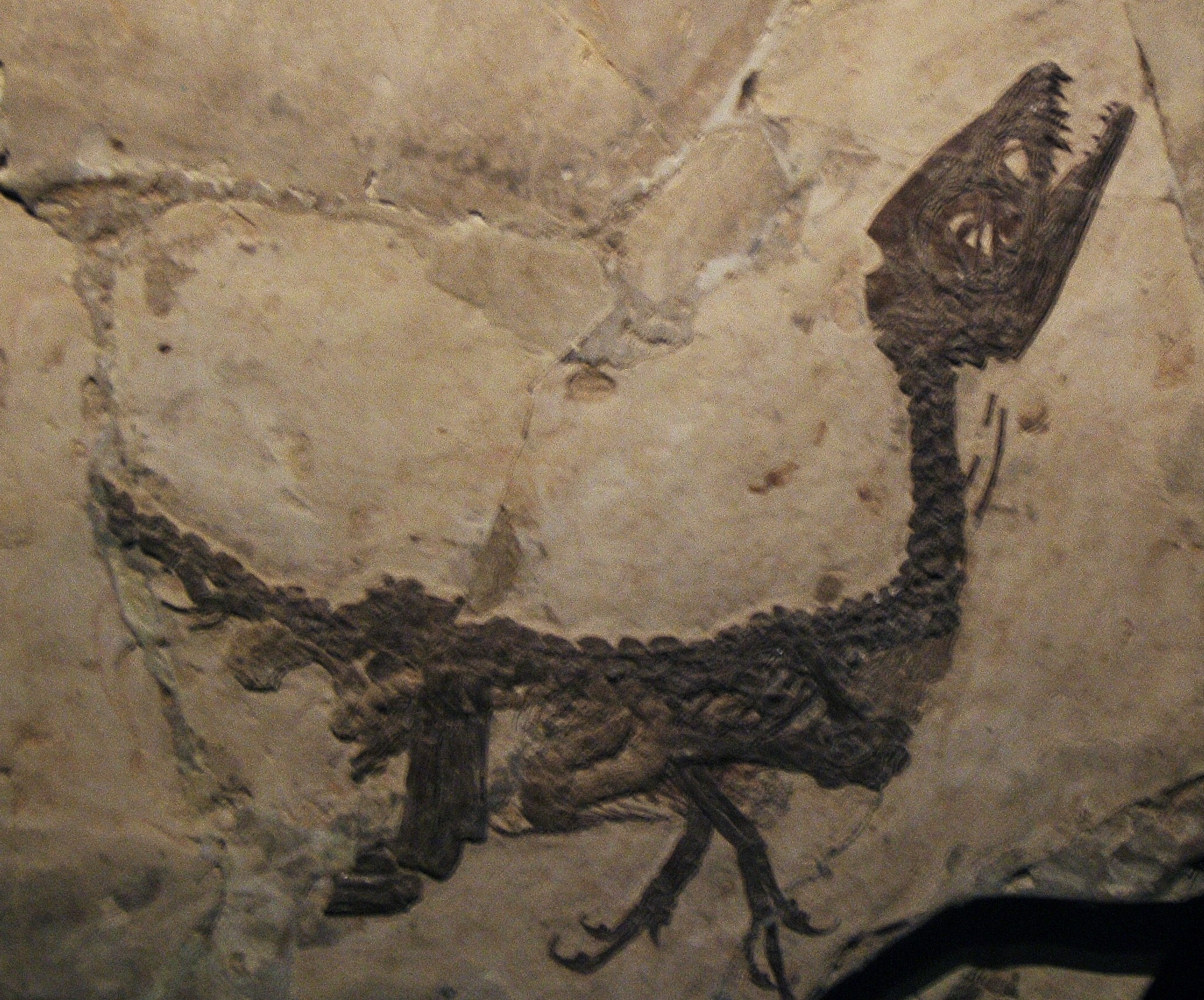


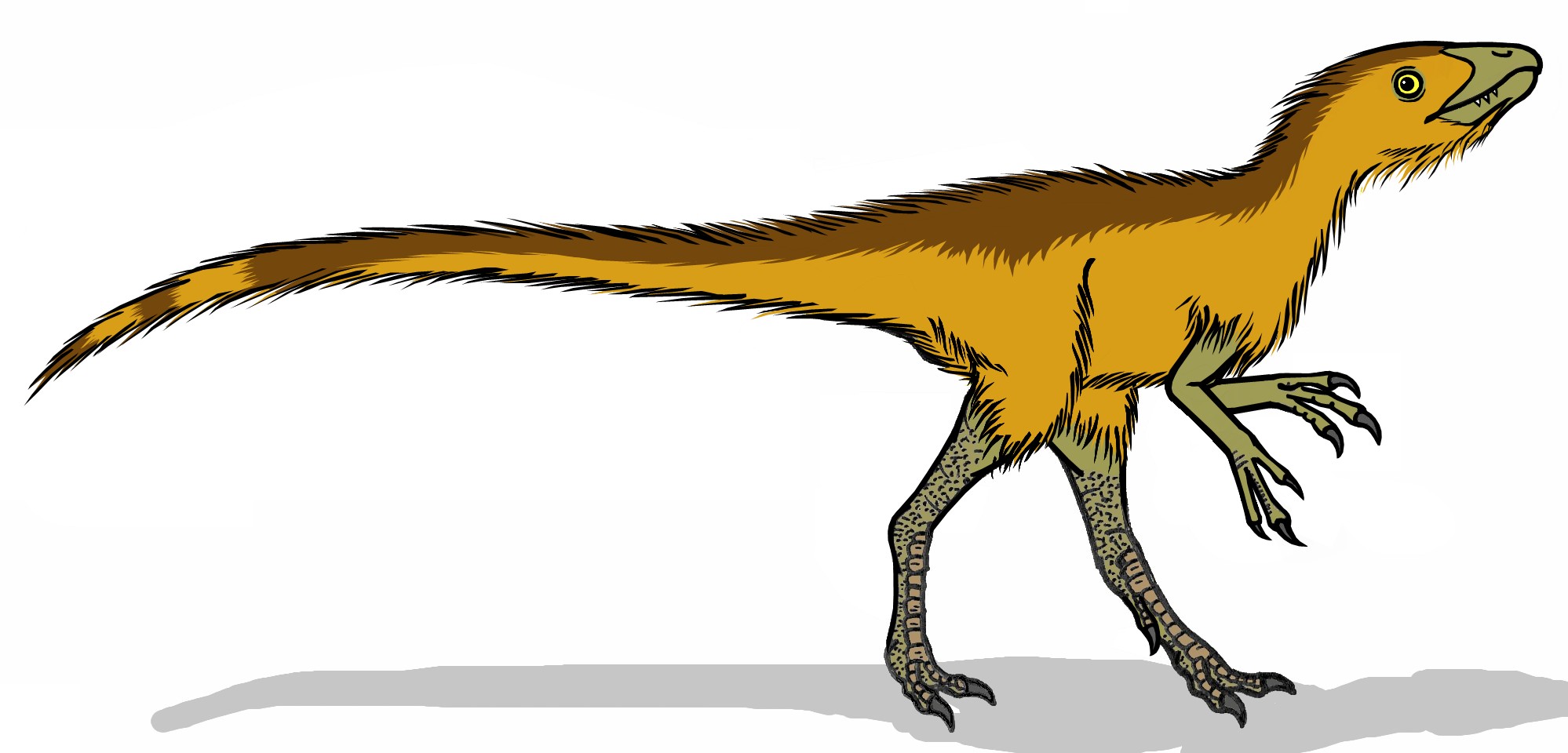
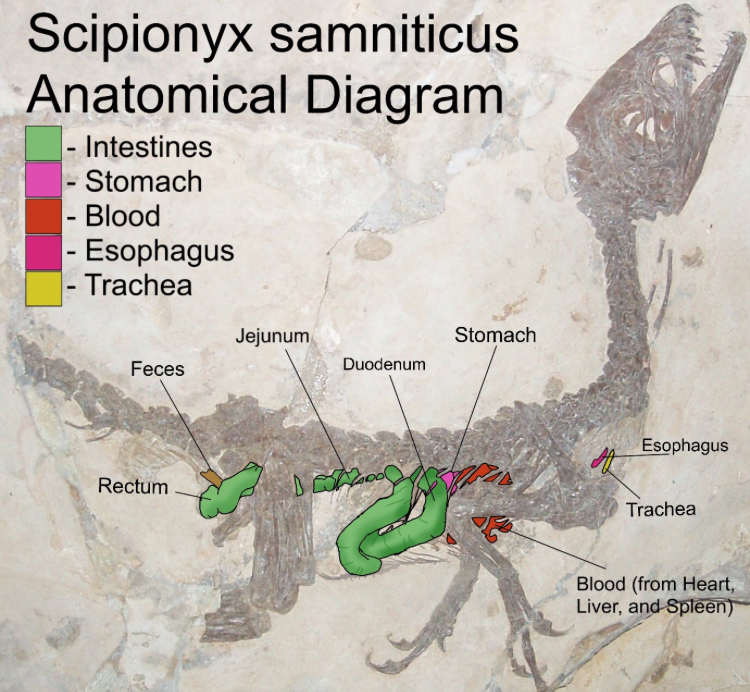


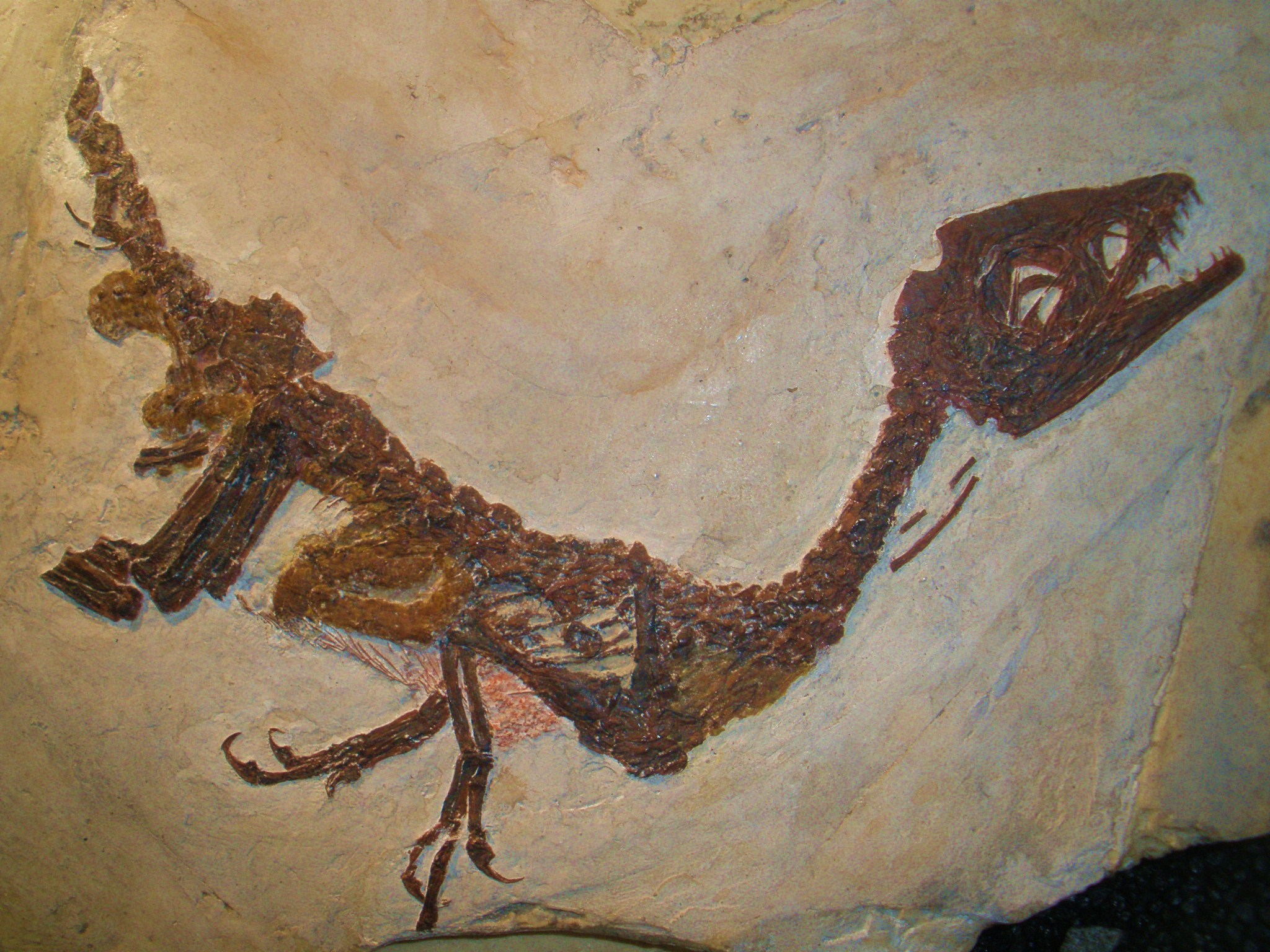
'Ciro' (SBA-SA 163760), the holotype of Scipionyx samniticus, on display at the Museo di Storia Naturale di Milano. Discovered in 1981 by Giovanni Todesco, it is the only Italian dinosaur with preserved internal organs.
Mogi, domínio público / Public Domain
Ecology and behavior
Habitat
Scipionyx inhabited the margins of shallow coastal lagoons in what is now southern Italy, during the early Albian (approximately 113 Ma). The paleoenvironment was a periodically anoxic tropical lagoon, part of a carbonate platform in the Tethys Sea. Vegetation was dominated by conifers of the Cheirolepidiaceae family, with a warm and possibly seasonal climate. The lagoon was rich in fish and small reptiles, foods identified in the fossilized intestine of the specimen.
Feeding
A small opportunistic predator, Scipionyx fed mainly on fish and small lizards, as evidenced by the semi-digested content preserved in its intestine. With 44 teeth, including five in the premaxilla on each side, the animal had dentition adapted for grasping slippery prey such as fish. Its slightly curved hand claws would have been useful for capturing prey in shallow coastal environments.
Behavior and senses
As a neonate, the holotype specimen provides no direct evidence of adult behavior. However, the general morphology of basal coelurosaurs and Scipionyx's close relatives suggest an agile, solitary predator. The presence of hypothetical proto-feathers would indicate some degree of thermoregulation. The air sac system inferred from pneumatized vertebrae suggests the elevated metabolism typical of theropods.
Physiology and growth
Analysis of the specimen revealed pneumatized vertebrae, suggesting the presence of air sacs similar to those of modern birds, implying an elevated metabolism and possibly endothermy. The fossilized liver sparked a scientific debate about hepatic piston-type breathing (proposed by Ruben et al., 1999), later refuted by Dal Sasso and Maganuco (2011), who attributed the supposed diaphragm to a preparation artifact. Preservation of muscle sarcomeres indicates well-developed musculature for such a young animal.
Paleogeography
Continental configuration

Ron Blakey · CC BY 3.0 · Cretáceous, ~90 Ma
During the Albiano (~115–110 Ma), Scipionyx samniticus inhabited Laramidia, the western half of present-day North America, separated from the east by the Western Interior Seaway, a shallow sea dividing the continent. The continents were in very different positions: India was drifting toward Asia, Antarctica was still connected to Australia, and South America was an isolated island.
Inventário de Ossos
The holotype SBA-SA 163760, housed at the Museo Civico di Storia Naturale di Milano, is nearly complete, lacking only the distal portion of the tail, the distal half of the hind limbs, and the claw on the right second finger. It represents a neonate at most three days old, estimated at 46 cm with a complete tail.
Found elements
Inferred elements
Scientific Literature
15 papers in chronological order — from the original description to recent research.
Exceptional soft-tissue preservation in a theropod dinosaur from Italy
Dal Sasso, C. & Signore, M. · Nature
The founding paper: Dal Sasso and Signore describe Scipionyx samniticus as a new genus and species, the first Italian dinosaur. The juvenile specimen, collected in 1981 by Giovanni Todesco near Pietraroja (Campania), shows extraordinary soft-tissue preservation. Intestine, trachea, traces of liver, and muscle tissue were replaced by calcium phosphate at subcellular detail, a process unprecedented among dinosaurs. Published in Nature, the article had enormous scientific and popular impact, cementing the nickname 'Ciro' for the specimen. The authors classify the animal as a basal coelurosaur and estimate an adult length of about 2 meters.
Pulmonary Function and Metabolic Physiology of Theropod Dinosaurs
Ruben, J.A., Dal Sasso, C., Geist, N.R., Hillenius, W.J., Jones, T.D. & Signore, M. · Science
Ruben and colleagues analyze the Scipionyx specimen under ultraviolet light and identify the fossilized liver as a structure that divided the visceral cavity into distinct regions: anterior pleuropericardial and posterior abdominal. The authors propose that this configuration, similar to that of crocodilians, would indicate a hepatic piston ventilation mechanism in theropods. The paper generated intense debate: Dal Sasso and Maganuco (2011) refuted the hypothesis, arguing that the supposed diaphragm was an artifact of the fossil preparation process. Even controversial, the work was pioneering in using imaging techniques to study dinosaur physiology.
Scipionyx samniticus (Theropoda: Compsognathidae) from the Lower Cretaceous of Italy. Osteology, ontogenetic assessment, phylogeny, soft tissue anatomy, taphonomy and palaeobiology
Dal Sasso, C. & Maganuco, S. · Memorie della Società Italiana di Scienze Naturali e del Museo Civico di Storia Naturale di Milano
A 281-page monograph by Dal Sasso and Maganuco, resulting from intensive study between 2005 and 2008 in Milan. It is the most extensive description ever published for a single dinosaur species. The work covers complete osteology, ontogenetic assessment (concluding the animal was at most three days old), phylogenetic analysis placing Scipionyx as a basal Compsognathidae, soft tissue anatomy, taphonomy, and paleobiology. It refutes Ruben et al.'s (1999) hepatic piston hypothesis, demonstrating that the supposed diaphragm was a preparation artifact. Includes description of preserved muscle sarcomeres, vascular mesentery, and tracheal segments, all replaced by calcium phosphate.
Vertebrate-rich Plattenkalk of Pietraroia (Lower Cretaceous, Southern Apennines, Italy): a new model
Carannante, G., Signore, M. & Vigorito, M. · Facies
Carannante, Signore, and Vigorito propose a new sedimentological model for the Pietraroja Plattenkalk, the formation that preserved Scipionyx. The paper describes a shallow lagoon environment with cyclically anoxic conditions in the lower Albian of the southern Apennines. Alternating periods of oxygenation and hypoxia in the water column explain the exceptional phosphatization of Scipionyx's soft tissues and other vertebrates in the formation. The article is fundamental for understanding the paleoenvironment in which 'Ciro' lived and died, and why the body was preserved with such anatomical detail.


Early eusuchia crocodylomorpha from the vertebrate-rich Plattenkalk of Pietraroia (Lower Albian, southern Apennines, Italy)
Buscalioni, A.D., Piras, P., Vullo, R., Signore, M. & Barbera, C. · Zoological Journal of the Linnean Society
Buscalioni and colleagues describe Pietraroiasuchus ormezzanoi, an eusuchian crocodylomorph from the same Pietraroja Plattenkalk that preserved Scipionyx. The paper demonstrates that the Albian lagoon fauna was rich and diverse: besides the famous dinosaur, it included crocodylomorphs, fish, and plants. This context is essential for understanding the ecosystem in which Scipionyx lived. The phylogenetic analysis positions Pietraroiasuchus as sister taxon to Pachycheilosuchus trinquei from the Albian of Texas, suggesting biogeographic connections between Tethys and the North American Cretaceous seaway.


Two new compsognathid-like theropods show diversified predation strategies in theropod dinosaurs
Qiu, R., Wang, X., Jiang, S., Meng, J. & Zhou, Z. · National Science Review
Qiu and colleagues describe two new compsognathid-like theropods from the Early Cretaceous Jehol Biota of China. The phylogenetic analysis has direct implications for Scipionyx's placement: the authors propose that compsognathid-like theropods form a clade called Sinosauropterygidae, nested among basal coelurosaurs. The work highlights the diversity of predation strategies in this group of small carnivorous dinosaurs that includes Scipionyx, and reveals a surprisingly broad paleobiogeographic distribution: Europe, Asia, and possibly other continents.
New insights into the palaeoenvironmental-palaeoclimatic significance and sedimentary dynamics of carbonate Lagerstätten: The lower Albian of Pietraroja (Southern Italy)
Graziano, R. · Sedimentology
Graziano presents the first high-resolution facies analysis of the lower Albian Pietraroja Lagerstätten, the formation that preserved Scipionyx. The study reveals new information about the paleoenvironmental and paleoclimatic conditions of the Cretaceous lagoon where 'Ciro' was buried. The analysis indicates a shallow carbonate environment on the Apennine carbonate platform, with sedimentary dynamics alternating between calm deposition periods and disturbance episodes, creating the perfect conditions for exceptional phosphatization of the organic tissues of Italy's only dinosaur.

Promotion of Paleontological Heritage: Case Histories from Southern Italy
Marra, A.C., Sudano, F., Rao, A., Calzona, V. & Guido, A. · Heritage
Marra and colleagues analyze strategies for promoting paleontological heritage in southern Italy, highlighting the role of Scipionyx samniticus as a cultural and scientific icon. The article documents how a cast of 'Ciro' circulates through Italian museums, including the National Archaeological Museum of Reggio Calabria and the University of Calabria Museum. The work demonstrates that Scipionyx has transcended its role as a research object to become an instrument of territorial revitalization and scientific education in the Campania region and southern Italy in general.
New data on Scipionyx samniticus from the Lower Cretaceous of Italy
Signore, M., Barbera, C. & Colamonico, C. · Abstracts of the Fifth European Workshop on Vertebrate Palaeontology
Preliminary communication by Signore and colleagues, presented at the Fifth European Workshop on Vertebrate Palaeontology in the same year as the original description of Scipionyx. The work complements the Nature article with additional anatomical data on the cranial morphology of the holotype specimen, including observations on the dentition with 44 teeth and five teeth in the premaxilla on each side. It discusses the phylogenetic implications of the discovery for the systematics of Lower Cretaceous European coelurosaurs, a group very poorly known before the discovery of Scipionyx in Italy.


Dinosaurs of Italy
Dal Sasso, C. · Comptes Rendus Palevol
Dal Sasso reviews all dinosaur records from Italy up to 2003, with special emphasis on Scipionyx samniticus as the most significant among them. The article contextualizes 'Ciro' within Italian and European paleontology, discussing the rarity of dinosaurs in the European Lower Cretaceous fossil record. The author examines the implications of soft tissue preservation for understanding theropod paleobiology: fossilization of the intestine with semi-digested food content (fish and lizards) provides unique data on the diet and feeding habits of basal coelurosaurs in the European Tethys.
The 3D model of Scipionyx samniticus: an educational tool to learn the anatomy of a dinosaur
Manucci, F., Bindellini, G. & Dal Sasso, C. · Bollettino della Società Paleontologica Italiana
Manucci, Bindellini, and Dal Sasso present a three-dimensional model of Scipionyx samniticus designed as an educational tool for teaching dinosaur anatomy. Scipionyx is considered by the authors the ideal candidate for this representation, as it is the only dinosaur with soft tissues preserved still in anatomical position, enabling an internal reconstruction based on direct evidence. The 3D model integrates osteology, musculature, and internal organs, and was used in exhibitions and science education programs in Italian museums, including the Museo Civico di Storia Naturale di Milano.

The Paleontological Heritage as a Mean for Territorial Revitalization: Innovative Communication Modalities for Pietraroja Site (Southern Italy)
Springer Nature Link · Geoheritage
This article examines how the Pietraroja paleontological site, home of Scipionyx samniticus, is being revitalized through immersive technologies. The Paleo-Lab, a multimedia museum in Pietraroja, uses virtual reality, mixed reality, and augmented reality to allow visitors from around the world to experience the local Cretaceous. The work demonstrates how 'Ciro' became a vector of territorial development for the Benevento region, transforming a paleontological discovery into a sustainable economic and cultural resource for a sparsely populated area of the southern Italian Apennines.


Scipionyx samniticus (Theropoda: Compsognathidae) from the Lower Cretaceous of Italy: osteology, ontogenetic assessment, phylogeny, soft tissue anatomy, taphonomy and palaeobiology
Farlow, J.O. (ed.) · Historical Biology
This entry in Historical Biology represents the peer-reviewed and summarized publication of the Dal Sasso and Maganuco (2011) monograph on Scipionyx. The version published in an international journal made the complete scientific data on 'Ciro' accessible to the global paleontological community, amplifying the impact of the original work published in Italian. Peer review confirmed the robustness of the anatomical descriptions, ontogenetic analysis, and phylogenetic position of Scipionyx as a basal Compsognathidae, establishing Dal Sasso and Maganuco's work as the definitive reference for the study of Italy's only dinosaur.


The oldest ceratosaurian (Dinosauria: Theropoda) from the Early Jurassic of Italy sheds light on the evolution of the three-fingered hand of birds
Dal Sasso, C., Maganuco, S. & Cau, A. · PeerJ
Dal Sasso, Maganuco, and Cau describe the oldest ceratosaurian from Italy, from the Early Jurassic, shedding light on the diversity of Italian theropods that would culminate in the Early Cretaceous with Scipionyx. The article is relevant to the study of Scipionyx because: (1) it demonstrates that Italy had an older and more diverse theropod fauna; (2) the same authors of the definitive Scipionyx monograph (2011) contributed to this work; (3) the phylogenetic analysis includes Scipionyx as a reference point for Italian theropods, contextualizing it within the evolution of European dinosaurs throughout the Mesozoic.

Cretaceous dinosaurs in the Old World with a review of the record from the Ibero-Armorican Island
Dalla Vecchia, F.M. · Arquivos Ibéricos de Paleontologia
Dalla Vecchia conducts a comprehensive review of Cretaceous dinosaur diversity on the islands and platforms of what is now Europe, with special attention to the biogeographic context of the Apennine carbonate platforms where Scipionyx was discovered. The article discusses how isolation on carbonate platforms in the Tethys Sea influenced the composition and evolution of European Cretaceous dinosaur faunas. For Scipionyx, this biogeographic context is fundamental: it explains why a basal coelurosaur appeared in southern Italy during the Albian, in a region that functioned as an archipelago of carbonate platforms with intermittent connections to other landmasses.


Espécimes famosos em museus
Holótipo SBA-SA 163760 ("Ciro")
Museo Civico di Storia Naturale di Milano, Milão, Itália
The only known specimen of Scipionyx samniticus and the only Italian dinosaur with internal organs preserved three-dimensionally by calcium phosphate. Nicknamed 'Ciro' by the Italian press. Legal ownership belongs to the Soprintendenza per i Beni Archeologici di Salerno.
Molde de exposição do Paleo-Lab
Paleo-Lab (Geopaleontological Park), Pietraroja, Benevento, Itália
Replica of the holotype exhibited at the multimedia museum in Pietraroja, the town where Scipionyx was discovered. The Paleo-Lab incorporates virtual and augmented reality technologies to contextualize Scipionyx in the local Albian lagoon paleoenvironment.
In cinema and popular culture
Scipionyx samniticus occupies a peculiar place in popular culture: it is known and celebrated in Italy as 'Ciro', but almost unknown internationally compared to globally renowned dinosaurs like Velociraptor or T. rex. Its entry into mainstream media came shortly after the Nature article was published in 1998, generating extensive coverage in the Italian press. The Jurassic Park Institute, Universal Studios' official educational portal, included Scipionyx in its catalog with artwork by Tim Bradley, giving the species some international visibility. Italian and European documentaries on European paleontology regularly refer to 'Ciro' as a symbol of the continent's scientific advances. The BBC's British series Planet Dinosaur (2011) mentioned the discovery as a landmark of European Lower Cretaceous paleontology. In recent years, the Pietraroja Paleo-Lab has embraced virtual and augmented reality to transform 'Ciro' into an immersive attraction, bringing the scientific discovery closer to the general public in an innovative way.

Classificação

Descoberta
Curiosidade
'Ciro' was at most three days old when it died. Despite being a tiny 24-cm neonate, scientists were able to identify its last meal: semi-digested fish and lizards visible directly in the fossilized intestine.