Suchomimus tenerensis
Suchomimus tenerensis
"Crocodile mimic from Ténéré"
Sobre esta espécie
Suchomimus tenerensis was a giant spinosaurid of the Early Cretaceous, reaching around 10 to 11 meters in length and up to 3.5 metric tons. Its elongated, narrow snout resembling a crocodile's, and its row of conical teeth adapted for gripping slippery fish, made it a specialized piscivore. The large curved thumb claws, up to 19 centimeters long, were its primary weapons for hooking aquatic prey. It lived on tropical floodplains in what is now Niger, coexisting with the giant crocodyliform Sarcosuchus and sauropods such as Nigersaurus. It was described in 1998 by Paul Sereno and colleagues from fossils found in the Ténéré Desert.
Geological formation & environment
The Elrhaz Formation is part of the Tegama Group in Niger and dates from the Aptian to the Albian of the Early Cretaceous (~125-112 Ma). It is composed of cross-bedded medium-grained fluvial sandstones with intercalated clays, limestones, and shales, reaching 80-120 meters in thickness. The depositional environment was continental, with river channels and floodplains in a semi-arid to tropical context. The Gadoufaoua site in the Ténéré Desert is the largest fossil graveyard in the Sahara, with records of multiple dinosaurs, crocodilians, turtles, fish, and pterosaurs, making the Elrhaz Formation one of the best-documented Early Cretaceous African ecosystems in the world.
Image gallery


Life reconstruction of Suchomimus tenerensis by PaleoGeekSquared (2022), showing the species' characteristic narrow elongated snout, low dorsal ridge, and robust forelimbs with curved claws.
PaleoGeekSquared, CC BY-SA 4.0
Ecology and behavior
Habitat
Suchomimus inhabited the tropical floodplains of present-day Niger during the Early Cretaceous (Aptian-Albian, ~125-112 Ma). The Elrhaz Formation represents an environment of fluvial sandstones with fast-flowing river channels and wide seasonal flood areas, with a tropical climate of wet and dry seasons. The ecosystem was extraordinarily rich: Suchomimus coexisted with the giant crocodyliform Sarcosuchus imperator (9-10 m), sauropods such as Nigersaurus, Ouranosaurus, Lurdusaurus, and Elrhazosaurus, as well as pterosaurs, turtles, fish, and freshwater bivalves.
Feeding
Suchomimus was a specialized piscivore. Its narrow elongated snout, analogous to that of gharials and narrow-snouted crocodilians, was adapted for quickly plunging into water and catching fish. The non-serrated conical teeth, curved backward, prevented slippery prey from escaping. The 19-cm thumb claw likely served to hook large fish out of the water, similar to modern brown bears fishing for salmon. Hassler et al.'s (2018) calcium isotope study chemically confirmed the predominantly fish-based diet.
Behavior and senses
Suchomimus's behavior is inferred primarily from anatomical evidence and comparisons with living animals. As a piscivore, it likely spent significant periods along riverbanks and flood zones. Fabbri et al.'s (2022) study indicates that, unlike Spinosaurus, Suchomimus was primarily terrestrial and entered the water only to fish, like a wader rather than a swimmer. There is no direct evidence of social or reproductive behavior. Coexistence with Sarcosuchus, an aquatic predator of comparable size, suggests the two likely avoided direct confrontations through niche partitioning.
Physiology and growth
Suchomimus belongs to Tetanurae, a group of theropods with likely elevated metabolism and rapid growth, as in modern birds. Its bone density is similar to that of other terrestrial theropods, unlike Spinosaurus with compact bones typical of semi-aquatic animals. The fenestrated skull (with multiple openings) reduced the head's weight without compromising structural strength, essential for such a long snout. The slightly elevated dorsal neural spines formed a low ridge whose function is still debated: it may have served for visual display, thermoregulation, or fat storage.
Paleogeography
Continental configuration

Ron Blakey · CC BY 3.0 · Cretáceous, ~90 Ma
During the Aptiano-Albiano (~125–112 Ma), Suchomimus tenerensis inhabited Laramidia, the western half of present-day North America, separated from the east by the Western Interior Seaway, a shallow sea dividing the continent. The continents were in very different positions: India was drifting toward Asia, Antarctica was still connected to Australia, and South America was an isolated island.
Inventário de Ossos
The holotype (MNN GDF500) includes parts of the skull, a nearly complete vertebral column, ribs, gastralia, three sacral vertebrae, twelve caudal vertebrae, scapula, coracoid, partial forelimbs, pelvis, and hindlimbs. Additional specimens (MNN GDF 501-511) provided snout material, quadrate, dentaries, and more vertebrae. All material is housed at the Musée National Boubou Hama, in Niamey.

Found elements
Inferred elements
Scientific Literature
15 papers in chronological order — from the original description to recent research.
A long-snouted predatory dinosaur from Africa and the evolution of spinosaurids
Sereno, P.C., Beck, A.L., Dutheil, D.B., Gado, B., Larsson, H.C.E., Lyon, G.H., Marcot, J.D., Rauhut, O.W.M., Sadleir, R.W., Sidor, C.A., Varricchio, D.D., Wilson, G.P. & Wilson, J.A. · Science
The founding paper for the species. Sereno and 12 collaborators describe Suchomimus tenerensis based on holotype MNN GDF500, discovered in the Ténéré Desert, Niger, in 1997. The animal is characterized by an extremely elongated crocodilian snout, recurved conical teeth, a 19-cm thumb claw, robust forelimbs, and slightly raised dorsal neural spines forming a low ridge. Phylogenetic analysis places Suchomimus as a close relative of European Baryonyx, indicating spinosaurids dispersed between continents during the Early Cretaceous. The paper also presents the first evidence of a large-bodied African spinosaurid, estimating a length of 9 to 11 meters.

Spinosaurs as crocodile mimics
Holtz, T.R. · Science
Perspective article published simultaneously with the original Suchomimus description in the same issue of Science. Thomas Holtz analyzes the anatomical and ecological convergences between spinosaurids and modern crocodilians: elongated snout, non-serrated conical teeth, robust claws, and piscivorous habits. He highlights that Suchomimus and Baryonyx represent an independent evolutionary pattern of 'crocodile mimicry' among theropod dinosaurs, distinct from the hunting strategy of tyrannosaurids. The paper contextualizes the discovery within the paleobiology of Cretaceous predators and its implications for understanding the ecology of large African theropods.

Baryonyx walkeri, a fish-eating dinosaur from the Wealden of Surrey
Charig, A.J. & Milner, A.C. · Bulletin of the Natural History Museum of London (Geology)
Definitive monograph on Baryonyx walkeri, the closest European relative of Suchomimus. Charig and Milner describe in detail the skeleton of specimen NHMUK R9951, providing the essential comparative basis for Sereno et al.'s subsequent interpretation of Suchomimus (1998). The work documents the elongated snout, conical teeth, robust claws, and fish remains preserved in the stomach, confirming the piscivorous habits of baryonychines. This anatomical atlas of Baryonyx enabled Sereno to quickly identify Suchomimus's affinity with this British genus and to classify both in the same subfamily Baryonychinae, establishing the biogeography of baryonychine spinosaurids.

The furcula in Suchomimus tenerensis and Tyrannosaurus rex (Dinosauria: Theropoda: Tetanurae)
Lipkin, C., Sereno, P.C. & Horner, J.R. · Journal of Paleontology
First dedicated study of the furcula of Suchomimus tenerensis. Lipkin, Sereno, and Horner describe the wishbone preserved in the holotype and compare it with T. rex and other theropods. The Suchomimus furcula has a distinct morphology: it is more gracile than that of T. rex and has an open V-shape, suggesting different biomechanical functions for the forelimbs. The study contributes to understanding the evolution of this structure in Tetanurae and provides evidence that spinosaurids actively used their forelimbs for prey capture, unlike T. rex, whose atrophied arms have reduced function. This paper is the only one focused exclusively on the anatomy of a single Suchomimus element.

Basal abelisaurid and carcharodontosaurid theropods from the Lower Cretaceous Elrhaz Formation of Niger
Sereno, P.C. & Brusatte, S.L. · Acta Palaeontologica Polonica
Sereno and Brusatte describe two new theropods from the same geological formation where Suchomimus was found: Kryptops palaios (abelisaurid) and Eocarcharia dinops (carcharodontosaurid). The paper contextualizes the Elrhaz paleoecosystem and demonstrates that Suchomimus coexisted with other large predators, each with distinct niches. Kryptops was a medium-sized carnivore with a covered skull, while Eocarcharia was a large-prey predator with serrated cutting teeth. This diversity of predators suggests resource partitioning in the Early Cretaceous Niger floodplain ecosystem, with Suchomimus specialized in fish and the other two in terrestrial herbivores.
The phylogeny of Tetanurae (Dinosauria: Theropoda)
Carrano, M.T., Benson, R.B.J. & Sampson, S.D. · Journal of Systematic Palaeontology
Comprehensive phylogenetic analysis of 95 Tetanurae taxa, including all spinosaurids known by 2012, with 472 characters. Carrano, Benson, and Sampson confirm Suchomimus's position within Megalosauroidea, as sister to Avetheropoda (which includes allosaurids, coelurosaurs, and birds). The paper documents that Spinosauridae are the sister group of Megalosauridae, and that within Spinosauridae the baryonychines (including Suchomimus and Baryonyx) are basal relative to the spinosaurines (including Spinosaurus). This analysis represents the phylogenetic consensus on Suchomimus used in most studies published after it.

A Century of Spinosaurs: A Review and Revision of the Spinosauridae with Comments on Their Ecology
Hone, D.W.E. & Holtz, T.R. · Acta Geologica Sinica (English Edition)
Comprehensive review of a century of spinosaurid research, compiling data on all known species, including Suchomimus. Hone and Holtz revise the diagnoses of each taxon, discuss piscivorous ecology, and evaluate evidence for semi-aquatic behaviors. The paper concludes that spinosaurids form an ecologically specialized group without parallel among other theropod dinosaurs. For Suchomimus specifically, the authors analyze the anatomical evidence for piscivory: the narrow elongated snout, non-serrated conical teeth, and thumb claws adapted for hooking fish. The paper serves as a reference point for the ecology and systematics of the entire family.
Spinosaur taxonomy and evolution of craniodental features: Evidence from Brazil
Sales, M.A.F. & Schultz, C.L. · PLOS ONE
Sales and Schultz analyze Brazilian spinosaurid specimens, producing a new phylogenetic analysis with 145 most parsimonious trees (MPTs). The resulting cladogram positions Baryonyx, Cristatusaurus, and Suchomimus in a basal polytomy within Spinosauridae, as sisters to the clade including remaining taxa. The paper is especially relevant for Suchomimus because it examines the question of its possible synonymy with Cristatusaurus lapparenti, concluding that Suchomimus is a valid species but that relationships within baryonychines need further study. The authors also review the evolution of conical teeth in spinosaurids, a trait Suchomimus shares with all members of the group.

New spinosaurids from the Wessex Formation (Early Cretaceous, UK) and the European origins of Spinosauridae
Barker, C.T., Hone, D.W.E., Naish, D., Cau, A., Lockwood, J.A.F., Foster, B., Clarkin, C.E., Schneider, P. & Gostling, N.J. · Scientific Reports
Paper that redefines baryonychine systematics and creates the new tribe Ceratosuchopsini. Barker et al. describe two new spinosaurids from the Isle of Wight (Ceratosuchops inferodios and Riparovenator milnerae) and conduct Bayesian and parsimony phylogenetic analyses. The most impactful result for Suchomimus is its grouping with the two new British taxa in a moderately supported clade (pp = 0.64), distinct from Baryonyx. This redefined Suchomimus's position within Baryonychinae and led to the creation of the Ceratosuchopsini group, to which Suchomimus now belongs. The paper also documents spinosaurid biogeography, suggesting a European origin for the group.

Subaqueous foraging among carnivorous dinosaurs
Fabbri, M., Navalón, G., Benson, R.B.J., Pol, D., O'Connor, J., Bhullar, B.S., Erickson, G.M., Norell, M.A., Orkney, A., Lamanna, M.C., Zouhri, S., Becker, J., Emke, A., Dal Sasso, C., Bindellini, G., Maganuco, S., Auditore, M. & Ibrahim, N. · Nature
High-impact study measuring bone compactness in 297 vertebrate species to infer aquatic or terrestrial habits. Suchomimus emerges as a control case in the group: its bone density is similar to other terrestrial theropods, suggesting the animal was a wader that entered water only superficially, unlike Spinosaurus and Baryonyx, which have compact bones typical of semi-aquatic animals. Fabbri et al. conclude that semi-aquatic habit evolved independently multiple times in spinosaurids, and that Suchomimus may have secondarily reverted to more terrestrial habits after diverging from the lineage leading to Spinosaurus. This paper redefines our ecological understanding of the species.
Calcium isotopes offer clues on resource partitioning among Cretaceous predatory dinosaurs
Hassler, A., Martin, J.E., Amiot, R., Tacail, T., Godet, F.A., Allain, R. & Balter, V. · Proceedings of the Royal Society B: Biological Sciences
Innovative study using calcium isotopes in Cretaceous theropod tooth enamel, including spinosaurids, to reconstruct trophic position. The isotopic data confirm that spinosaurids had calcium values consistent with a fish-based diet (fish being relatively poor in calcium compared to terrestrial vertebrates). Suchomimus is used as a case study within the context of piscivorous spinosaurids, with Ca isotopes suggesting its diet was predominantly aquatic. This independent geochemical method corroborates the anatomical evidence (snout, teeth, claws) for piscivory proposed by Sereno et al. in 1998, providing chemical confirmation of the species' feeding ecology.

Geology and paleontology of the Upper Cretaceous Kem Kem Group of eastern Morocco
Ibrahim, N., Sereno, P.C., Varricchio, D.J., Martill, D.M., Dutheil, D.B., Unwin, D.M., Baidder, L., Larsson, H.C.E., Zouhri, S. & Kaoukaya, A. · ZooKeys
Geological and paleontological monograph of the Kem Kem Group of Morocco, one of the richest Cretaceous spinosaurid ecosystems ever documented. The study is relevant to Suchomimus because it compares the Kem Kem fossil record with the Elrhaz Formation of Niger, where Suchomimus was found. The two formations share similar ages (Albian-Cenomanian) and analogous paleoenvironmental contexts of tropical fluvial floodplains. The paper also documents the cervicodorsal specimen of Suchomimus used in comparisons with Spinosaurus, providing essential biogeographic and paleoenvironmental context for understanding the distribution of spinosaurids in North Africa during the Cretaceous.
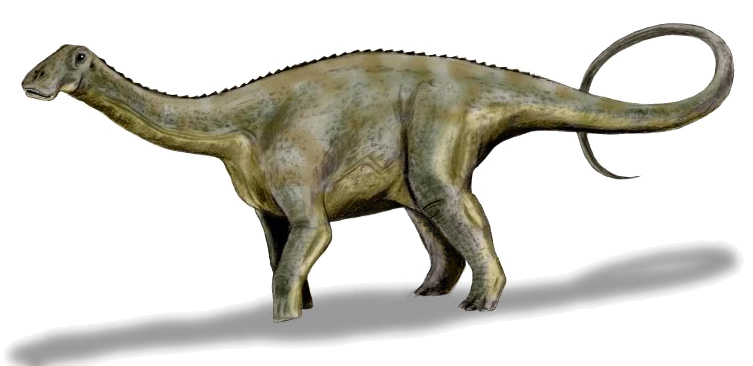
Structural extremes in a Cretaceous dinosaur
Sereno, P.C., Wilson, J.A., Witmer, L.M., Whitlock, J.A., Maga, A., Ide, O. & Rowe, T.A. · PLOS ONE
Description of Nigersaurus taqueti, a sauropodomorph with the most unusual craniodental adaptations among herbivorous dinosaurs: a battery of over 500 replaceable teeth and a downward-facing skull for ground-level grazing. Nigersaurus coexisted with Suchomimus in the Elrhaz Formation and was likely a potential prey item (or water resource competitor) for the spinosaurid. The paper is based on CT scans of the skull and documents the Elrhaz Formation paleoecosystem, where Suchomimus was the main piscivorous predator. Sereno led both Niger expeditions that discovered Suchomimus (1997) and Nigersaurus (1999), and the ecological context of the two animals is inseparable.


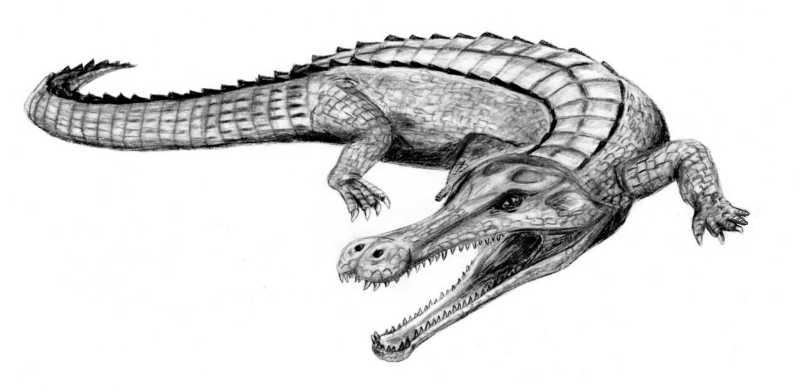
The giant crocodyliform Sarcosuchus from the Cretaceous of Africa
Sereno, P.C., Larsson, H.C.E., Sidor, C.A. & Gado, B. · Science
Description of Sarcosuchus imperator, a giant crocodyliform reaching up to 10 meters that coexisted with Suchomimus in the Elrhaz Formation. The paper is essential for understanding the Suchomimus paleoecosystem: Sarcosuchus was the only aquatic predator of comparable size to the spinosaurid, suggesting the two competed for the same giant fish of the period. Sarcosuchus inhabited the same tropical rivers and floodplains as Suchomimus, and the coexistence of the two 'crocodiles' (one real, one mimic) is one of the most fascinating ecological convergences of the African Cretaceous. Sereno led the expedition that discovered both animals at the same Gadoufaoua site.

My theropod is bigger than yours ... or not: estimating body size from skull length in theropods
Therrien, F. & Henderson, D.M. · Journal of Vertebrate Paleontology
Therrien and Henderson develop regression equations for estimating body length and mass from skull length in theropods. Suchomimus is one of the central taxa in the analysis, with its partially preserved skull serving as calibration for spinosaurid size estimates. The authors estimate Suchomimus's length at approximately 9.5 to 10.5 meters, consistent with original data from Sereno et al. (1998). The method is particularly valuable for spinosaurids because many specimens are known only from cranial fragments. The study establishes Suchomimus as one of the largest theropods of the Early Cretaceous in Africa, second only to Spinosaurus in estimated size.

Espécimes famosos em museus
MNN GDF500 (Holótipo)
Musée National Boubou Hama, Niamei, Níger
Type specimen of the species, including partial skull, nearly complete vertebral column, ribs, gastralia, sacrum, caudal vertebrae, limbs, and pelvis. Remains in the country of origin as required by Nigerien authorities, being the largest known specimen of the species.
Molde esquelético (cast)
Chicago Children's Museum, Chicago, Illinois, EUA
Life-size cast of holotype MNN GDF500, mounted and displayed to the public at Chicago's children's museum. It is one of the few physical Suchomimus displays accessible to the public outside of Niger, with the complete skeleton in an active hunting posture.
Molde de membro anterior
Museum of Ancient Life, Lehi, Utah, EUA
Cast specimen of the Suchomimus forelimb, displaying the robustness of the arms and the giant curved thumb claw. This skeletal element is central to understanding the animal's prey-capture capabilities.
In cinema and popular culture
Suchomimus occupies a peculiar space in popular culture: it is recognized by dinosaur enthusiasts but remains in the shadow of its more famous relative, Spinosaurus. Its media debut was National Geographic's documentary Colossal Claw (1998), which covered live the discovery of the fossils in Niger. On television, it appeared in Jurassic Fight Club (2008) and Dinosaur Revolution (2011), where its crocodilian snout and giant claws made it a visually striking character. In the video game universe, Ark: Survival Evolved popularized the animal among younger generations, depicting it as a semi-aquatic hunter. Despite its absence from Jurassic Park or Jurassic World franchise films, Suchomimus maintains a constant presence in miniature collections, illustrated books, and educational dinosaur games. Fabbri et al.'s (2022) study in Nature, discovering that Suchomimus had terrestrial bone density opposed to aquatic Spinosaurus, generated broad coverage in science media and redefined its image as the 'less aquatic cousin' of spinosaurids.

Classificação

Descoberta
Curiosidade
The name 'Suchomimus' means 'crocodile mimic' in Greek, and the irony is that in the same river, the true giant crocodilian of the period, Sarcosuchus imperator, reached 9-10 meters and weighed 4 metric tons. The two 'crocodiles' hunted the same giant fish in the rivers of Niger 112 million years ago, but only Suchomimus was a dinosaur.