
Tarbosaurus
Tarbosaurus bataar
"Alarming lizard (from Greek tarbos = alarm, terror + sauros = lizard). The epithet bataar comes from Mongolian баатар, meaning hero or warrior."
Sobre esta espécie
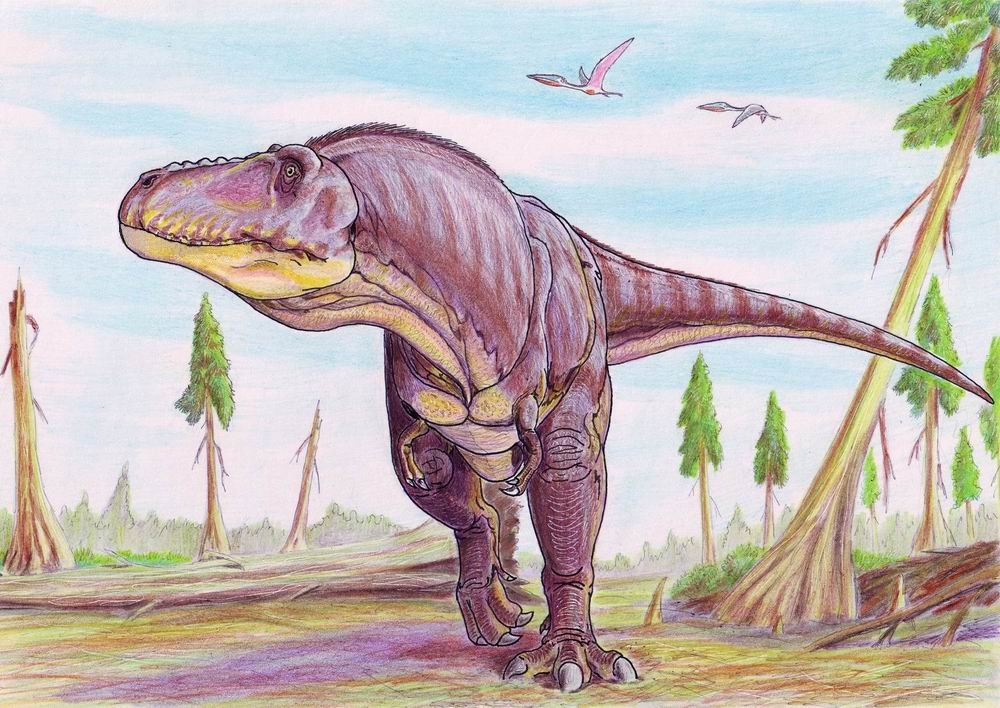
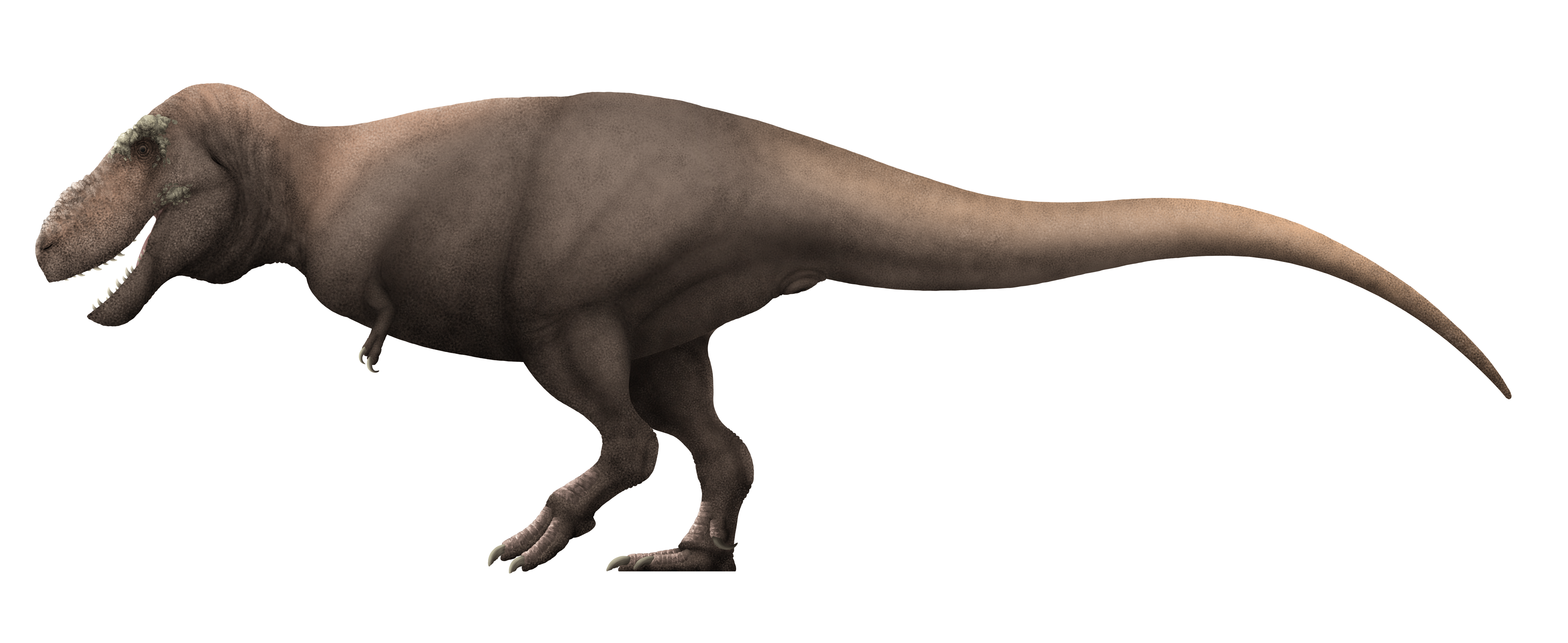
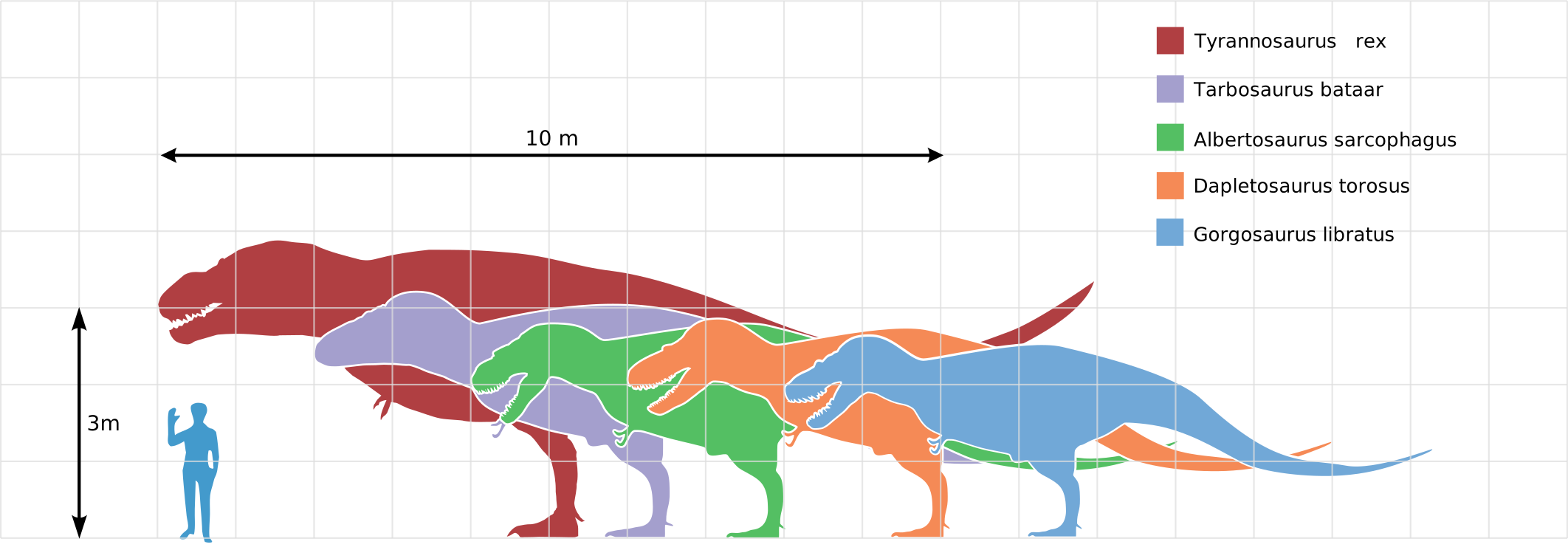
Tarbosaurus bataar was the largest land predator in Asia at the end of the Cretaceous, 72 to 66 million years ago. At up to 10 to 12 meters long and around 5 metric tons, it was the Asian equivalent of Tyrannosaurus rex, with whom it shared close kinship within the subfamily Tyrannosaurinae. Its skull measured approximately 1.3 meters, proportionally narrower than that of T. rex, with more laterally oriented orbits resulting in a reduced binocular field. The forelimbs were proportionally even smaller than those of T. rex, with only two functional digits. Known from over 30 specimens, including more than 15 skulls and several complete postcranial skeletons, Tarbosaurus is one of the best-represented tyrannosaurids in the fossil record. Its remains come exclusively from the Nemegt Formation of Mongolia and the Subashi Formation of China.
Geological formation & environment
Tarbosaurus bataar is found in the Nemegt Formation, exposed in the Gobi Desert, Omnogovi Province, Mongolia, and in the Subashi Formation of China. The Nemegt Formation dates to the Maastrichtian (72-66 Ma) and represents an alluvial plain environment crossed by meandering rivers, with a warm and humid climate drastically different from today's arid desert. Vegetation included conifers, tree ferns, and diversifying angiosperms. The fauna was exceptionally diverse: hadrosaurids (Saurolophus), sauropods (Nemegtosaurus), therizinosaurs (Therizinosaurus), ornithomimosaurs (Gallimimus, Deinocheirus), oviraptorosaurs (Citipati, Rinchenia), ankylosaurs (Tarchia, Saichania), crocodilians, turtles, and mammals. The Nemegt Formation is one of the world's most productive for Late Cretaceous dinosaur fossils, comparable in richness to the Hell Creek Formation of North America.
Image gallery




Holotype skull of Tarbosaurus bataar (PIN 551-1) at the Paleontological Institute of the Russian Academy of Sciences, Moscow. Original specimen collected in 1946 and described by Maleev in 1955.
Dominio publico
Ecology and behavior
Habitat
Tarbosaurus inhabited the alluvial plains and waterways of the Nemegt Formation, in what is now the Gobi Desert, Omnogovi Province, Mongolia, 72 to 66 million years ago. The climate was drastically different from today's desert: warm and humid, with large rivers, seasonally flooded plains, and lush vegetation of conifers, ferns, and angiosperms. The Nemegt Formation records one of the richest Late Cretaceous ecosystems in Asia. Contemporary fauna included the hadrosaurid Saurolophus angustirostris (the most abundant herbivore), the giant Deinocheirus mirificus (11 m omnivore), the sauropod Nemegtosaurus, the ankylosaurs Tarchia and Saichania, the ornithomimosaur Gallimimus, the oviraptorosaurs Rinchenia and Citipati, and numerous smaller species of theropods, crocodilians, turtles, and mammals. Paleoecological analyses indicate Tarbosaurus was the sole large predator in the Nemegt Formation, occupying the absolute top of the food chain.
Feeding
Tarbosaurus was the absolute apex predator of the Nemegt Formation. With a ~1.3 m skull and serrated teeth up to 15 cm, it possessed an estimated bite force of 20,000 to 40,000 N, lower than T. rex (~57,000 N) but still among the most powerful of any land animal. Cranial biomechanics, analyzed by Hurum & Sabath (2003), reveal that the Tarbosaurus skull was optimized for lateral bites with a unique stress distribution pattern, different from T. rex's vertical force system. Primary prey were Saurolophus angustirostris and other hadrosaurids, abundant in the ecosystem. Tooth marks on fossil bones confirm predatory interactions. Deinocheirus, despite its size, was probably also prey for adult Tarbosaurus. Hunting strategy was likely ambush-based: like other giant tyrannosaurids, adult Tarbosaurus could not run at high speeds, depending on its senses (developed olfaction, acute vision) to locate prey.
Behavior and senses
Tarbosaurus was probably solitary as an adult, as inferred by analogy with T. rex and other large predators. The marked difference between juveniles and adults (documented by Tsuihiji et al., 2011) suggests young animals occupied different ecological niches than adults, possibly hunting smaller and more agile prey. The sensory system included proportionally large olfactory bulbs (inferred by analogy with T. rex) and reasonably acute vision, though with a more restricted binocular field than T. rex due to more laterally oriented orbits. The presence of multiple specimens at some Nemegt Formation sites may indicate occasional gregarious behavior or natural accumulation of carcasses. There is no direct evidence of nests or parental behavior in Tarbosaurus, but it is inferred by analogy with modern crocodilians and birds.
Physiology and growth
Tarbosaurus had endothermic metabolism, as demonstrated by bone histology from Erickson et al. (2004): growth rings reveal rapid adolescent growth at rates comparable to large birds. The animal reached adult size (~5 metric tons, ~10 m) around ages 18 to 20. Maximum estimated longevity is ~25 to 30 years. Locomotion speed was probably similar to T. rex: natural walk of ~4 to 5 km/h, with estimated maximum speed of 15 to 25 km/h in fast walking (no flight phase). The forelimbs, proportionally even more reduced than those of T. rex, had uncertain function, possibly assisting in stabilization during feeding. The pneumatic skull (with hollow internal cavities) combined structural lightness with resistance to bite forces.
Paleogeography
Continental configuration

Ron Blakey · CC BY 3.0 · Cretáceous, ~90 Ma
During the Maastrichtiano (~72–66 Ma), Tarbosaurus bataar inhabited Laramidia, the western half of present-day North America, separated from the east by the Western Interior Seaway, a shallow sea dividing the continent. The continents were in very different positions: India was drifting toward Asia, Antarctica was still connected to Australia, and South America was an isolated island.
Inventário de Ossos
Based on multiple specimens. The holotype (PIN 551-1) includes skull and vertebrae. Over 30 known specimens, including 15+ skulls and several nearly complete postcranial skeletons. Specimen ZPAL MgD-I/4, described by Hurum & Sabath (2003), is one of the most complete.

Found elements
Inferred elements
Scientific Literature
15 papers in chronological order — from the original description to recent research.
Giant carnivorous dinosaurs of Mongolia
Maleev, E.A. · Doklady Akademii Nauk SSSR
The founding paper of Tarbosaurus taxonomic history. Evgeny Maleev describes material collected during the 1946-1949 Soviet-Mongolian paleontological expeditions to the Gobi Desert, Mongolia. The holotype PIN 551-1, a large skull and associated vertebrae from the Nemegt Formation, is designated Tyrannosaurus bataar sp. nov. Maleev also names Tarbosaurus efremovi from separate material from the same formation. The original description positions the animal as a large Asian tyrannosaurid comparable to the North American Tyrannosaurus rex. The paper catalogs initial diagnostic characters: robust skull of ~1.3 m, serrated teeth, reduced forelimbs, and bipedal stance. The taxonomic separation between Tyrannosaurus and Tarbosaurus would remain controversial for decades.


Growth changes in Asian dinosaurs and some problems of their taxonomy
Rozhdestvensky, A.K. · Paleontologicheskii Zhurnal
Rozhdestvensky reexamines Mongolian tyrannosaurid material and concludes that Tarbosaurus efremovi, named by Maleev in 1955, is in fact a synonym of Tyrannosaurus bataar from the same author. The anatomical differences between the two taxa are interpreted as ontogenetic variation (growth changes), not species-level differences. The work reduces the number of valid tyrannosaurids from the Nemegt Formation to a single species. Rozhdestvensky retains the animal in the genus Tyrannosaurus as T. bataar. The ontogenetic analysis presented in this paper was pioneering for Asian dinosaur paleontology and anticipated modern tyrannosaurid growth studies by decades.

Avialan status for Oviraptorosauria
Maryanska, T., Osmolska, H. & Wolsan, M. · Acta Palaeontologica Polonica
A comprehensive phylogenetic analysis of coelurosaurian theropods that includes Tarbosaurus bataar among the analyzed taxa. The study contributes to the debate on the generic status of Tarbosaurus by providing a character matrix supporting the separation between Tarbosaurus and Tyrannosaurus. Diagnostic characters include proportionally narrower skull, more posteriorly directed orbits, and proportionally smaller forelimbs. The analysis places Tarbosaurus as sister group to Tyrannosaurus within Tyrannosaurinae, but as a distinct genus. This work is part of the series of Polish publications that helped consolidate the taxonomy of Nemegt Formation dinosaurs.

Giant theropod dinosaurs from Asia and North America: skulls of Tarbosaurus bataar and Tyrannosaurus rex compared
Hurum, J.H. & Sabath, K. · Acta Palaeontologica Polonica
Detailed comparative study of the skulls of Tarbosaurus bataar and Tyrannosaurus rex, based on well-preserved specimens including ZPAL MgD-I/4. Hurum & Sabath identify significant differences: Tarbosaurus has a more gracile and elongate skull, narrower snout, more laterally oriented orbits (reducing binocular vision), a more rigid intracranial joint system, and a unique pattern of cranial stress distribution. The authors argue these differences support generic separation of the two taxa. Biomechanical analysis reveals that the Tarbosaurus skull was optimized for lateral bites, while that of T. rex better withstood vertical forces. This paper is the primary reference for comparative cranial anatomy of the two largest tyrannosaurids.


Cranial anatomy of tyrannosaurid dinosaurs from the Late Cretaceous of Alberta, Canada
Currie, P.J. · Acta Palaeontologica Polonica
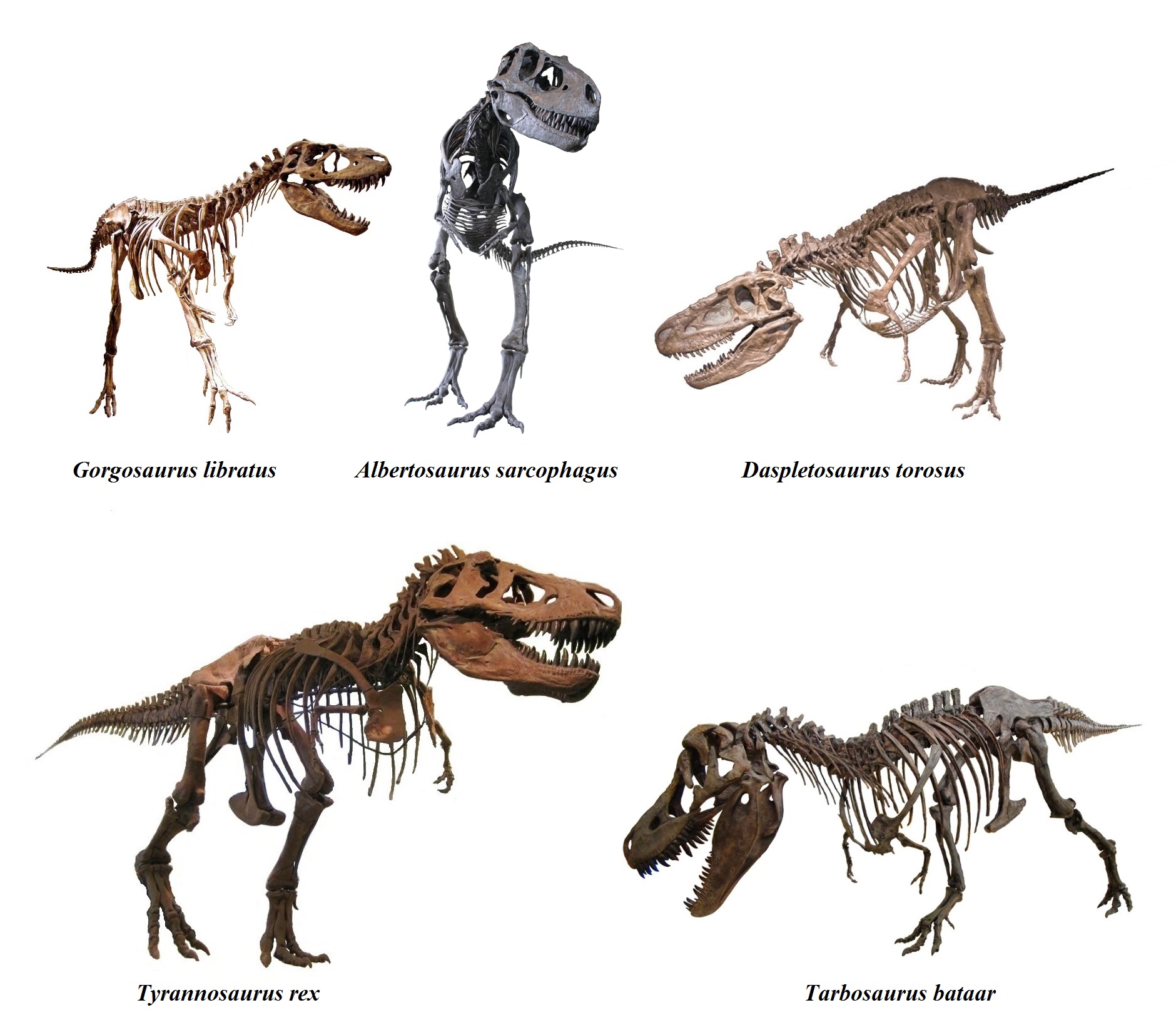
Currie describes the cranial anatomy of North American tyrannosaurids (Albertosaurus, Gorgosaurus, Daspletosaurus) and includes extensive comparative notes on Tarbosaurus bataar. Phylogenetic analysis recovers Tarbosaurus as sister taxon to Tyrannosaurus within Tyrannosaurinae. Both share more derived characters than Daspletosaurus or Albertosaurus, including pronounced sagittal crest, expanded maxillary fenestra, and D-shaped premaxillary teeth. Currie identifies exclusive synapomorphies of the Tarbosaurus + Tyrannosaurus clade supporting their close relationship. This work is fundamental for placing Tarbosaurus in the global phylogenetic context of tyrannosaurids.
Gigantism and comparative life-history parameters of tyrannosaurid dinosaurs
Erickson, G.M. et al. · Nature
Erickson et al. cross-section bones of several tyrannosaurids including Tarbosaurus bataar and count annual growth rings (lines of arrested growth, LAGs) to reconstruct growth curves. The results reveal that Tarbosaurus, like T. rex, showed explosive adolescent growth at rates comparable to large birds and mammals, not ectothermic reptiles. The study demonstrates that endothermic metabolism was a basal characteristic of Tyrannosauridae. Maximum estimated longevity for Tarbosaurus is approximately 25 to 30 years. The paper is fundamental for understanding the physiology of Asian tyrannosaurids and confirms that Tarbosaurus occupied the same ecological niche as T. rex in Asia.

New information on Cretaceous troodontids (Dinosauria, Theropoda) from the People's Republic of China
Currie, P.J. & Dong, Z. · Canadian Journal of Earth Sciences
Currie & Dong describe Cretaceous theropod material from China, including fragmentary remains attributable to Tarbosaurus from the Subashi Formation. This discovery extends the known geographic range of the genus beyond Mongolia, suggesting Tarbosaurus inhabited a more extensive area of Central Asia than previously recognized. The Chinese material is fragmentary but includes teeth and vertebrae consistent with Tarbosaurus morphology. The presence of the genus in China reinforces the idea that the Late Cretaceous ecosystem of Central Asia was relatively homogeneous in terms of large predator fauna.

Phylogeny of Tyrannosauroidea (Dinosauria: Coelurosauria) with special reference to North American forms
Carr, T.D. · PhD Thesis, University of Toronto
Thomas Carr's doctoral thesis presenting the most comprehensive phylogenetic analysis of Tyrannosauroidea to that date, with over 300 morphological characters. The analysis recovers Tarbosaurus bataar as the sister taxon of Tyrannosaurus rex, united by synapomorphies including massive skull proportions, fused nasals, and extreme reduction of the manus. Carr maintains Tarbosaurus as a valid genus distinct from Tyrannosaurus, based on consistent differences in cranial geometry, orbital orientation, and limb proportions. The thesis is the foundation for subsequent tyrannosaurid phylogenetic analyses and sets the theoretical framework for understanding the group's evolutionary relationships.


The osteology of Alioramus, a gracile and long-snouted tyrannosaurid (Dinosauria: Theropoda) from the Late Cretaceous of Mongolia
Brusatte, S.L., Carr, T.D. & Norell, M.A. · Bulletin of the American Museum of Natural History
Brusatte, Carr & Norell publish the complete osteological description of Alioramus altai, a gracile tyrannosaurid from the Nemegt Formation. Phylogenetic analysis places Alioramus as the sister taxon of Tarbosaurus, forming an exclusively Asian clade within Tyrannosaurinae. Both genera share cranial characteristics related to stress distribution not found in other tyrannosaurines. This result suggests Alioramus may have been a juvenile or neotenous form related to Tarbosaurus, or that both represent a distinct Asian adaptive radiation. The study redefines the phylogenetic position of Tarbosaurus by identifying its closest relative as another Asian genus.


Cranial osteology of a juvenile specimen of Tarbosaurus bataar (Theropoda, Tyrannosauridae) from the Nemegt Formation (Upper Cretaceous) of Bugin Tsav, Mongolia
Tsuihiji, T. et al. · Journal of Vertebrate Paleontology
Tsuihiji et al. describe the cranial osteology of a juvenile Tarbosaurus bataar specimen from Bugin Tsav, Mongolia. The juvenile skull differs markedly from the adult: it is more gracile, with a proportionally longer snout, smaller teeth, and less developed cranial ornamentation. The specimen provides critical data on ontogenetic changes in tyrannosaurid skulls. The differences between juvenile and adult are so pronounced that, without context, the young Tarbosaurus could be confused with a different genus. The study reinforces the importance of considering ontogenetic variation before naming new taxa based on isolated specimens.


Tyrannosaur paleobiology: new research on ancient exemplar organisms
Brusatte, S.L. et al. · Science
Comprehensive review of tyrannosaur paleobiology covering phylogenetics, anatomy, growth, locomotion, feeding, and ecology. Tarbosaurus bataar is discussed extensively as the Asian sister taxon of Tyrannosaurus rex. The paper synthesizes two decades of research and positions Tarbosaurus as the apex predator of the Nemegt Formation, occupying an ecological role analogous to T. rex in North America. The review highlights that Tarbosaurus shared rapid growth, extreme bite force, and acute senses with T. rex, but differed in cranial biomechanics and more restricted binocular vision. The Science article popularized research on Asian tyrannosaurids for a broad scientific audience.


A new clade of Asian Late Cretaceous long-snouted tyrannosaurids
Lü, J. et al. · Nature Communications
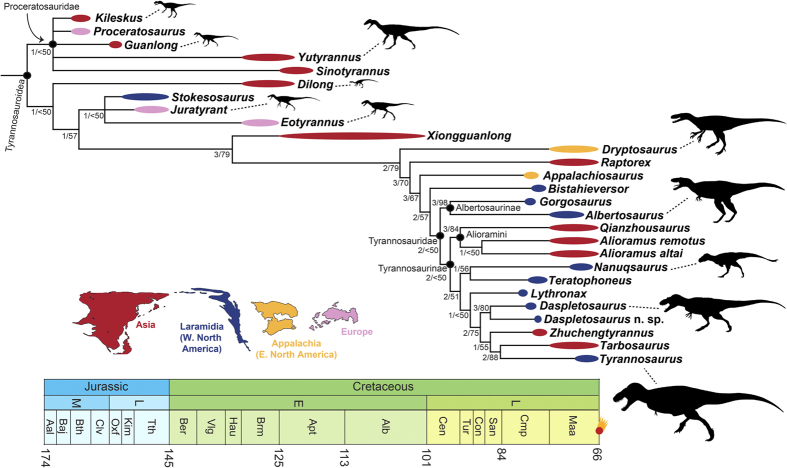
Lü et al. describe Qianzhousaurus sinensis, a long-snouted tyrannosaurid from the Late Cretaceous of China. Phylogenetic analysis recovers a long-snouted clade (Alioramini, including Qianzhousaurus and Alioramus) as sister group to a short-snouted clade including Tarbosaurus and Tyrannosaurus. This result clarifies evolutionary relationships within Tyrannosaurinae and suggests Asia harbored greater tyrannosaurid diversity than previously recognized. Tarbosaurus is reaffirmed as a member of the short-snouted clade, closer to Tyrannosaurus than to Alioramus, contradicting earlier analyses that grouped Alioramus with Tarbosaurus.

The phylogeny and evolutionary history of tyrannosauroid dinosaurs
Brusatte, S.L. & Carr, T.D. · Scientific Reports
Brusatte & Carr present a new phylogenetic analysis of Tyrannosauroidea using Bayesian methods, incorporating the most complete character matrix to date. Tarbosaurus bataar is recovered as sister taxon of Tyrannosaurus rex with strong statistical support. The two genera form a clade with Zhuchengtyrannus magnus from China, suggesting the largest tyrannosaurids shared a common evolutionary lineage. The analysis confirms the validity of Tarbosaurus as a distinct genus and documents the 100-million-year evolutionary history of tyrannosauroids, from small Jurassic forms to the Late Cretaceous giants. This open-access Scientific Reports article is the most cited phylogenetic reference for tyrannosaurids.


New tyrannosaur specimen from the Nemegt Formation
Watabe, M., Tsogtbaatar, K. & Barsbold, R. · Paleontological Journal
Watabe, Tsogtbaatar & Barsbold describe a new, exceptionally preserved specimen of Tarbosaurus bataar from the Nemegt Formation. The specimen preserves gastralia and detailed postcranial elements rarely preserved in tyrannosaurids, providing new data on thoracic anatomy and body proportions of the species. The discovery expands knowledge of Tarbosaurus postcranial anatomy, which remained less studied than the cranium. The work also documents the continued paleontological productivity of the Nemegt Formation and reinforces the importance of Mongolian expeditions for understanding Late Cretaceous Asian ecosystems.


A diminutive new tyrannosaur from the top of the world
Fiorillo, A.R. & Tykoski, R.S. · PLOS ONE
Fiorillo & Tykoski describe Nanuqsaurus hoglundi, a small tyrannosaurid from Arctic Alaska. Phylogenetic analysis recovers Nanuqsaurus as closely related to the Tarbosaurus-Tyrannosaurus clade, suggesting biogeographic connections between Asia and western North America via Beringia during the Late Cretaceous. The result is significant for Tarbosaurus because it provides additional evidence that the largest tyrannosaurids (Tarbosaurus in Asia, Tyrannosaurus in North America) derived from a common ancestor that migrated between continents. The Beringia land bridge would have allowed faunal interchange that produced giant tyrannosaurines on both continents.
Espécimes famosos em museus
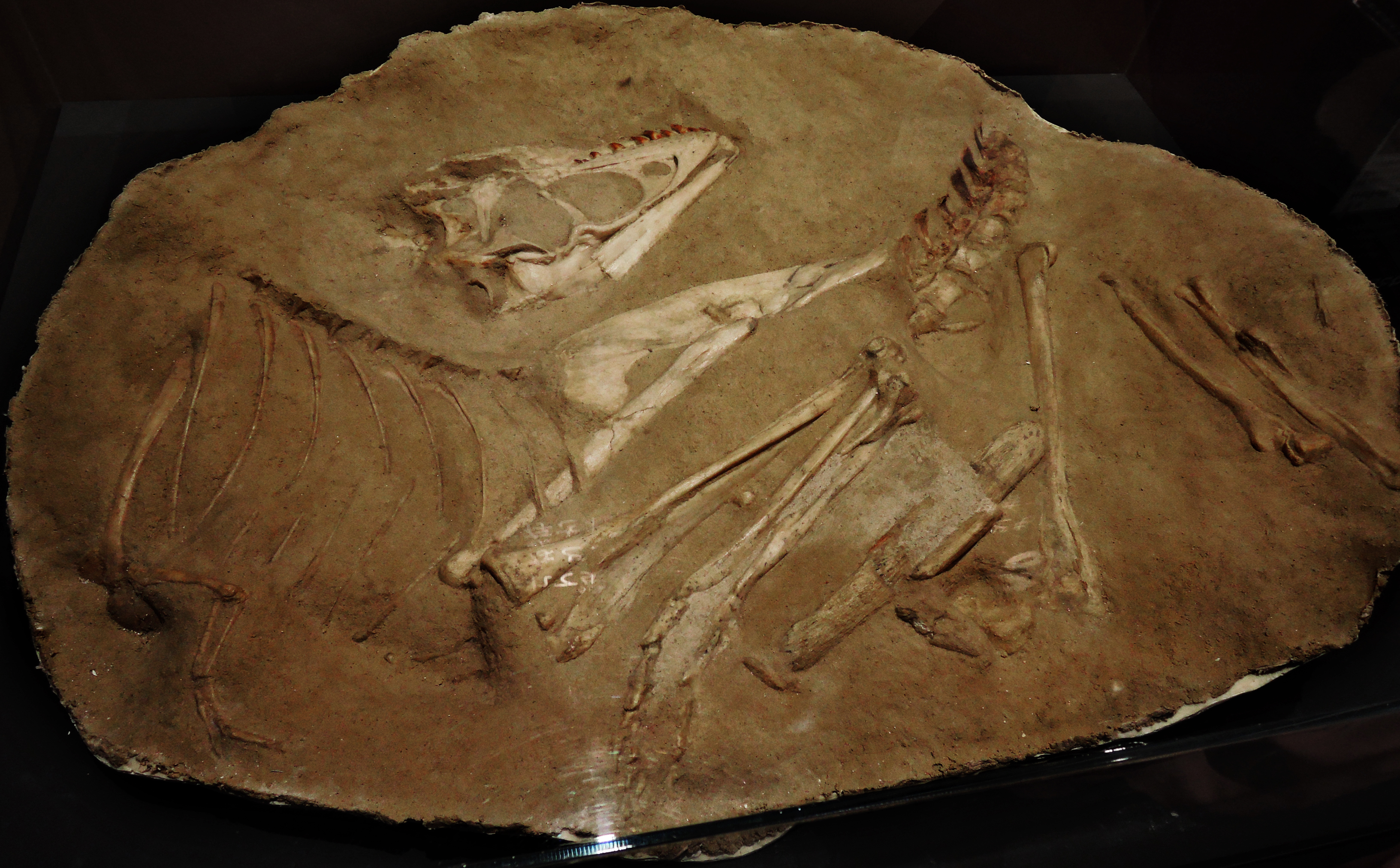
PIN 551-1 (Holotipo)
Instituto Paleontologico da Academia Russa de Ciencias, Moscou
The original holotype described by Maleev in 1955. Includes skull and associated vertebrae. Collected during the first Soviet-Mongolian expedition to the Gobi Desert.

MPC-D 107/7 (Especime juvenil)
Museu de Historia Natural da Mongolia, Ulan Bator
Remarkably complete juvenile specimen from Bugin Tsav. Skull ~60 cm, about half adult size. Described by Tsuihiji et al. (2011), provided critical data on tyrannosaurid ontogeny.
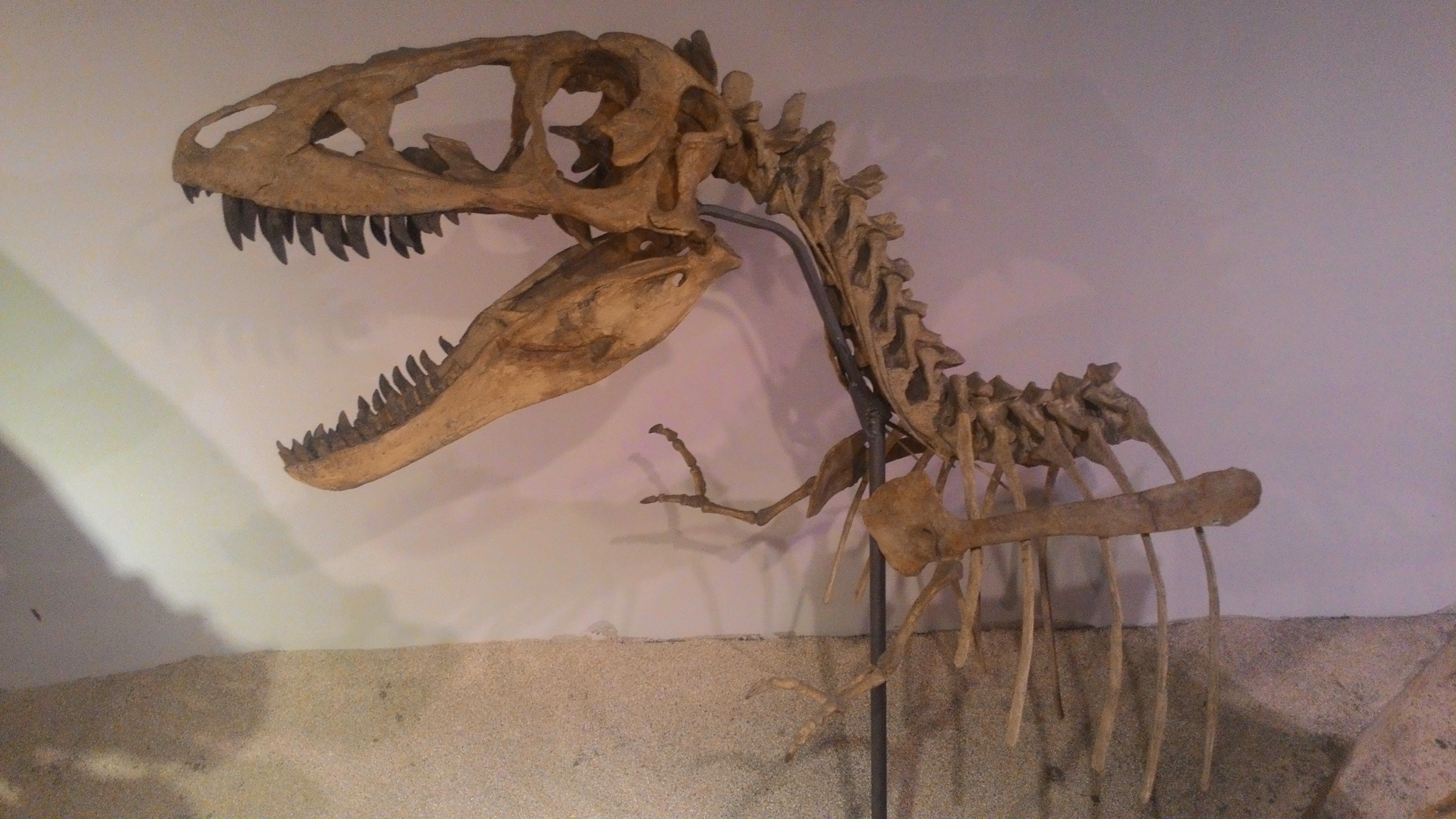
Esqueleto contrabandado (repatriado em 2013)
Museu Central de Dinossauros da Mongolia, Ulan Bator
Nearly complete skeleton smuggled to the USA and auctioned in New York for US$ 1.05 million in 2012. Seized by the US government and repatriated to Mongolia in 2013 after a high-profile legal dispute. Now the centerpiece of the Dinosaur Museum in Ulaanbaatar.
In cinema and popular culture
Although lacking the cultural omnipresence of T. rex, Tarbosaurus bataar has carved its place in visual media, especially in Asia. Its most notable cinema debut came in 2012 with the South Korean film 'Tarbosaurus: The Mightiest Ever' (released internationally as 'Speckles: The Tarbosaurus'), an animation following a Tarbosaurus named Patch from hatchling to dominant predator. The film was a commercial success in South Korea and spawned a 2019 sequel, 'Dino King 3D: Journey to Fire Mountain'. On television, Tarbosaurus appeared in high-profile documentaries: 'Chased by Dinosaurs' (BBC, 2002) with Nigel Marven, 'Dinosaur Planet' (Discovery Channel, 2003), and 'March of the Dinosaurs' (2011). The most scientifically accurate depiction came in 2023 with 'Prehistoric Planet' (Apple TV+), produced with consultation from renowned paleontologists. The media trajectory reflects growing public awareness that Asia had its own giant tyrannosaurids, every bit as impressive as the North American T. rex.

Classificação
Descoberta
Curiosidade
A nearly complete Tarbosaurus bataar skeleton was illegally smuggled from Mongolia to the United States and auctioned in New York for US$ 1.05 million in 2012. The Mongolian government protested, the specimen was seized by the US government, and in 2013 it was repatriated to Mongolia in an official ceremony. It is now the centerpiece of the Central Museum of Dinosaurs in Ulaanbaatar.