
Troodon formosus
Troodon formosus
"Wounding tooth (from Greek troodos = to wound + odon = tooth; formosus = beautiful in Latin)"
Sobre esta espécie
Troodon formosus was a small theropod from the Late Cretaceous of North America, notable for possessing the largest brain relative to body size among all known non-avian dinosaurs. At approximately 2.4 meters long and 45 kg, it inhabited the seasonal forests of the Two Medicine Formation in Montana. Its large, forward-facing eyes suggest binocular vision and possible nocturnal activity. Teeth with apical serrations indicate an omnivorous diet, including small mammals and possibly plant material. Originally described by Joseph Leidy in 1856 from a single tooth, Troodon became a symbol of the debate on intelligence and behavior in dinosaurs.
Geological formation & environment
The Two Medicine Formation (Campanian, ~83-74 Ma) outcrops in northwestern Montana, USA, and is one of the most productive of the North American Late Cretaceous. Deposited in lacustrine, fluvial, and floodplain environments in a semi-arid region east of the Sevier magmatic arc, the formation preserves a diverse fauna including Troodon formosus, Maiasaura peeblesorum, Einiosaurus procurvicornis, and Hypacrosaurus stebingeri. The Egg Mountain site, within the formation, is one of the most important dinosaur nesting deposits in the world, providing eggs, embryos, and nests of Troodon formosus and Maiasaura peeblesorum. The Judith River Formation (correlatable with the Two Medicine) provided Troodon's holotype tooth.
Image gallery
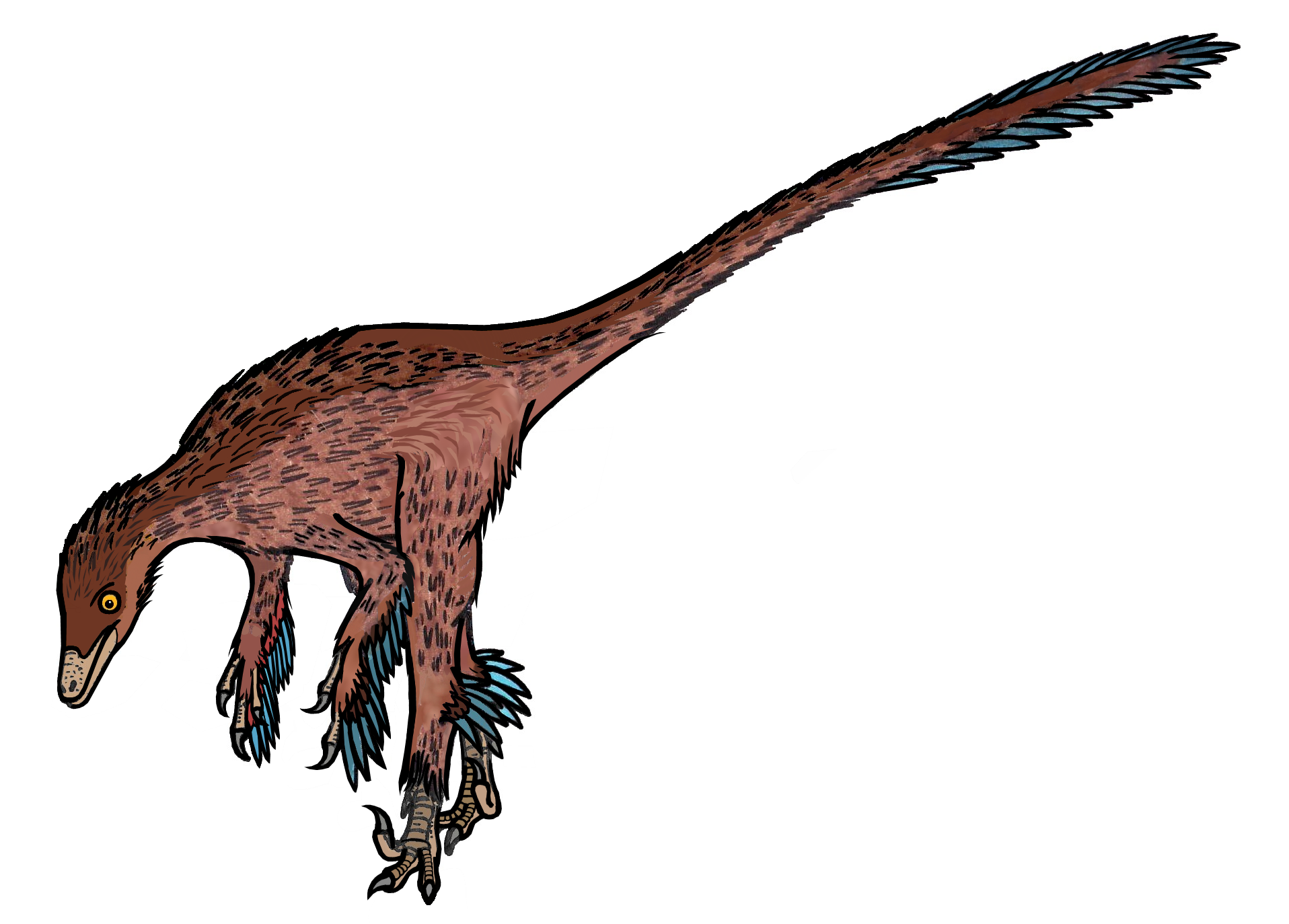




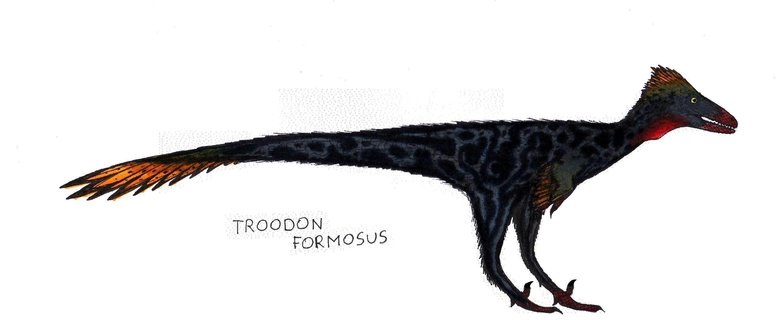
Updated troodontid reconstruction with white background by Conty (CC BY-SA 4.0). The image reflects current taxonomic uncertainty: the animal may be Troodon formosus or Stenonychosaurus inequalis depending on the reference material used.
Conty — CC BY-SA 4.0
Ecology and behavior
Habitat
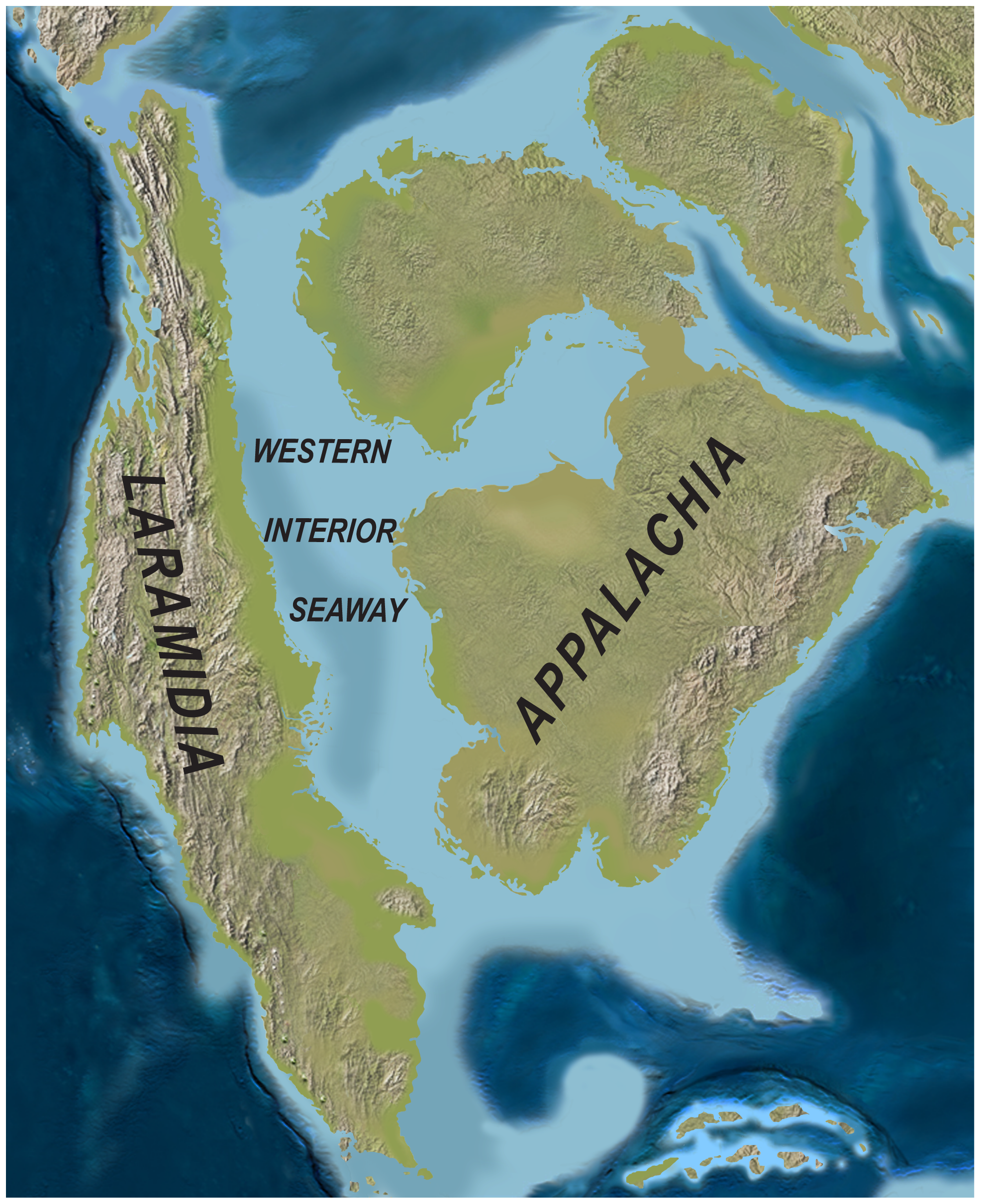
Troodon formosus inhabited the seasonal lacustrine and fluvial environments of the Two Medicine Formation (Montana) during the Campanian (~77-74 Ma). This region was part of Laramidia, the western continent of North America separated from the east by the Western Interior Seaway. The climate was seasonal and semi-arid, with marked wet and dry seasons, and vegetation included open forests of angiosperms and gymnosperms. It coexisted with other dinosaurs such as Maiasaura, Hypacrosaurus, and ceratopsids like Einiosaurus. The Alaskan population, from the Prince Creek Formation, inhabited Arctic environments with 120-day winters of darkness and temperatures between 2 and 12°C.
Feeding
Troodon formosus's diet was likely omnivorous: teeth with apically oriented serrations are morphometrically more similar to those of herbivorous reptiles than to carnivorous theropods, but enamel hardness and wear patterns are inconsistent with strict herbivory on tough plants. Gastric pellets with mammal bones from the Egg Mountain site (Freimuth and Varricchio, 2021) confirm that small mammals such as Alphadon were part of the diet. Fiorillo (2008) demonstrated that dental wear is inconsistent with bone chewing, suggesting soft prey. Insects, lizards, and eggs of other dinosaurs are also likely prey items.
Behavior and senses
Troodon formosus exhibited highly developed nesting behaviors documented by multiple studies (Varricchio et al., 1997, 1999). It built nests with capacity for 16 to 24 eggs, incubated by partial body contact. Isotopic analysis by Tagliavento et al. (2023) suggests possible communal nesting, with eggs from multiple females in the same nest. The large forward-facing eyes indicate binocular vision and possible crepuscular or nocturnal activity. The exceptional encephalization quotient suggests more complex social behavior than other dinosaurs, possibly including vocal communication and individual recognition.
Physiology and growth
The bone microstructure of Troodon formosus, analyzed by Varricchio (1993), reveals rapid growth with highly vascularized fibro-lamellar bone in juvenile phases, reaching adult size in approximately 3 to 5 years. This is consistent with elevated metabolism and endothermy. Clumped isotope thermometry analysis by Tagliavento et al. (2023) indicates heterothermic endothermy: variable body temperature, lower than that of modern birds during egg calcification. Four of the five periotic pneumatic systems of birds are present in the Troodon skull (Currie and Zhao, 1993), and the brain has morphology similar to birds, with a characteristic triangular-shaped telencephalon.
Paleogeography
Continental configuration

Ron Blakey · CC BY 3.0 · Cretáceous, ~90 Ma
During the Campaniano (~77–74 Ma), Troodon formosus inhabited Laramidia, the western half of present-day North America, separated from the east by the Western Interior Seaway, a shallow sea dividing the continent. The continents were in very different positions: India was drifting toward Asia, Antarctica was still connected to Australia, and South America was an isolated island.
Inventário de Ossos
The holotype of Troodon formosus is a single tooth collected from the Judith River Formation of Montana in 1855, described by Leidy in 1856. More complete material, including partial skulls, dentaries, vertebrae, limbs, and eggs with embryos, comes from the Two Medicine Formation (Montana, USA) and the Dinosaur Park Formation (Alberta, Canada). The most complete specimen attributed to the genus, MOR 553 from Egg Mountain (Montana), was proposed as the neotype in 2025 by Varricchio et al. The taxonomic identity of the Canadian material remains controversial.
Found elements
Inferred elements
Scientific Literature
15 papers in chronological order — from the original description to recent research.
Notices of the remains of extinct reptiles and fishes, discovered by Dr. F.V. Hayden in the bad lands of the Judith River, Nebraska Territory
Leidy, J. · Proceedings of the Academy of Natural Sciences of Philadelphia
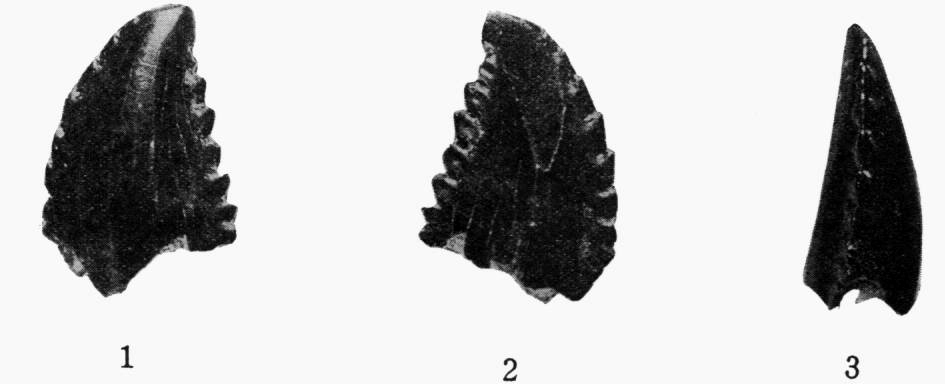
This is the founding paper of Troodon formosus: Joseph Leidy describes a single serrated tooth collected by F.V. Hayden from the Judith River Formation of Montana, naming it Troödon formosus. Leidy initially interpreted it as a lizard, not a dinosaur, demonstrating the limited paleontological knowledge of the time. The holotype tooth (Academy of Natural Sciences of Philadelphia specimen no. 9259) bears characteristic apical serrations that distinguish troodontids from other theropods. This single tooth generated over 160 years of taxonomic debate about the validity and identity of the genus.
Two new theropod dinosaurs from the Belly River Formation of Alberta
Sternberg, C.M. · Canadian Field-Naturalist
Charles Mortram Sternberg describes Stenonychosaurus inequalis based on a foot, hand fragments, and caudal vertebrae from the Dinosaur Park Formation of Alberta, Canada. This material would become central to the taxonomic debate about Troodon decades later. Phil Currie synonymized Stenonychosaurus with Troodon formosus in 1987, but van der Reest and Currie reversed this synonymy in 2017, recognizing Stenonychosaurus as a distinct genus. Sternberg's work established the first documentation of troodontids in Canada.


A new specimen of Stenonychosaurus from the Oldman Formation (Cretaceous) of Alberta
Russell, D.A. · Canadian Journal of Earth Sciences
Dale Russell describes new Stenonychosaurus material (later referred to Troodon) and performs the first encephalization quotient estimate for the genus using Jerison's EQ concept. Results indicate Troodon had the largest proportional brain volume among all non-avian dinosaurs, comparable to modern ratites. This publication was the starting point for decades of speculation about dinosaur intelligence, culminating in Russell and Séguin's famous 'dinosauroid' thought experiment published in 1982.
Bird-like characteristics of the jaws and teeth of troodontid theropods (Dinosauria, Saurischia)
Currie, P.J. · Journal of Vertebrate Paleontology
Phil Currie performs a systematic review of the dental and mandibular characteristics of North American troodontids, demonstrating that supposed differences between Stenonychosaurus, Pectinodon, and other genera reflect ontogenetic variation and tooth position in the jaw, not species differences. Based on this, Currie synonymized all North American material under Troodon formosus, a classification that dominated the literature for 30 years. The paper also highlights avian characteristics of troodontid jaws, reinforcing the group's role in understanding the dinosaur-bird transition.
A new troodontid (Dinosauria, Theropoda) braincase from the Dinosaur Park Formation (Campanian) of Alberta
Currie, P.J.; Zhao, X.J. · Canadian Journal of Earth Sciences
Currie and Zhao describe a well-preserved braincase of Troodon formosus from the Dinosaur Park Formation of Alberta, the first to reveal the internal anatomy of the lower part of the cranial box. CT scanning reveals the anatomy of the inner ear and the course of pneumatic ducts diverging from the middle ear. The authors demonstrate that four of the five periotic pneumatic systems present in bird skulls are present in Troodon, reinforcing close kinship with birds. The work provides detailed data on the brain volume and morphology of the most encephalized non-avian dinosaur.

Bone microstructure of the Upper Cretaceous theropod dinosaur Troodon formosus
Varricchio, D.J. · Journal of Vertebrate Paleontology
David Varricchio analyzes the bone microstructure of Troodon formosus through histology, identifying three ontogenetic growth stages: rapid fibro-lamellar, moderate lamellar-zonal, and slow avascular lamellar growth. Highly vascularized fibro-lamellar bone accounted for most growth, with the animal potentially reaching adult size in 3 to 5 years. This rapid growth pattern is more similar to birds and mammals than to reptiles, supporting the hypothesis of elevated (endothermic) metabolism for Troodon.
Nest and egg clutches of the dinosaur Troodon formosus and the evolution of avian reproductive traits
Varricchio, D.J.; Jackson, F.; Borkowski, J.J.; Horner, J.R. · Nature
Varricchio and collaborators describe nests and egg clutches of Troodon formosus from the Two Medicine Formation of Montana, published in Nature. The study demonstrates that Troodon produced two eggs simultaneously at daily or longer intervals, and incubated eggs using a combination of soil and direct body contact. Each clutch contained up to 24 elongated eggs positioned with their smaller ends pointing toward the center of the nest. This complex reproductive behavior is intermediate between reptiles and modern birds, providing direct fossil evidence for the evolution of avian reproductive traits.
A nesting trace with eggs for the Cretaceous theropod dinosaur Troodon formosus
Varricchio, D.J.; Jackson, F. · Journal of Vertebrate Paleontology
Varricchio and Jackson describe a nesting trace with eggs of Troodon formosus from the Two Medicine Formation of Montana, with detailed analysis of nest geometry and inferred incubation behavior. The eggs were positioned with their smaller ends downward, partially buried in the substrate, with the larger ends exposed to the air. This arrangement suggests that only the lower half of the eggs was in contact with moist sediment, while the adult covered the eggs with its body. The work complements the 1997 findings and reinforces Troodon's role as a model of parental behavior intermediate between reptiles and birds.
Revisiting Sabath's 'Larger Avian Eggs' from the Gobi Cretaceous
Varricchio, D.J.; Barta, D.E. · Acta Palaeontologica Polonica
Varricchio and Barta review paravian eggs from the Cretaceous of Mongolia and compare them to the reproductive pattern established for Troodon formosus. The work elucidates the evolution of reproductive traits in paravians, especially the transition from the partially buried incubation of troodontids to the completely aerial incubation of modern birds. Direct comparisons with Two Medicine material show how Troodon's nesting mode represents a critical intermediate stage in the evolution of avian reproductive behavior.

Description of two partial Troodon braincases from the Prince Creek Formation (Upper Cretaceous), North Slope Alaska
Fiorillo, A.R.; Tykoski, R.S.; Currie, P.J.; McCarthy, P.J.; Flaig, P. · Journal of Vertebrate Paleontology
Fiorillo and collaborators describe two partial Troodon braincases from the Prince Creek Formation of Alaska, documenting for the first time the presence of the genus in the Arctic Circle. The Alaskan troodontid's teeth are approximately twice as large as specimens from the Two Medicine Formation, suggesting an animal nearly 4 meters long. This size variation is consistent with Bergmann's Rule: animals in cold climates tend to be larger. Troodon was the most common theropod in the Prince Creek Formation, representing nearly two-thirds of all theropod specimens.


A new troodontid theropod, Talos sampsoni gen. et sp. nov., from the Upper Cretaceous Western Interior Basin of North America
Zanno, L.E.; Varricchio, D.J.; O'Connor, P.M.; Titus, A.L.; Knell, M.J. · PLOS ONE
Zanno and collaborators describe Talos sampsoni, a new gracile troodontid from the Kaiparowits Formation (upper Campanian) of Utah, published in PLOS ONE. Phylogenetic analysis recovers Talos in a position close to Troodon formosus, Saurornithoides, and Zanabazar within Troodontinae. The specimen includes a pathological pedal phalanx, the first evidence of pathology in a troodontid and possible evidence of interspecific predation. The work also documents the evolution of an enlarged second pedal claw in derived troodontids, similar to the sickle claw of dromaeosaurids.


Troodontids (Theropoda) from the Dinosaur Park Formation, Alberta, with a description of a unique new taxon: implications for deinonychosaur diversity in North America
van der Reest, A.J.; Currie, P.J. · Canadian Journal of Earth Sciences
Van der Reest and Currie review troodontid material from the Dinosaur Park Formation of Alberta and propose that Stenonychosaurus inequalis be recognized as a valid genus separate from Troodon formosus, reversing the synonymy established by Currie in 1987. The authors also describe Latenivenatrix mcmasterae, the largest known troodontid, with an estimated height of 180 cm and length of 350 cm, from the upper portion of the formation. This work represents the main modern taxonomic revision of the group and triggered the reassessment of the validity of Troodon formosus itself, culminating in the 2025 neotype proposal.


Mammal-bearing gastric pellets potentially attributable to Troodon formosus at the Cretaceous Egg Mountain locality, Two Medicine Formation, Montana, USA
Freimuth, W.J.; Varricchio, D.J. · Palaeontology
Freimuth and Varricchio describe gastric pellets containing small mammal bones from the Egg Mountain site (Two Medicine Formation), possibly produced by Troodon formosus. This is the first direct record of pellet regurgitation (similar to the behavior of modern raptorial birds) in non-avian dinosaurs. The study provides concrete evidence that Troodon included mammals such as Alphadon in its diet, supporting the omnivory hypothesis. The spatial association of the pellets with Troodon nests at Egg Mountain reinforces the troodontid attribution.

Evidence for heterothermic endothermy and reptile-like eggshell mineralization in Troodon formosus
Tagliavento, M.; Heinemann, F.; Bernasconi, S.M.; Fiebig, J. · Proceedings of the National Academy of Sciences
Tagliavento and collaborators apply clumped isotope thermometry to Troodon formosus eggshells from the Oldman Formation, revealing that egg calcification occurred at lower temperatures than in modern birds. This indicates heterothermic endothermy (variable body temperature) and the presence of two simultaneous functional ovaries, unlike birds which have only one. Despite two ovaries, egg production was limited, suggesting that eggs in clutches were laid by multiple females in communal nests, as observed in some modern birds.


Troodontid specimens from the Cretaceous Two Medicine Formation of Montana (USA) and the validity of Troodon formosus
Varricchio, D.J.; Barta, D.E.; Riggs, N.P. · Journal of Paleontology
Varricchio, Barta, and Riggs redescribe the troodontid material from Egg Mountain (Two Medicine Formation, Montana), including specimen MOR 553, a collection of elements representing multiple individuals of different ontogenetic stages. The authors propose MOR 553 as the neotype of Troodon formosus, preserving the genus's validity and treating Stenonychosaurus as a possible junior synonym. This paper represents the most recent resolution of a century-long taxonomic controversy and consolidates Troodon formosus as the valid name for Two Medicine Formation material, with implications for the paleoecology of Campanian Laramidia.


Espécimes famosos em museus
MOR 553 (neótipo proposto de Troodon formosus)
Museum of the Rockies, Bozeman, Montana
Collected at the Egg Mountain site (Two Medicine Formation, Montana), specimen MOR 553 is a collection of elements representing multiple individuals of different ages. In 2025, Varricchio et al. proposed this material as the neotype of Troodon formosus, resolving the century-long taxonomic controversy about the genus's validity.
ANSP 9259 (holótipo — dente único)
Academy of Natural Sciences of Philadelphia, Filadélfia, Pennsylvania
The holotype tooth of the Academy of Natural Sciences of Philadelphia (no. 9259) is the sole specimen on which Joseph Leidy based the original description of Troodon formosus in 1856. It is one of the simplest holotypes of any dinosaur: a single serrated tooth collected from the Judith River Formation of Montana. The incompleteness of the holotype was the direct cause of 160 years of taxonomic instability.
In cinema and popular culture
Troodon formosus occupies a singular space in pop paleontological culture: it is the most intelligent known dinosaur, and this characteristic has profoundly shaped its media presence. In the animated series Dinosaur Train (PBS Kids, 2009), troodontids are the operators of the titular train, chosen precisely for their superior intelligence. In the game Jurassic Park: The Game (Telltale, 2011), the species was transformed into a venomous assassin predator, a scientifically unfounded invention that amplified its threatening character. In the documentary Dinosaur Planet (Discovery, 2003), it appears as a large-eyed nocturnal predator, and in the series Prehistoric Planet (Apple TV+, 2022) the Alaskan troodontid is shown with complete plumage adapted to the Arctic. In games like Jurassic World Evolution 2, Troodon is described as the most intelligent dinosaur in the park. The dinosauroid thought experiment, published by Dale Russell in 1982, continues to be referenced in popular discussions about evolution and intelligence, making Troodon the favorite dinosaur of any 'what if?' debate.

Classificação

Descoberta
Curiosidade
Troodon had the largest brain relative to body size of any known non-avian dinosaur. Dale Russell speculated in 1982 that had dinosaurs not gone extinct, Troodon might have evolved over another 65 million years to become bipedal, with prehensile forelimbs and a human-sized brain: the so-called dinosauroid. The speculation, though rejected by most modern paleontologists, remains one of paleontology's most famous thought experiments.