
Utahraptor
Utahraptor ostrommaysorum
"Utah thief of Ostrom and Mays"
Sobre esta espécie
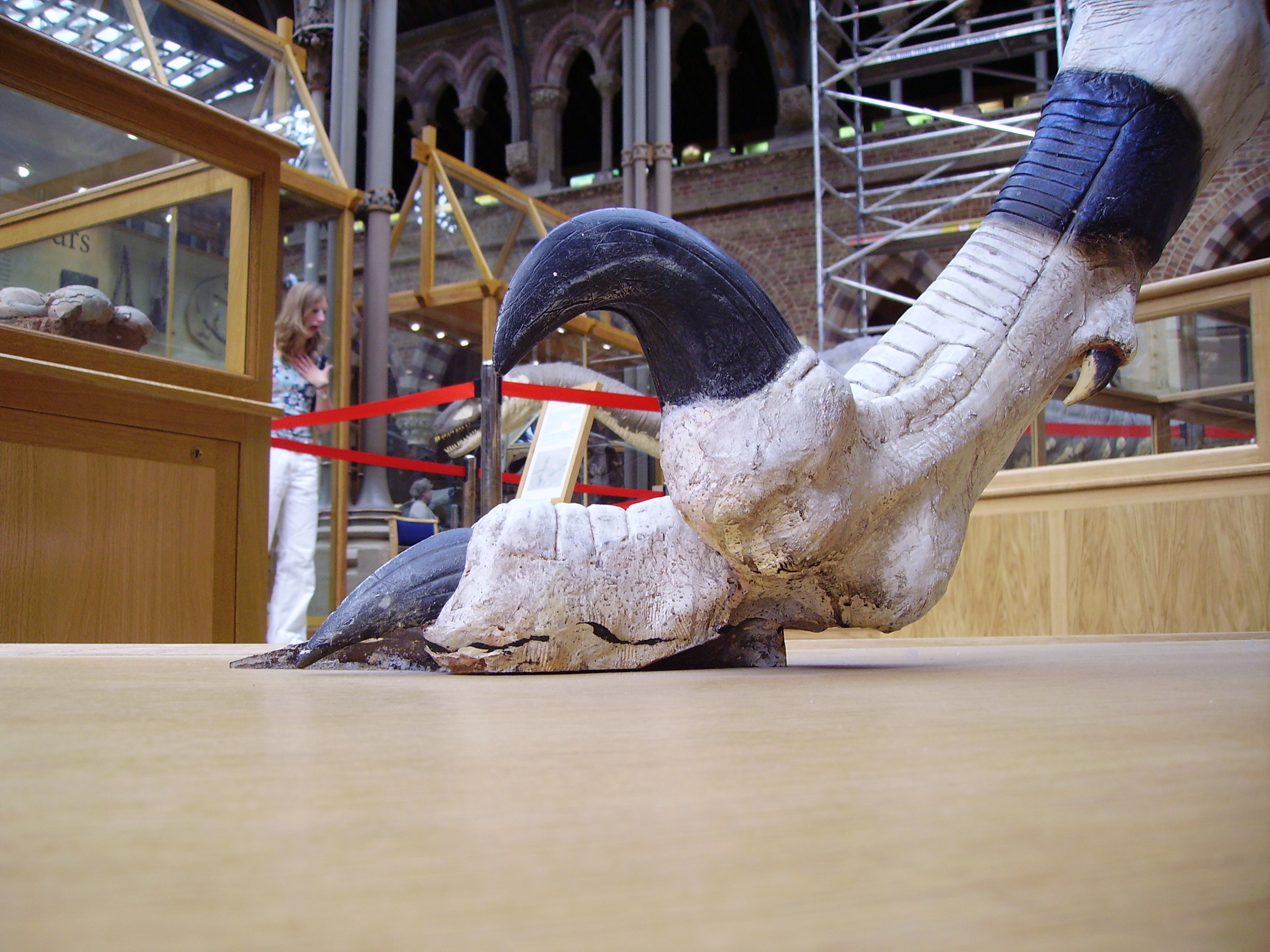
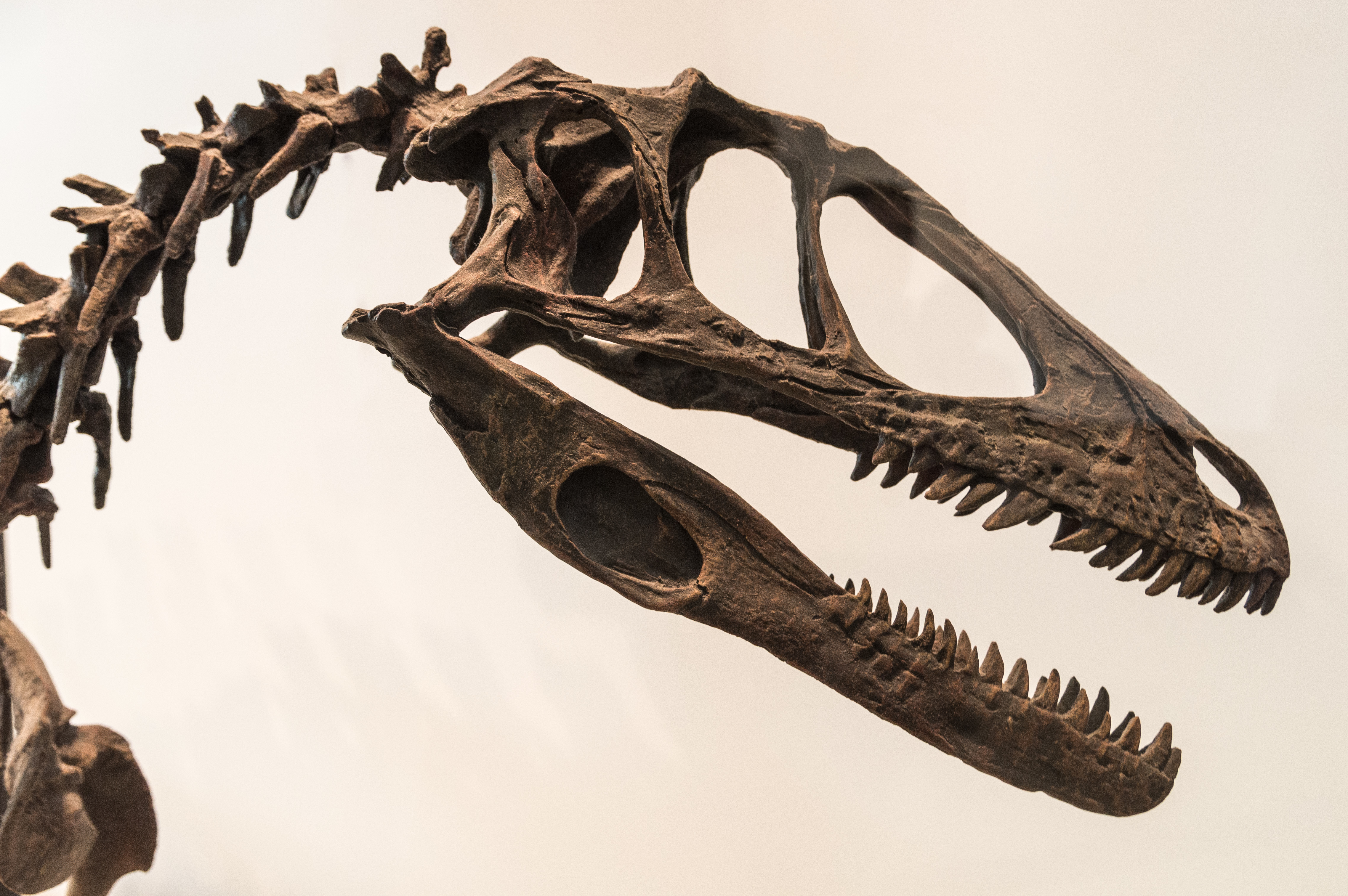
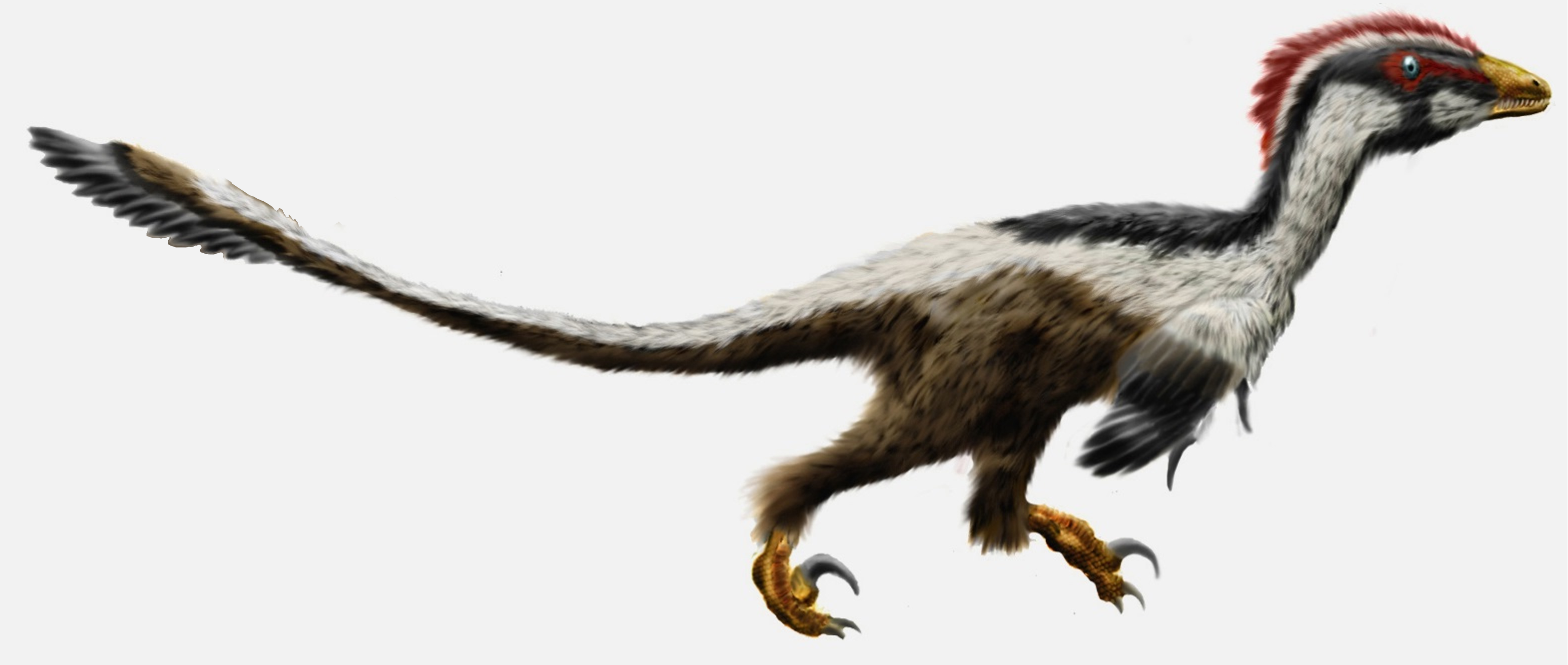
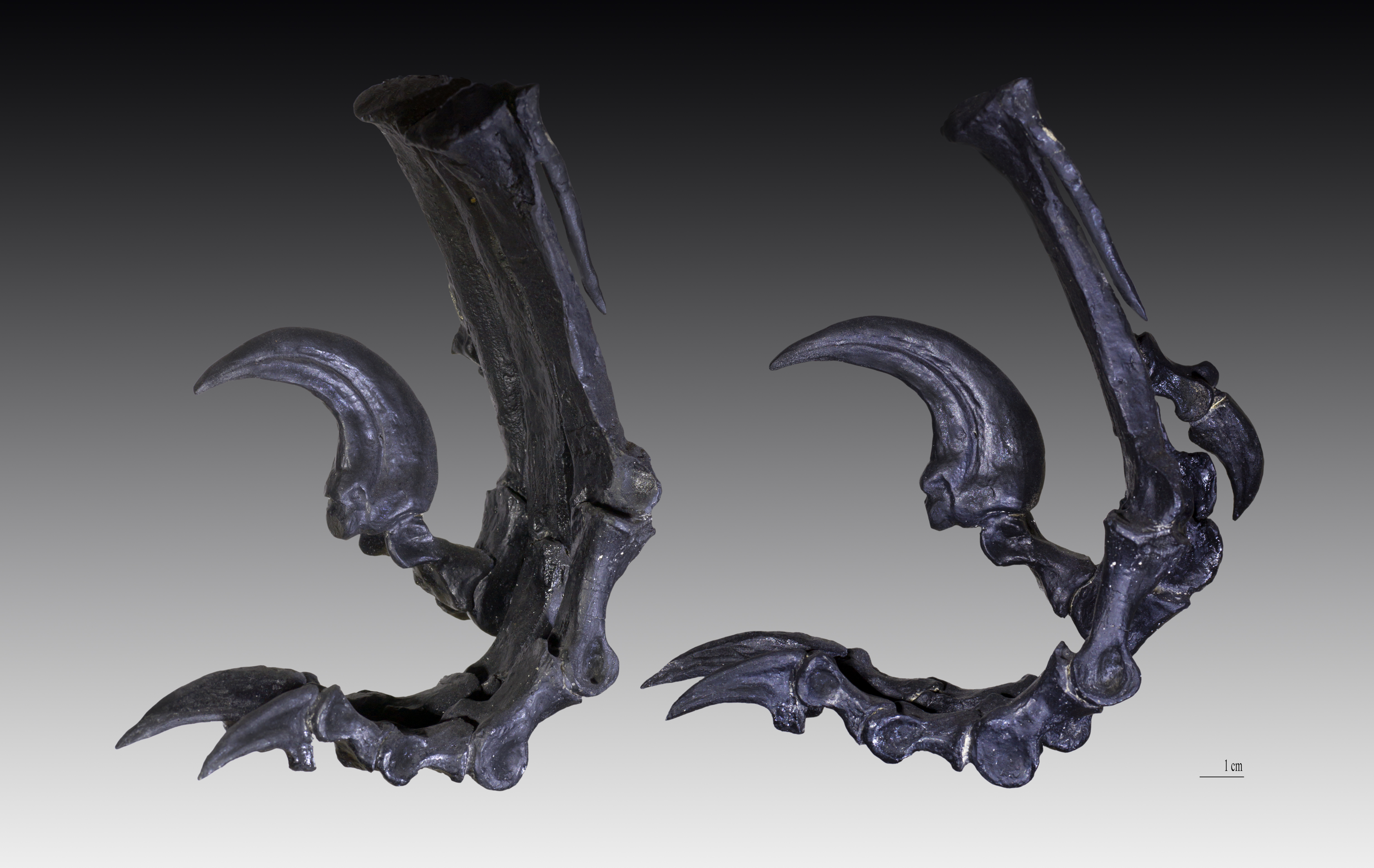
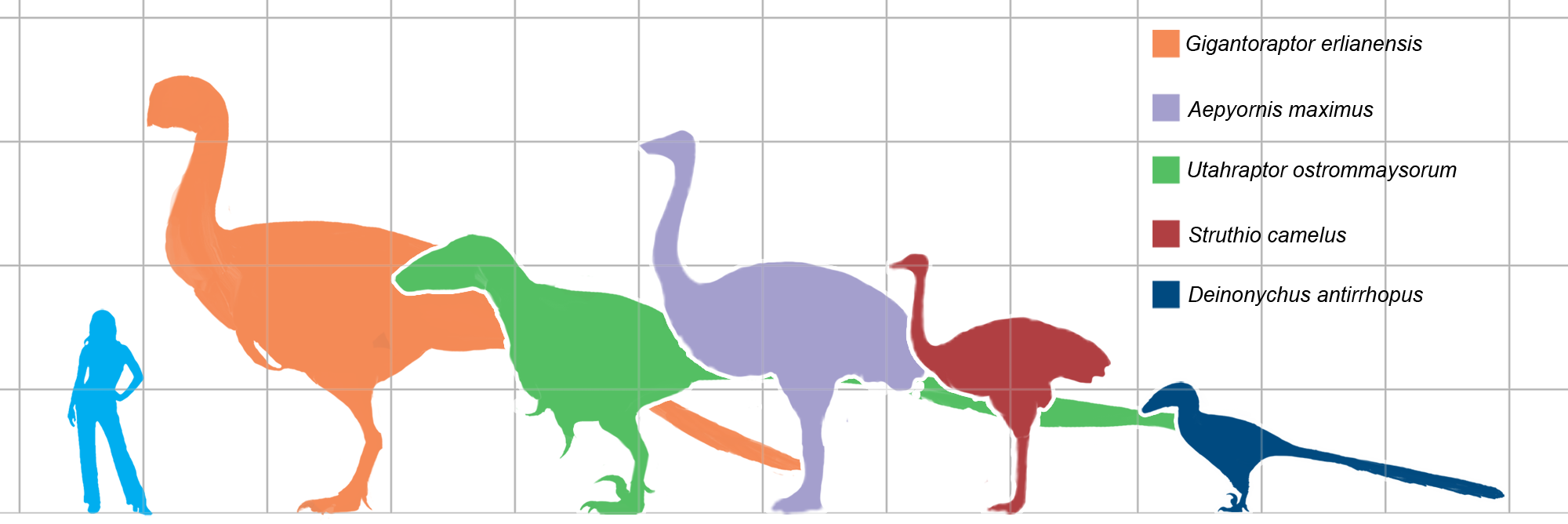
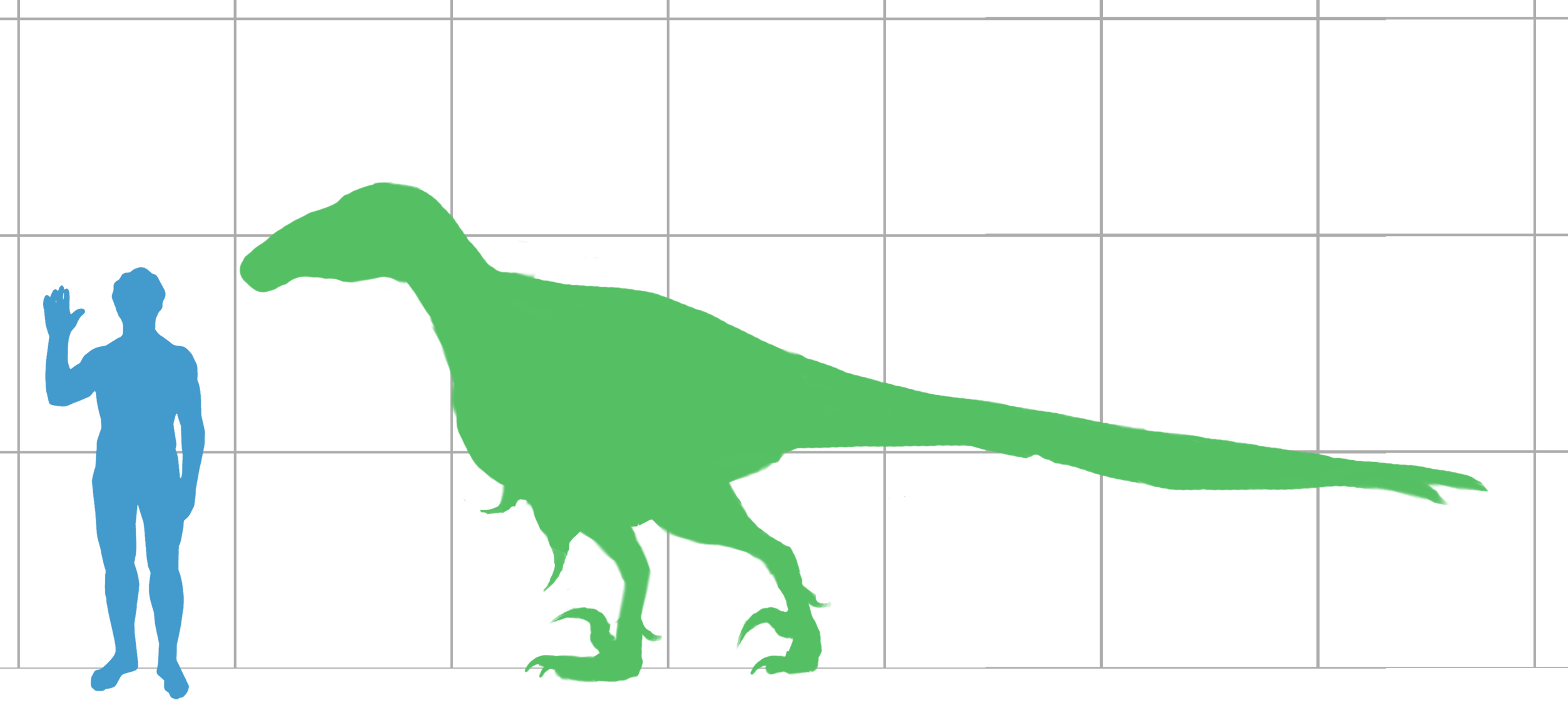
Utahraptor ostrommaysorum is the largest known dromaeosaurid, the Early Cretáceous equivalent of a giant velociraptor. Up to 6 meters long and around 500 kg, it was considerably larger than Late Cretáceous dromaeosaurids. It lived 126 to 125 million years ago in the Cedar Mountain Formation of Utah, in an ecosystem dominated by large iguanodonts and ankylosaurs. Its most iconic feature is the retractable sickle claw on the second toe, up to 24 centimeters long, used to pin prey or inflict deep wounds. Like other dromaeosaurids, it was likely covered in feathers, inferred from close relatives with preserved feathers. A sandstone block containing at least seven individuals, including adults, juveniles, and a hatchling, suggests gregarious behavior with some social structure.
Geological formation & environment
The Cedar Mountain Formation is a Lower Cretáceous sedimentary unit (Berriasian to Cenomanian, approximately 139 to 98 Ma) outcropping in eastern Utah, primarily in Grand, Emery, and Carbon Counties. The Yellow Cat Member (Barremian, ~126 Ma) is where Utahraptor was found. The environment was a semi-arid fluvial plain with meandering rivers, mud deposits, and intermittent drainage. The formation overlies the Late Jurassic Morrison Formation and is capped by the mid-Cretáceous Dakota Formation. Other dinosaurs from the Yellow Cat Member include Gastonia (ankylosaur), Iguanacolossus (iguanodont), Hippodraco (iguanodont), and as-yet undescribed sauropods.
Image gallery



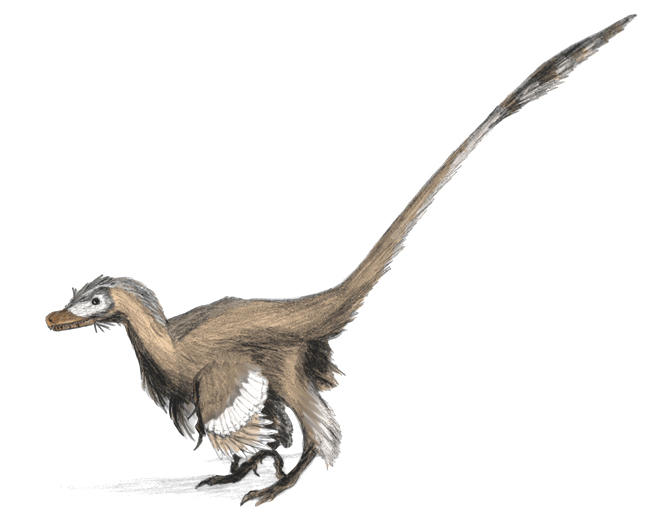
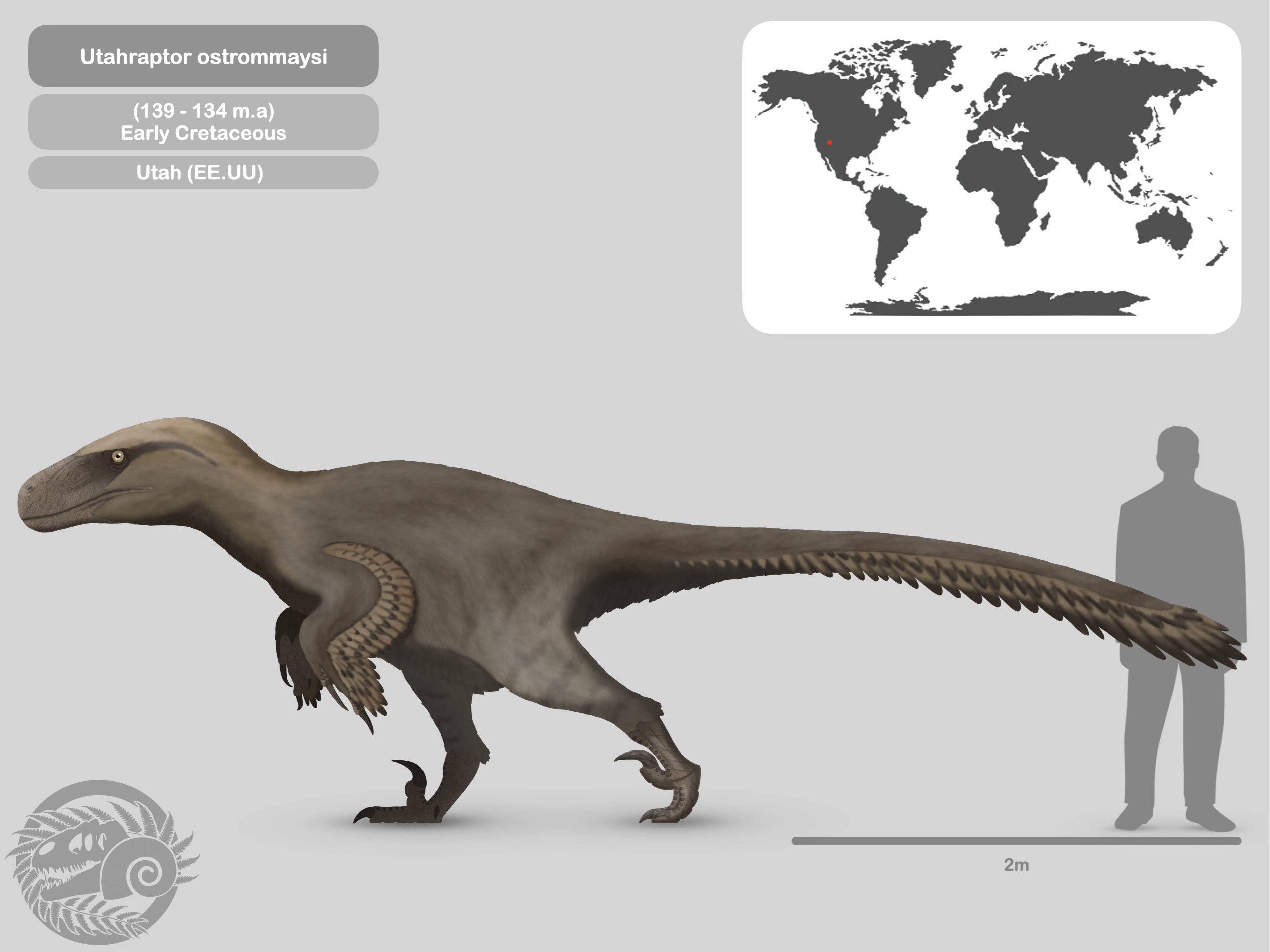
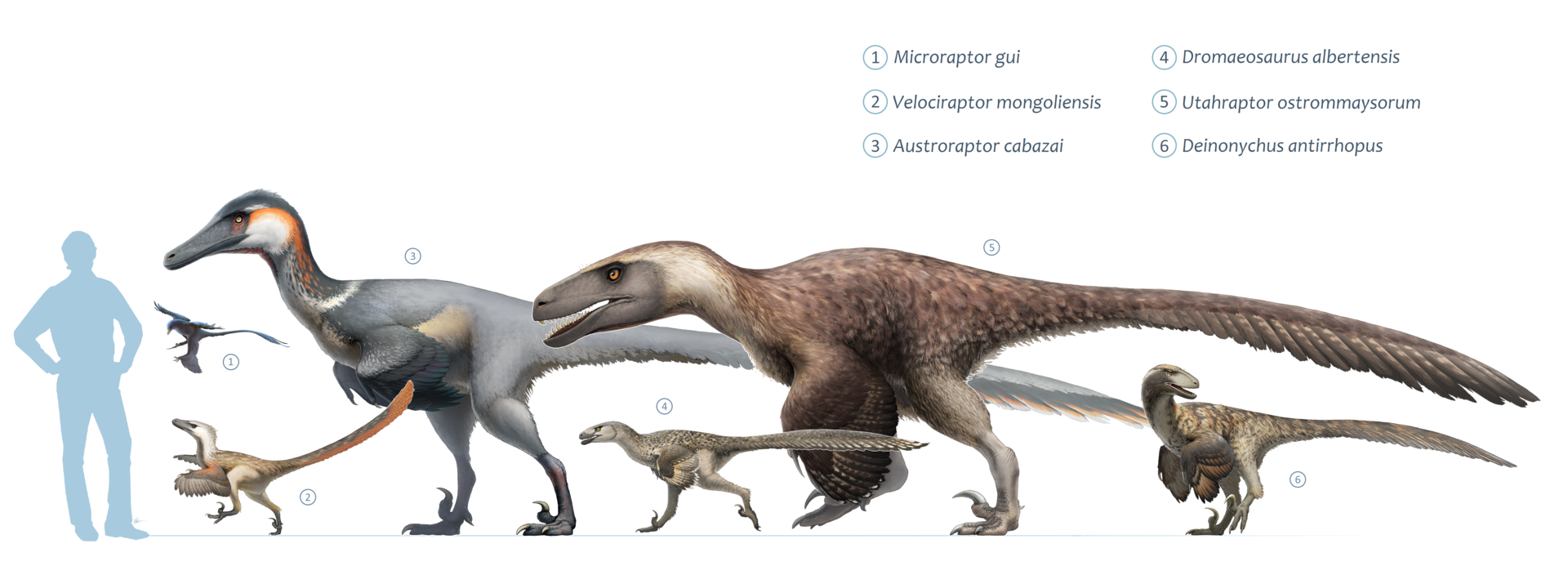
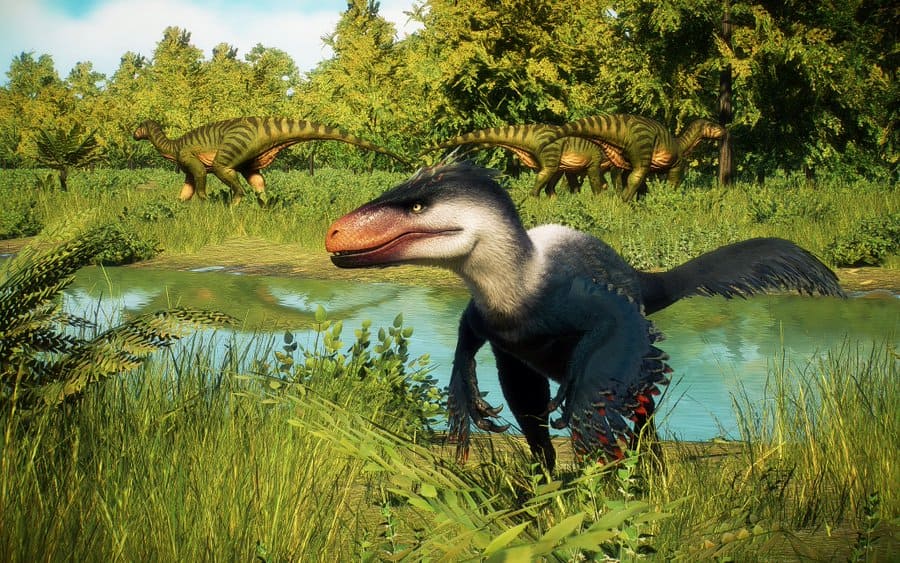
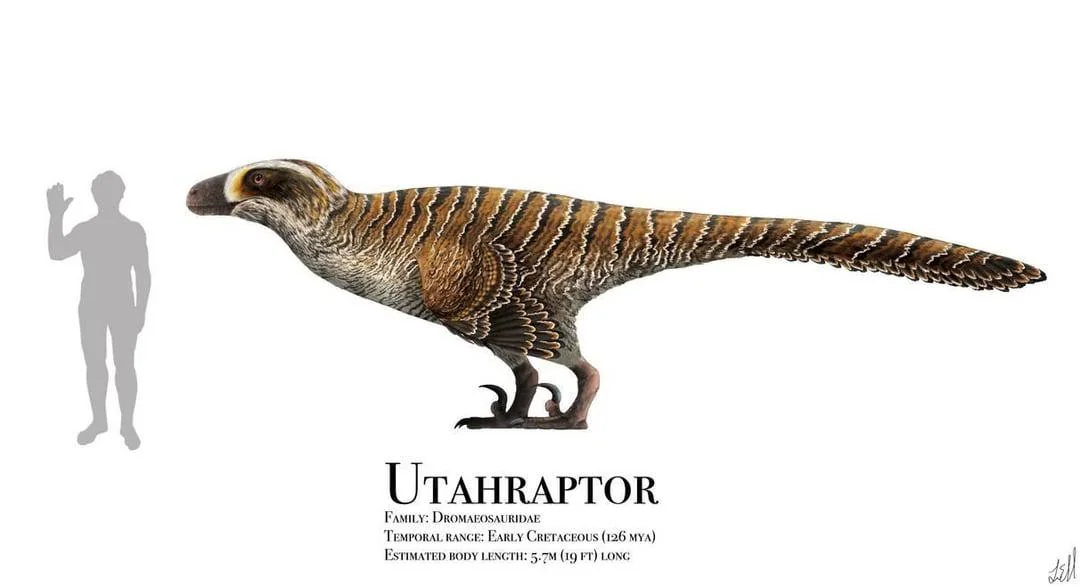
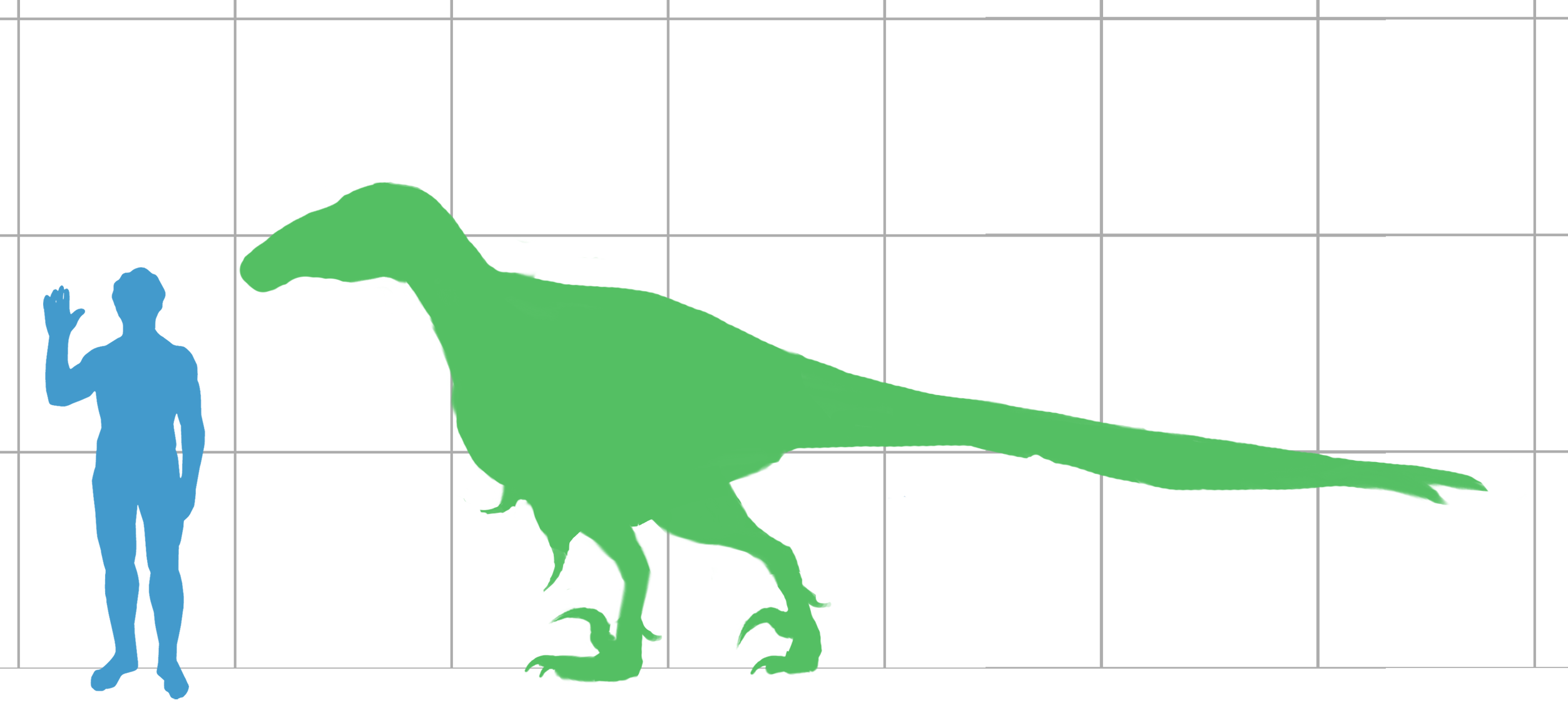
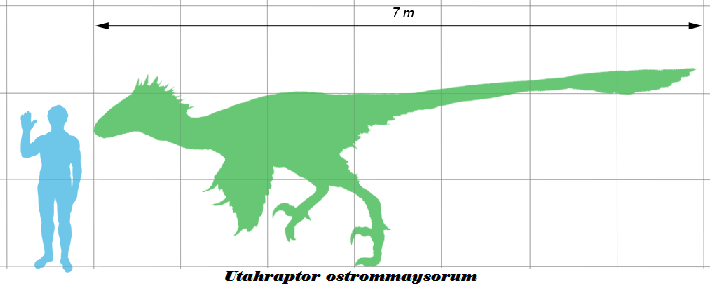
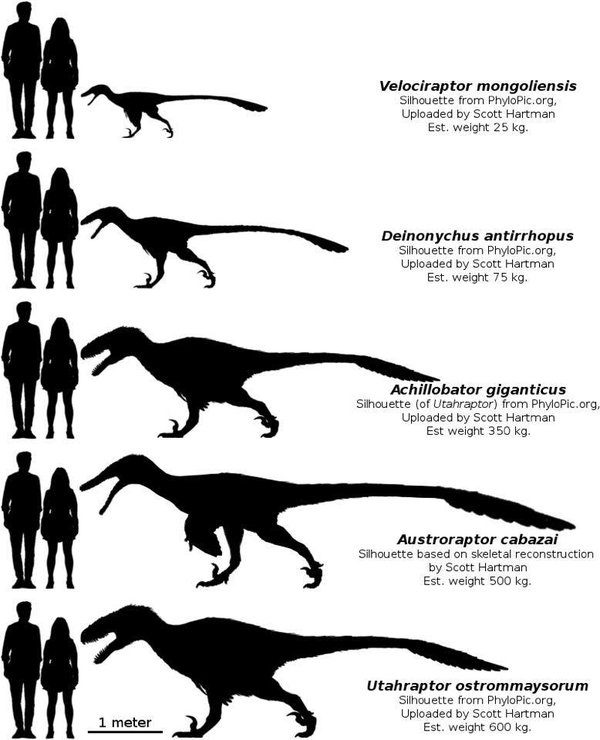
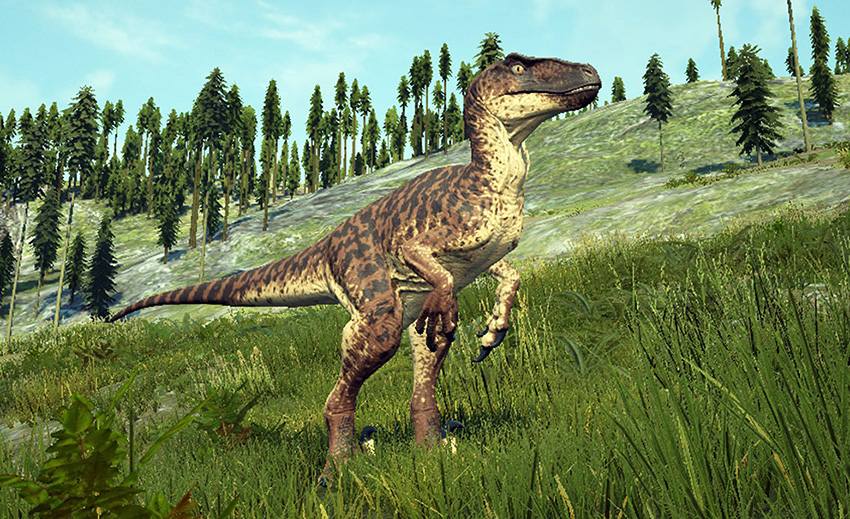
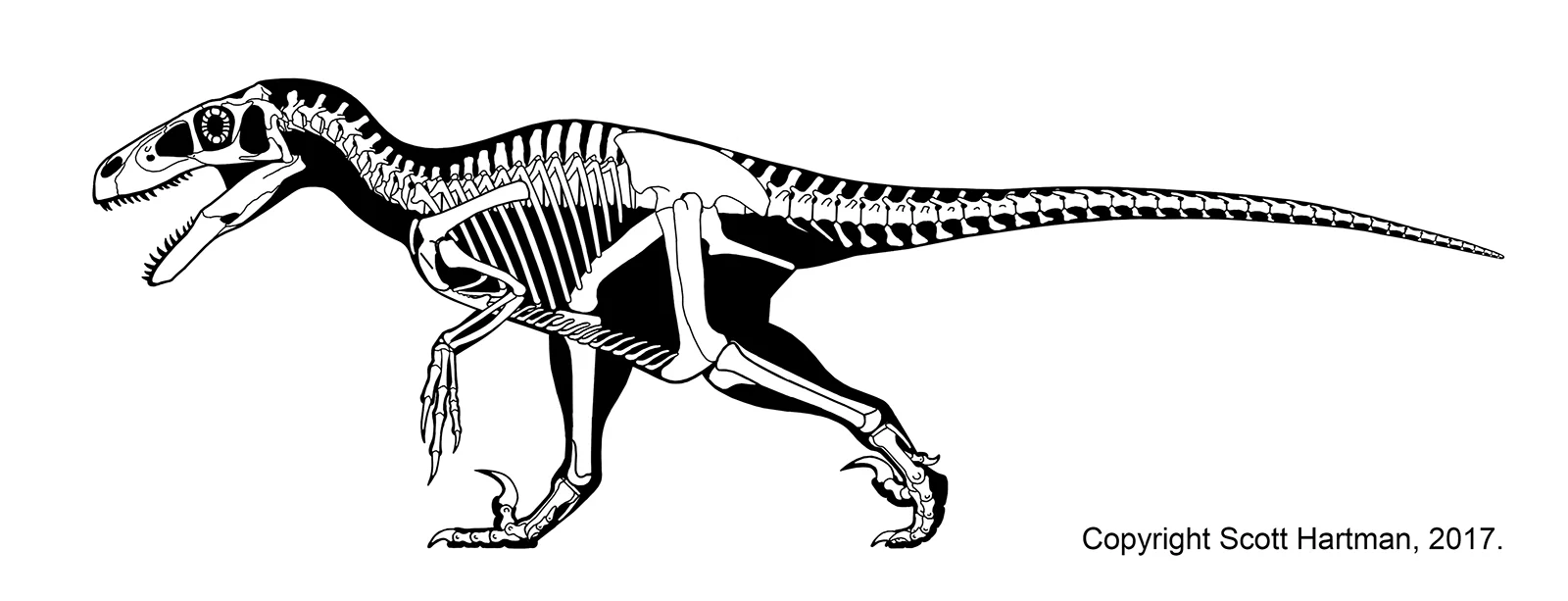
Reconstruction of Utahraptor ostrommaysorum by Emily Willoughby (2014), incorporating feathers and proportions based on unpublished material.
Emily Willoughby, CC BY-SA 3.0
Ecology and behavior
Habitat
Utahraptor inhabited the floodplains and riparian forests of the Yellow Cat and Poison Strip Members of the Cedar Mountain Formation in eastern Utah. The Barremian paleoclimate in this region was semi-arid, with open plains, conifer forests, and seasonal rivers. The ecosystem was dominated by large iguanodonts such as Iguanacolossus and Hippodraco, ankylosaurs like Gastonia, and medium-sized sauropods (Joeckel et al., 2019). Utahraptor was the largest terrestrial predator in this ecosystem, occupying an ecológical niche analogous to large modern felids. The absence of other large theropods in the Barremian Cedar Mountain Formation reinforces Utahraptor's apex predator position. The faunal diversity of the Yellow Cat Member is comparable to the Early Cretáceous of Laurasia, with a fauna influenced by the still-present continental connection to Europe.
Feeding
Utahraptor was a hypercarnivore with specialized adaptations for taking down large prey. The sickle claw on the second toe, up to 24 centimeters long, was the primary hunting weapon: biomechanical studies of dromaeosaurids indicate the claw was used to pin and immobilize prey, anchored by extremely powerful digit flexor muscles, not to slash the throat as popularized in cinema (Fowler et al., 2011). The robust jaw with serrated teeth was used to kill and dismember. Biomechanical analyses suggest Utahraptor was more an ambush hunter than a pursuit predator, similar to the strategy of large felids such as leopards. Its likely prey included juvenile and medium-sized iguanodonts, and possibly juvenile ankylosaurs. Its body weight of 500 kg made it possible to tackle larger prey using momentum.
Behavior and senses
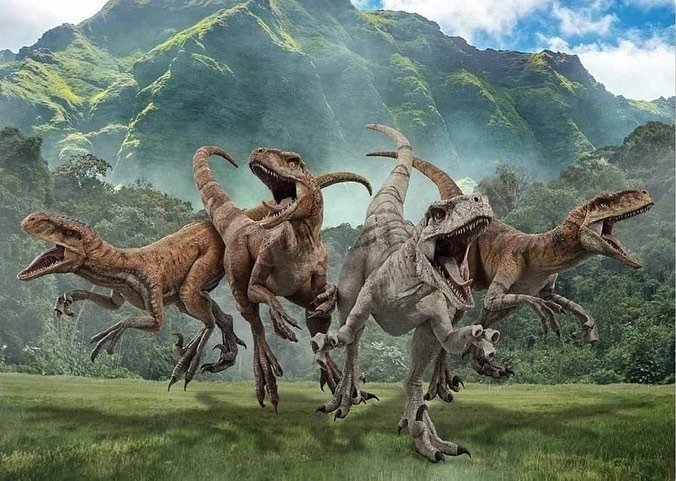
Utahraptor behavior is reconstructed from the Grand County, Utah sandstone block, which contained at least seven individuals of different ages, including an adult, four juveniles, and a hatchling. The most accepted interpretation is that the group fell into a quicksand trap during a predation attempt or watering, being preserved together. This evidence, combined with dromaeosaurid analogs with inferred gregarious behavior, suggests Utahraptor had some social structure, possibly family groups or cooperative hunting units (Senter et al., 2012). The species name honors John Ostrom, the paleontologist who recognized the relationship between dinosaurs and modern birds, and Chris Mays, president of Dinamation International. The discovery was made public in 1993, coinciding with the premiere of Jurassic Park, generating extensive media coverage.
Physiology and growth
Utahraptor physiology, like that of other dromaeosaurids, points to high-rate endothermic metabolism, inferred from bone histology of close relatives and phylogenetic comparison with birds. The near-certain presence of feathers is inferred from direct evidence in smaller dromaeosaurids such as Microraptor and Velociraptor, and from the clade phylogeny, which indicates that secondary feather loss in larger-bodied animals is much less likely than retention (Turner et al., 2012). The sickle claw was kept retracted during locomotion, touching the ground only with digits III and IV, preserving the sharp edge. Respiratory physiology included air sacs interdigitating with bones, a system that likely conferred high ventilation efficiency similar to that of modern birds. The hindlimb musculature was extremely powerful, necessary to drive the claw with sufficient force to penetrate the thick hide of large prey.
Paleogeography
Continental configuration

Ron Blakey · CC BY 3.0 · Cretáceous, ~90 Ma
Fóssil sites
Emily Willoughby, CC BY-SA 3.0
During the Barremiano (~126–125 Ma), Utahraptor ostrommaysorum inhabited Laramidia, the western half of present-day North America, separated from the east by the Western Interior Seaway, a shallow sea dividing the continent. The continents were in very different positions: India was drifting toward Asia, Antarctica was still connected to Australia, and South America was an isolated island.
Inventário de Ossos
The type material is fragmentary, but a sandstone block from Grand County, Utah, contains remains of at least 7 individuals (CEUM 184v.86, CEUM 50000), including an adult approximately 4.8 m long, four juveniles, and a hatchling. The material was still being prepared and formally described from the mid-2010s. The most complete specimen allows reasonable reconstruction of general anatomy.
Found elements
Inferred elements
Scientific Literature
14 papers in chronological order — from the original description to recent research.
A large dromaeosaurid (Theropoda) from the Lower Cretáceous of eastern Utah
Kirkland, J.I., Gaston, R. & Burge, D. · Hunteria
Founding paper in which Kirkland, Gaston, and Burge describe Utahraptor ostrommaysorum based on the sickle claw and fragmentary material from the Cedar Mountain Formation. The work identifies Utahraptor as the largest dromaeosaurid then known and describes the 24 cm claw as the primary predatory weapon. The publication coincided with the release of Jurassic Park in 1993, generating international media coverage that made the animal famous before it was even widely studied.


Osteology of Deinonychus antirrhopus, an unusual theropod from the Lower Cretáceous of Montana
Ostrom, J.H. · Bulletin of the Peabody Museum of Natural History
Fundamental monograph by Ostrom describing Deinonychus antirrhopus, the best-known American dromaeosaurid, which serves as the primary anatômical reference for interpreting Utahraptor. The scientist honored in Utahraptor's name (ostrommaysorum), Ostrom established that the sickle claw was kept elevated during locomotion and used during predation. The study also revitalized the hypothesis that dinosaurs were agile and possibly endothermic, revolutionizing paleontology.

Saurischian monophyly and the origin of birds
Gauthier, J. · Memoirs of the California Academy of Sciences
Gauthier formally defines the clade Maniraptora and Dromaeosauridae in cladistic phylogenetic analysis, positioning dromaeosaurids as the dinosaurs most closely related to birds. This work provides the fundamental phylogenetic framework in which Utahraptor is classified. Gauthier's analysis demonstrated that birds are maniraptorantheropod dinosaurs, unifying dinosaur paleontology and ornithology in one of the most influential syntheses of the 20th century.


Predatory Dinosaurs of the World
Paul, G.S. · Simon & Schuster
Paul presents the most influential pre-Utahraptor synthesis on predatory dromaeosaurids, establishing size and behavior comparisons between Deinonychus and 'Velociraptors'. The book argues that dromaeosaurids were agile warm-blooded predators with sophisticated behavior, providing the intellectual substrate on which Utahraptor's discovery was contextualized in 1993 and that inspired Jurassic Park's portrayal.


New evidence on deinonychosaurian dinosaurs from the Late Cretáceous of Patagonia
Novas, F.E. & Puerta, P.F. · Nature
Novas and Puerta describe Unenlagia comahuiensis from Patagonia, a Gondwanan dromaeosaurid that expands the geographic distribution of the group. The study has comparative relevance for Utahraptor by demonstrating that large-bodied dromaeosaurids existed on multiple continents during the Early and Middle Cretáceous, and by providing phylogenetic data on clade distribution in the Southern Hemisphere that informs the global biogeography of Dromaeosauridae.


Remarkable new birdlike dinosaur (Theropoda: Maniraptora) from the Upper Cretáceous of Montana
Burnham, D.A., Derstler, K.L., Currie, P.J., Bakker, R.T., Zhou, Z. & Ostrom, J.H. · University of Kansas Paleontológical Contributions
Burnham and colleagues describe Bambiraptor feinbergi, a very complete dromaeosaurid providing valuable anatômical information for Utahraptor's phylogenetic context. The specimen preserved rare elements including the furcula and hand skeleton, and phylogenetic analysis robustly positions dromaeosaurids within Maniraptora as non-avian birds, providing anatômical comparisons for interpreting the more fragmentary Utahraptor material.

A basal dromaeosaurid and size evolution preceding avian flight
Turner, A.H., Pol, D., Clarke, J.A., Erickson, G.M. & Norell, M.A. · Science
Turner and colleagues describe Mahakala omnogovae from Mongolia and reconstruct size evolution in dromaeosaurids, demonstrating that the group's ancestors were small and that gigantism (as in Utahraptor) evolved independently multiple times. The study has direct implications for understanding why Utahraptor was so much larger than its Late Cretáceous relatives and how body size varied throughout the group's evolutionary history.


New dromaeosaurids (Dinosauria: Theropoda) from the Lower Cretáceous of Utah, and the classification of Late Jurassic and Early Cretáceous dromaeosaurids
Senter, P., Kirkland, J.I., DeBlieux, D.D., Madsen, S. & Toth, N. · PLOS ONE
Senter and colleagues describe new dromaeosaurids from the Cedar Mountain Formation, the same unit containing Utahraptor, and revise the classification of Late Jurassic and Early Cretáceous dromaeosaurids. The work provides the faunal context of Utahraptor's ecosystem and analyzes the phylogenetic relationships of Early Cretáceous North American dromaeosaurids, positioning Utahraptor within Dromaeosaurinae.


The predatory ecology of Deinonychus and the origin of flapping in birds
Fowler, D.W., Freedman, E.A., Scannella, J.B. & Kambic, R.E. · PLOS ONE
Fowler and colleagues propose the Raptor Prey Restraint (RPR) model for sickle claw function: rather than used for slashing, the claw was used to pin and restrain prey under the predator's weight, as modern raptorial birds do. The model has direct implications for Utahraptor, whose 500 kg body weight would make it one of the most lethal predators using this pinning technique.

A review of dromaeosaurid systematics and paravian phylogeny
Turner, A.H., Makovicky, P.J. & Norell, M.A. · Bulletin of the American Museum of Natural History
Turner, Makovicky, and Norell publish the most comprehensive phylogenetic review of Dromaeosauridae, analyzing 111 taxa and 478 characters. The study positions Utahraptor within Dromaeosaurinae as a basal member, confirms dromaeosaurids are closer to birds than troodontids, and revises within-clade relationships with implications for interpreting the group's biogeography and behavioral evolution.


The origin and diversification of birds
Brusatte, S.L., O'Connor, J.K. & Jarvis, E.D. · Current Biology
Brusatte, O'Connor, and Jarvis synthesize the modern understanding of bird origin and diversification from maniraptorantheropod dinosaurs. The work contextualizes Utahraptor as one of the last large non-avian dromaeosaurids in a clade that would give rise to modern birds. The review demonstrates that feathers, flight, and other avian characters were acquired incrementally along the Paraves phylogeny.


Chronostratigraphy and terrestrial palaeoclimatology of Berriasian-Hauterivian strata of the Cedar Mountain Formation, Utah, USA
Joeckel, R.M., Suarez, C.A., McLean, N., Suarez, M.B. & Kirkland, J.I. · Geológical Society of London Special Publications
Joeckel and colleagues establish the chronostratigraphic and palaeoclimatic framework for the oldest Cedar Mountain Formation members, refining the ages of strata containing Utahraptor. The work documents that the Barremian environment was semi-arid with seasonal rivers, providing crucial paleoenvironmental context for understanding the ecológical conditions in which Utahraptor lived and was preserved.


A new paravian dinosaur from the Late Jurassic of North America supports a late acquisition of avian flight
Hartman, S., Mortimer, M., Wahl, W.R., Lomax, D.R., Lippincott, J. & Lovelace, D.M. · PeerJ
Hartman and colleagues describe Hesperornithoides miessleri, a Late Jurassic paravian, and perform phylogenetic analysis with implications for Utahraptor's position within Dromaeosauridae. The study reinforces that the origin of flight was a gradual process and that dromaeosaurids like Utahraptor represent lineages that retained the terrestrial body plan while increasingly smaller relatives evolved toward flight.

The tail of Tyrannosaurus: reassessing the size and locomotive importance of the M. caudofemoralis in non-avian theropods
Persons, W.S. & Currie, P.J. · The Anatômical Record
Persons and Currie analyze caudal musculature in non-avian theropods including dromaeosaurids, demonstrating that the caudofemoral muscle was the primary source of locomotor propulsion. For Utahraptor, the study implies that the robust tail provided considerable impulse in jumps and sprints, fundamental to the prey-pinning technique. The analysis revises speed and agility estimates for large dromaeosaurids.

Classificação
Descoberta
Curiosidade
The name Utahraptor became world-famous in 1993 because paleontologist Phil Currie joked with Steven Spielberg that the Velociraptors in Jurassic Park were the wrong size: they should be larger. Utahraptor had just been described at that moment, and some media outlets even speculated that the film had 'predicted' the discovery.