
Yi qi
Yi qi
"Strange wings"
Sobre esta espécie
Yi qi (pronounced approximately 'ee chee') was a diminutive scansoriopterygid dinosaur that lived during the Middle to Late Jurassic, Oxfordian stage, approximately 163 to 159 million years ago, in the region of present-day Hebei, northern China. At only 0.6 meters in length with an estimated body mass of 380 grams, it was smaller than most modern pigeons. The most extraordinary feature of Yi qi is the styliform elongate bony rod projecting from the wrist: a long, pointed skeletal element that, together with a skin membrane (patagium), formed a wing of morphology entirely unlike any other known flying bird or dinosaur. This combination of a membrane wing supported by an accessory bony rod is unique among Dinosauria and finds functional parallels only in bats and flying squirrels among modern vertebrates. The holotype specimen (STM 31-2) was preserved with impressions of contour feathers on the body and filamentous plumage, plus portions of carbonized wing membrane visible around the forelimbs. Histological analysis of the feathers and bones indicates the animal had not reached full skeletal maturity at death, making adult size estimates slightly uncertain. Yi qi had long recurved foot claws consistent with arboreal habits, and simple conical teeth suggesting insectivorous or generalist carnivorous diet. The skull is relatively large in proportion to the body, with broad orbital openings, suggesting acute vision in a forest canopy environment. The phylogeny of Yi qi within Scansoriopterygidae is well-supported, but the placement of that clade within Coelurosauria remains debated: recent analyses alternate between positioning them as basal members of Pennaraptora or as an independent branch of theropods that developed gliding flight convergently and independently from modern birds. If Yi qi's patagium permitted active flight, it would represent a third independent origin of flight among feathered Jurassic dinosaurs, alongside the lineages leading to modern birds (Avialae) and possibly the gliding of Microraptor. Alternatively, aerodynamic analyses suggest the wing morphology was better suited to descending gliding from elevated perches than to sustained flapping. The discovery was announced in April 2015 in Nature by Xu Xing and collaborators, immediately becoming one of the most impactful paleontological finds of the decade.
Geological formation & environment
The Tiaojishan Formation (also spelled Tiao-chi-shan) is a Middle to Late Jurassic stratigraphic unit (Oxfordian, ~163-155 Ma) outcropping mainly in Hebei Province and Inner Mongolia, northern China. It is composed predominantly of laminated limestones of volcanic origin, tuffs, and shales deposited in shallow, calm-water lakes in a subtropical climate environment. The anaerobic bottom conditions of the lacustrine environment are responsible for the extraordinary preservation of soft tissues, feather impressions, and membranes found in fossils from the formation, including the Yi qi holotype. The Tiaojishan Formation correlates with or is slightly older than the famous Yixian Formation of the Early Cretaceous, and both formations together document the rich fauna of feathered dinosaurs in northeastern China during the Mesozoic. In addition to Yi qi and other scansoriopterygids, the Tiaojishan has preserved fossils of Anchiornis huxleyi, Xiaotingia zhengi, and Epidexipteryx hui, all small feathered dinosaurs, suggesting the formation's paleoenvironment was dominated by dense forests that favored miniaturization and the development of gliding or flight capabilities in multiple lineages.
Image gallery


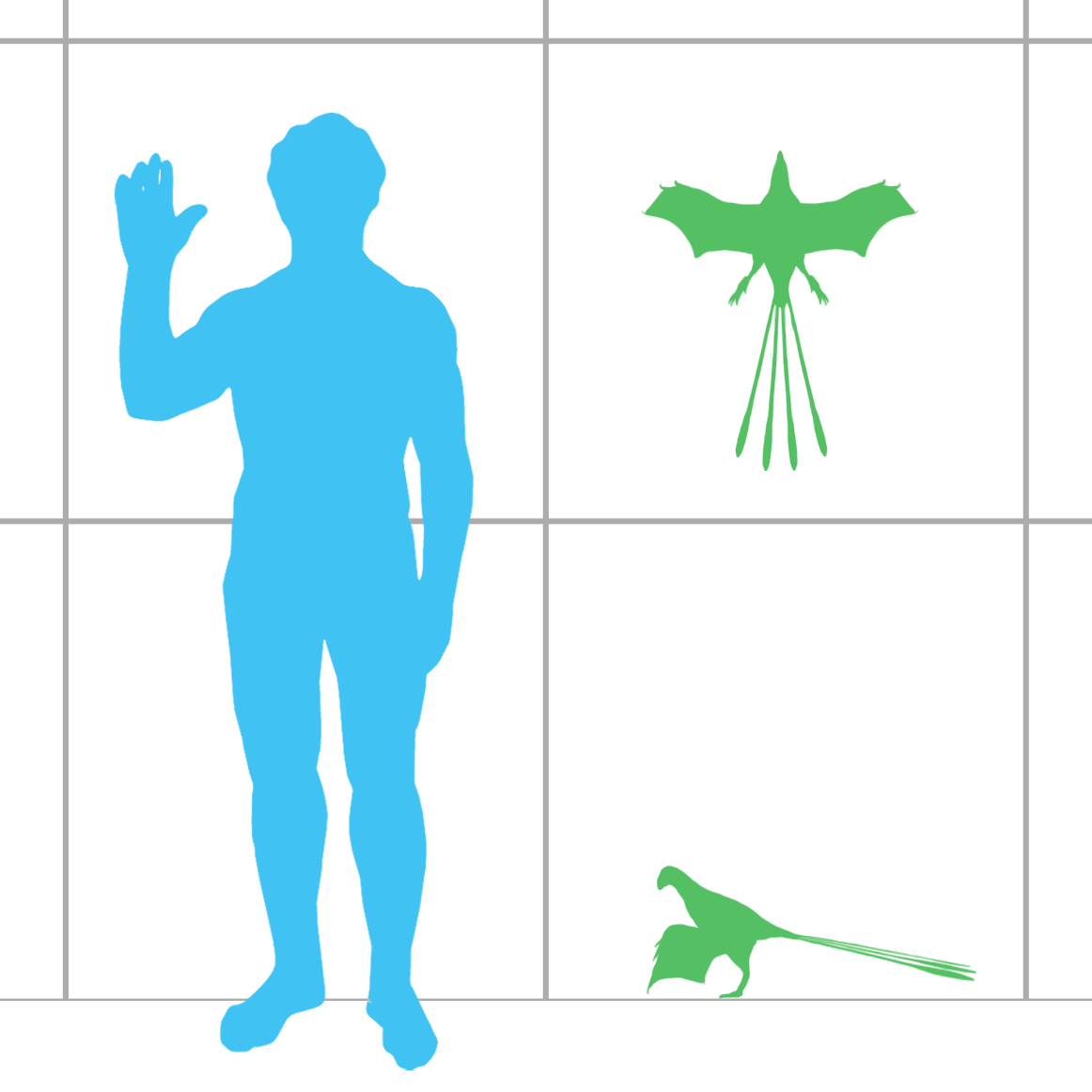

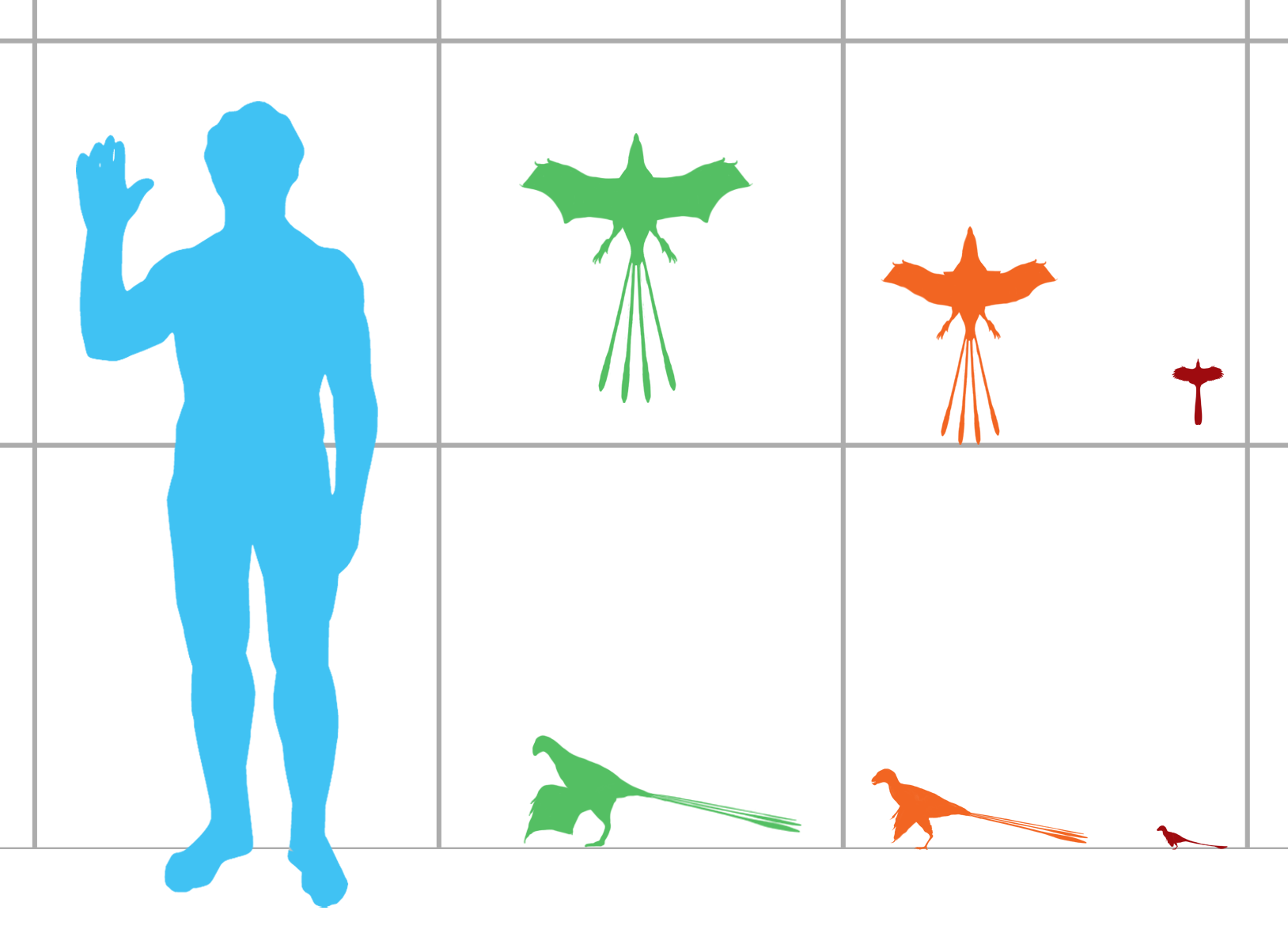

Life reconstruction of Yi qi by Nobu Tamura, showing the unique wing membranes supported by a bony styliform element, a feature without parallel in any other dinosaur.
CC BY-SA 3.0
Ecology and behavior
Habitat
Yi qi inhabited dense high-canopy forests during the Middle to Late Jurassic of northern China, when the region corresponded to an area of subtropical to warm temperate climate with abundant vegetation. The Tiaojishan Formation preserves evidence of a forest paleoenvironment with pteridophytes, cycads, and primitive conifers, probably with a canopy between 10 and 20 meters high. Yi qi's claw morphology, long and recurved, is highly diagnostic of arboreal adaptation, and the preservation pattern of the holotype, articulated and without signs of transport by water currents, suggests the animal lived and died near a calm body of water, possibly a lake or pond surrounded by dense vegetation.
Feeding
Yi qi's diet was probably insectivorous or generalist carnivorous, based on dental morphology: simple conical teeth without serrations, suitable for capturing large insects, small vertebrates, and possibly spiders or other arthropods. The body mass of 380 grams is consistent with a specialized insectivore or small omnivore. There is no evidence of adaptations for feeding on fish or vegetation. The arboreal position would be advantageous for capturing flying insects by leaping from perches or gliding between branches, a hunting strategy observed in many modern small birds inhabiting upper forest strata.
Behavior and senses
Yi qi was probably a solitary or small-group arboreal animal that used its membranous patagium to glide between tree canopies, reducing the energetic cost of movement in the canopy. The presence of contour feathers on the body, documented in the holotype, indicates a thermoregulatory and possibly camouflage function in canopy shade. Aerodynamic analyses suggest Yi qi was not capable of sustained powered flight, but could perform controlled glides of tens of meters from elevated perches. The descending glide behavior, rather than flapping upward, would imply the animal needed to actively climb trees using its foot claws to regain glide altitude, a pattern similar to modern gliding snakes (Chrysopelea) and colugos.
Physiology and growth
Bone histology of holotype STM 31-2 indicates Yi qi was a relatively slow-growing animal for a theropod, with a bone tissue pattern suggesting intermediate metabolism between ectothermic reptiles and endothermic birds. The abundant plumage, inferred from preserved impressions, is consistent with active thermoregulation and elevated metabolism. The extremely reduced body size of 380 grams would suggest high basal metabolic rates in absolute terms, but the animal probably did not reach the metabolic rates of modern birds of comparable size. The wing membrane, composed of skin and connective tissue, would be thermoregulated differently from feathers, possibly requiring specific sun-basking behaviors to maintain membrane temperature adequate for muscular function.
Paleogeography
Continental configuration

Ron Blakey · CC BY 3.0 · Jurassic, ~90 Ma
During the Oxfordiano (~163–159 Ma), Yi qi inhabited the fragmenting Pangea. North America and Europe were still close, and the North Atlantic was just beginning to open. Climate was warm and humid globally, with no polar ice caps.
Inventário de Ossos
The holotype STM 31-2, deposited at the Shandong Tianyu Museum of Nature, is a nearly complete and articulated specimen preserved in laminated limestone slabs of the Tiaojishan Formation. It includes the skull, mandible, partial vertebral column, pectoral girdle, complete forelimbs with the diagnostic styliform element, pelvic girdle, and hind limbs. Contour feather impressions and carbonized portions of the wing membrane are also preserved. Missing mainly the distal caudal vertebrae and some ribs. The 75% completeness estimate reflects the generally excellent preservation of the specimen.

Found elements
Inferred elements
Scientific Literature
7 papers in chronological order — from the original description to recent research.
A bizarre Jurassic maniraptoran theropod with preserved evidence of membranous wings
Xu, X., Zheng, X., You, H., Xing, Q., Zhou, Z., Wang, X., Zhang, B., Wu, W., Li, G. · Nature
Founding paper describing Yi qi from holotype STM 31-2, collected at Mutoudeng, Hebei, China, in the Tiaojishan Formation (Oxfordian, ~163-159 Ma). Xu Xing and collaborators identify the wrist styliform element, a structure without parallel in any other known dinosaur or bird, which would have served as support for a wing membrane (patagium). Phylogenetic analysis places Yi qi within Scansoriopterygidae, a clade of very small arboreal theropods from the Jurassic of China, and documents the convergent development of membranous wings in a separate non-avian lineage. The authors analyze feather and membrane impressions preserved in the rock, perform computed microtomography of the styliform element, and compare the patagium morphology with that of bats, colugos, and pterosaurs. The study concludes that Yi qi represents unequivocal evidence that at least one group of feathered dinosaurs experimented with an anatomically radically different solution for flight or gliding, distinct from the solution that led to modern birds.
The wings before the bird: an evaluation of flapping-based locomotion in presumed winged dinosaurs
Dececchi, T.A., Larsson, H.C.E., Habib, M.B. · PeerJ
Dececchi, Larsson and Habib perform comparative aerodynamic modeling of three feathered Jurassic dinosaurs: Microraptor, Anchiornis and Yi qi. For Yi qi, the authors reconstruct the patagium geometry from impressions preserved in the holotype and calculate wingspan ratios, wing loading, and available muscle power. Results indicate that the morphology of Yi qi's membranous wing was inadequate for sustained flapping flight: wing loading would be too high and the pectoral musculature, inferred from bone insertion marks, would be insufficient to generate lift during active wing beats. The study concludes that Yi qi was probably a descending glider ('parachuter') from height, similar in flight dynamics to flying squirrels, rather than an active flapper. This work is central to the debate about whether Yi qi could actually fly or merely descend from trees, supporting the passive gliding hypothesis.
The oldest record of Ornithuromorpha from the Early Cretaceous of China
Wang, M., Zheng, X., O'Connor, J.K., Lloyd, G.T., Wang, X., Wang, Y., Zhang, X., Zhou, Z. · Nature Communications
Wang et al. describe a new ornithuromorph from the Early Cretaceous of China, contextualizing the diversification panorama of Mesozoic birds in the same biogeographic corridor where Yi qi was found. Although the main focus is not Yi qi, the paper discusses the radiation of feathered dinosaurs in the Jurassic and Cretaceous of China and provides the stratigraphic framework within which the Tiaojishan Formation and its taxa, including scansoriopterygids, are situated. The phylogenetic data presented show that the diversification of flying or gliding theropods in the Jurassic-Cretaceous of China was much more complex than previously imagined, with at least three independent lineages simultaneously experimenting with body size reduction and arboreal adaptations.
Hind wings in basal birds and the evolution of leg feathers
Zheng, X., Zhou, Z., Wang, X., Zhang, F., Zhang, X., Wang, Y., Wei, G., Wang, S., Xu, X. · Science
Zheng and collaborators examine the configuration of leg feathers in multiple avian and theropod taxa from the Jurassic and Cretaceous of China, including representatives from the same stratigraphic horizon where Yi qi was found. The study documents a mosaic of hindwing configurations, with some species bearing functional flight feathers on the feet and others only decorative or insulating plumage. The results have direct implications for understanding Yi qi, showing that the hind limbs of feathered theropods from the Middle Jurassic of China exhibited much greater anatomical diversity than simplified two-wing or four-wing models allow. The research supports the hypothesis that multiple aerodynamic solutions coexisted during the dino-bird transition, contextualizing the emergence of Yi qi's unique patagium within a scenario of intense evolutionary experimentation.

Convergent evolution of powered flight in theropod dinosaurs
Pittman, M., Dececchi, T.A., Larsson, H.C.E. · Current Biology
Pittman, Dececchi and Larsson perform a comprehensive biomechanical analysis of the flight apparatus in multiple theropod lineages, including Yi qi, Microraptor, Anchiornis and Avialae representatives. Using computational modeling and measurements of aspect ratio and wing loading, the authors demonstrate that powered flight may have evolved convergently at least twice and possibly three times in Theropoda. For Yi qi, the biomechanical model indicates that even as a glider, the membranous patagium would be functionally more efficient than contour feathers in generating lift during descents from tree canopies. The study proposes that Yi qi and scansoriopterygids represent a successful evolutionary experiment in the Jurassic that was eventually extinguished without leaving flight-capable descendants in the Cretaceous.

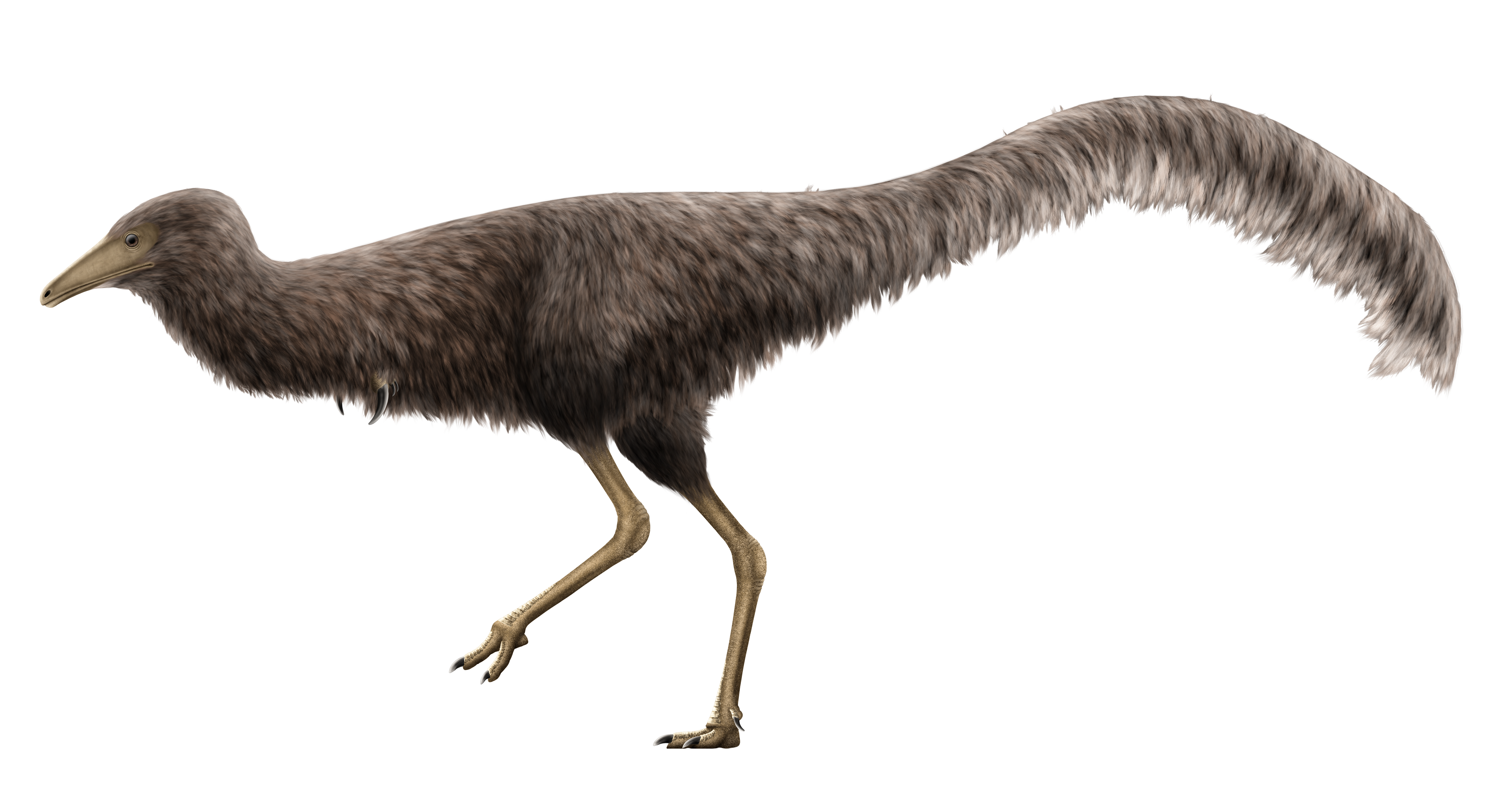
A new Jurassic theropod from China documents the early origin of scansoriopterygid flight morphology
Lefèvre, U., Cau, A., Cincotta, A., Hu, D., Chinsamy, A., Escuillié, F., Godefroit, P. · Royal Society Open Science
Lefèvre and collaborators describe Ambopteryx longibrachium, a second scansoriopterygid with a styliform element and wing membrane, also collected in the Tiaojishan Formation of Hebei. The existence of Ambopteryx confirms that Yi qi's membranous wing morphology was not an individual aberration, but rather a body plan shared by at least two members of the clade Scansoriopterygidae. The paper deepens the anatomical characterization of the styliform element, demonstrating it is an elongated carpometacarpal bone rather than a newly developed accessory element. Comparison between Yi qi and Ambopteryx shows variation in the relative length of the styliform element, suggesting functional diversity within the clade. The work also presents histological analysis of Ambopteryx and discusses growth rates in scansoriopterygids, which appear slower than those of other theropods of comparable size.
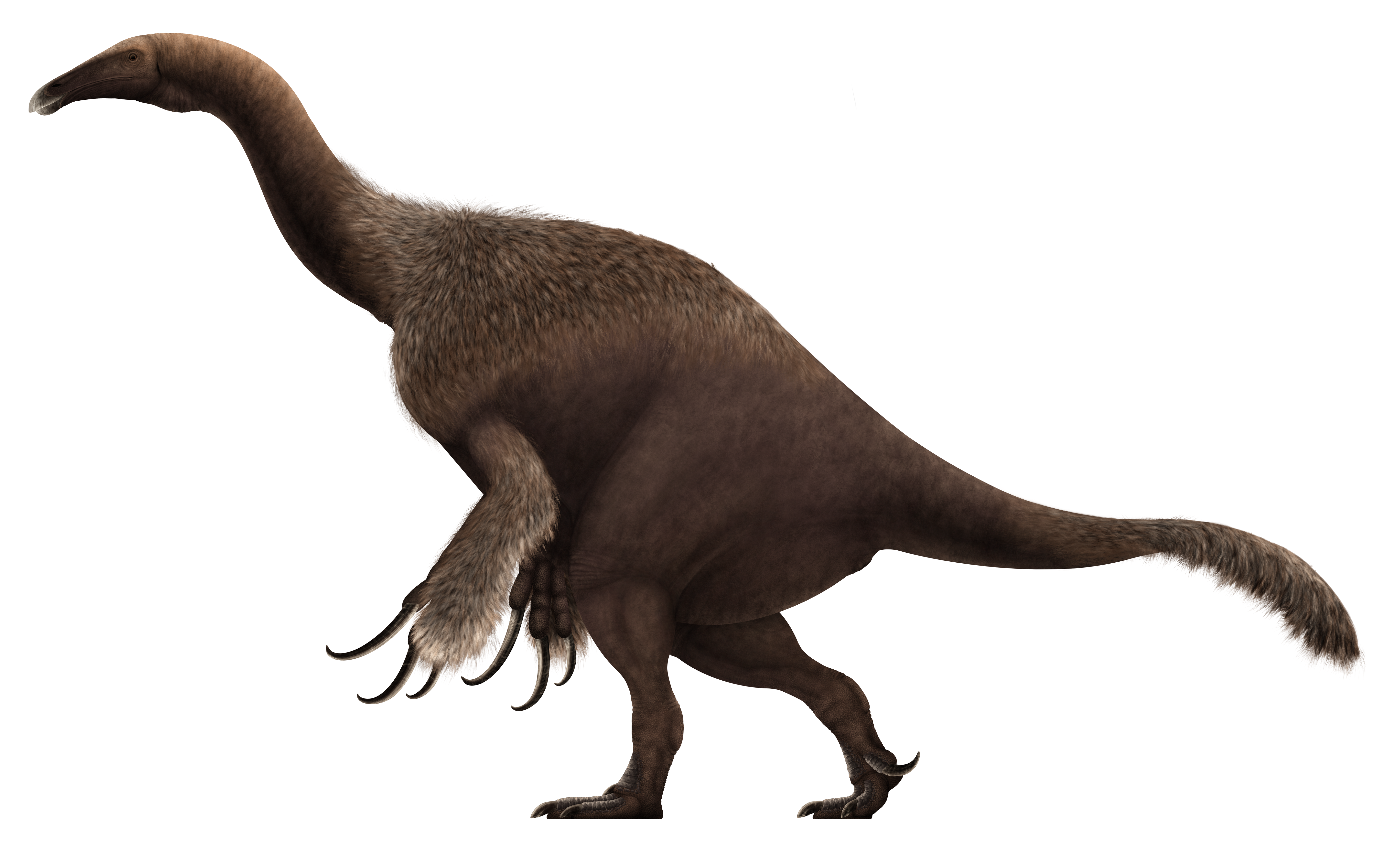

Potential for powered flight neared by most close avialan relatives, but few cross its thresholds
Pei, R., Pittman, M., Goloboff, P.A., Dececchi, T.A., Habib, M.B., Kaye, T.G., Larsson, H.C., Norell, M.A., Brusatte, S.L., Xu, X. · Current Biology
Pei et al. apply quantitative flight potential modeling to 44 paravian dinosaur taxa, including Yi qi, combining osteometric data, body mass estimates, and aerodynamic models. For Yi qi, the model indicates the animal approached the aerodynamic thresholds required for powered flight, but likely did not consistently cross them. The authors calculate wing loading indices, aspect ratios, and relative muscle power for each taxon, creating the largest comparative dataset on flight capability in paravians ever published. The study concludes that most close bird relatives approached the flight threshold without crossing it, and that Yi qi represents a particular case where an alternative anatomical solution, the membrane wing, permitted at least efficient gliding capability, even without reaching the thresholds of active flight.


Espécimes famosos em museus

STM 31-2
Shandong Tianyu Museum of Nature, Pingyi, China
Holotype and only known specimen of Yi qi. Nearly complete and articulated skeleton in laminated limestone slab, with preservation of contour feather impressions and portions of carbonized wing membrane. The wrist styliform element is clearly visible. The specimen was acquired from a local farmer in 2007 and is permanently displayed at the museum.
Molde IVPP V18495
Institute of Vertebrate Paleontology and Paleoanthropology (IVPP), Pequim, China
High-fidelity cast of Yi qi holotype STM 31-2, deposited at the Institute of Vertebrate Paleontology and Paleoanthropology in Beijing for use in research and morphological comparisons. The cast was produced with polyurethane resin and reproduces the details of the wing membrane and styliform element with submillimeter resolution.
Molde NHM R37123
Natural History Museum, Londres, Reino Unido
Study cast of the Yi qi holotype deposited at the Natural History Museum in London, used by European researchers for comparative morphological analyses. Part of the museum's collection of Jurassic feathered dinosaur casts used for temporary exhibitions and research.
In cinema and popular culture
Yi qi has had a modest but growing presence in popular culture since its description in 2015. The animal quickly went viral on social media due to the combination of the shortest name of any dinosaur with its bizarre appearance: a feathered theropod with bat-like wings. The documentary series Prehistoric Planet (Apple TV+, 2022), produced with high-level scientific consultancy, included Yi qi in its Jurassic representation, introducing the animal to a broad global audience for the first time. Unlike dinosaurs such as Velociraptor or T. rex, Yi qi has not been incorporated into science fiction film franchises, partly due to its relatively recent discovery and partly because it is difficult to portray as threatening given its pigeon-like size. However, the animal frequently appears in paleontology textbooks since 2016 and in digital educational materials about bird evolution. Its unique morphology makes it a powerful pedagogical example of convergent evolution: membranous wings evolved independently in bats, pterosaurs, and Yi qi, demonstrating that similar solutions can emerge in completely different evolutionary contexts. On the internet, Yi qi is frequently presented as the 'strangest dinosaur ever discovered', a title it shares with Deinocheirus and Therizinosaurus on different forums. The brevity of the name facilitates memorization and dissemination, making Yi qi a rare case of a highly technical dinosaur that achieved genuine popular culture penetration without needing a big-budget film as a vector.

Classificação

Descoberta
Curiosidade
Yi qi has the shortest scientific name of any dinosaur ever described: just two Chinese characters, 奇翼, with two syllables. The name was deliberately chosen to reflect the animal's strangeness, as 'yi' means 'strange' and 'qi' means 'wing' in classical Mandarin. For comparison, the second shortest dinosaur name, Yi lingyuanensis (another scansoriopterygid), still has more characters. The combination of the name's brevity and the animal's anatomical uniqueness made Yi qi one of the most cited dinosaurs on social media since its description in 2015.